Categorization skills Plants and Animals Worksheets for Ages 3-8
3 filtered results
Difficulty Level
Grade
Age
-
From - To
Subject
Activity
Standards
Enhance your child’s learning experience with our "Categorization Skills: Plants and Animals Worksheets" designed for ages 3-8. This engaging collection supports critical thinking and understanding of the natural world by helping children categorize various plants and animals. Through colorful images and interactive activities, kids will learn to differentiate between types of flora and fauna, improving their observation skills and promoting cognitive development. Ideal for fun learning at home or in the classroom, these worksheets foster creativity and a deeper appreciation for nature. Make learning enjoyable and effective with our thoughtfully crafted resources! Download now to inspire young minds.
Favorites
With answer key
Interactive
 Assign to My Students
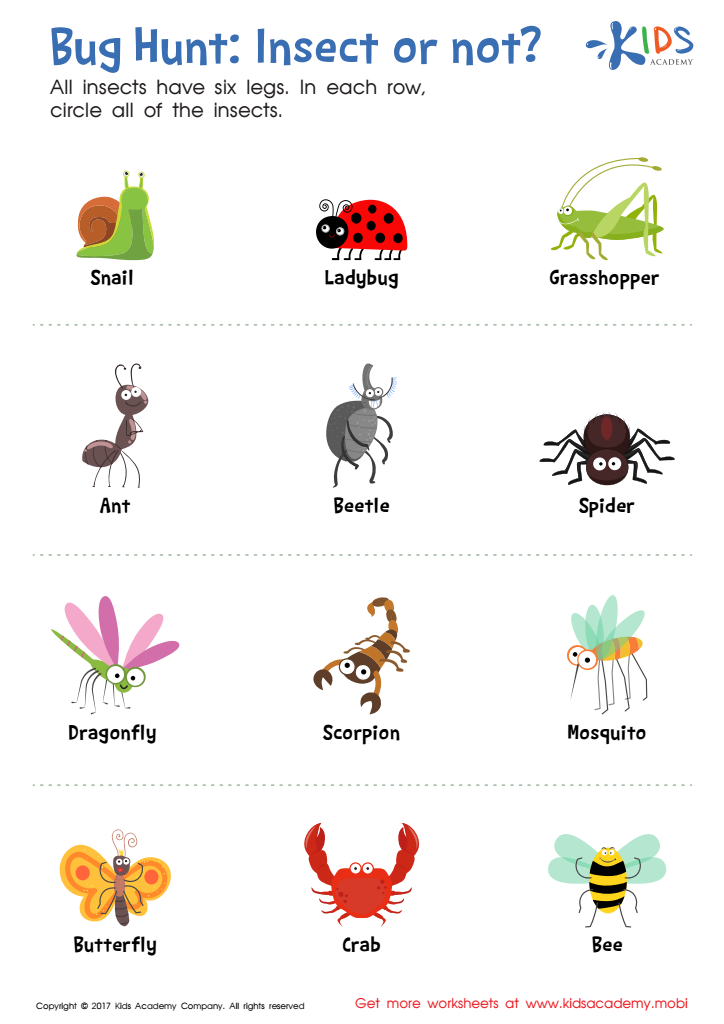
Insect or Not? Worksheet
Worksheet











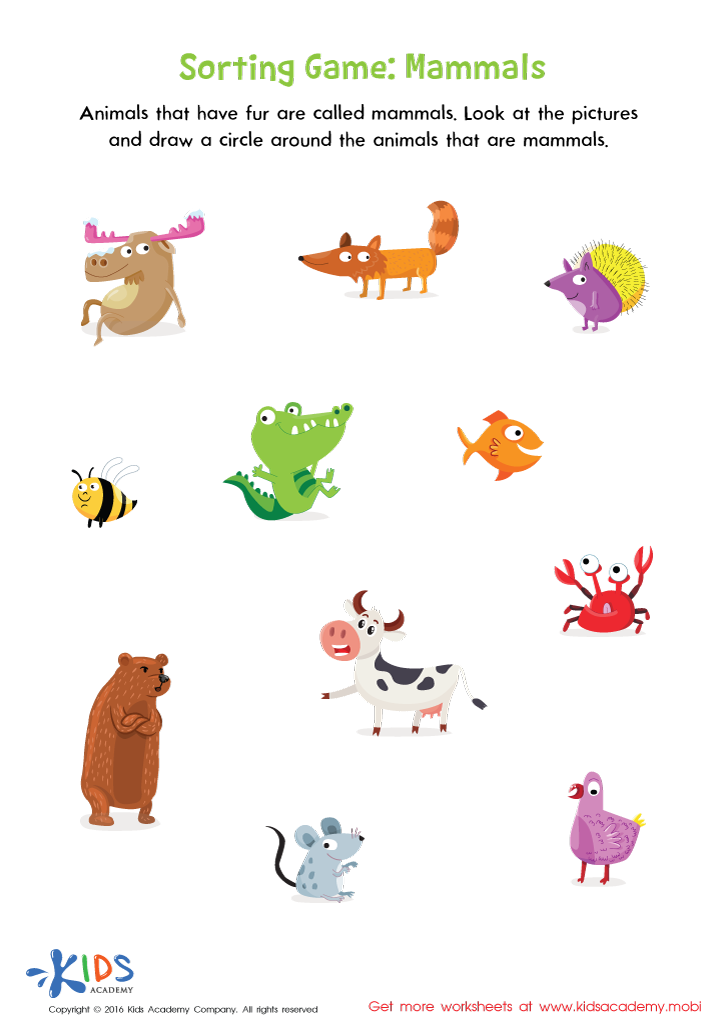
Mammals Sorting Worksheet
They'll practice sorting animals and learn their features with this fun worksheet.
Kids can test their scientific knowledge with this fun worksheet! They'll view pictures of animals, identify mammals based on their fur, and practice sorting them. This colorful worksheet is a great way for kids to learn about the differences between mammals and other animals.
Mammals Sorting Worksheet
Worksheet
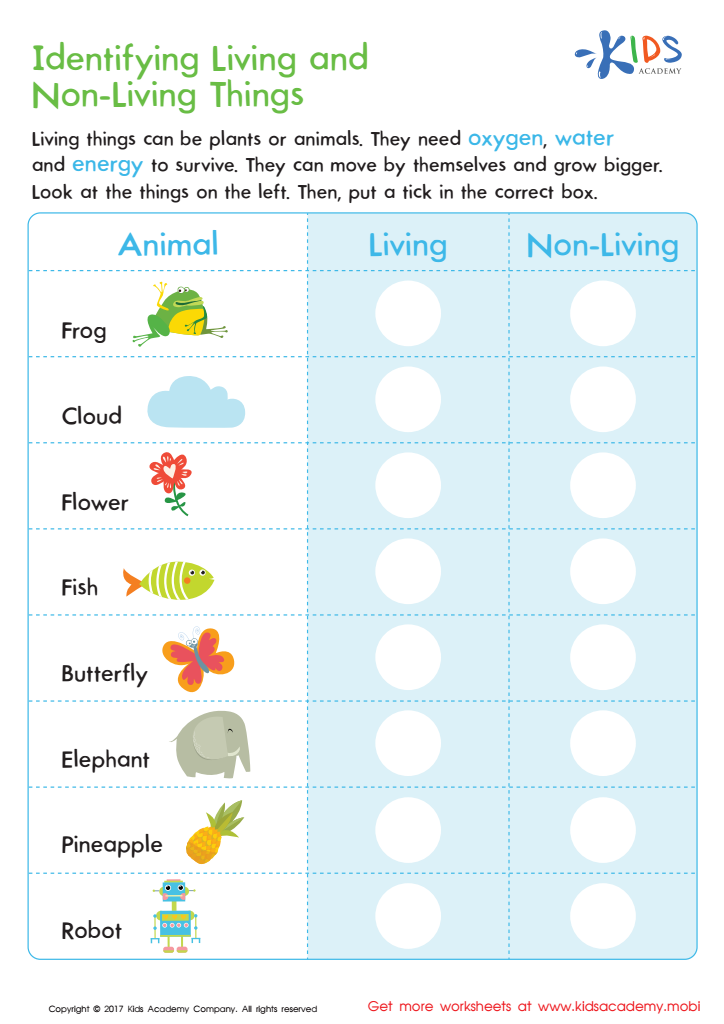
Identifying Living or Non–living Worksheet
Help your child learn to sort and categorize in a new way! Teach them to classify things as living or non-living using this worksheet. It's the perfect way to build their scientific understanding, and to have some learning fun! Print this worksheet and watch them discover the world of science!
Identifying Living or Non–living Worksheet
Worksheet
Join Kids Academy for Free
Who is primarily going to use this learning content?







Categorization skills are vital for young children, especially when learning about plants and animals. For parents and teachers of children aged 3-8, fostering these skills can significantly enhance cognitive development and critical thinking abilities.
At this stage, children are naturally curious and eager to explore their surroundings. By helping them categorize plants and animals, adults encourage executive function skills – the ability to organize, prioritize, and problem-solve. For instance, understanding the differences between herbivores, carnivores, and omnivores cultivates an appreciation for ecosystems and biodiversity.
Additionally, categorization aids language development. As children learn to name and sort various plants and animals, they expand their vocabulary and improve communication skills. It also fosters social interaction, as group activities can promote cooperative learning experiences.
Furthermore, in an era focused on environmental awareness, instilling knowledge about different species fosters a sense of responsibility and protection for nature. Educators and parents who prioritize categorization skills are not only enhancing academic achievement but also nurturing responsible, environmentally-conscious individuals who will make informed choices in the future. Ultimately, supporting categorization skills lays a strong foundation for lifelong learning and respect for the natural world.