Fine motor skills development Letter Recognition Worksheets for Ages 3-9
5 filtered results
-
From - To
Enhance your child's fine motor skills and letter recognition with our engaging worksheets designed for ages 3-9. Perfectly tailored to foster early learning, these worksheets combine fun activities with educational content to build dexterity and hand-eye coordination. Each page offers creative exercises, including tracing, coloring, and puzzles, to make learning the alphabet an enjoyable experience. Ideal for parents, teachers, and caregivers seeking effective tools to support children's developmental milestones, our fine motor skills development letter recognition worksheets are essential for nurturing young learners on their path to literacy. Download now at Kids Academy!
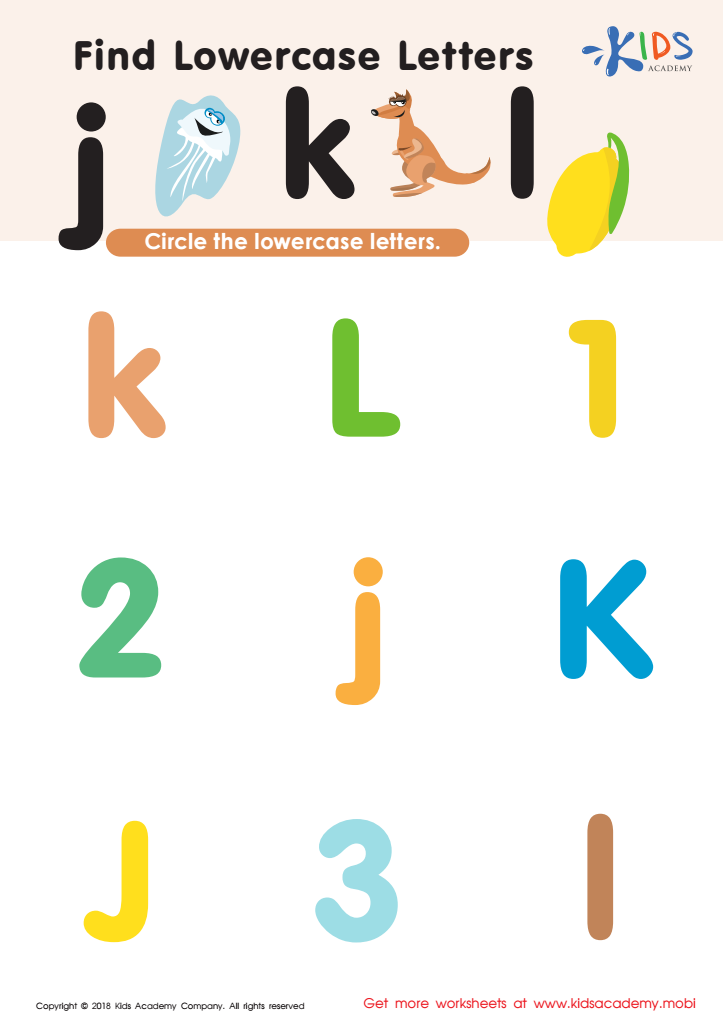
Find Lowercase Letters j k l Worksheet
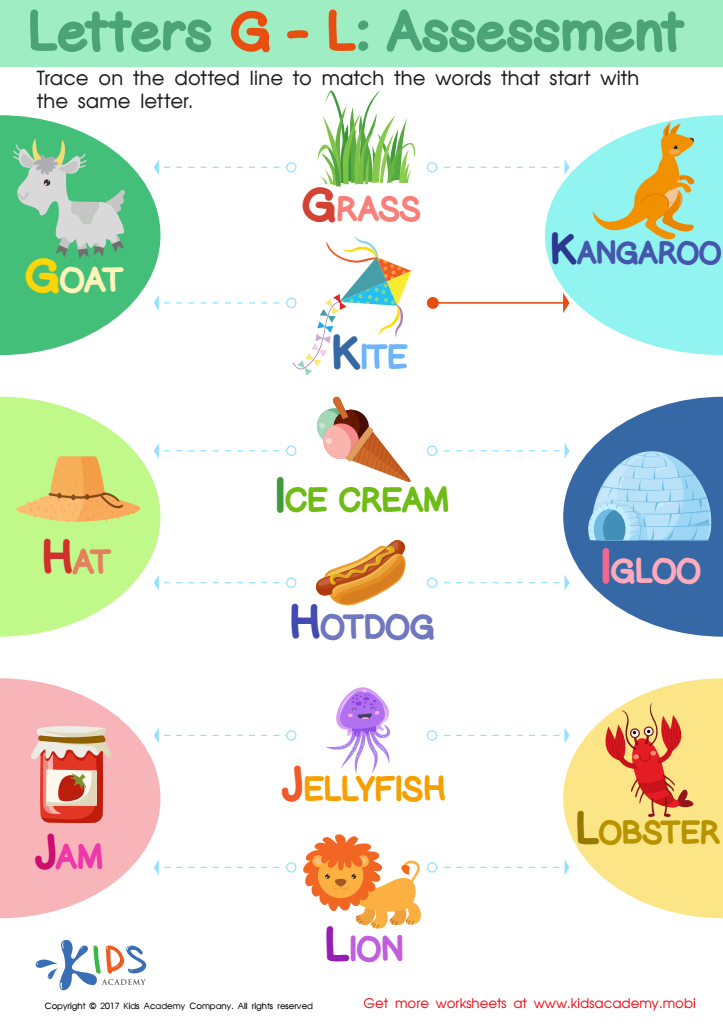
Letters G-L Worksheet
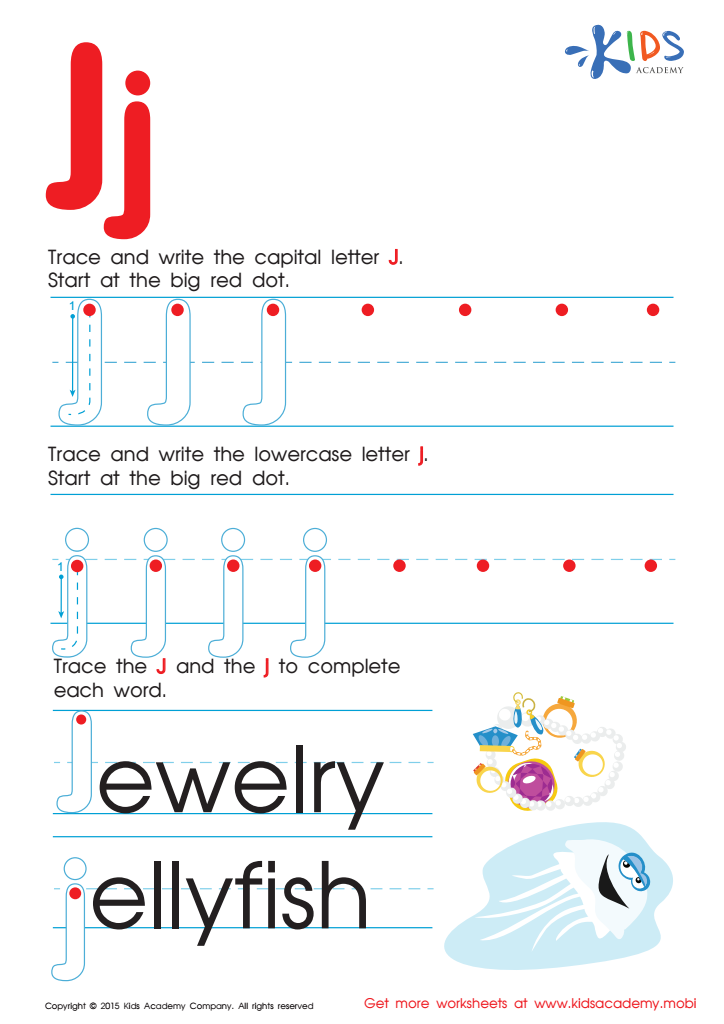
Letter J Tracing Page
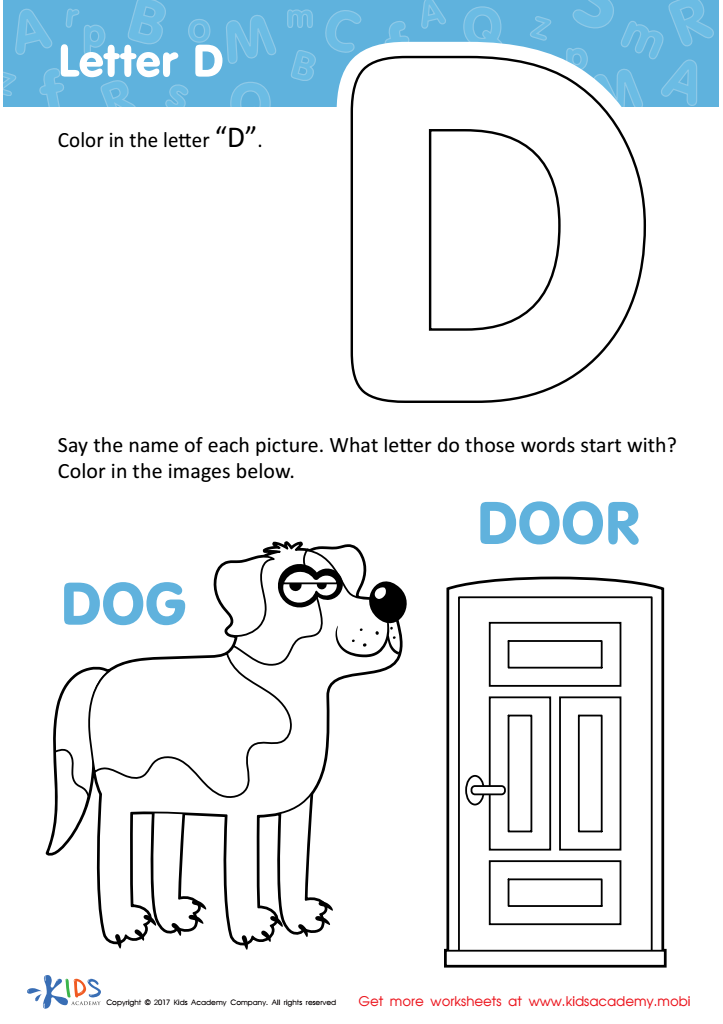
Letter D Coloring Sheet
 Assign to My Students
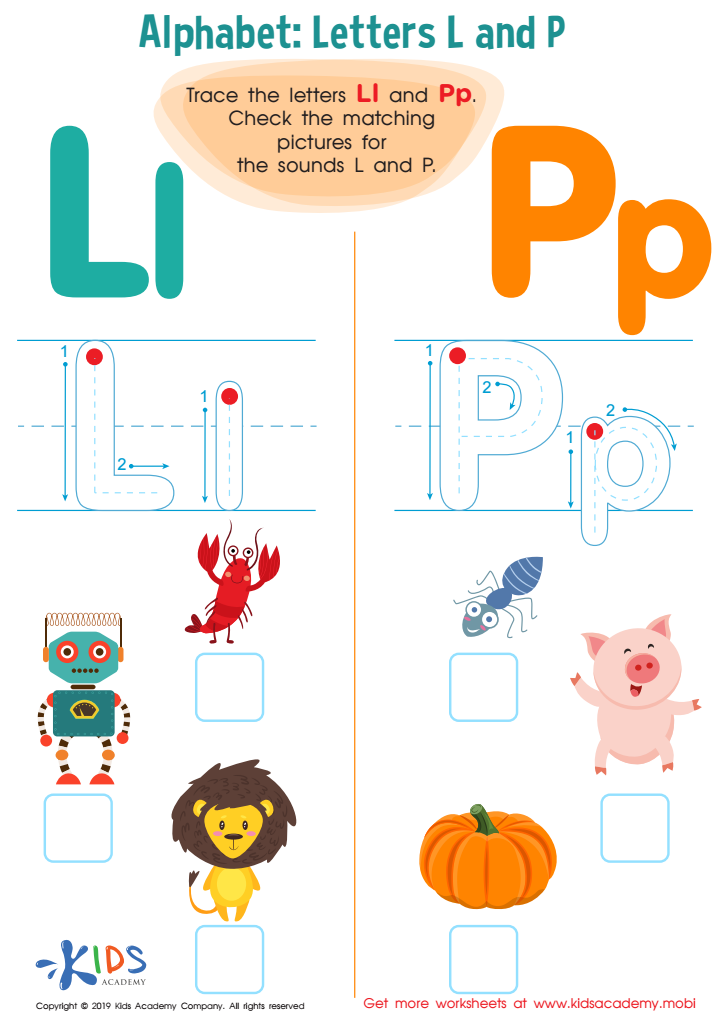
Letter L and P Tracing Worksheet








Fine motor skills and letter recognition are foundational elements in a child's early development that significantly impact their educational journey. Fine motor skills involve the coordination of small muscles in movements—usually involving the synchronization of hands and fingers with the eyes. For children ages 3-9, these skills are crucial in tasks such as writing, cutting with scissors, buttoning clothes, and other daily activities. Strengthening fine motor skills improves a child’s ability to participate independently and successfully in school and at home.
Letter recognition is a critical precursor to reading and writing success. Being able to identify letters and their corresponding sounds forms the basis of literacy, enabling children to decode words, begin forming sentences, and understand written language. Research indicates that children who are proficient in letter recognition typically become more skilled readers and exhibit higher academic achievement later on.
Together, fine motor skills and letter recognition provide children with the tools they need for effective communication and learning. Parents and teachers should actively nurture these skills through activities like drawing, tracing, and engaging in letter-focused games. By fostering these areas of development early on, caregivers and educators set the stage for a lifetime of successful learning and communication. Engaging young learners in hands-on, playful experiences can make a significant difference in their academic and personal lives.







