
Listening skills Letter Sounds Worksheets for Ages 3-9
4 filtered results
Difficulty Level
Grade
Age
-
From - To
Subject
Activity
Standards
Enhance your child's learning journey with our Listening Skills Letter Sounds Worksheets, designed specifically for ages 3-9. These engaging worksheets help young learners develop essential listening abilities while mastering letter sounds. Children will listen to instructions, identify sounds, and complete fun activities that reinforce their understanding of phonetics. With colorful designs and interactive tasks, these worksheets make learning dynamic and enjoyable. Perfect for home or classroom use, they support early literacy development and prepare children for reading success. Encourage your child’s growth in a fun, engaging way, and lay the foundation for lifelong learning. Start their adventure with our worksheets today!
Favorites
With answer key
Interactive
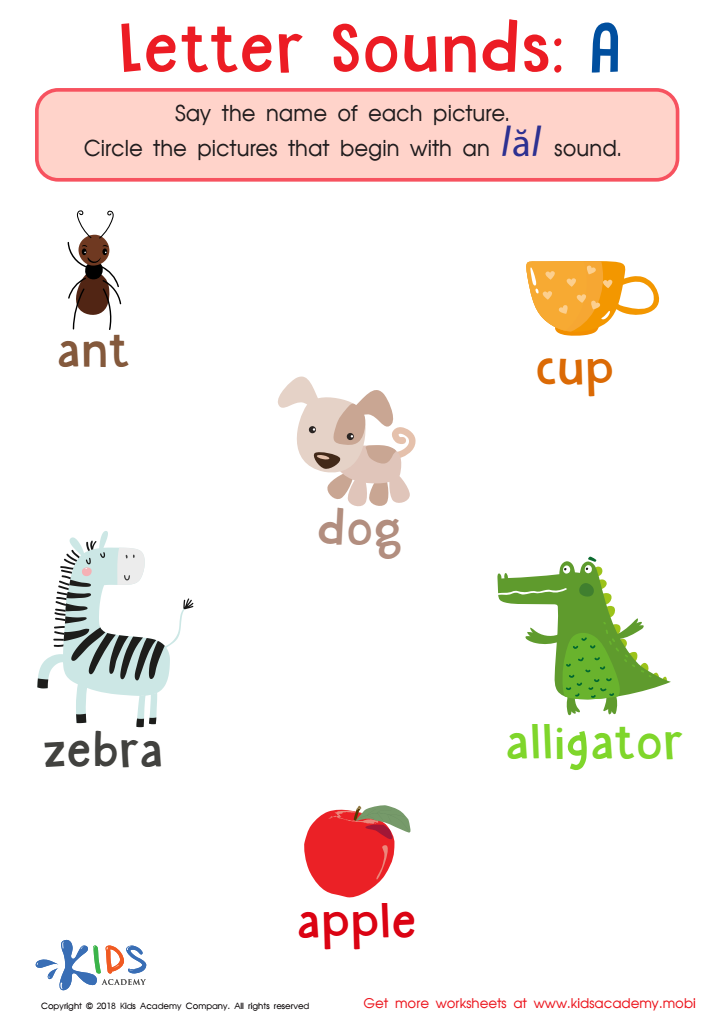
Letter A Sounds Worksheet
Encourage your new reader to practice the «ă» sound with this fun, free PDF worksheet. With the help of picture clues, they'll say the name of each word and trace circles around the items that start with «ă». This worksheet is an effective way to boost beginning sound skills while having fun!
 Assign to My Students
Letter A Sounds Worksheet
Worksheet
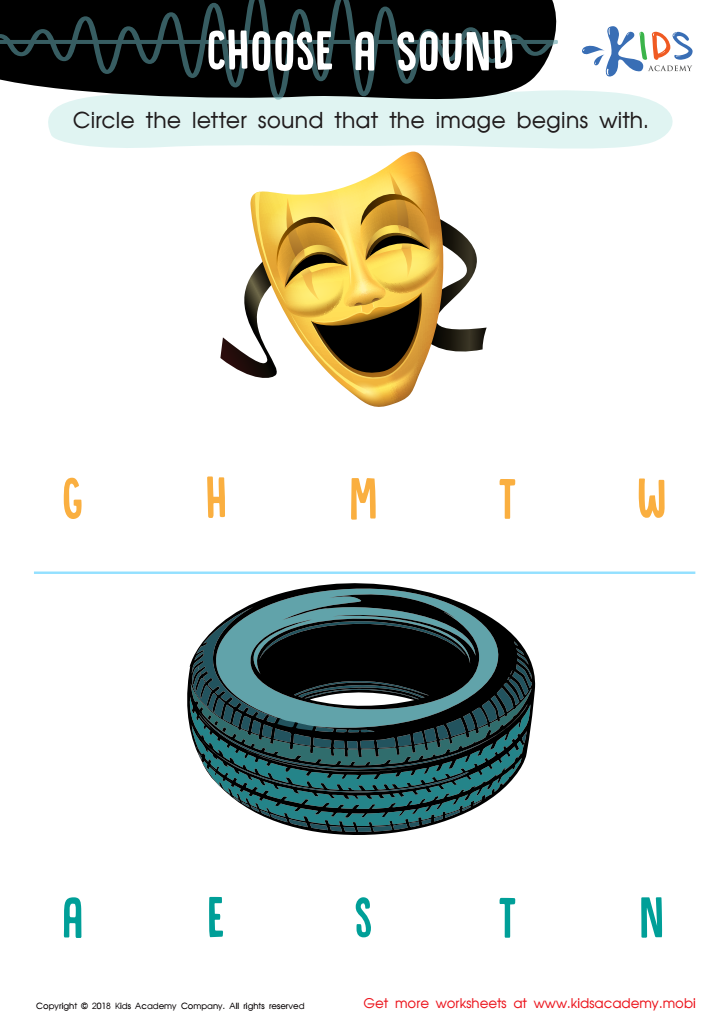
Choose a Sound Worksheet
Help your child hone pre-reading skills with this colorful worksheet! They'll practice tracing letter sounds, develop phoneme awareness, and gain confidence. Plus, it's a fun way to work on their fine motor skills.
Choose a Sound Worksheet
Worksheet
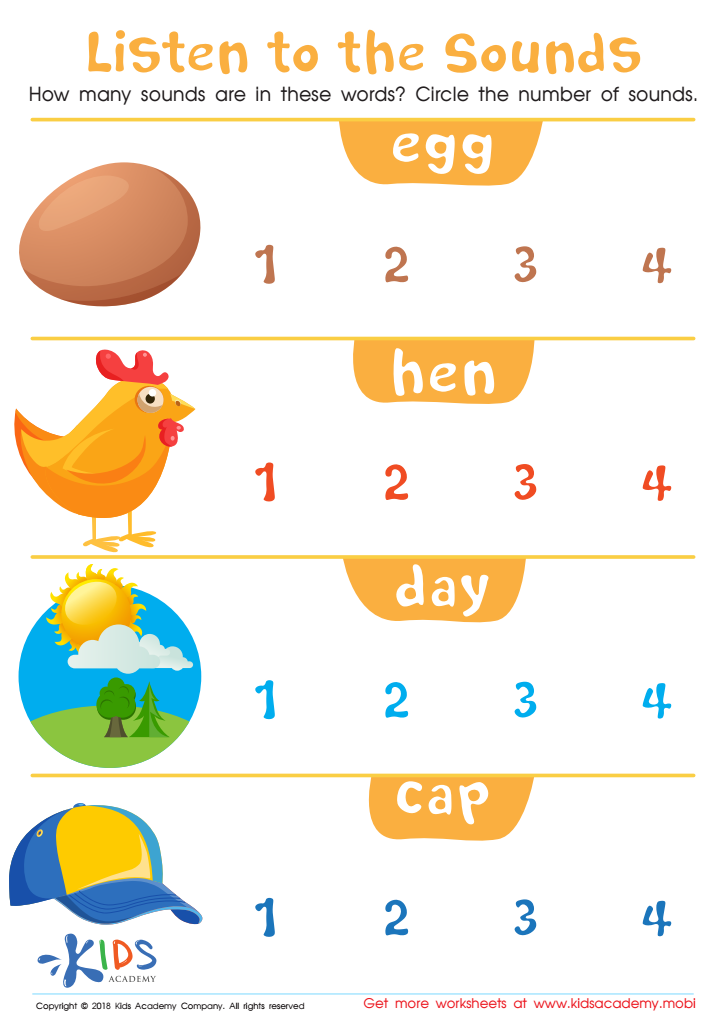
Listen to the Sounds Worksheet
This worksheet builds emerging readers' skills in using sounds for reading and spelling. It helps strengthen auditory processing by having them count the sounds in each word, then trace the corresponding number. Fun and cheerful!
Listen to the Sounds Worksheet
Worksheet
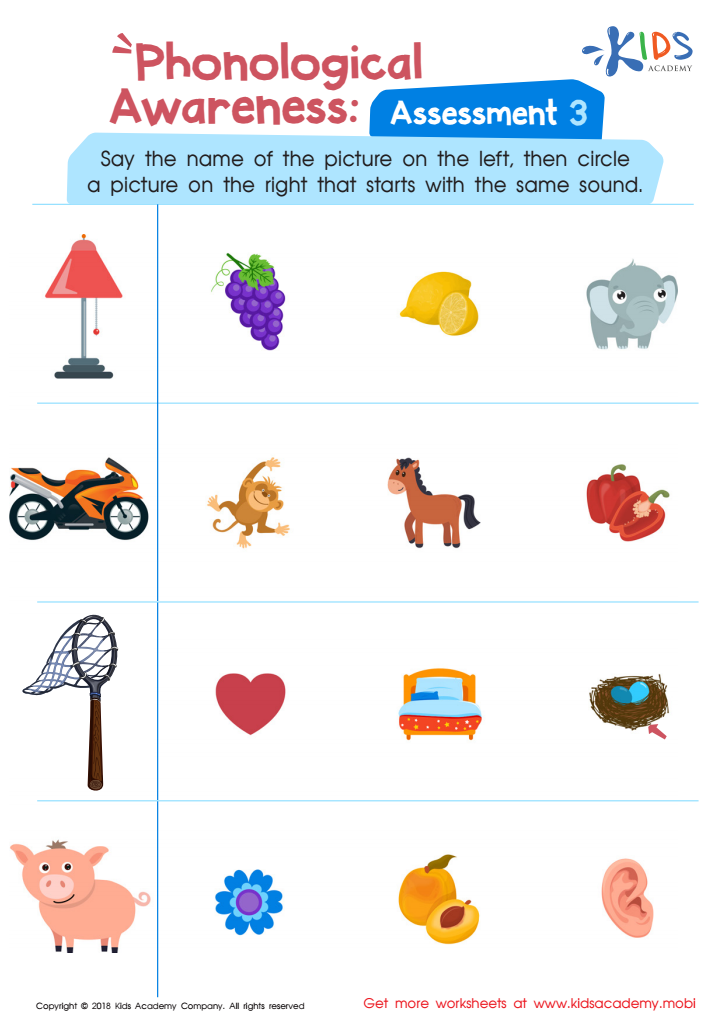
Phonological Awareness: Assessment 3 Worksheet
Test kids' reading readiness with a phonological awareness worksheet! With this PDF exercise, encourage children to name each picture aloud and match left to right. Help them learn to recognize word sounds at the start, middle and end of words. They'll be sure to remember that lamp doesn't sound like elephant!
Phonological Awareness: Assessment 3 Worksheet
Worksheet
Join Kids Academy for Free
Who is primarily going to use this learning content?








Listening skills and understanding letter sounds are crucial components of early literacy development, particularly for children aged 3 to 9. These foundational skills lay the groundwork for successful reading and writing, making them essential for academic achievement.
First, listening skills enhance a child’s ability to process and interpret spoken language. By honing these skills, children learn to follow directions, comprehend stories, and engage in discussions, all of which are essential for classroom participation and social interaction. For young learners, being adept at listening fosters the confidence to express themselves and share ideas.
Moreover, recognizing letter sounds, or phonemic awareness, is vital in learning to read. Children who can hear and identify sounds in words are better equipped to decode new vocabulary and spells, setting the stage for more advanced language skills. When parents and teachers prioritize these skills, they provide children with the tools necessary for literacy development.
Lastly, early intervention can close learning gaps and cultivate a love for reading from a young age. By fostering listening skills and letter sound recognition, parents and teachers can significantly impact a child’s educational journey, empowering them to become proficient, confident, and enthusiastic learners. Thus, prioritizing these skills is key to nurturing lifelong success.







