Rhyming skills development Rhyming Worksheets for Ages 3-9
4 filtered results
-
From - To
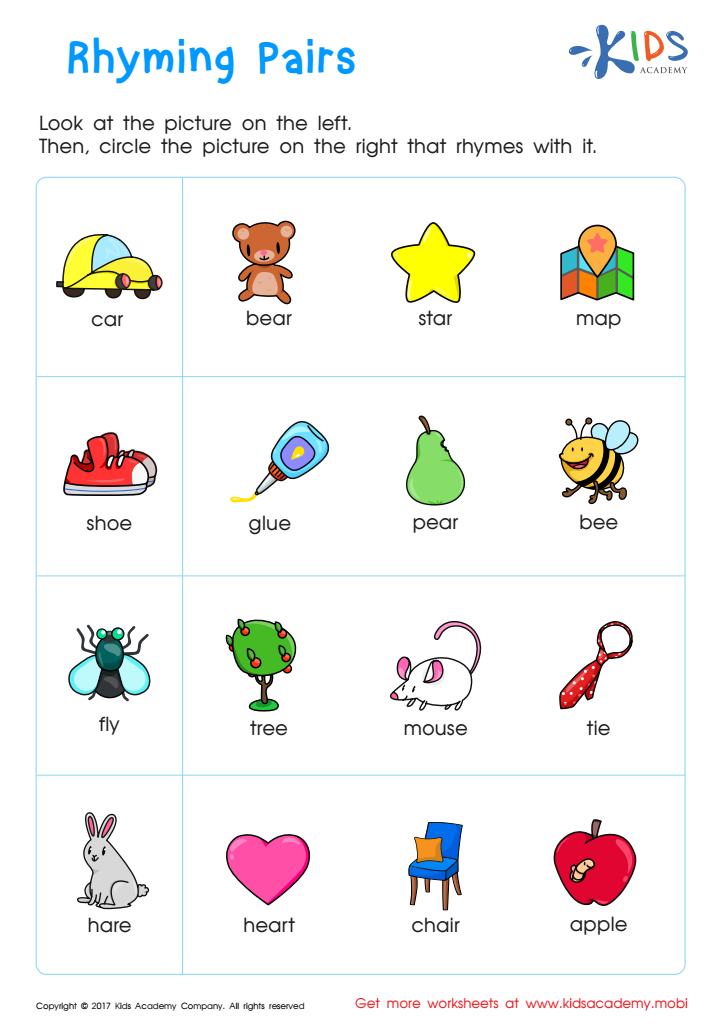
Boost your child's language skills with our Rhyming Worksheets designed for ages 3-9! These engaging resources help young learners develop their rhyming abilities through fun exercises and interactive activities. Tailored to enhance phonemic awareness, our worksheets encourage children to recognize patterns in sounds, vital for early literacy. Kids will enjoy matching words, completing rhymes, and playful exercises that build confidence and creativity. Perfect for both classroom and home learning, our materials are easy to use and promote a love for language. Start your child’s journey towards strong reading skills today with our comprehensive rhyming worksheets!
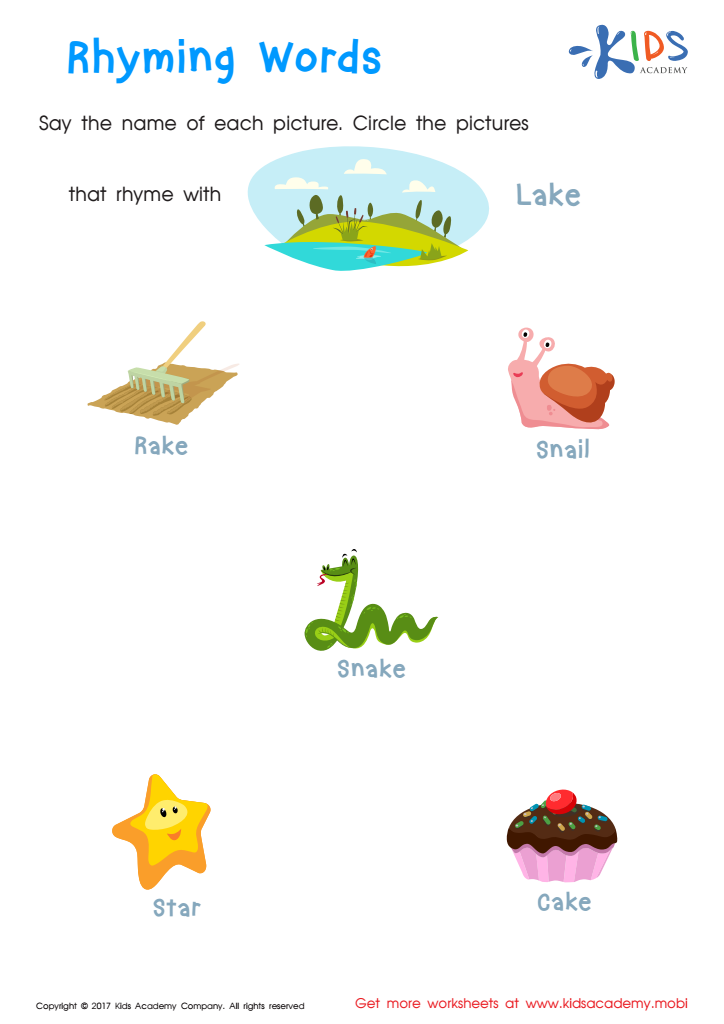
Rhyming Words Rhyming Worksheet
 Assign to My Students
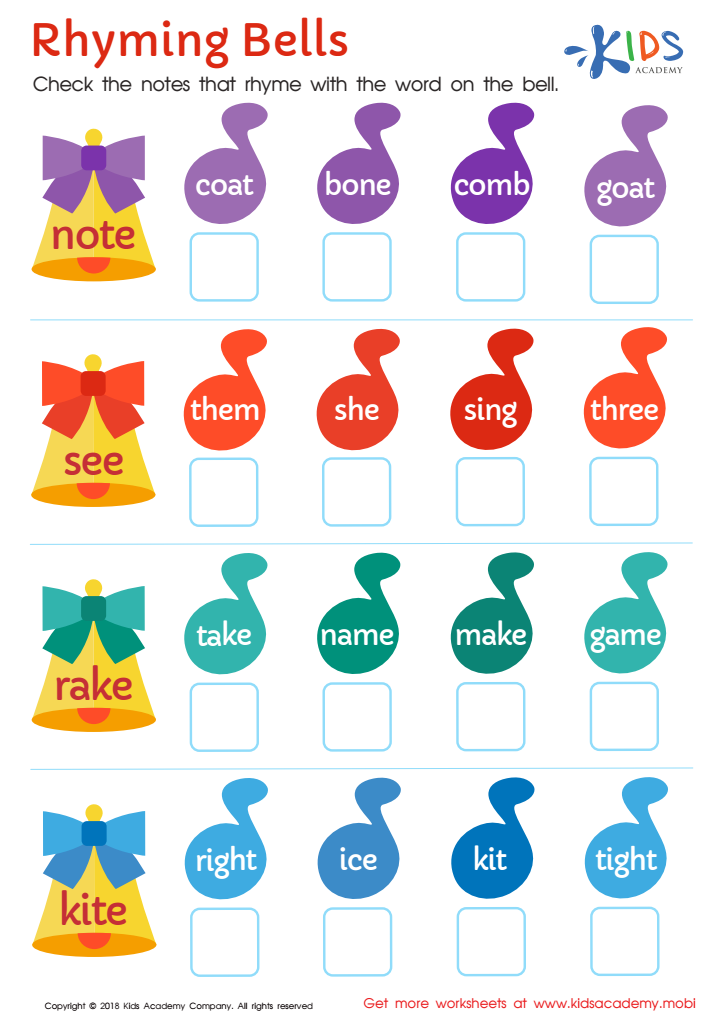
Rhyming Bells Worksheet
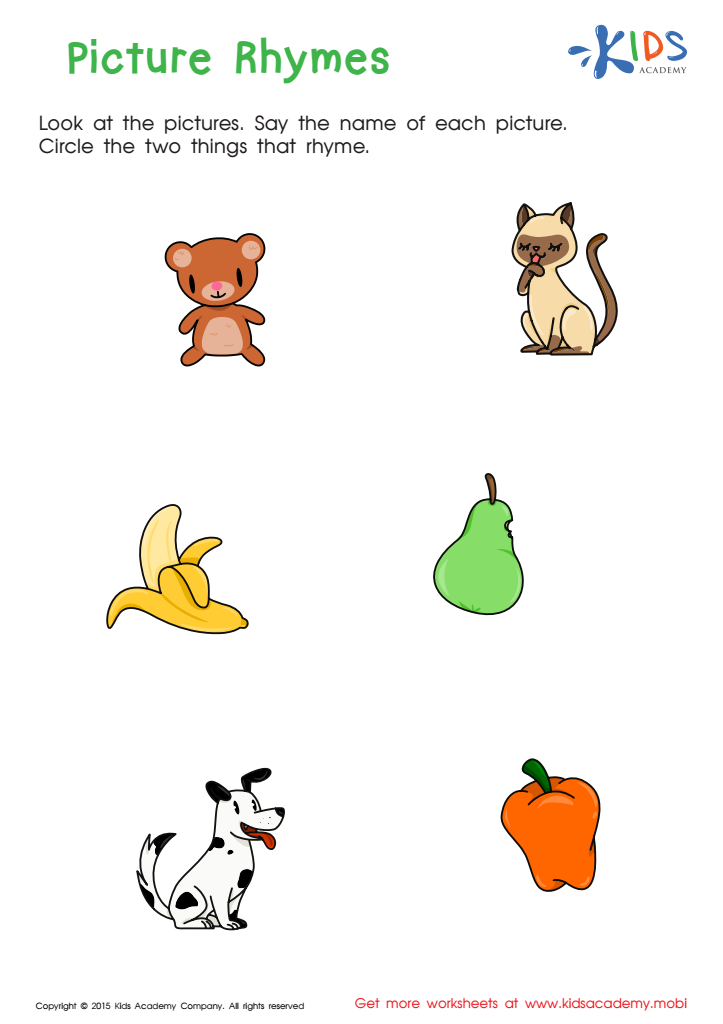
First Words: Picture Rhymes Worksheet








Rhyming skills are crucial for children aged 3-9 because they lay the foundation for language development, literacy, and phonemic awareness. When children engage with rhymes, they develop their listening skills and become more attuned to the sounds of language. This heightened awareness helps them decode words later on, which is essential for reading proficiency.
Rhymes can enhance vocabulary acquisition and comprehension as they often introduce playful language and new words through repetition. Moreover, rhyming helps children with the rhythms and patterns of language, making it easier for them to grasp the structure of sentences and narratives.
Additionally, rhyming activities can foster social skills and emotional development. Singing rhymes, participating in rhyming games, or sharing stories with rhymes encourage collaborative learning and interpersonal interaction.
For teachers and parents, noticing and nurturing rhyming skills empowers them to support their child's overall cognitive and linguistic development. Incorporating playful and engaging rhyming exercises into daily routines can make learning enjoyable, thereby fostering a positive attitude toward reading and language exploration that will benefit children throughout their educational journey. Building strong rhyming skills can ultimately lead to greater academic success in literacy and beyond.







