Vocabulary expansion Rhyming Worksheets for Ages 3-9
5 filtered results
-
From - To
Boost your child's language skills with our engaging "Vocabulary Expansion Rhyming Worksheets" designed for ages 3-9. These fun-filled worksheets are crafted to enhance your child's phonemic awareness, vocabulary, and reading abilities through the captivating power of rhyme. With a variety of colorful, age-appropriate activities, your little learner will match, create, and explore rhyming words, making learning a joyous adventure. Whether at home or in the classroom, these worksheets are perfect for early readers to build a strong literacy foundation while enjoying playful and interactive experiences. Unlock the magic of rhyming and watch your child's vocabulary soar!
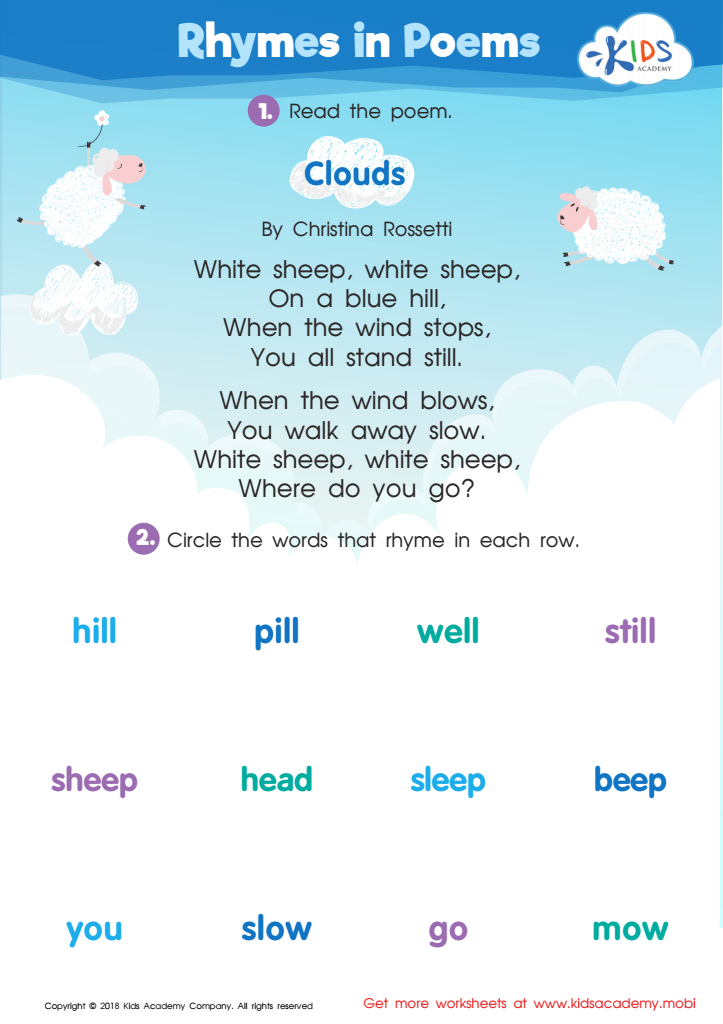
Rhymes in Poems Worksheet
 Assign to My Students
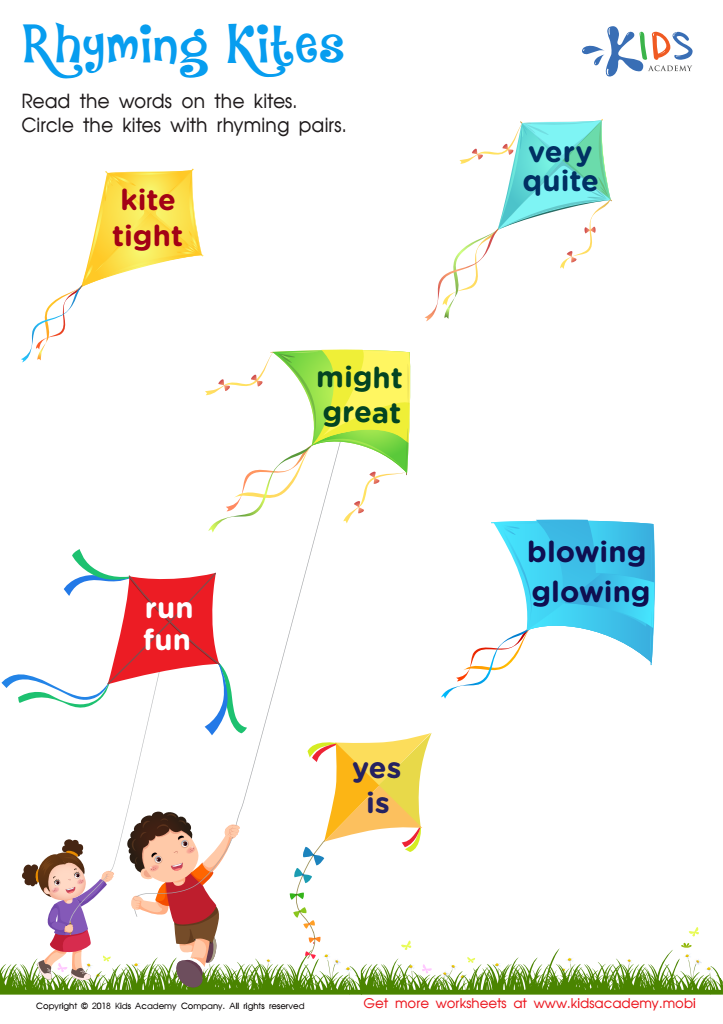
Rhyming Kites Worksheet
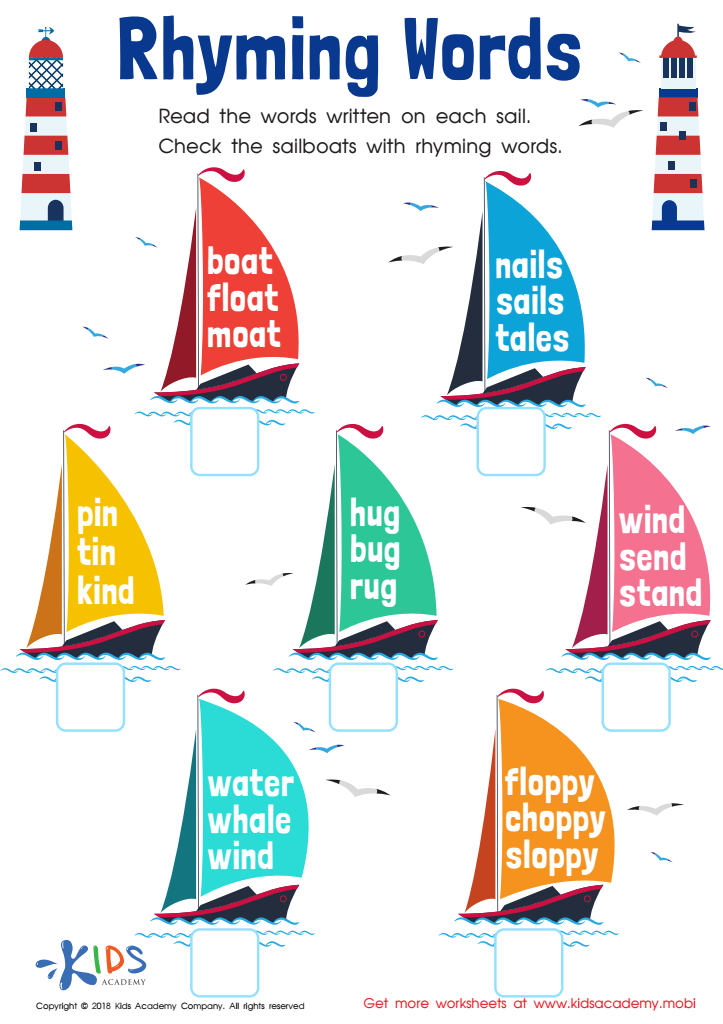
Rhyming Words Worksheet
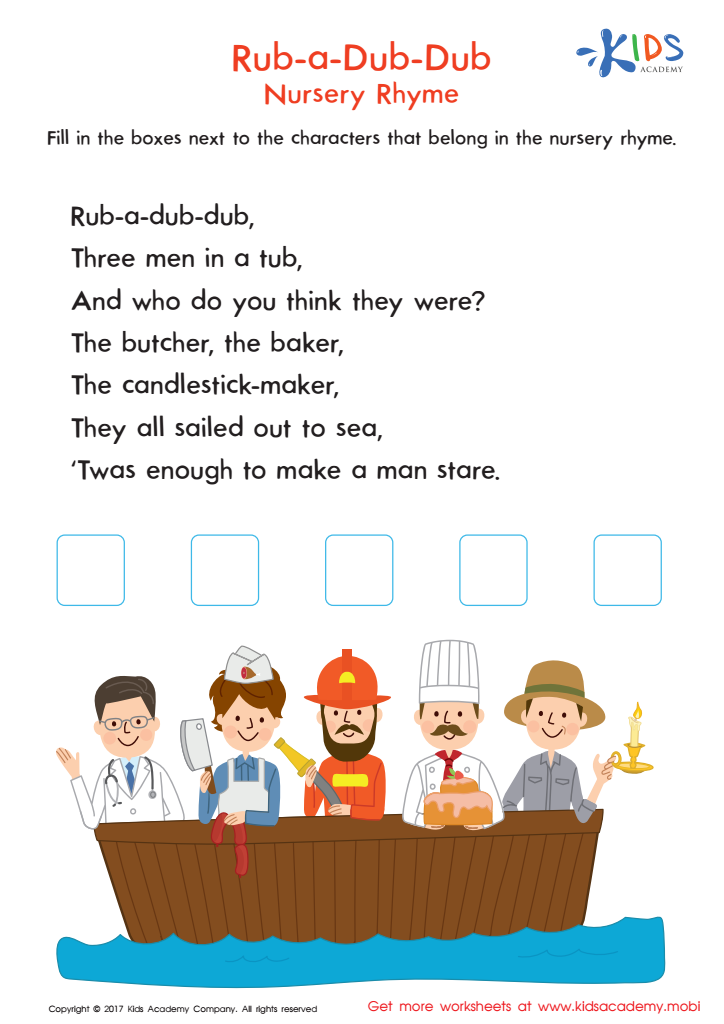
Rub a Dub Dub Printable
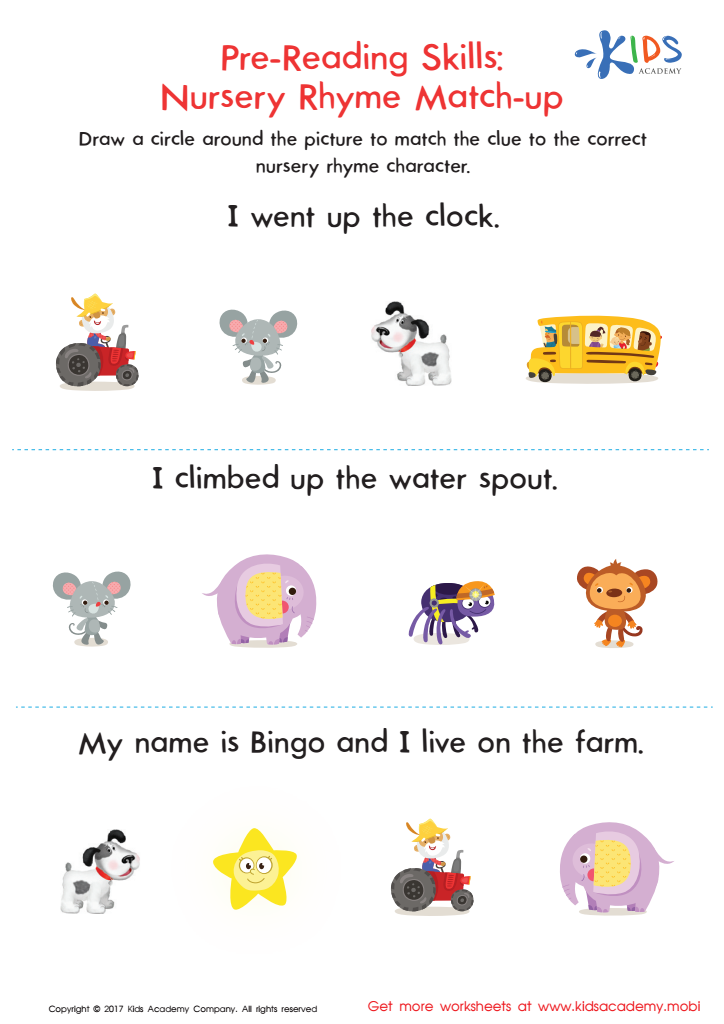
Nursery Rhyme Match–Up Worksheet







Vocabulary expansion through rhyming is crucial for children aged 3-9 because it lays a strong foundational block for language development and literacy skills. Rhyming helps children recognize patterns and sounds, making it easier for them to predict other words, also known as phonemic awareness. This skill is essential for developing reading abilities.
Engaging young minds with rhyming words fosters better memory and cognitive organization, aiding effective communication. When children frequently hear rhyming words, they become more adept at understanding the structure and function of language, which boosts their confidence in speaking and writing. Furthermore, rhymes make learning fun and engaging, fostering a positive relationship with words at an early age.
Parents and teachers who emphasize vocabulary expansion through rhymes provide children with a toolkit for academic success. Expanded vocabularies support better comprehension skills, essential for all subjects, not just language arts. A larger vocabulary also improves children’s ability to express their thoughts, emotions, and creative ideas, contributing to emotional intelligence and social skills.
In essence, focusing on vocabulary growth through rhyming gives young children the resources they need to navigate the world of literacy and communication effectively, benefiting them academically, socially, and emotionally as they grow older.







