Reading Skills Vowels Worksheets for Ages 3-9
5 filtered results
-
From - To
Nurture your child's reading abilities with our "Reading Skills Vowels Worksheets" designed for ages 3-9. These interactive and engaging worksheets help young learners master vowel sounds, crucial for developing strong reading foundations. Tailored to foster phonemic awareness, the activities include fun matching exercises, vibrant illustrations, and rewarding puzzles. Our expertly crafted worksheets make learning vowels enjoyable, building confidence and proficiency in early readers. Perfect for parents and educators aiming to supplement classroom instruction or provide at-home practice, these worksheets support seamless and enjoyable reading skills development. Explore the potential of your child's literacy with our dedicated educational resources!
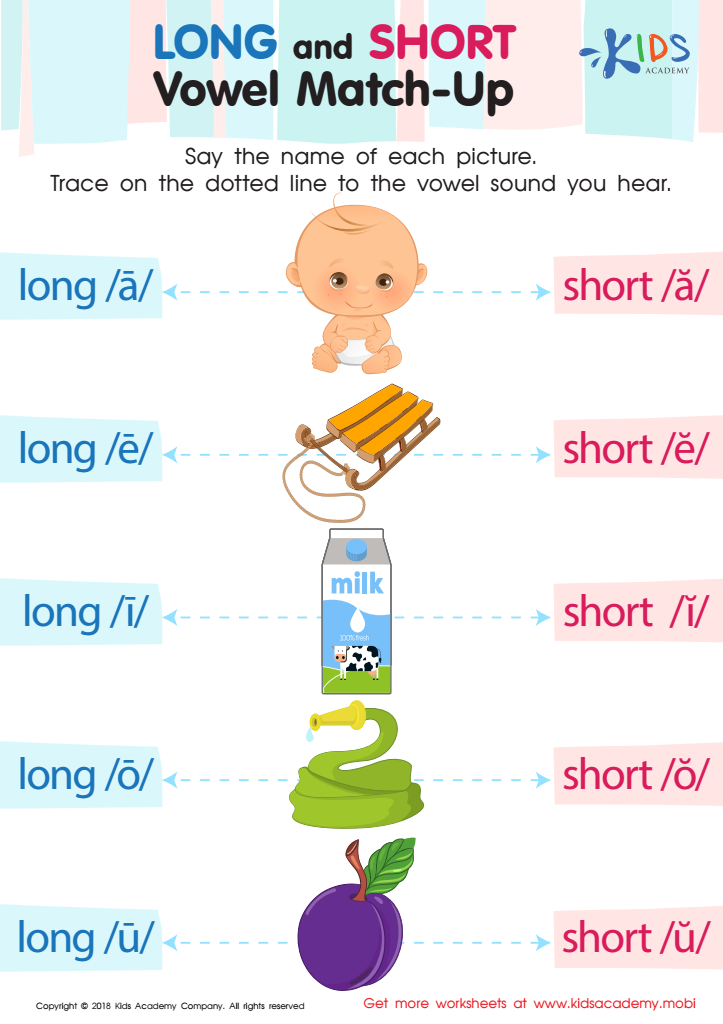
Long and Short Vowel Match up Reading Worksheet
 Assign to My Students
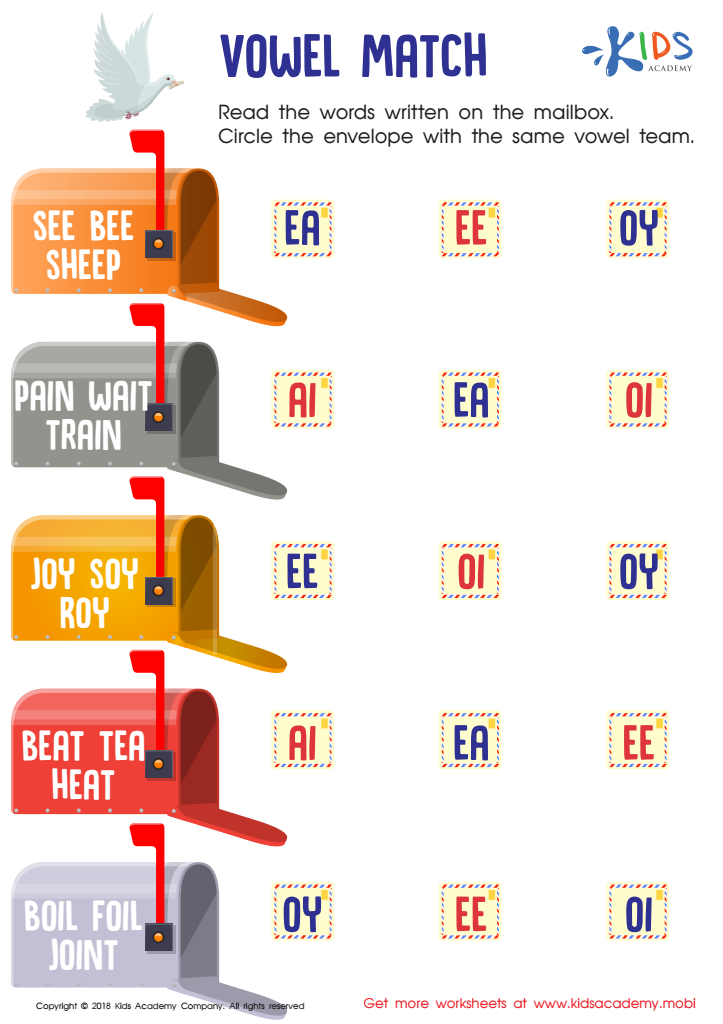
Vowel match Worksheet
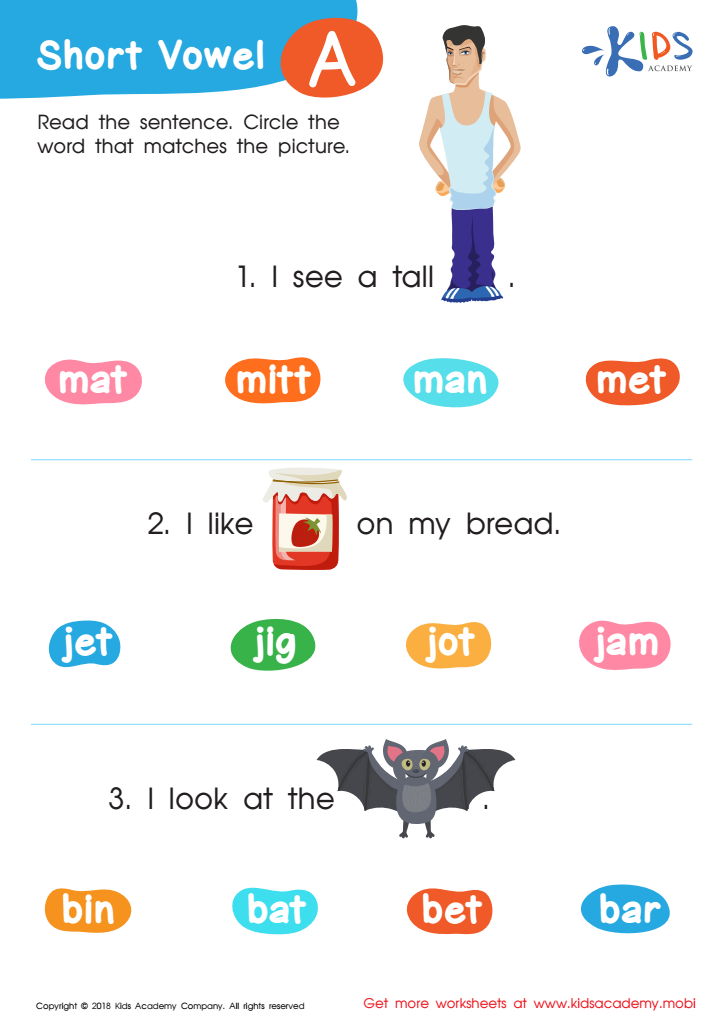
Short Vowel /a/ Worksheet
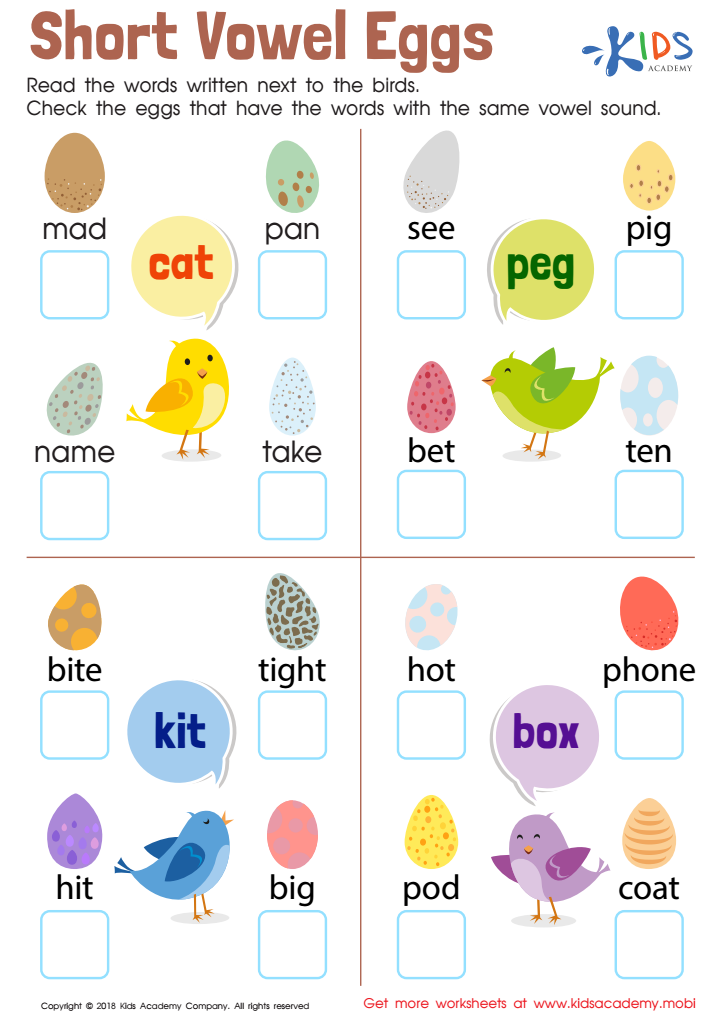
Short Vowel Eggs Worksheet
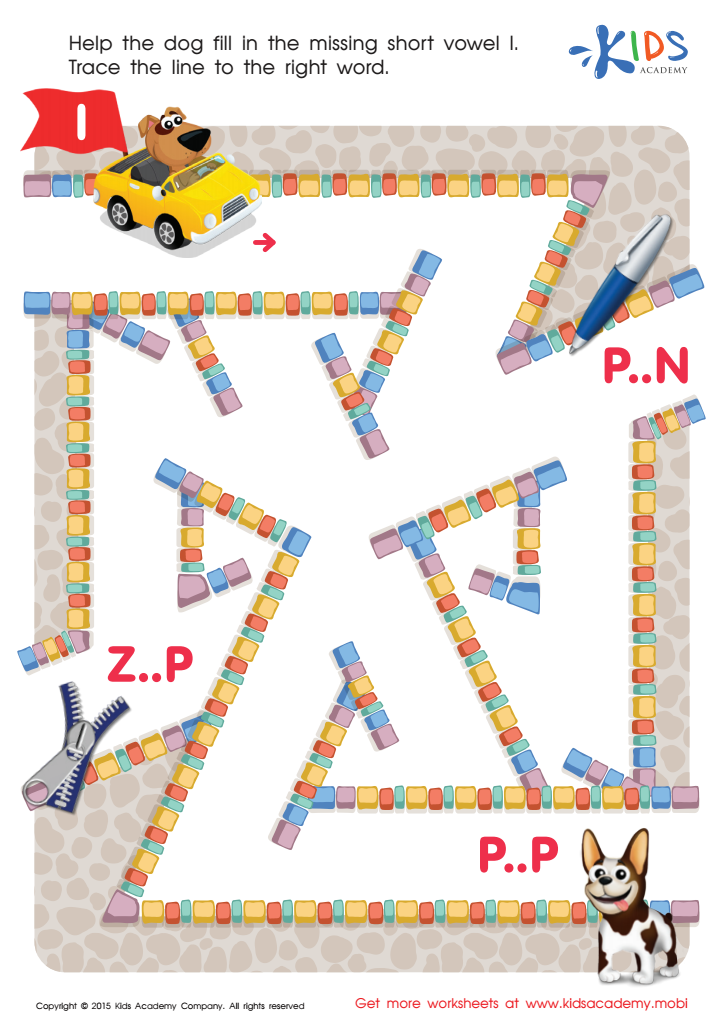
Short Vowel Sound I Worksheet





Understanding and mastering vowel sounds are crucial for young children aged 3-9 as they form the foundation of reading proficiency. Vowels are essential components of nearly all words in the English language, and recognizing them helps children decode words, improving their reading fluency and comprehension. During these formative years, children’s brains are highly receptive to learning language, and strong early reading skills contribute to academic success and a lifelong love of reading.
Parents and teachers should care about teaching vowel sounds because it builds phonemic awareness, which is the ability to hear and manipulate sounds in words. This skill is a key predictor of future reading success. Activities like singing vowel songs, engaging in rhyming games, and practicing phonics can make learning fun and effective for young children.
Moreover, reading skills positively impact overall cognitive development. They enhance children's vocabulary, improve memory, and foster creativity and concentration. Good reading skills also lead to improved self-esteem and a more significant enthusiasm for learning. As children notice their progress, they gain confidence in their abilities, setting a positive trajectory for all future learning endeavors.
Incorporating consistent and enjoyable learning experiences around vowel sounds can lead to significant educational benefits, making it essential for both parents and teachers to invest time and effort in developing these skills.







