
Community understanding Worksheets for Ages 3-9
3 filtered results
Difficulty Level
Grade
Age
-
From - To
Subject
Activity
Standards
Discover our engaging Community Understanding Worksheets designed for children ages 3-9! These thoughtfully crafted resources promote social awareness and teach essential skills about community roles, relationships, and responsibilities. Through interactive activities, children will explore their neighborhoods, recognize different professions, and understand the importance of helping others. Our worksheets are perfect for home or classroom use, fostering a sense of belonging and teamwork. Easy to access and print, they are ideal for enhancing your child's learning experience in a fun and engaging way. Equip your young learners with the knowledge to navigate and appreciate their communities with confidence and curiosity!
Favorites
With answer key
Interactive
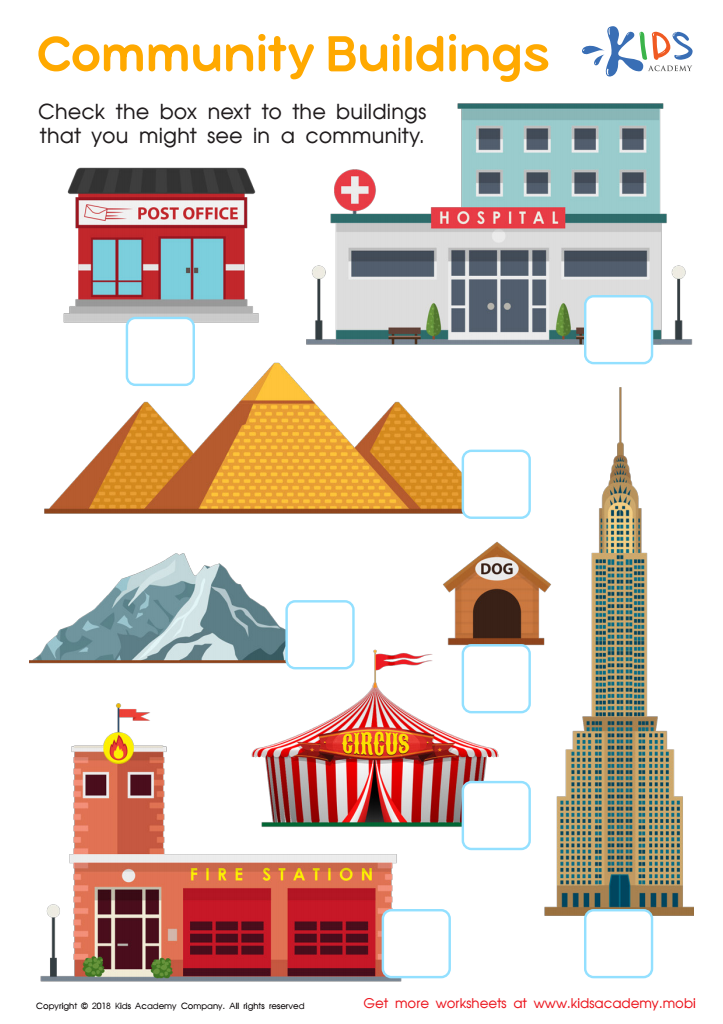
Community Buildings Worksheet
Test your child's knowledge of local buildings with this worksheet. Ask them to name the buildings in the images, then check the boxes next to the ones they might see in a community. It's a great way to explore the places you visit together.
 Assign to My Students
Community Buildings Worksheet
Worksheet
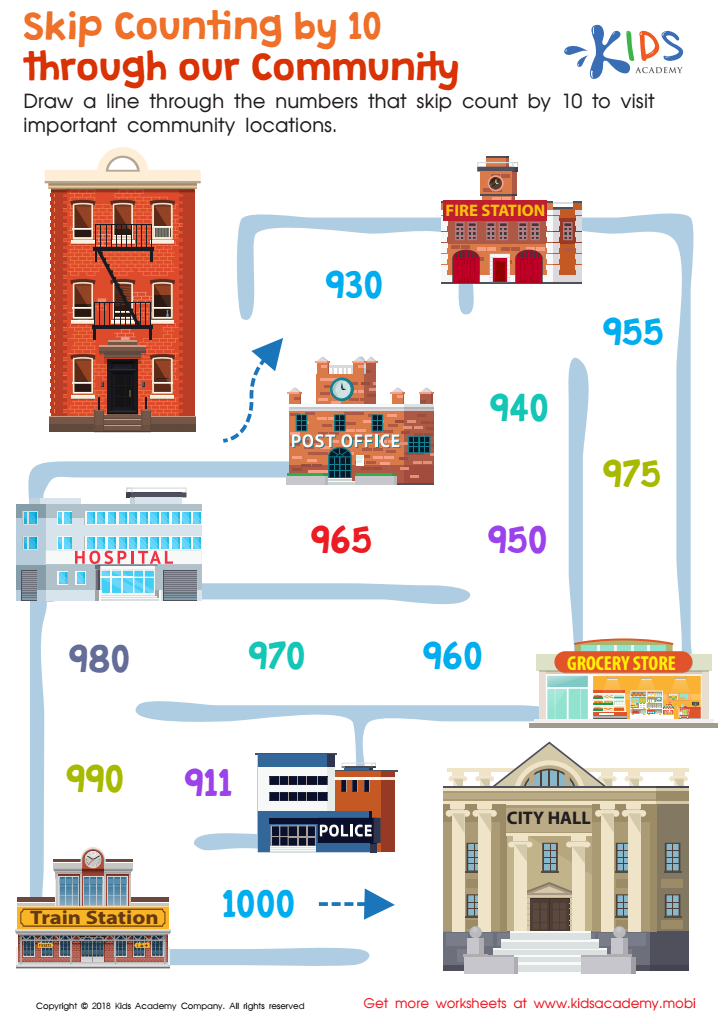
Skip Counting by 10 Through Our Community Worksheet
Our kids need to 'make a ten' and skip count by tens to boost their speed and accuracy in math. This cool, free worksheet takes them on a journey through their local community to practice counting by tens. They'll work on social studies and fine motor skills while having fun with the maze they get to count by tens in!
Skip Counting by 10 Through Our Community Worksheet
Worksheet
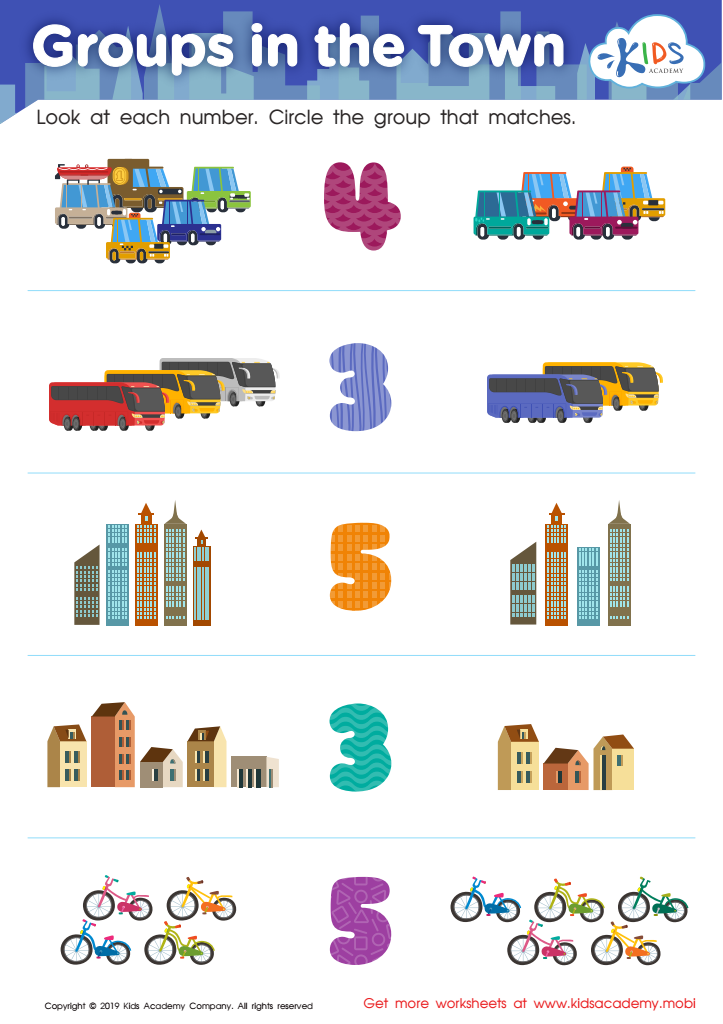
Groups in the Town Worksheet
Help your kids learn to count with this worksheet! Look at each number of objects and circle the group that matches. This simple activity can give them extra practice to support what they learn in school. Learning doesn't have to be a struggle; make it fun and interactive with this worksheet.
Groups in the Town Worksheet
Worksheet
Join Kids Academy for Free
Who is primarily going to use this learning content?








Understanding the community is crucial for children aged 3 to 9 as it lays the foundation for their social development, empathy, and sense of belonging. During these formative years, children are naturally curious about the world around them. Engaging them in community activities helps them learn about diversity, culture, and local history.
Moreover, fostering community understanding encourages collaboration and relationships. It teaches children the importance of teamwork and communication, which are essential skills in their educational and personal lives. Involving parents and teachers in community-oriented activities creates a united front, enhancing the learning experience and modeling proactive civic behavior.
Additionally, comprehension of community resources—like parks, libraries, and local organizations—instills confidence in children, allowing them to navigate their surroundings effectively. This bond with the community strengthens their emotional security, crucial for their overall development.
Promoting community understanding also supports inclusivity and respect for differences. When children are exposed to various perspectives, they develop empathy and form a foundation for respectful relations in the future. In essence, community understanding cultivates well-rounded individuals equipped to contribute positively to society. Thus, it is vital for parents and teachers to prioritize this aspect of learning.








