
Comparing numbers Worksheets for Ages 3-9
12 filtered results
Difficulty Level
Grade
Age
-
From - To
Subject
Activity
Standards
Introduce your young learners to the world of numbers with our "Comparing Numbers Worksheets for Ages 3-9." Specially designed to boost early math skills, these engaging printables help children grasp concepts of greater than, less than, and equal to with ease. Kids Academy offers a variety of activities, including fun illustrations, number lines, and hands-on exercises to make comparing numbers an enjoyable learning journey. Perfect for parents and educators, these worksheets are tailored to different learning stages, ensuring a solid foundation in math. Foster confidence and competence in numerical comparisons with our expertly crafted resources. Download today!
Favorites
With answer key
Interactive
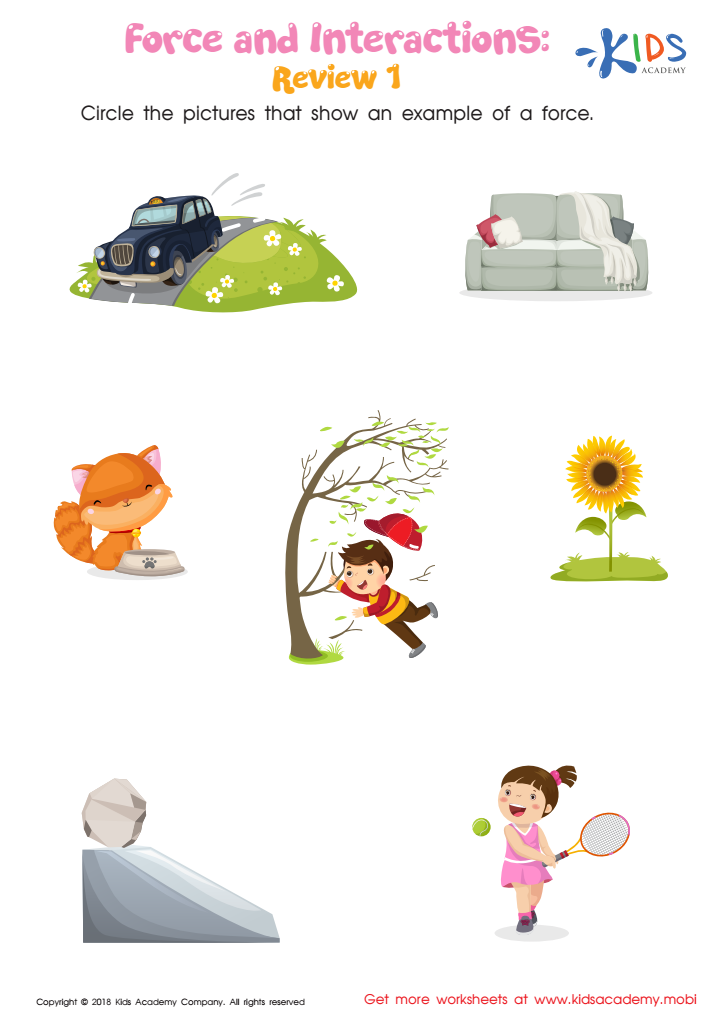
Force and Interactions: Review 1 Worksheet
See how well your child can identify the different forces.
Explain to your child that force is what causes objects to move, such as wind blowing a branch or an object going down a ramp. Ask them to circle images that show a force and assess how well they can identify them.
 Assign to My Students
Force and Interactions: Review 1 Worksheet
Worksheet
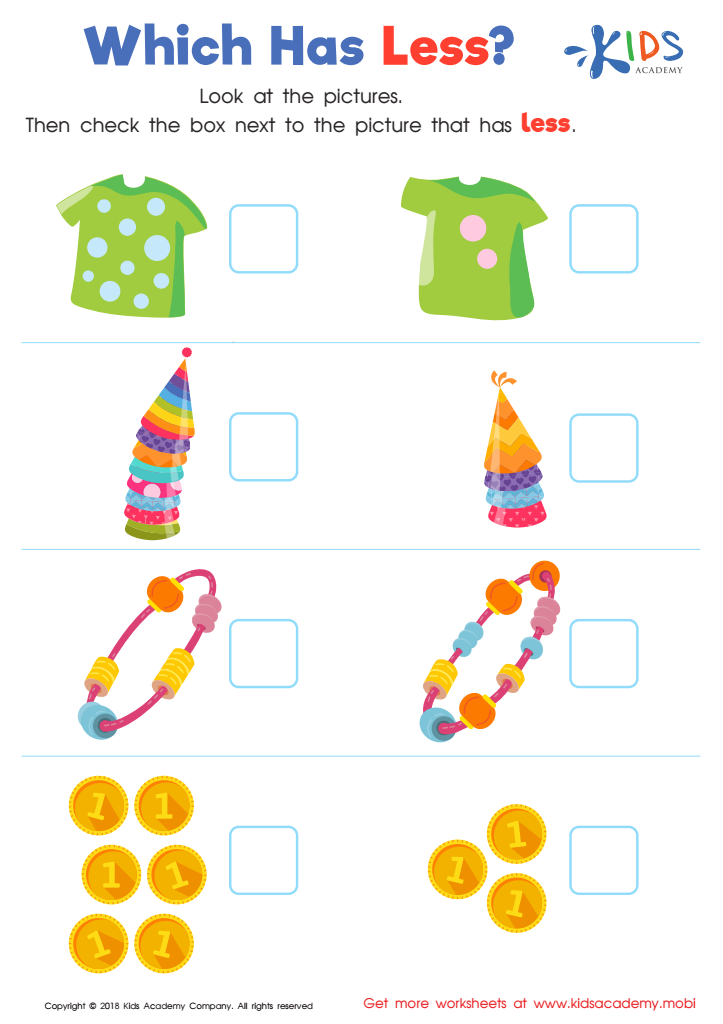
Which Has Less? Worksheet
Kids can develop their number sense by comparing and contrasting objects to identify which has less. This worksheet helps them practice: it's bright and colorful, featuring familiar objects and pictures to count, strengthening basic counting skills. It's the perfect warm-up for comparing and contrasting larger numbers.
Which Has Less? Worksheet
Worksheet
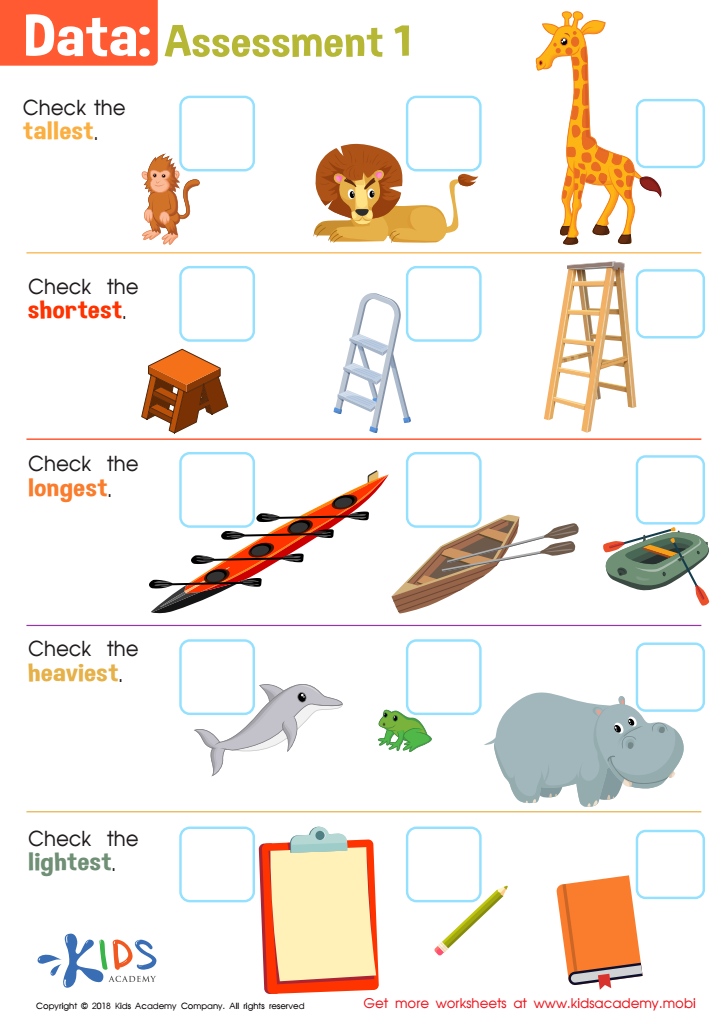
Data: Assessment 1 Worksheet
This free worksheet helps you assess where your young students are with measurement superlatives like tallest, shortest, heaviest, longest and lightest. It features cute, colorful pics of familiar objects so your kids have a reference, and helps you identify areas to work on.
Data: Assessment 1 Worksheet
Worksheet
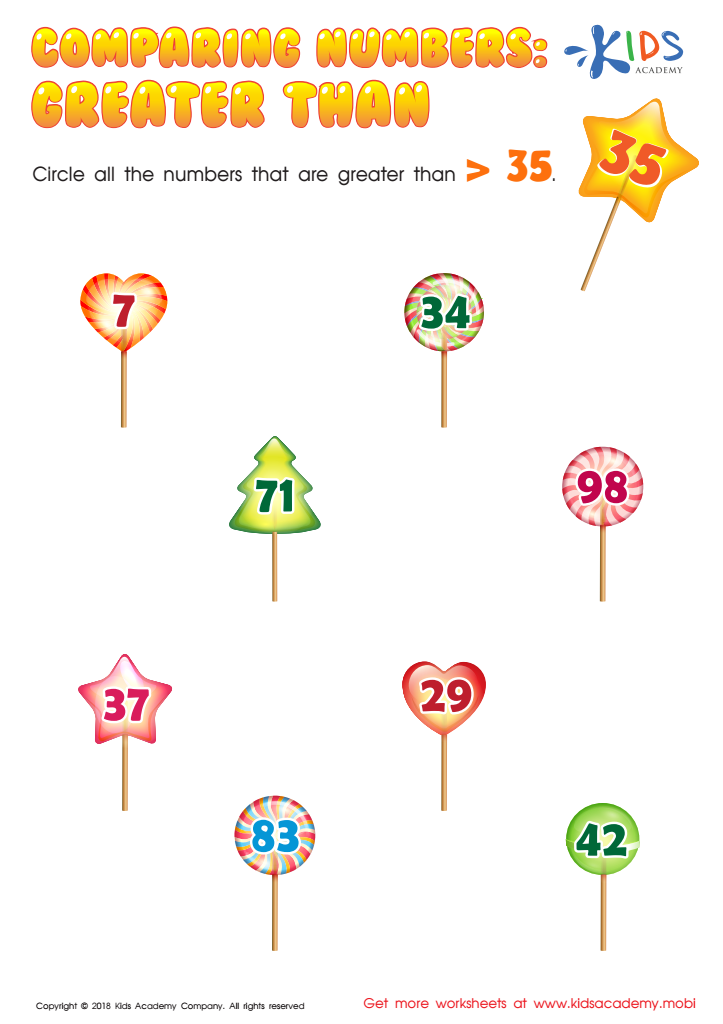
Greater Than Worksheet
Tired of generic maths problems? Try this fun pdf worksheet! With your child or student, carefully look through the numbers in the balloon and circle those greater than 35. Enjoyable and educational!
Greater Than Worksheet
Worksheet
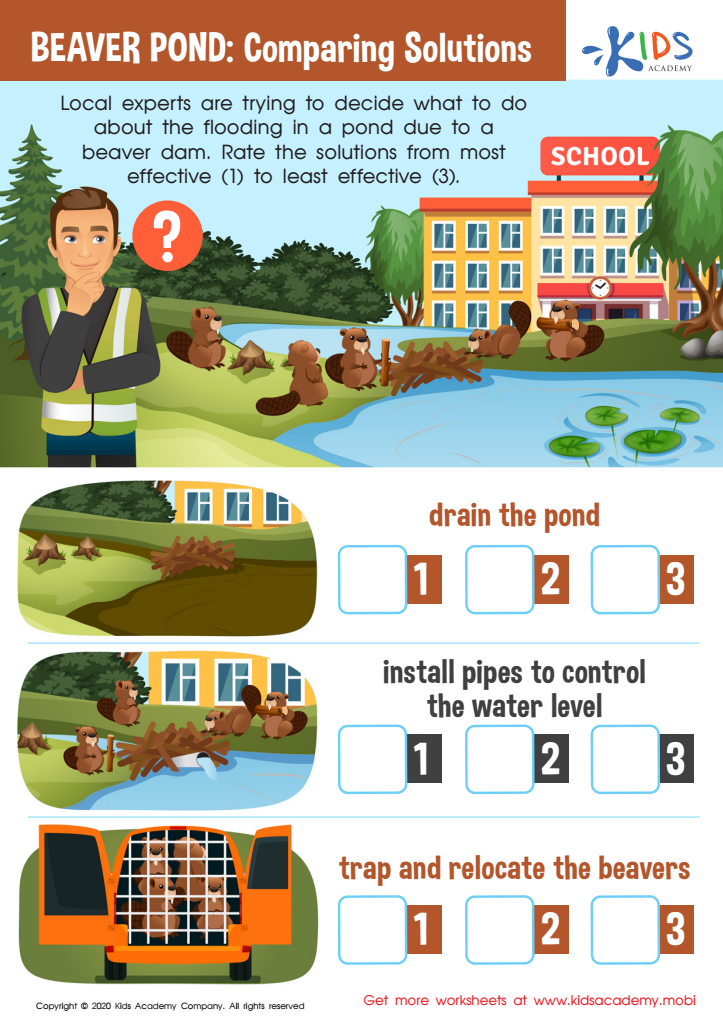
Beaver Pond: Comparing Solutions Worksheet
Got a problem? This science worksheet is great for helping your child compare solutions and pick the best one. Kids get to rate each option's effectiveness by ticking off boxes, from most to least. It's a great way to encourage problem-solving skills, while having fun!
Beaver Pond: Comparing Solutions Worksheet
Worksheet
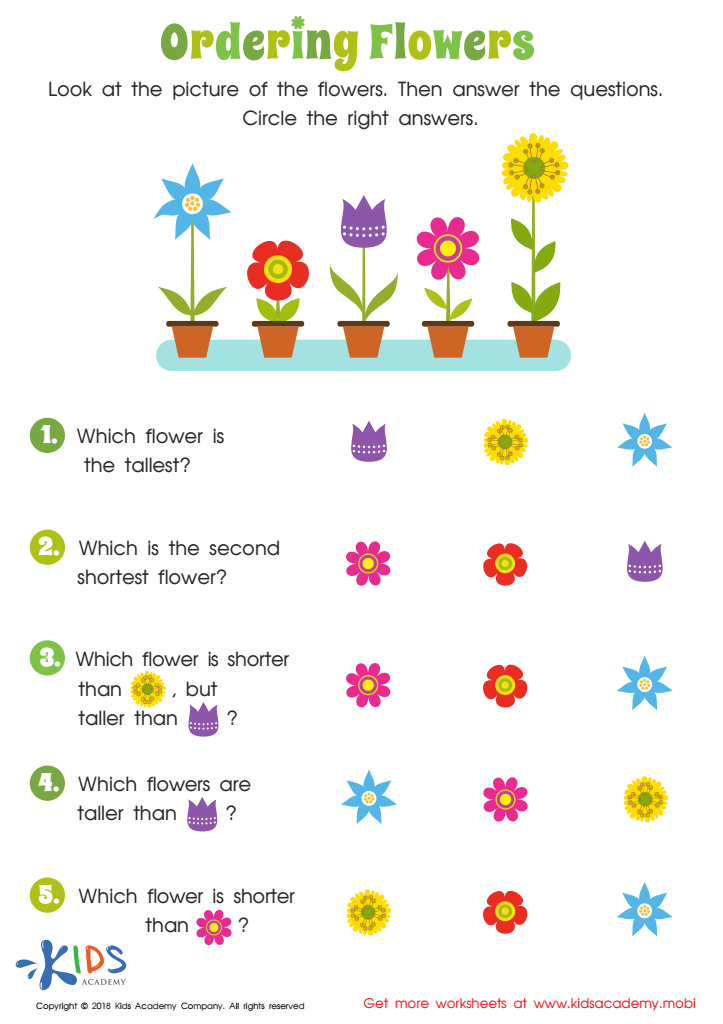
Ordering Flowers Worksheet
Preschoolers can start learning measurement with visuals! This worksheet uses colorful flowers of different heights. Ask your learner to observe the flowers, then help them compare/answer which is taller/shorter. It's an easy way for them to begin learning about measurement.
Ordering Flowers Worksheet
Worksheet
Join Kids Academy for Free
Who is primarily going to use this learning content?








Comparing numbers is a foundational skill critical for the cognitive and academic development of children aged 3-9. At this young age, understanding the relative value of numbers—such as which number is larger or smaller—builds the groundwork for more advanced mathematical concepts like addition, subtraction, and place value. This fundamental knowledge is also essential for everyday activities, like comparing quantities, measuring objects, or managing time.
For parents and teachers, nurturing this skill early enhances children’s numerical literacy. It equips them with the tools to engage confidently with mathematics in school and other real-world contexts. By learning to compare numbers, children develop critical thinking and problem-solving skills, as they have to make decisions based on numerical relationships.
Engaging activities like number games, sorting exercises, and interactive tools help make the learning process enjoyable and effective. Moreover, early exposure to comparing numbers paves the way for academic success, as a strong number sense is linked to higher achievement in later mathematical learning and other subjects that require analytical skills. Therefore, parents and teachers must give attention to this aspect of early education to foster well-rounded, mathematically competent, and confident children.
By prioritizing comparing numbers, we set a solid foundation for lifelong learning and cognitive development in these formative years.








