Counting skills Worksheets for Ages 3-9 - Page 22
510 filtered results
-
From - To
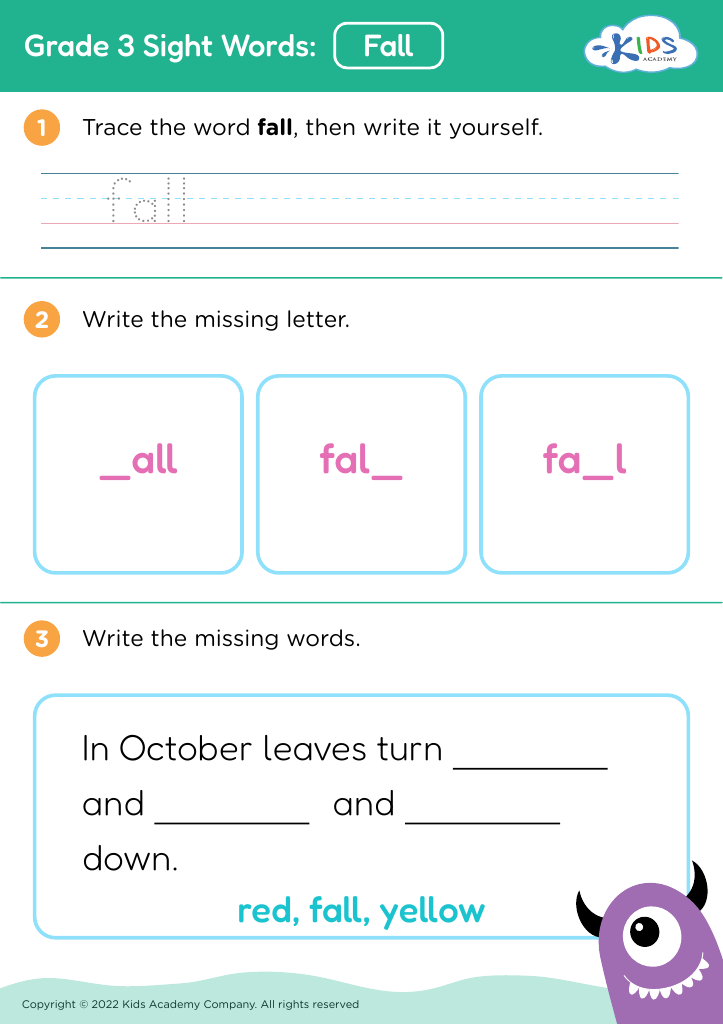
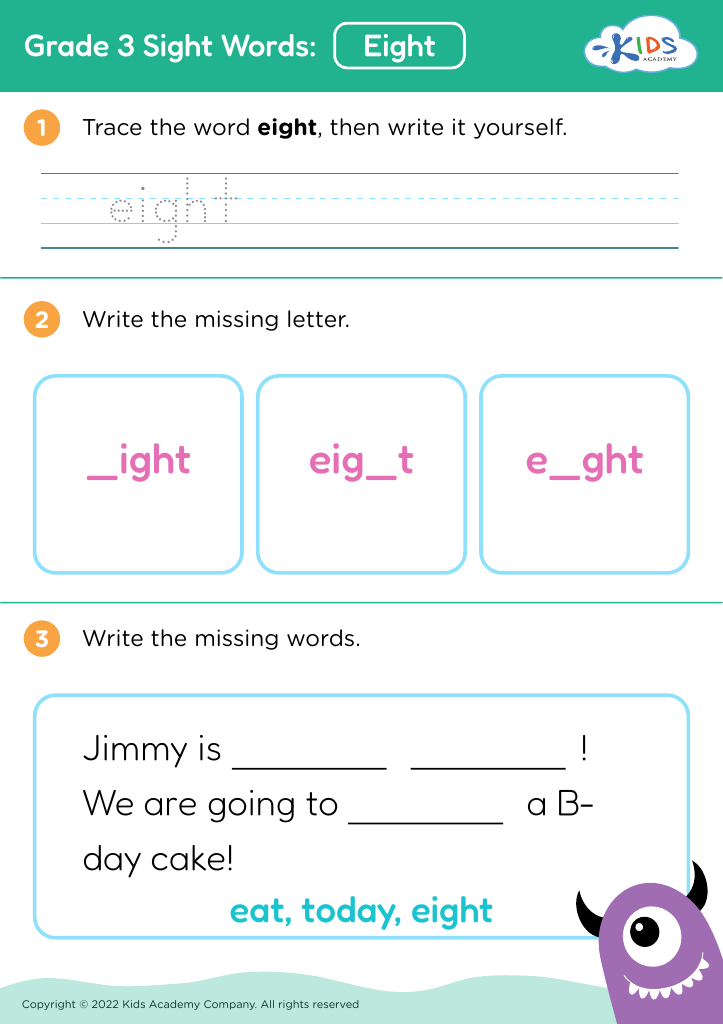







Counting skills are foundational for children aged 3-9, playing a crucial role in their cognitive and academic development. Mastering counting not only enhances math abilities but also promotes critical thinking and problem-solving skills. As children learn to count, they begin to recognize patterns, understand quantities, and develop spatial awareness, which are all essential for later mathematical concepts, such as addition, subtraction, and even more complex operations.
For parents and teachers, fostering counting skills is vital to setting kids up for future academic success. Early counting experiences contribute to a child’s confidence in handling numbers, thus reducing anxiety around math as they progress through school. Engaging children in counting activities, whether through games, songs, or everyday tasks like counting fruits at the grocery store, makes learning enjoyable and interactive.
Additionally, count-focused learning nurtures language development as kids engage in conversations about numbers, comparisons, and classifications. This holistic approach not only builds early math skills but also supports social skills through cooperative counting games. Ultimately, investment in counting during these formative years lays the groundwork for a lifetime of mathematical understanding and a positively constructed attitude towards learning.








