Develop problem-solving skills Worksheets for Ages 3-9
11 filtered results
-
From - To
Nurture your child's critical thinking and creativity with our "Develop Problem-Solving Skills Worksheets" designed for ages 3-9. Our expertly crafted worksheets at Kids Academy transform learning into an engaging and educational adventure. These worksheets offer a wide range of challenges that boost cognitive abilities, sharpen decision-making, and enhance spatial awareness. They cover fundamental problem-solving areas like pattern recognition, sequencing, puzzles, and logical reasoning. Perfect for both classroom and home use, our resources ensure your child develops essential life skills while having fun. Start their learning journey with us and watch them grow into confident and adept problem solvers!
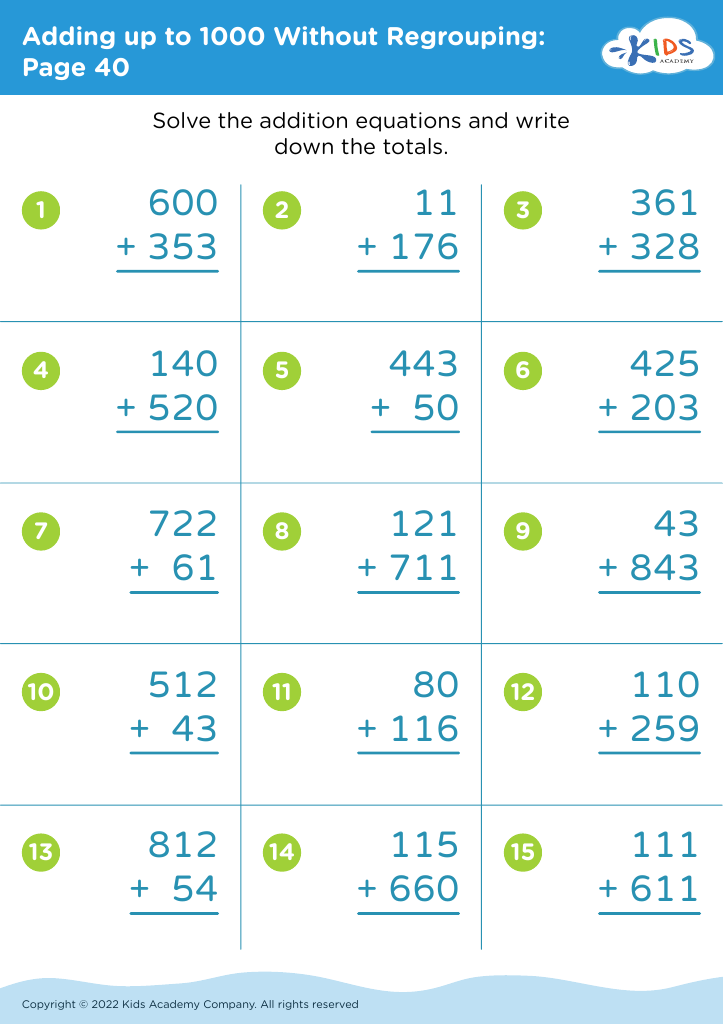
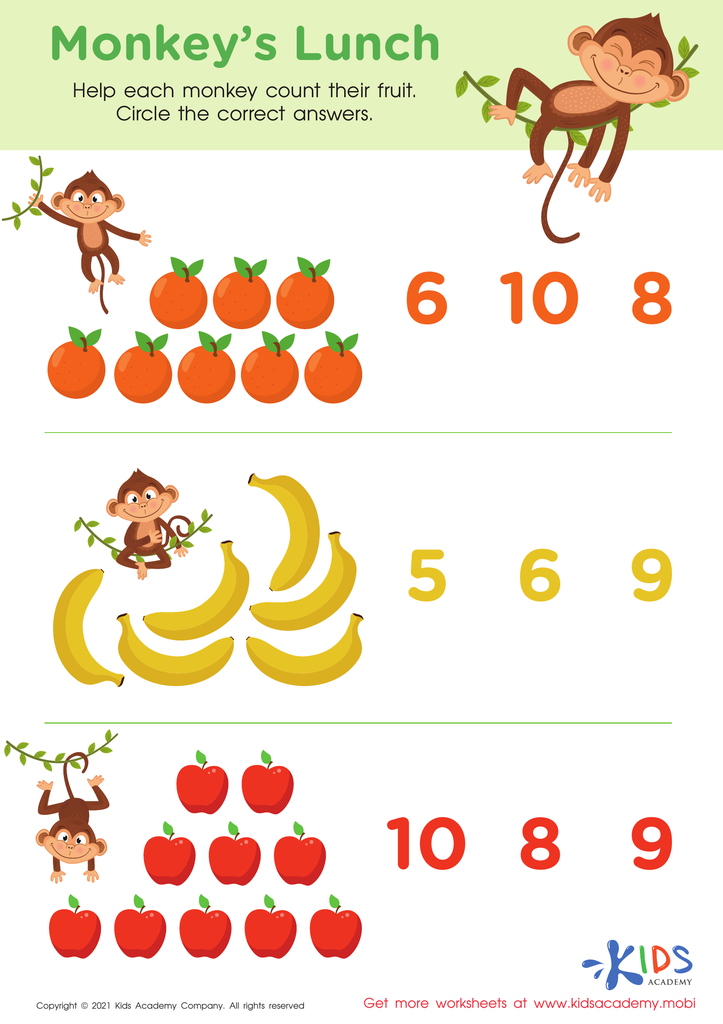
Monkey’s Lunch Worksheet
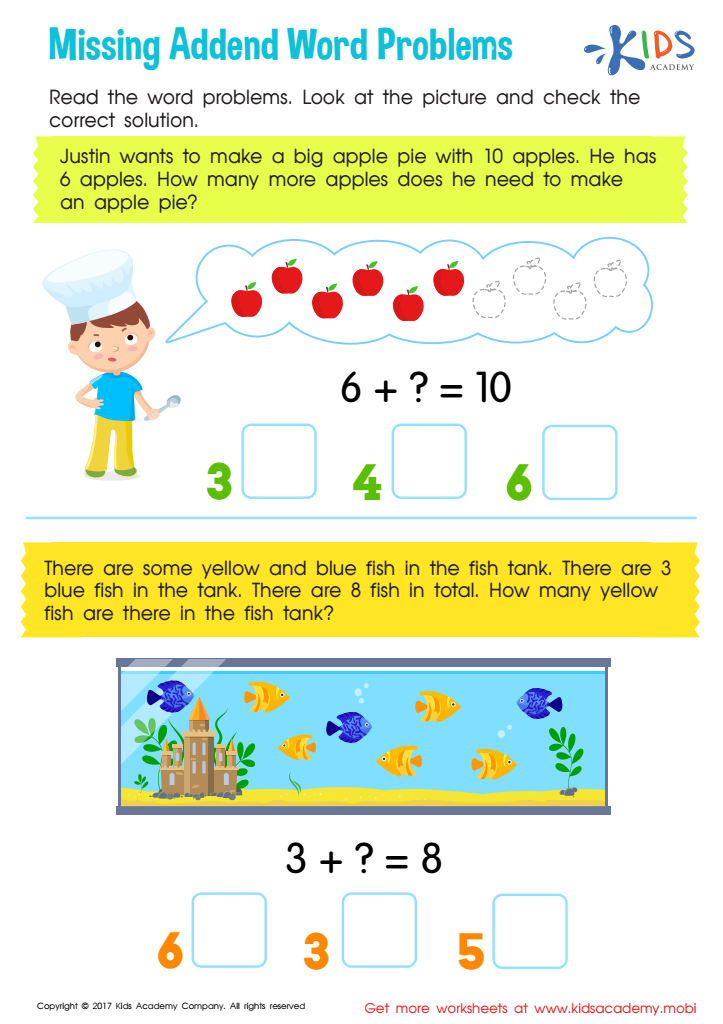
Missing Addend Word Problems Worksheet
 Assign to My Students
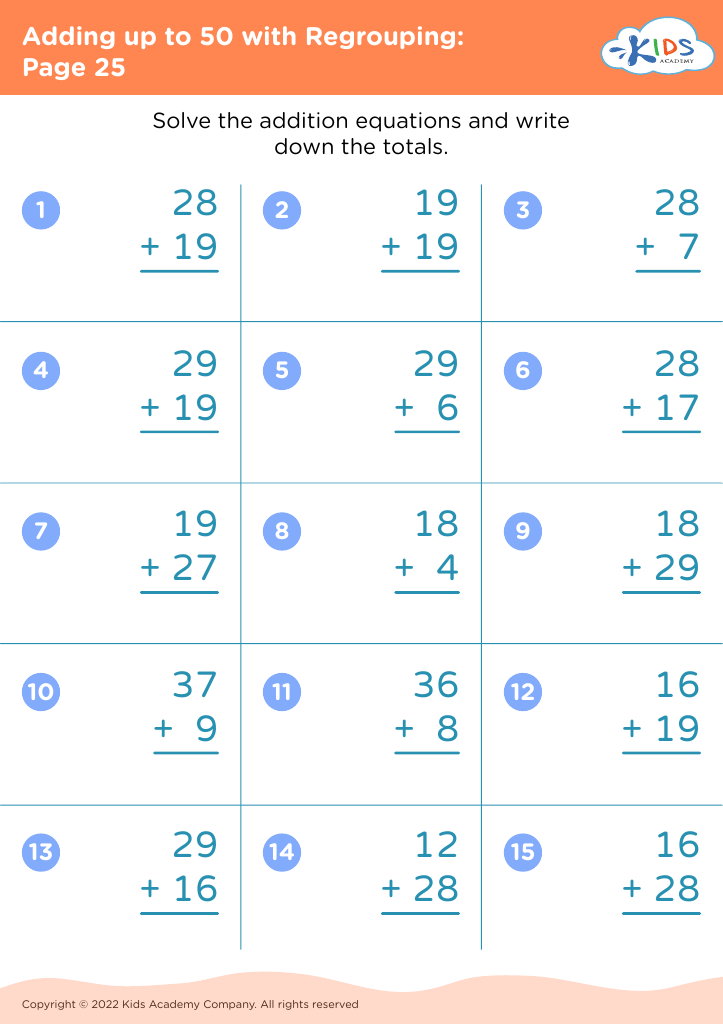

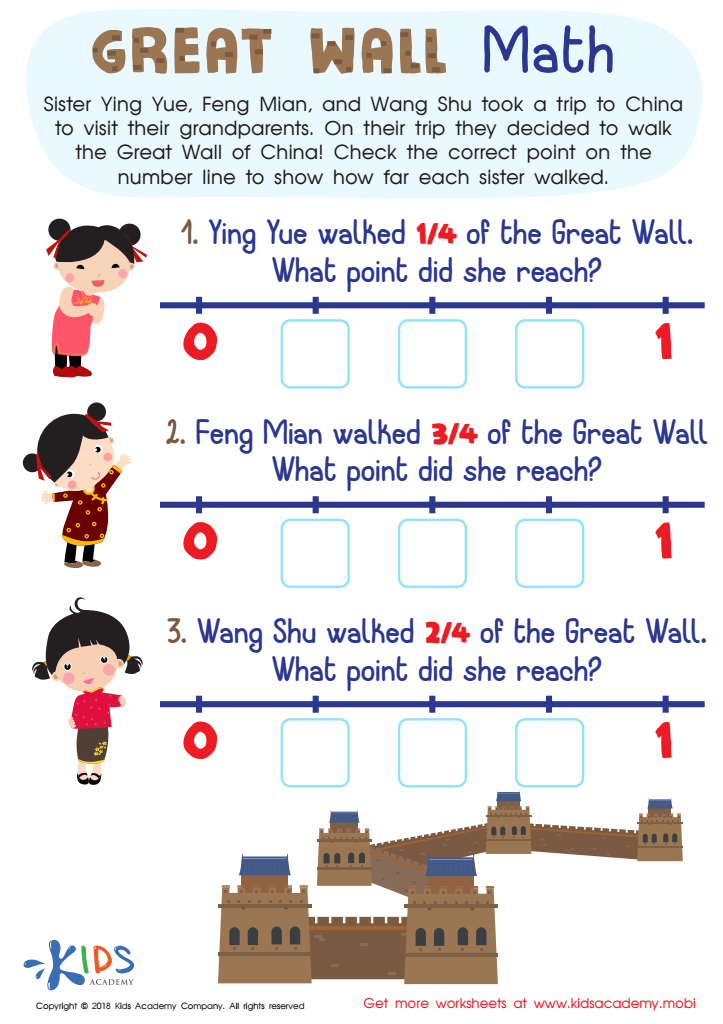
Great Wall Math Worksheet










Developing problem-solving skills in children ages 3-9 is crucial for their overall cognitive and social development. At this early stage, children's brains are rapidly growing, making it a prime time to nurture critical thinking and analytical abilities. Problem-solving skills help children navigate challenges both in academic settings and in everyday life. These skills encourage independence, boost self-esteem, and foster persistence as children learn that they can find solutions to obstacles they encounter.
For parents and teachers, focusing on problem-solving equips children with tools to manage and overcome frustrations effectively. This can lead to fewer tantrums and behavioral issues, creating a more harmonious home and classroom environment. Problem-solving skills also lay the groundwork for success in subjects like math and science, where analytical thinking is key. Learning how to approach problems from different angles, hypothesize solutions, and test their ideas helps children become innovative thinkers.
Moreover, collaborative problem-solving activities teach essential social skills such as listening, empathy, and cooperation. These competencies are vital for effective teamwork and healthy relationships throughout life. Investing in the early development of problem-solving skills, therefore, is not just about immediate benefits, but also about setting the stage for a child's long-term intellectual and emotional well-being.








