Developing observational skills Worksheets for Ages 3-9
4 filtered results
-
From - To
Enhance your child's ability to notice details with our "Developing Observational Skills" worksheets for ages 3-9. Designed to stimulate young minds, these engaging activities help kids improve focus, critical thinking, and attention to detail through fun, interactive exercises. From spotting differences to matching and sequencing, our worksheets cater to a variety of learning styles, making early education an adventure. Perfect for home or classroom use, these printables foster foundational skills essential for academic success. Start today and watch your little observant geniuses blossom with each completed worksheet! Visit our page for an incredible learning journey.
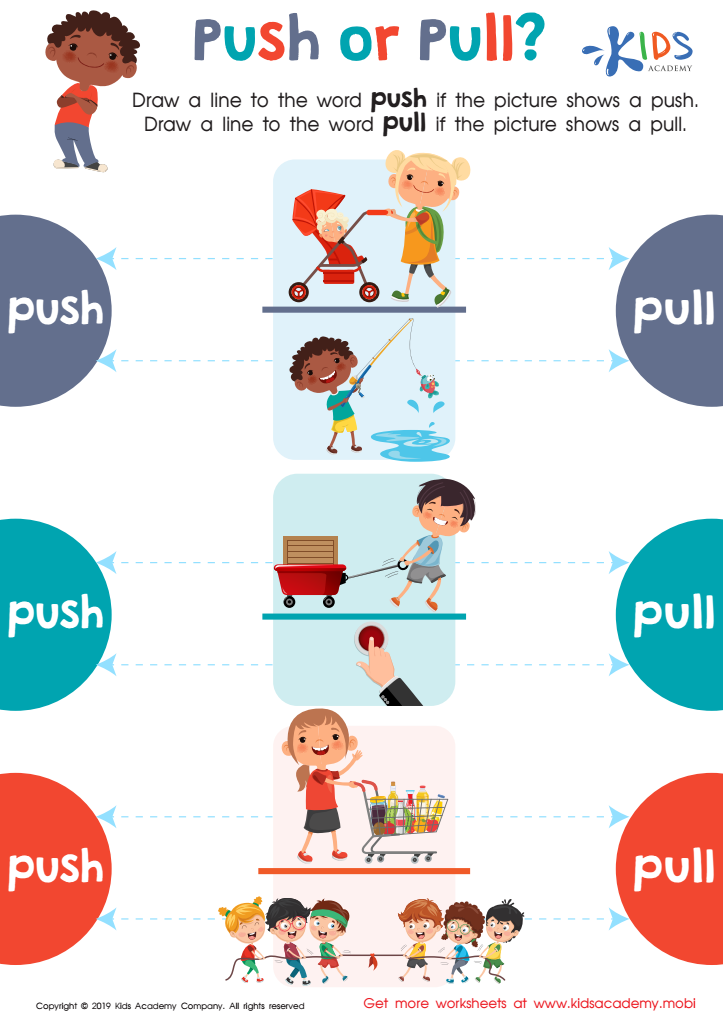
Push or Pull? Worksheet
 Assign to My Students
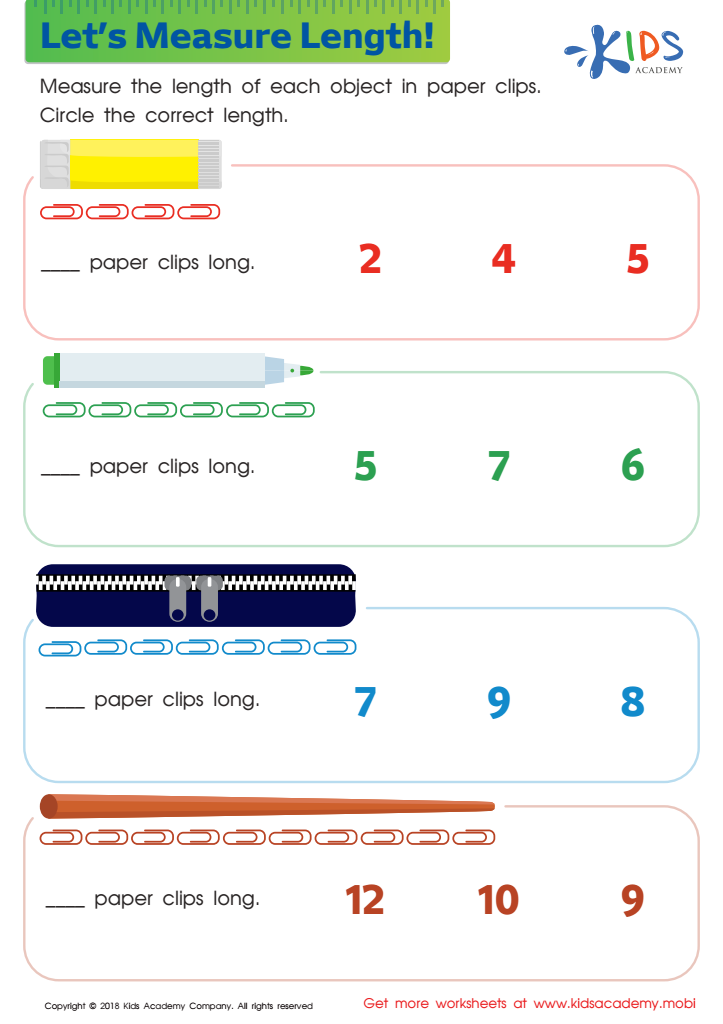
Lets Measure Length Worksheet
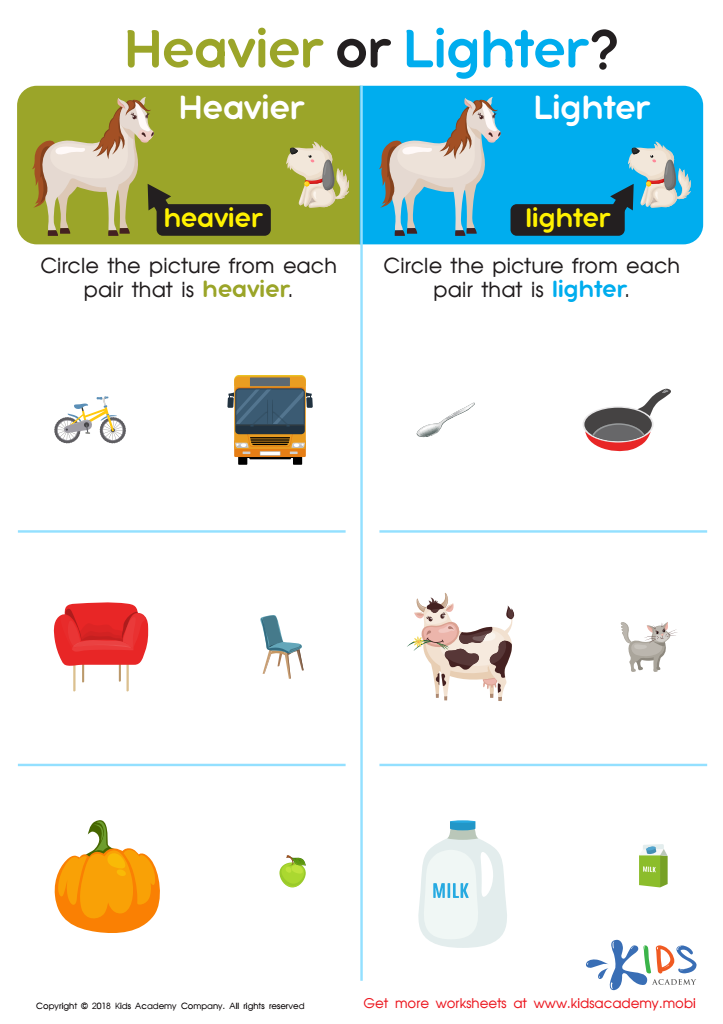
Heavier or Lighter? Worksheet





Developing observational skills in children ages 3-9 is crucial for their overall development and learning. These skills form the foundation for critical thinking and problem-solving abilities, enabling children to notice details, patterns, and nuances in their environment. By enhancing their awareness, children become more curious and engaged learners, which fosters a lifelong love for education.
Parents and teachers play a vital role in this development. For instance, when children observe nature, they learn to appreciate biodiversity and understand basic scientific concepts. Observational skills also bolster language development. Describing what they see helps children expand their vocabulary and improve their communication skills.
In social contexts, observation allows children to better understand body language, emotions, and social cues, thereby enhancing their empathy and interpersonal relations. Observational skills can also contribute to safety, as aware children are more likely to notice potentially dangerous situations.
Activities like drawing, playing "I Spy," and nature walks can nurture these skills. As children learn to observe more critically, they will become adept at making connections, asking questions, and seeking knowledge. Thus, the development of observational skills is foundational, impacting cognitive, linguistic, emotional, and social growth, ensuring children can navigate and understand the world more effectively.








