Fine motor skills development Worksheets for Ages 3-9 - Page 2
27 filtered results
-
From - To
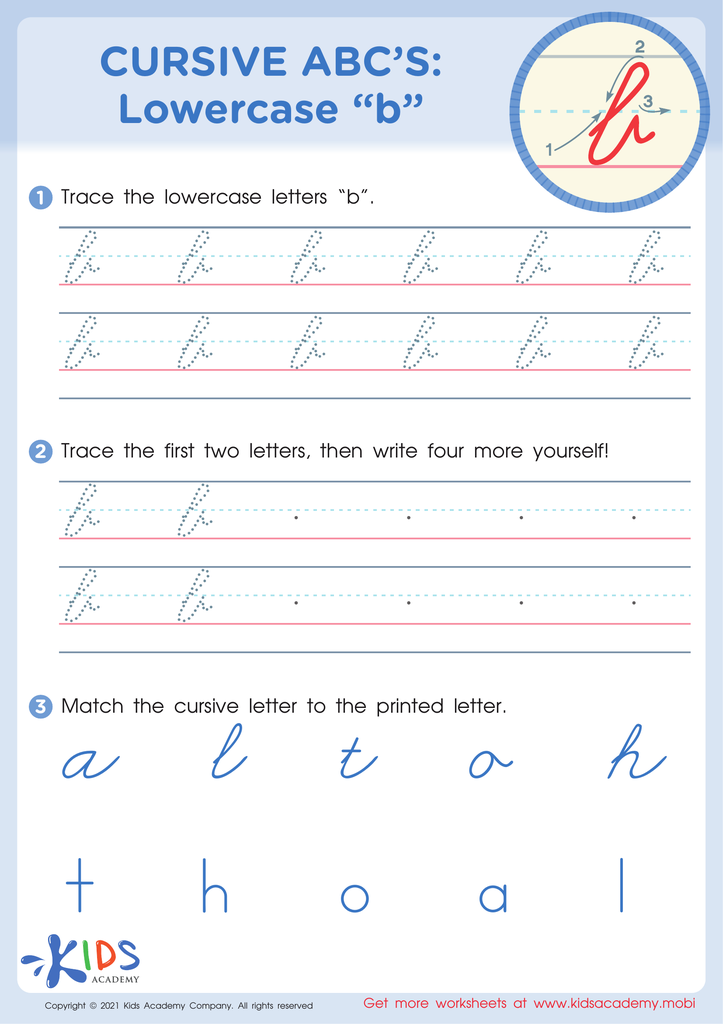
Cursive ABCs: Lowercase b
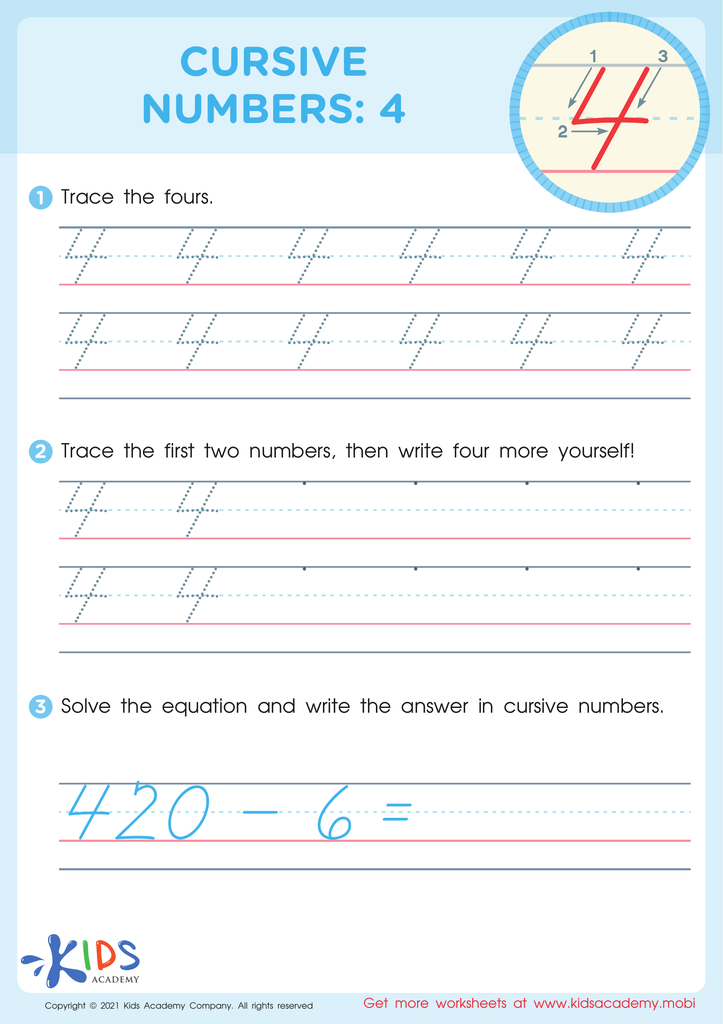
Cursive Numbers: 4 Worksheet








Fine motor skills refer to the coordination of small muscles in the hands and fingers, essential for daily activities such as writing, drawing, and self-care tasks. For children aged 3-9, the development of these skills is crucial as it lays the foundation for future academic success and independence.
Parents and teachers should prioritize fine motor skills development because it enhances not only hand-eye coordination but also cognitive abilities. When children engage in activities like painting, cutting with scissors, or assembling puzzles, they improve their problem-solving skills and creativity. Furthermore, proficient fine motor skills promote confidence as children learn to perform tasks independently, fostering a sense of accomplishment.
In this age group, the brain is highly plastic, meaning that early experiences can significantly shape development. Delaying fine motor skill activities may lead to difficulties in later years, particularly in learning to write, which can affect academic performance. Moreover, social play often involves fine motor tasks, helping children build relationships and collaborate with peers.
By nurturing fine motor skills through playful and engaging activities, parents and teachers can support children's overall development, setting them up for a successful transition into future learning environments.








