
Fruit identification Worksheets for Ages 3-9
4 filtered results
Difficulty Level
Grade
Age
-
From - To
Subject
Activity
Standards
Discover our engaging Fruit Identification Worksheets designed specifically for children aged 3-9! These worksheets help young learners explore the world of fruits through fun activities that enhance their identification skills, vocabulary, and cognitive development. Each worksheet features vibrant illustrations and interactive tasks, making learning about fruits both enjoyable and educational. Perfect for classrooms or home use, our resources cater to a variety of learning styles while promoting healthy eating habits. Watch your child's confidence grow as they master fruit names, colors, and characteristics. Explore our collection today and inspire your little ones to grow their knowledge in a deliciously fun way!
Favorites
With answer key
Interactive
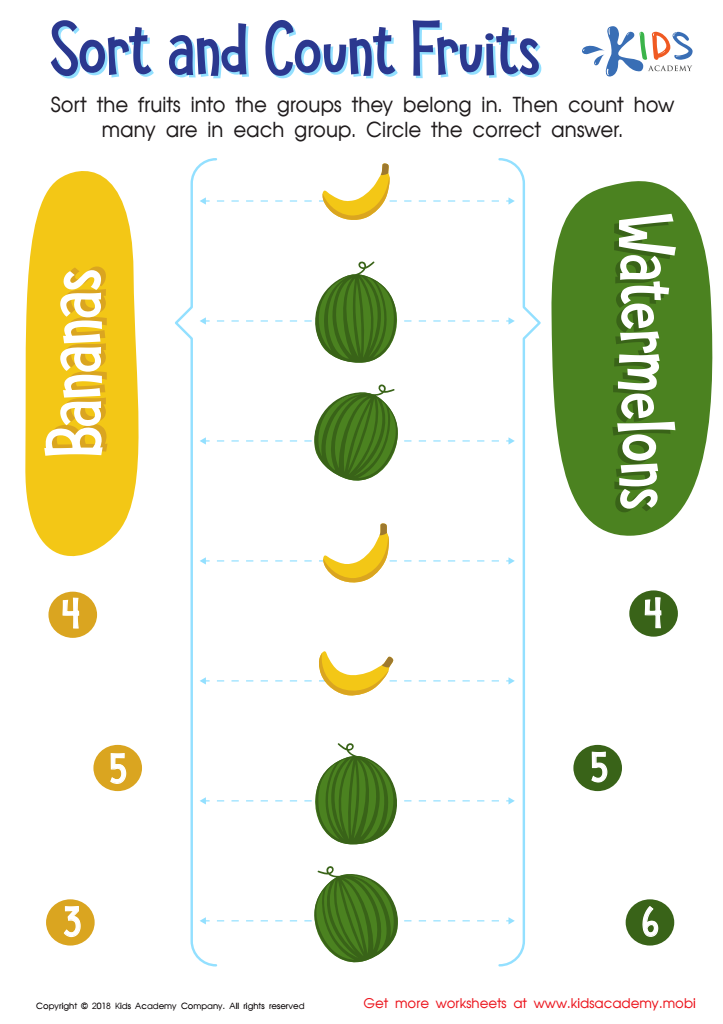
Sort and Count Fruits Worksheet
Allow your children to hone their critical thinking and number reasoning skills with this free worksheet. They'll sort, count, and trace fruits while learning basic number sense. A fun, delicious learning experience with familiar pictures they'll love.
 Assign to My Students
Sort and Count Fruits Worksheet
Worksheet
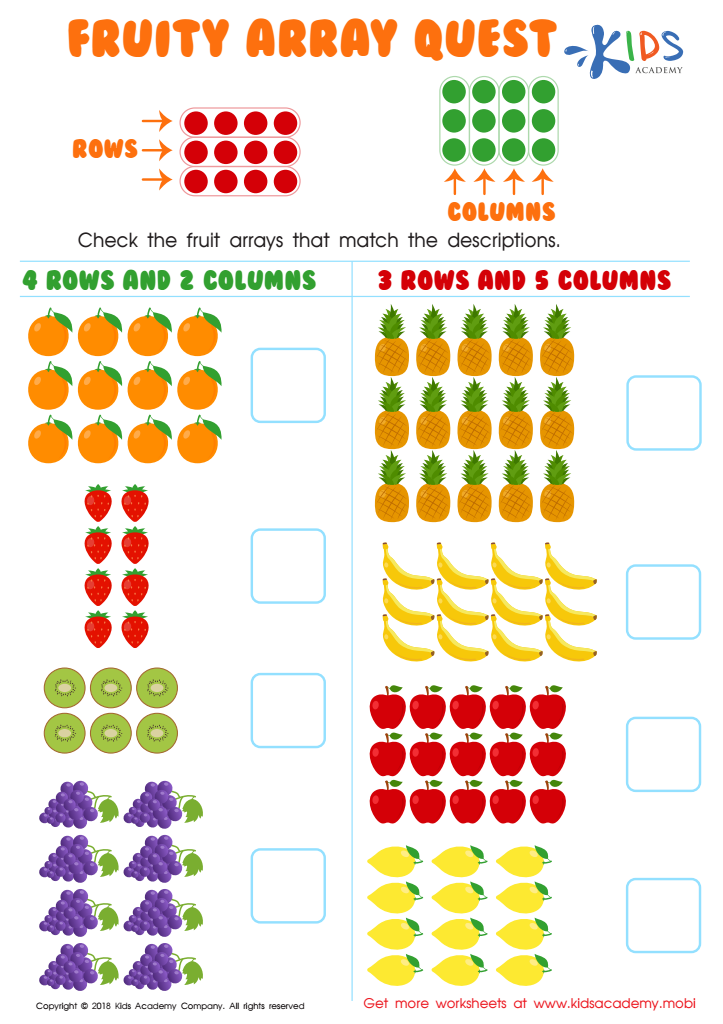
Fruity Array Quest Worksheet
Explain rows (horizontal) and columns (vertical) to your child before starting the worksheet. Show them the picture and the arrows indicating direction. Your child should be able to answer the questions easily after that. Help them match the fruit arrays that match the descriptions.
Fruity Array Quest Worksheet
Worksheet
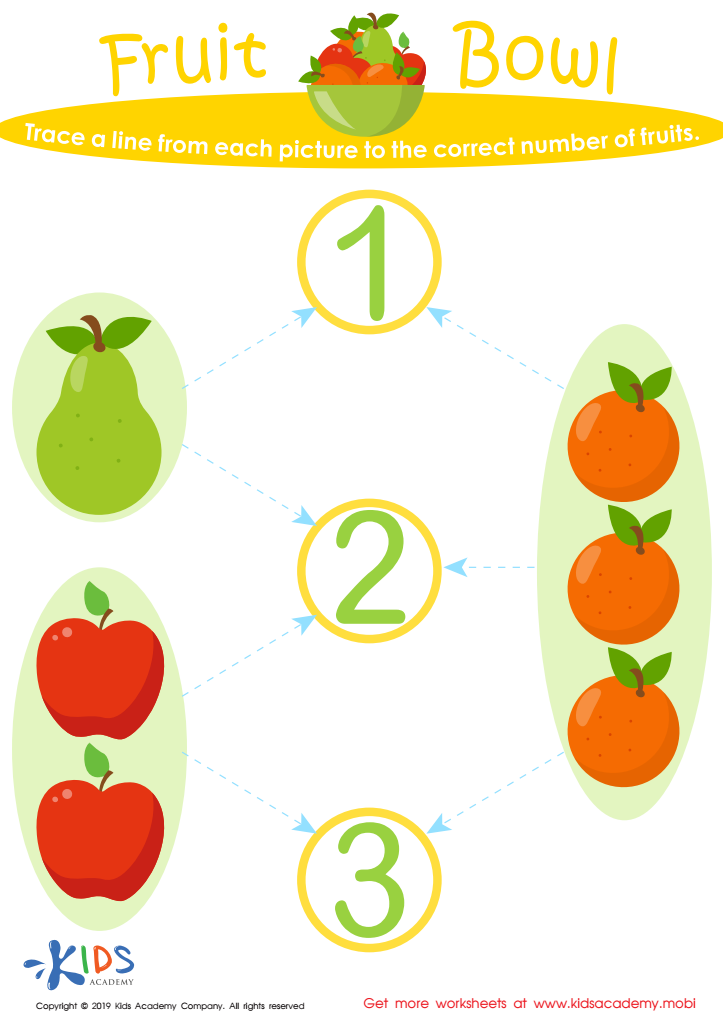
Fruit Bowl Worksheet
Kids love counting fruit! This fun math worksheet lets them count the number of fruit in each group and use the traceable lines to connect the correct number. It's a great way to learn one-to-one number representation, plus it's yummy and delicious!
Fruit Bowl Worksheet
Worksheet
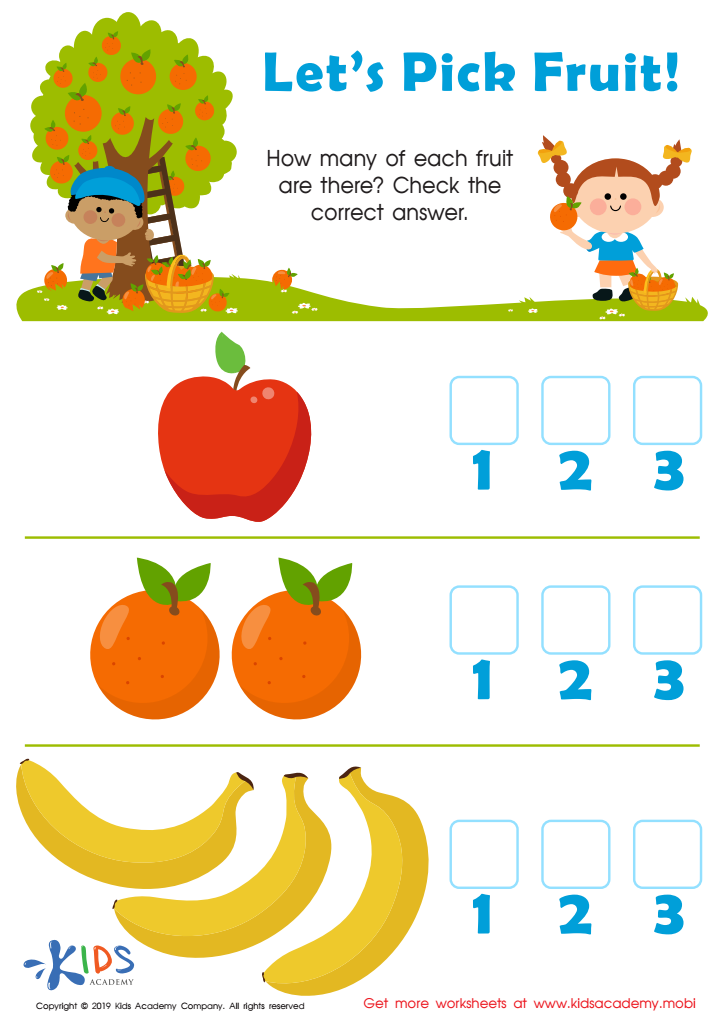
Let's Pick Fruit Worksheet
Picking fruit is fun - and counting it is even better! This free worksheet is perfect for young math learners. They'll use picture representation to count the fruit in each problem and then select the correct answer from the multiple-choice boxes. It's a great way to teach number sense in an easy, fun way!
Let's Pick Fruit Worksheet
Worksheet
Join Kids Academy for Free
Who is primarily going to use this learning content?







Fruit identification for children aged 3-9 is essential for several reasons. Firstly, it promotes healthy eating habits early in life. By learning about various fruits, children can develop a preference for nutritious options, reducing the likelihood of unhealthy food choices as they grow. Understanding fruits encourages curiosity about nature, which fosters a lifelong appreciation for healthy foods.
Moreover, identifying fruits aids in cognitive development. It enhances vocabulary and improves memory skills as children learn names, colors, and shapes associated with different fruits. Engaging activities such as sorting fruits or participating in fruit-themed games can boost fine motor skills and hand-eye coordination.
Another key aspect is social interaction. Group activities centered around fruit identification can enhance teamwork and communication skills among peers. Parents and teachers can create an enjoyable, inclusive learning environment that not only teaches kids but also encourages them to share their knowledge.
Lastly, fruit identification cultivates sensory experiences. Children can explore textures, smells, and tastes, allowing for hands-on learning and sensory development. Overall, fruit identification equips children with essential knowledge and skills that foster healthy lifestyles, encourage curiosity, and support social skills, making it a valuable focus for both parents and educators.








