Geometry basics Worksheets for Ages 3-9
3 filtered results
-
From - To
Explore our engaging Geometry Basics Worksheets designed specifically for children ages 3-9. These worksheets introduce foundational geometry concepts through fun and interactive activities that make learning enjoyable. From recognizing shapes and understanding spatial relationships to honing their skills in measuring and classifying objects, our worksheets cater to young learners' diverse needs. Each resource is crafted to support early math skills while promoting critical thinking and problem-solving in a playful manner. Perfect for both classroom and home use, these printable worksheets offer a comprehensive approach to building confidence in geometry. Start your child's mathematical journey today with our vibrant and educational materials!
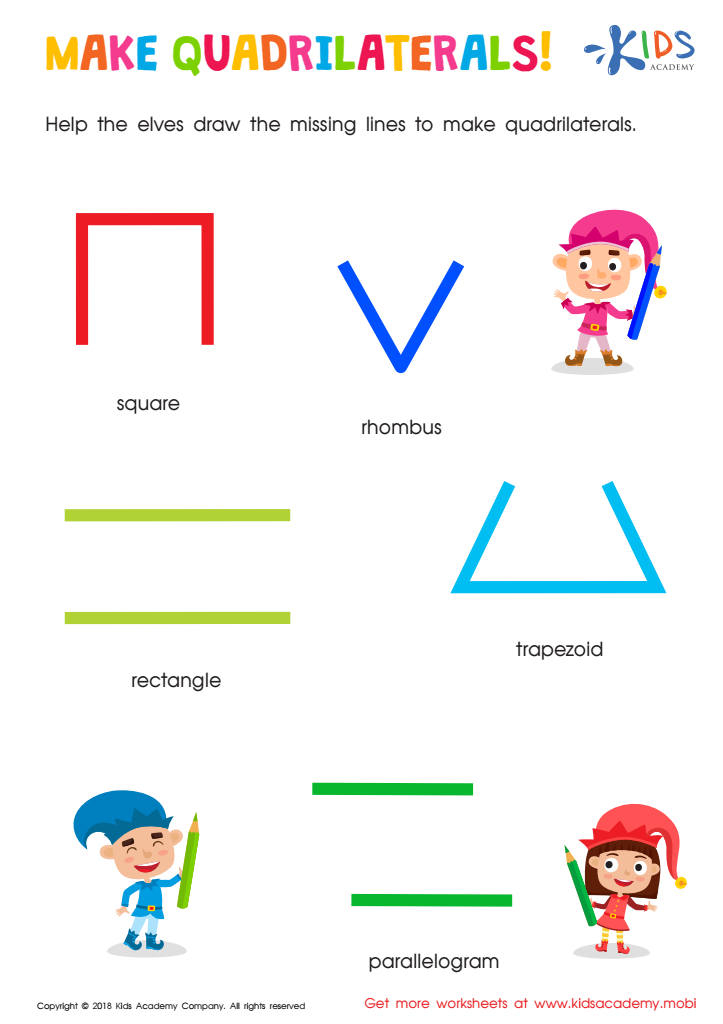
Make Quadrilaterals Worksheet
 Assign to My Students
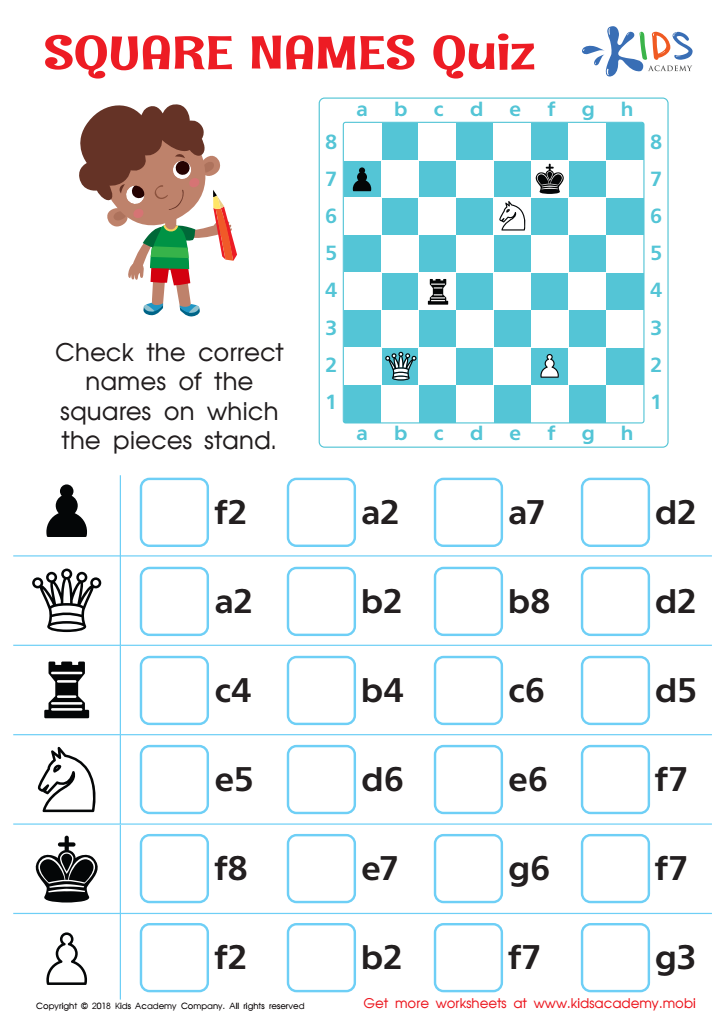
Square Names Quiz Worksheet
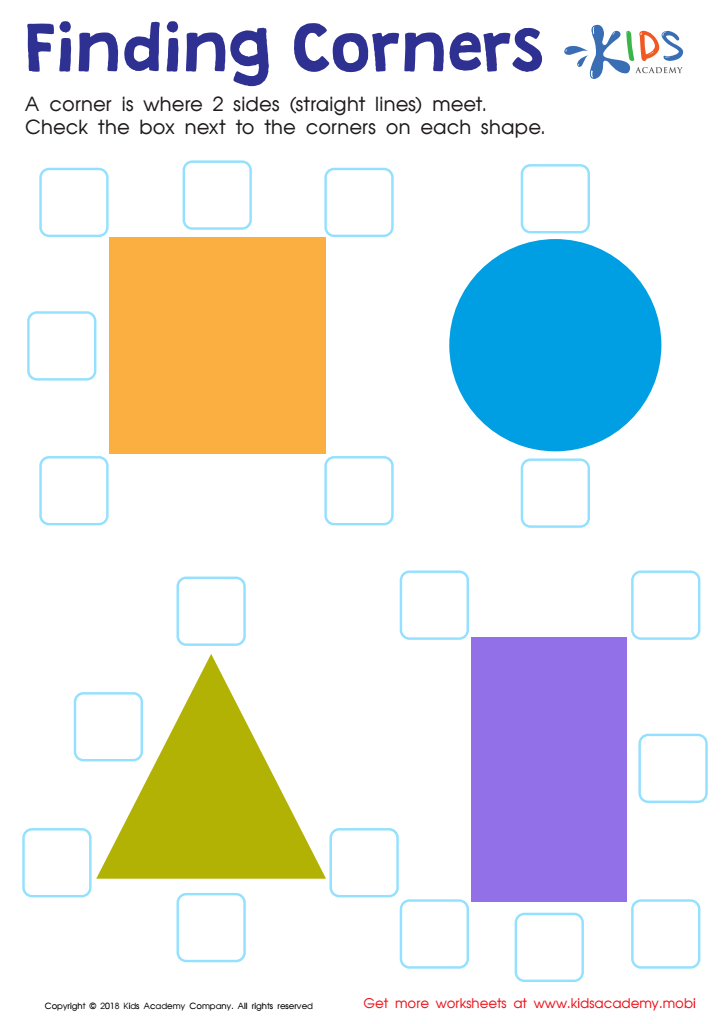
Finding Corners Worksheet







Understanding the basics of geometry is crucial for young children, ages 3-9, as it lays the foundation for critical thinking and problem-solving skills. Geometry engages spatial reasoning, helping children comprehend their environment better, developing both cognitive and physical skills. Recognizing shapes and their attributes enhances observational skills, which are important in scientific inquiry.
Geometry also promotes the development of language and communication skills. When children describe shapes, sizes, and positions, they enrich their vocabulary and learn to convey ideas clearly. Incorporating geometry into daily play activities, such as building blocks or drawing, encourages creativity while making learning enjoyable.
For parents and teachers, mastering geometry basics boosts children's confidence in mathematics, which can influence their overall attitudes towards STEM (science, technology, engineering, and mathematics) subjects later in life. An early understanding of geometry facilitates easier grasp of more complex mathematical concepts in the future.
Moreover, learning geometry contributes to logical reasoning and pattern recognition skills. These skills not only support higher academic achievement but also nurture essential life skills, such as decision-making and planning. In essence, emphasizing geometry basics is invaluable for fostering well-rounded, capable learners.








