Grouping skills Worksheets for Ages 3-9
4 filtered results
-
From - To
Explore our engaging Grouping Skills Worksheets designed for children ages 3-9! These worksheets provide fun and interactive activities that help young learners develop key categorization and sorting skills. Through colorful images and playful exercises, kids will practice identifying similarities and differences, grouping objects based on common attributes, and honing their observational skills. Perfect for both the classroom and home learning environments, our worksheets cater to various learning styles and abilities, ensuring every child can thrive. Encourage critical thinking and boost cognitive development with our expertly crafted resources that make learning enjoyable and effective. Download and watch your child’s skills grow!
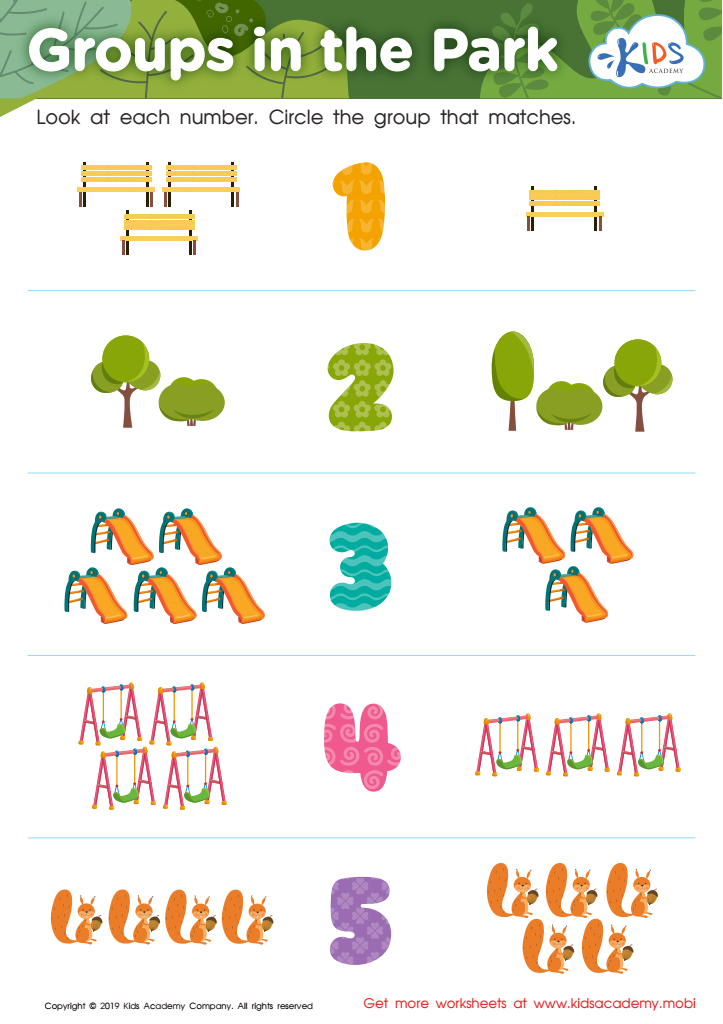
Groups in the Park Worksheet
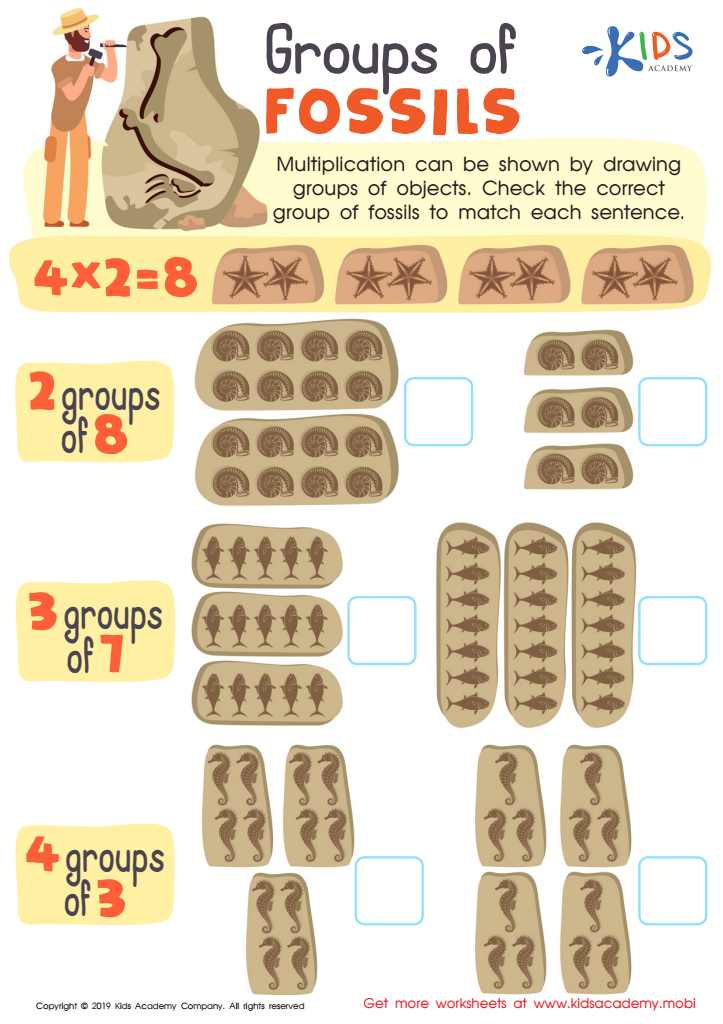
Groups of Fossils Worksheet
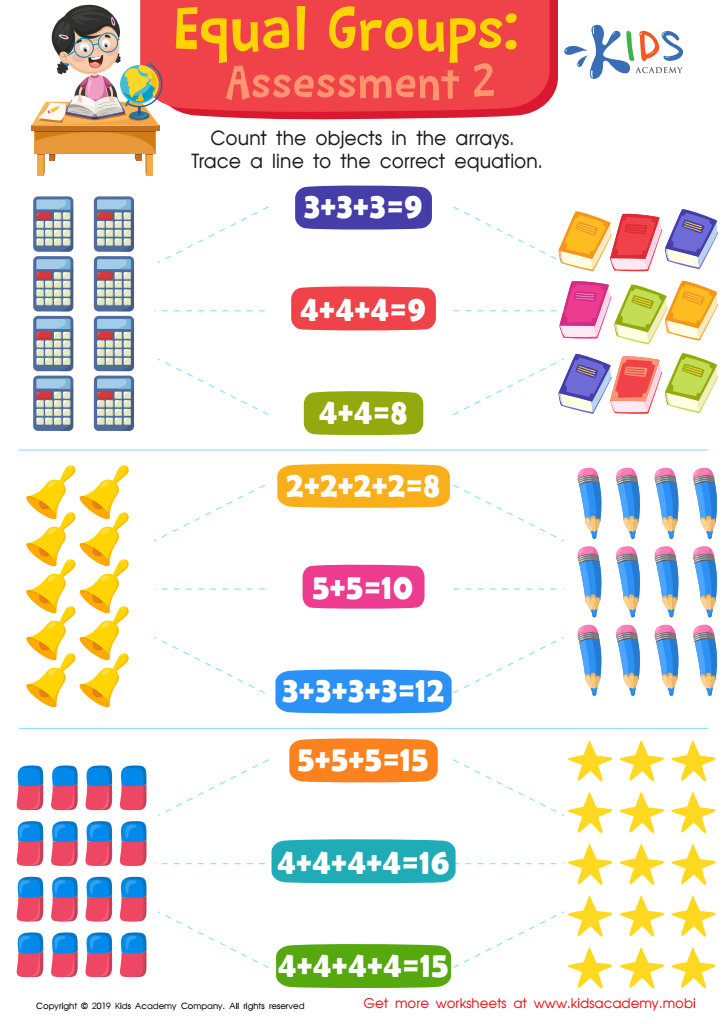
Equal Groups: Assessment 2 Worksheet
Musical Band Worksheet
 Assign to My Students






Grouping skills, which involve the ability to categorize objects based on shared characteristics, are crucial for children aged 3-9, and therefore warrant significant attention from parents and teachers. Firstly, these skills lay the foundation for critical thinking and problem-solving. When young learners can group items based on color, size, shape, or function, they're engaging in higher-order thinking that enhances cognitive development.
Secondly, grouping skills promote social interaction and collaboration. Activities like sorting games or group projects encourage children to work together, fostering communication skills and teamwork, which are essential life skills.
Moreover, these skills improve early mathematical abilities. Understanding concepts of categorization is vital for more advanced math topics such as addition and subtraction, where grouping items can aid in comprehension.
Additionally, developing grouping skills can help build children's confidence. Mastering these foundational skills allows them to participate actively in classroom settings, enhancing their sense of belonging and motivation to learn.
Finally, supporting the development of grouping skills prepares children for future academic success. Parents and teachers who prioritize these skills will contribute positively to a child’s overall growth, making them better equipped for learning challenges in later years.








