
Handwriting development Worksheets for Ages 3-9
3 filtered results
Difficulty Level
Grade
Age
-
From - To
Subject
Activity
Standards
Discover our engaging Handwriting Development Worksheets, designed for children ages 3-9, to foster their fine motor skills and handwriting proficiency. Our carefully crafted worksheets offer a variety of tracing exercises, letter formation practices, and fun activities that motivate young learners. With a focus on both uppercase and lowercase letters, numbers, and simple words, these resources cater to different skill levels. Perfect for home or classroom use, our worksheets make learning to write enjoyable and interactive. Watch as your child you grow in confidence and technique, setting the foundation for successful handwriting and communication skills. Start their handwriting journey today!
Favorites
With answer key
Interactive
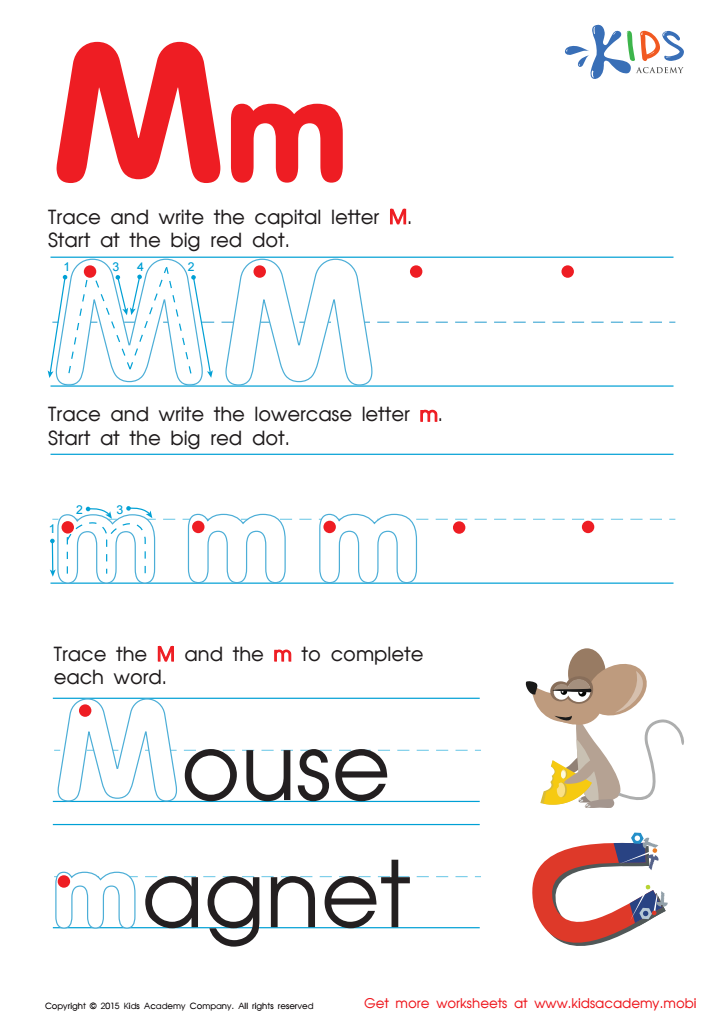
Letter M Tracing Page
Trace and write the letter "M" to help kids learn the alphabet. Start at the red dot and practice several times. Trace the capital letter first, then move on to the lowercase. Complete words like "mouse" and "magnet" in the further exercise. Get more free printables here.
Letter M Tracing Page
Worksheet
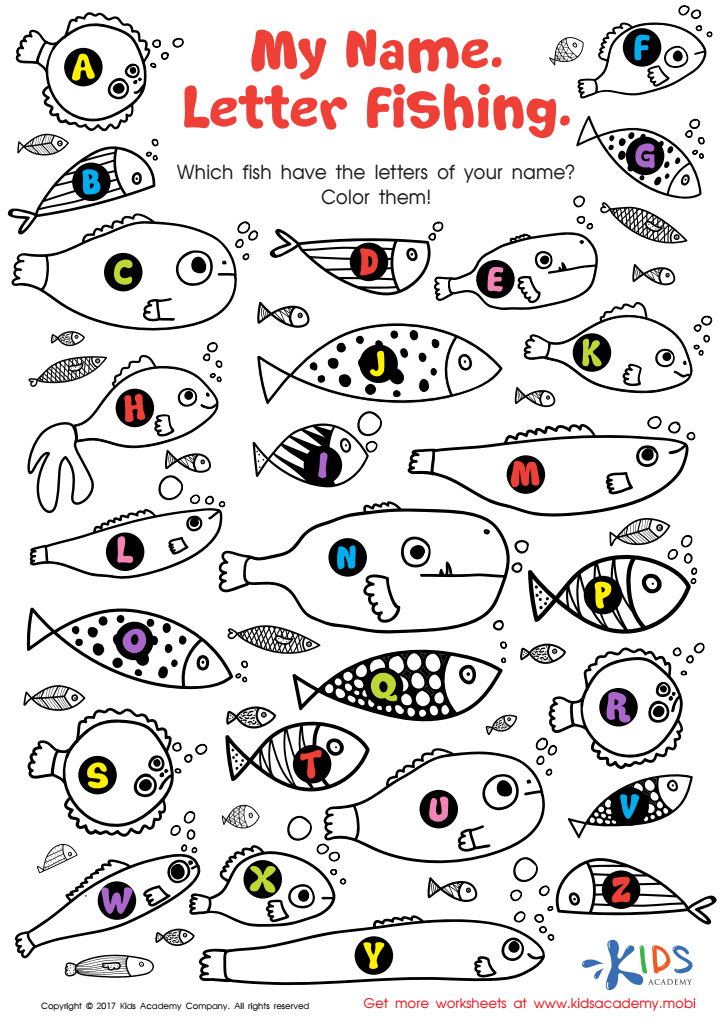
My Name: Letter Fishing Worksheet
Dive into the deep sea and search for fish with a letter on them. Can you find all the letters from your name? Color your favorite fish with crayons and be creative! On the other side, use the letters you found to write your name. Have fun coloring and finding the letters of your name! (80 words)
Download (PDF)
 Assign to My Students
Assign to My Students
My Name: Letter Fishing Worksheet
Worksheet
Join Kids Academy for Free
Who is primarily going to use this learning content?







Handwriting development is a critical aspect of early childhood education for children aged 3-9. During these formative years, children's fine motor skills, cognitive abilities, and even self-expression are intricately linked to their writing skills. When children learn to write effectively, they enhance their ability to communicate thoughts and ideas, which is fundamental in forming a solid academic foundation.
Good handwriting fosters self-confidence and motivation, as clear, legible writing allows students to feel proud of their work and encouraged to share it. Understanding letter formation and spacing also builds essential skills for more complex tasks later in life, such as note-taking and essay writing.
Furthermore, handwriting involves multisensory learning, which supports brain development. This tactile experience can solidify memory retention of letter shapes and sounds, strengthening early literacy skills. Research indicates a correlation between handwriting proficiency and better performance in reading and spelling.
In a digital age, where screen time dominates children's interaction, focusing on handwriting ensures a balance by nurturing traditional skills that promote critical thinking and creativity. Thus, both parents and teachers play a vital role in supporting handwriting development in young learners, securing broader educational success and developing essential life skills.








