Identify shapes Worksheets for Ages 3-9
13 filtered results
-
From - To
Discover our engaging Identify Shapes Worksheets designed for children aged 3-9. These educational worksheets feature a variety of activities to help young learners recognize and name different shapes, from circles and squares to more complex figures like hexagons. Each worksheet is crafted to enhance your child's visual-spatial skills, critical thinking, and fine motor abilities through fun tracing, coloring, and matching exercises. Perfect for preschool to elementary students, our printable resources support early math skills and bolster confidence in young learners. Foster your child's love for learning with our reliable and enjoyable shape identification worksheets.
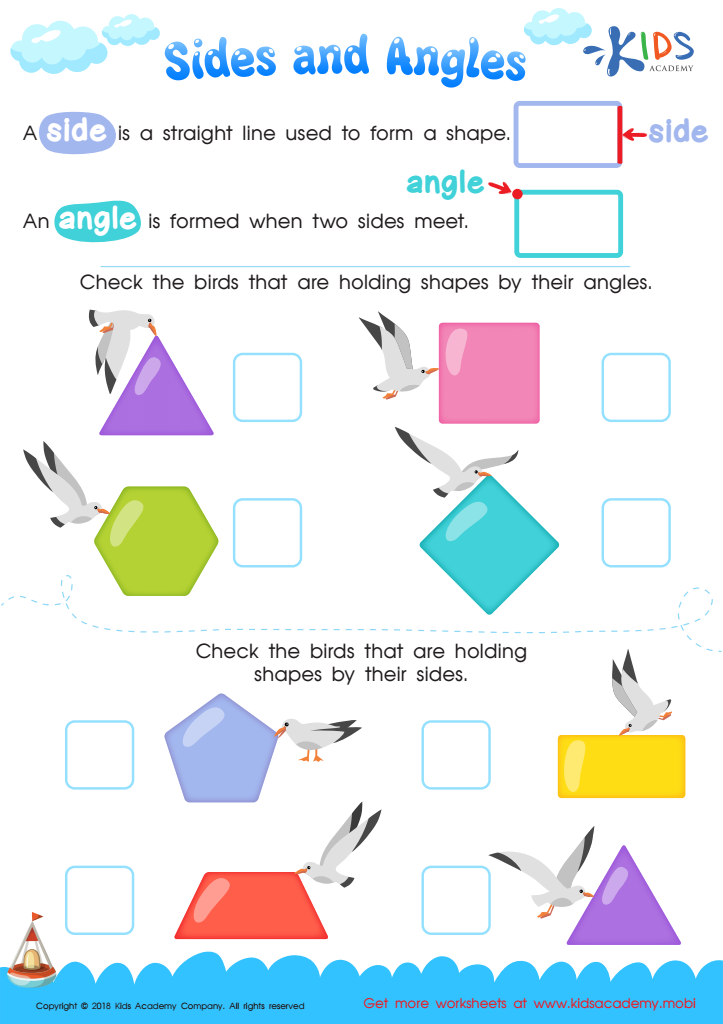
Sides and Angles Worksheet
 Assign to My Students





Understanding shapes is crucial for young children, especially between the ages of 3 and 9, as it forms the foundation for more advanced mathematical concepts and cognitive skills. When parents and teachers emphasize identifying shapes, they help children enhance their spatial awareness and visual perception. These skills are vital for daily activities as simple as recognizing objects, reading maps, and even playing sports.
Shapes are everywhere, and by learning to identify and differentiate them, children develop language and communication skills. For example, naming shapes like circles, squares, triangles, and rectangles helps in broadening children's vocabulary. Moreover, discussing the properties of shapes such as sides and corners introduces basic geometry concepts.
Furthermore, recognizing shapes aids in problem-solving and critical thinking. When children arrange shapes to fit puzzles or construct objects with building blocks, they engage in creative and independent thinking. These activities often lay the groundwork for understanding patterns, sequences, and symmetry—all important components of higher-level math and science.
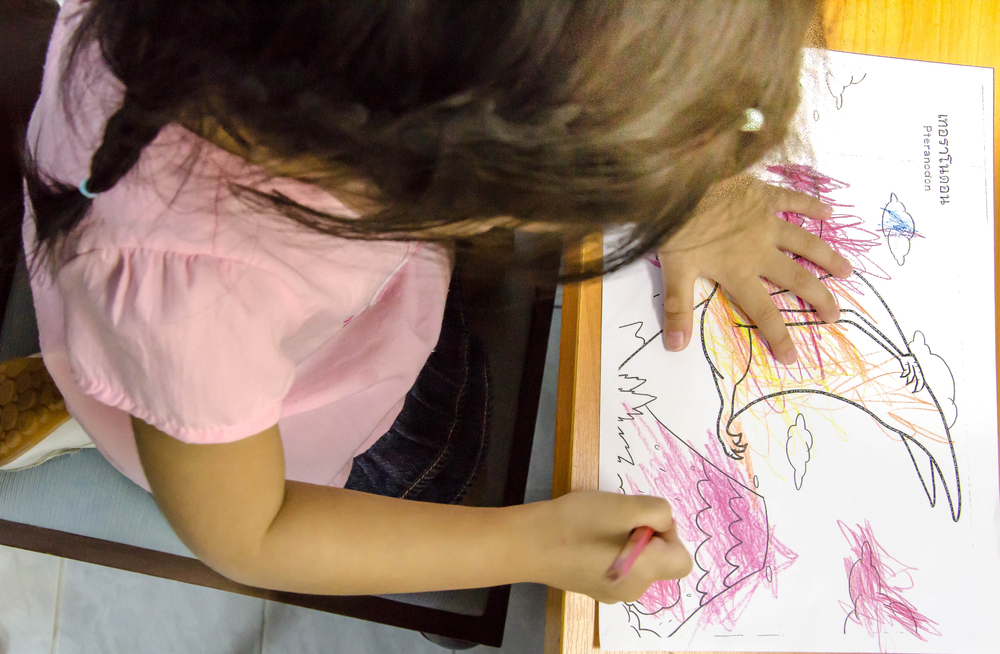
In addition to cognitive development, shape recognition strengthens fine motor skills through activities like drawing shapes or cutting them out with scissors. This physical engagement enhances hand-eye coordination and dexterity.
Caring about identifying shapes fosters an environment of curiosity and lifelong learning, equipping children with essential skills for their educational journey and everyday life.








