
Improve handwriting skills Worksheets for Ages 3-9
3 filtered results
Difficulty Level
Grade
Age
-
From - To
Subject
Activity
Standards
Enhance your child's penmanship with our "Improve Handwriting Skills" worksheets, tailored for ages 3-9. These engaging worksheets make learning fun, fostering fine motor skills and teaching proper letter formation. Designed by educational experts, each worksheet blends interactive activities with step-by-step instructions to guide your child in mastering cursive and print handwriting. From tracing shapes and letters to writing full sentences, our resources support individualized learning at every developmental stage. Perfect for at-home practice or classroom use, these printable worksheets will build confidence and ensure your child's handwriting skills progress beautifully. Explore more at Kids Academy!
Favorites
With answer key
Interactive
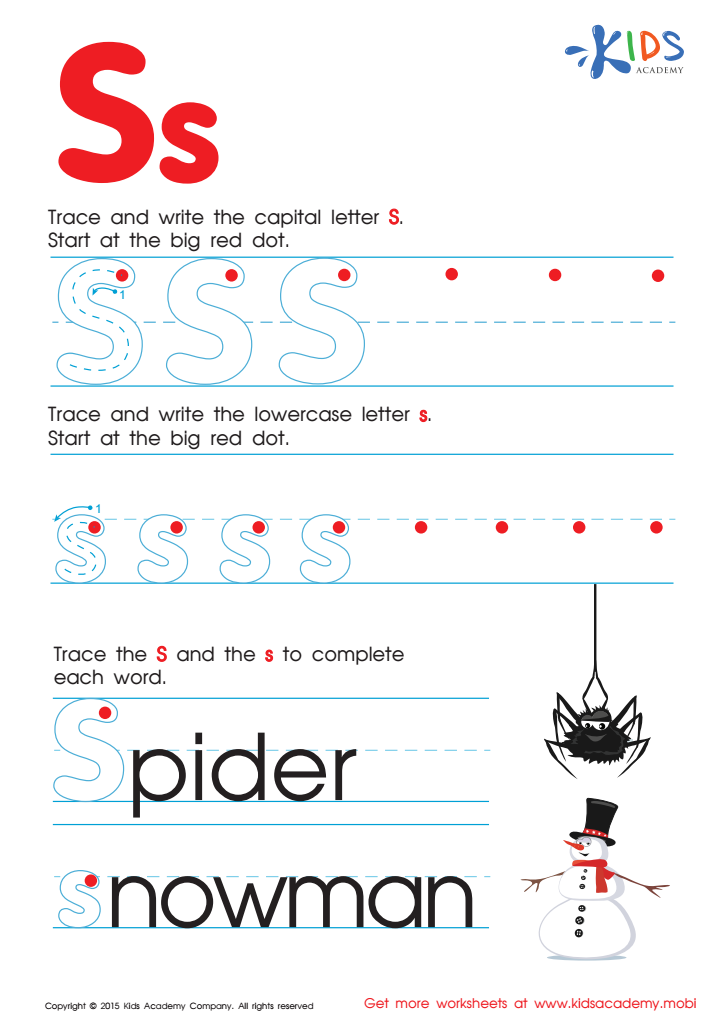
Letter S Tracing Page
Trace and write the capital and lowercase "S" on this ABC worksheet for kindergarten. Start with the big red dot and be careful. When you finish, help the spider and snowman in the pictures restore their words with the capital and lowercase letters. Continue learning the alphabet with Kids Academy.
 Assign to My Students
Letter S Tracing Page
Worksheet
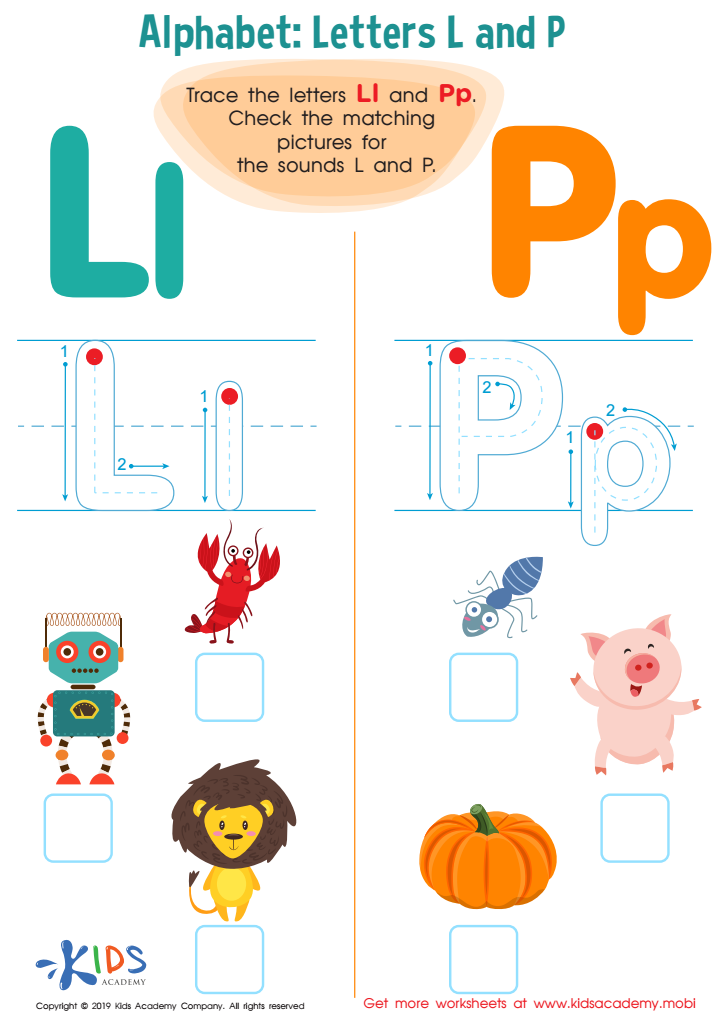
Letter L and P Tracing Worksheet
This traceable worksheet can motivate your students to learn and practice core skills. They'll trace the letters 'L' and 'P' and identify the pictures next to them. With this exercise, they'll unlock their learning abilities and excel in the subject!
Letter L and P Tracing Worksheet
Worksheet
Join Kids Academy for Free
Who is primarily going to use this learning content?








Improving handwriting skills for children aged 3-9 is crucial for their overall academic and personal development. During these formative years, handwriting lays the foundation for effective communication and cognitive growth. Fine motor skills are highly important at this age, and practicing handwriting helps to develop hand-eye coordination, muscle control, and dexterity. These skills also transfer to other essential activities like dressing, eating, and playing.
Additionally, good handwriting reinforces language learning. It involves learning letter shapes, sizes, and formation which supports early reading skills. When children focus on forming letters correctly, they are practicing how to write and comprehend their first words, thus fostering literacy and improving spelling skills.
Psychologically, neat handwriting boosts a child's confidence and self-esteem. Praise and positive reinforcement for their handwriting efforts instill a sense of accomplishment. This increased self-confidence can motivate them to tackle other academic challenges.
Moreover, handwritten work is never truly obsolete. In an increasingly digital world, the skill remains essential for note-taking, signatures, and certain examinations. Strong handwriting skills show attention to detail, which can have long-lasting positive implications in academic assessments and professional settings.
Therefore, investing time and effort in developing good handwriting during these early years can significantly benefit a child's educational trajectory and life skills.








