
Interpreting information Worksheets for Ages 3-9
3 filtered results
Difficulty Level
Grade
Age
-
From - To
Subject
Activity
Standards
Kids Academy’s "Interpreting Information Worksheets for Ages 3-9" are meticulously designed to enhance young learners' abilities to understand and process information effectively. These engaging, age-appropriate worksheets cover various skills including recognizing patterns, making predictions, and connecting ideas. With fun activities featuring colorful illustrations, children practice critical thinking, comprehension, and logical reasoning vital for academic growth. Perfect for both classroom and home use, they foster a passion for learning while building foundational skills in a supportive and interactive way. Empower your child’s educational journey and boost their confidence with tools tailored to their developmental needs at Kids Academy.
Favorites
With answer key
Interactive
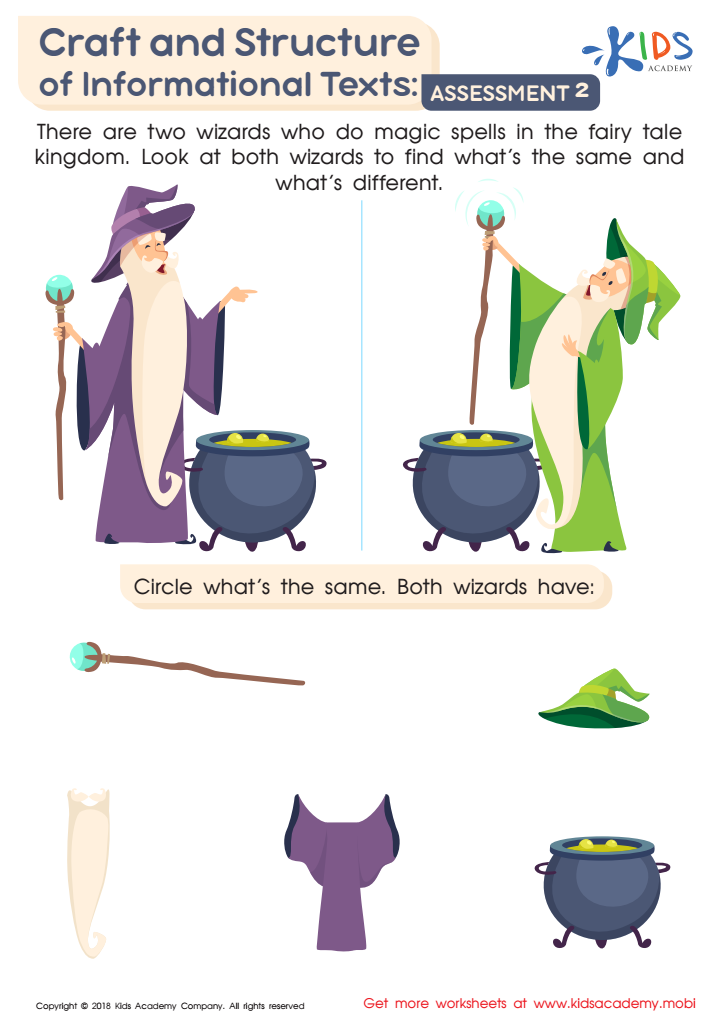
Craft and Structure of Informational Texts: Assessment 2 Worksheet
This assessment has kids looking at two similar fairy tale wizards, focusing on their visuals to find the similarities and differences. Then, they'll circle the things they both have. It's a great way to help children hone their detail-oriented comprehension skills, which is essential when using informational texts.
 Assign to My Students
Craft and Structure of Informational Texts: Assessment 2 Worksheet
Worksheet
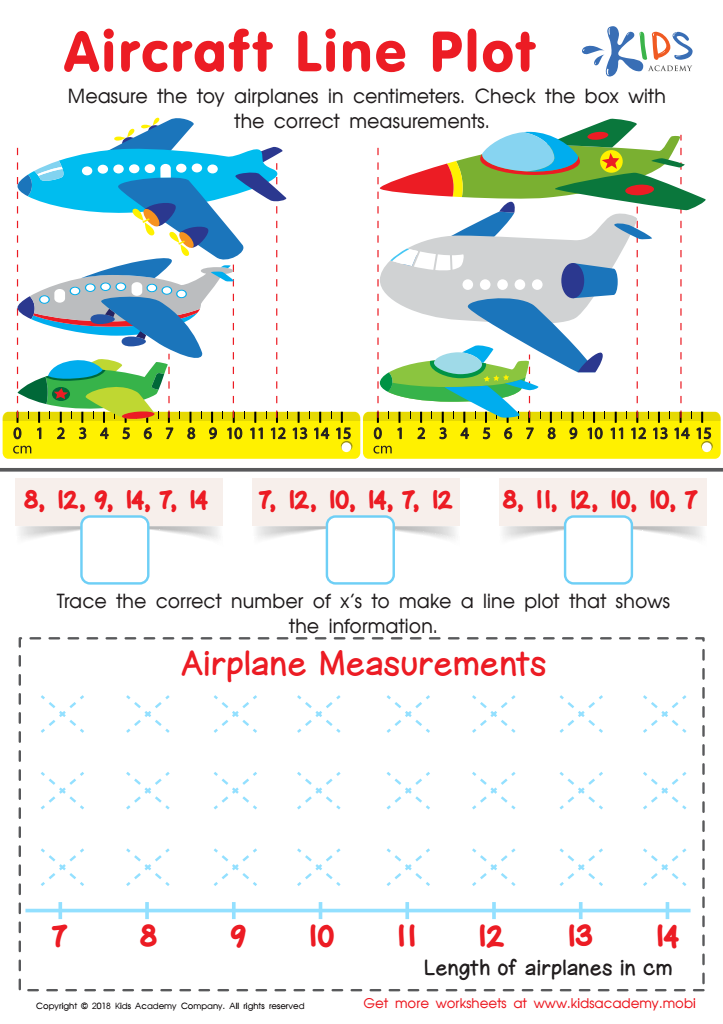
Aircraft Line Plot Worksheet
If your kids are aviation enthusiasts, they'll love this worksheet! Look at the picture with them, then ask them to measure the toy planes in cm. Check the box with the right measurements and then trace the x's to make a line plot with the data.
Aircraft Line Plot Worksheet
Worksheet
Join Kids Academy for Free
Who is primarily going to use this learning content?







Helping children between the ages of 3-9 learn to interpret information is foundational for their cognitive and social development. At this early stage, their brains are like sponges, absorbing everything around them but not yet equipped to fully understand what they perceive. Parents and teachers play a crucial role in guiding them through this information processing.
Firstly, interpreting information teaches critical thinking. Children learn to distinguish between fact and fiction, recognize patterns, and develop problem-solving skills. This helps in academic success across subjects like reading, math, and science.
Secondly, it nurtures emotional intelligence. By interpreting social cues and understanding their own and others' emotions, children develop empathy, build better relationships, and effectively manage their reactions.
Moreover, it promotes safety. In an age where media and technology are pervasive, discerning appropriate content and understanding the context is essential to protect children from misinformation and harmful material.
Lastly, these skills instill a lifelong love for learning. Curious, empowered children who can analyze and understand their world grow into informed, self-reliant adults. By actively engaging in interpreting information, parents and teachers foster a generation of thinkers and responsible citizens who can navigate a complex world confidently and competently.








