
Learning subtraction Worksheets for Ages 3-9
4 filtered results
Difficulty Level
Grade
Age
-
From - To
Subject
Activity
Standards
Discover a vibrant collection of learning subtraction worksheets designed for children aged 3-9! Our interactive materials are perfect for young learners to grasp the fundamentals of subtraction through engaging activities. Each worksheet is tailored to different skill levels, ensuring your child builds a solid math foundation while having fun. From visual aids to hands-on exercises, these worksheets encourage critical thinking and problem-solving skills. Our resources are perfect for homeschooling, classroom use, or additional practice at home. Empower your child to master subtraction with confidence and watch them thrive in their mathematical journey. Start exploring our selection today!
Favorites
With answer key
Interactive
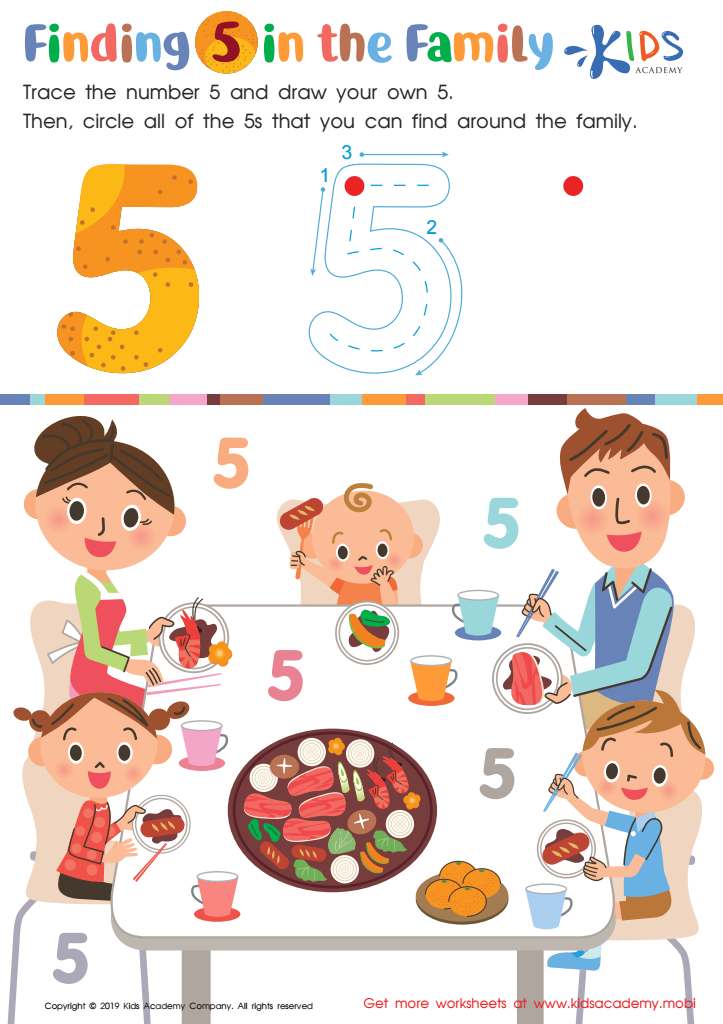
Finding 5 in the Family Worksheet
This worksheet helps kids identify and write the number 5. Ask what the family is doing and who the family members are. Help them trace and draw the 5, then have them circle all 5s in the picture.
 Assign to My Students
Finding 5 in the Family Worksheet
Worksheet
Join Kids Academy for Free
Who is primarily going to use this learning content?








Learning subtraction is a crucial skill for children aged 3 to 9, as it forms the foundation for their mathematical understanding and cognitive development. Early exposure to subtraction helps children grasp the concept of taking away, which is essential for everyday problem-solving. By mastering subtraction, children enhance their critical thinking and logic skills, which are vital for various life situations.
Subtraction fosters number sense, enabling children to understand relationships between numbers and comprehend how they interact. By practicing subtraction, children become more comfortable with math in general, reducing anxiety around the subject as they progress in their education. Furthermore, it’s not just a matter of numbers; learning subtraction enhances a child's ability to focus, practice patience, and develop perseverance.
Teachers and parents play a vital role in creating supportive learning environments. Engaging activities, such as games and practical applications, can make subtraction enjoyable. By encouraging a positive attitude toward math and subtraction at an early age, adults help set children up for future success in more advanced concepts. In summary, nurturing subtraction skills in young learners is beneficial for cognitive development, educational success, and building a lifetime appreciation for math.








