Math fact fluency Worksheets for Ages 3-9
3 filtered results
-
From - To
Enhance your child's math skills with our engaging Math Fact Fluency Worksheets designed specifically for ages 3 to 9! These printable resources offer a fun and interactive way for young learners to master essential math concepts, from addition and subtraction to fundamental multiplication and division. With vibrant illustrations and age-appropriate exercises, children can build confidence and speed in their calculations. Our worksheets encourage independent learning, catering to various skill levels while making math a delightful experience. Perfect for home or classroom use, these worksheets are a fantastic tool to ensure your child achieves math fluency and a solid foundation for future learning!
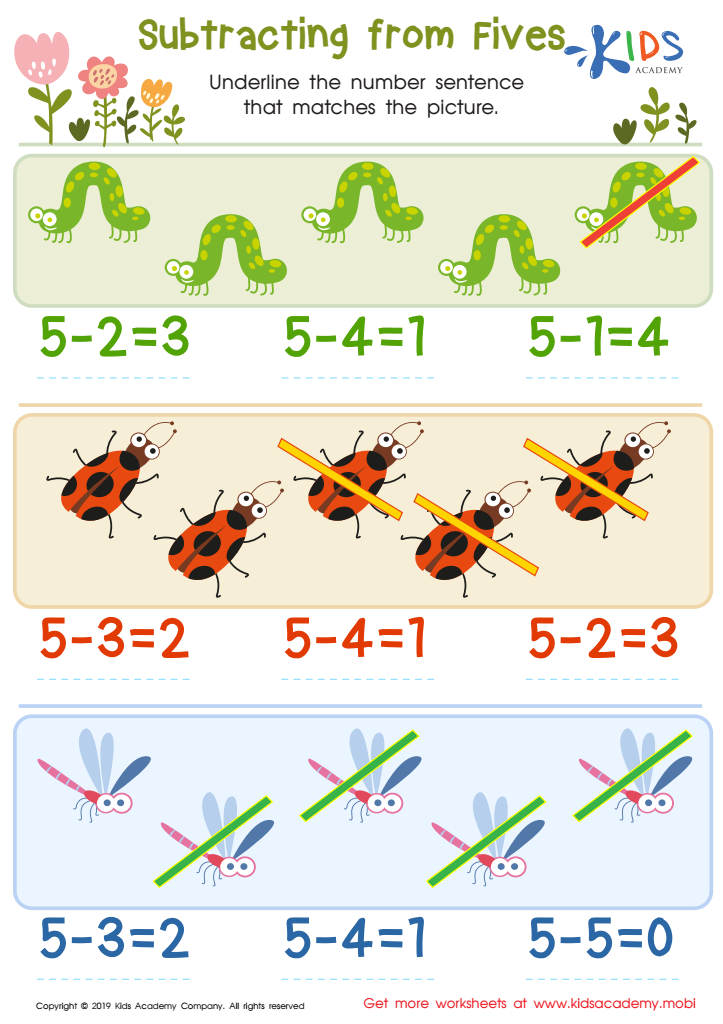
Subtracting From Fives Worksheet
 Assign to My Students
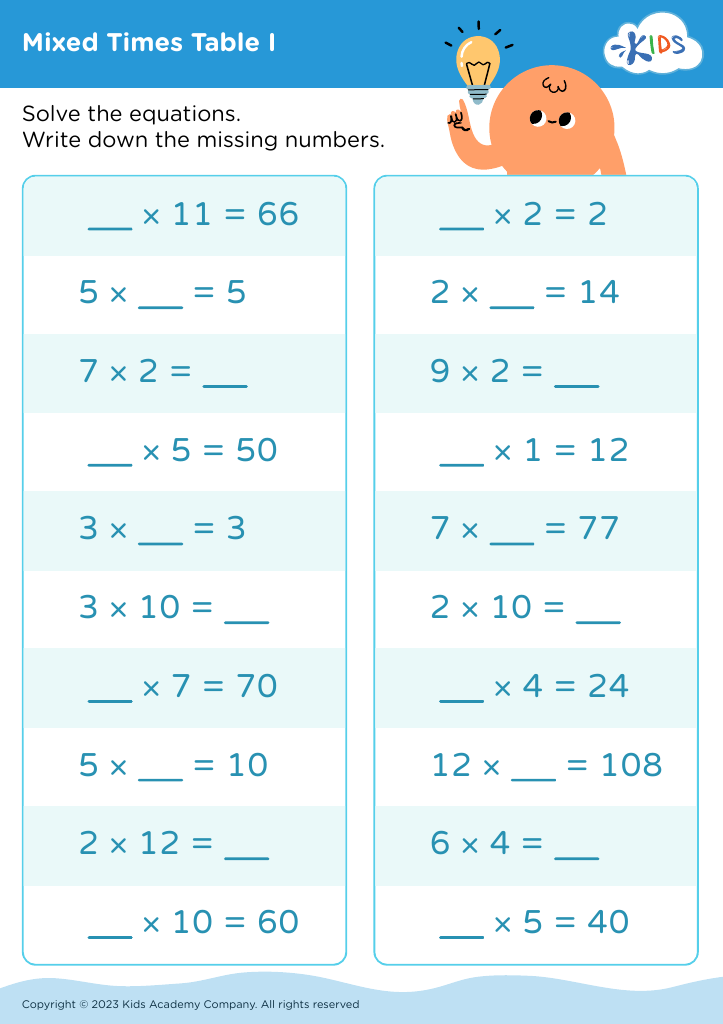
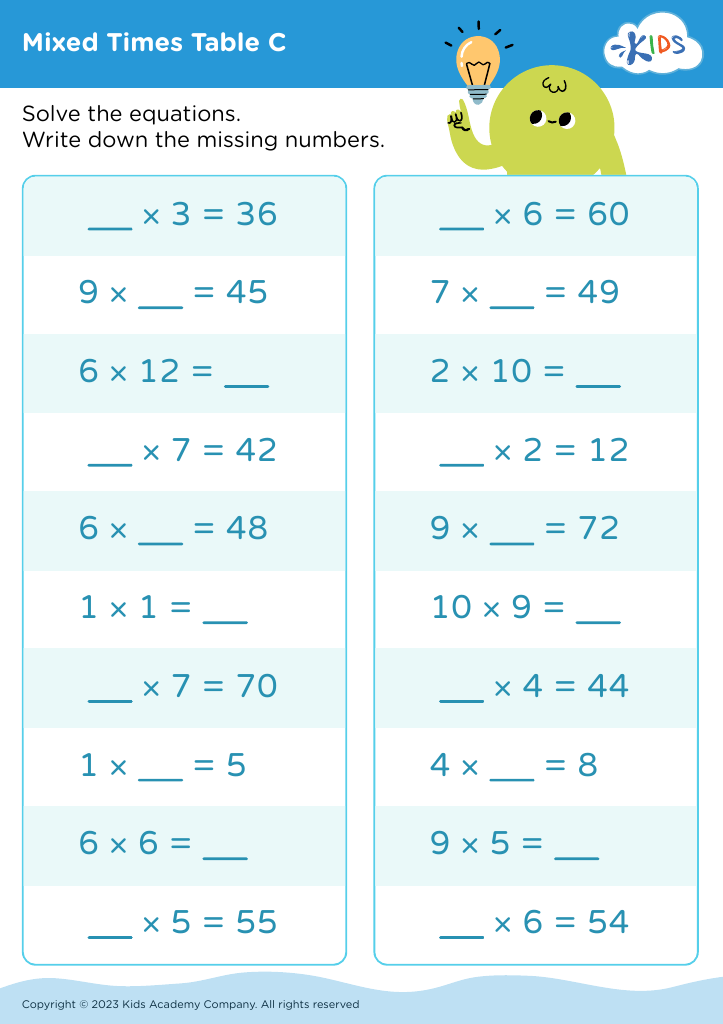






Math fact fluency in young children, ages 3 to 9, is crucial for their overall mathematical development. At this early stage, children are laying the foundation for future math skills that they will use throughout their lives. Mastering basic math facts—such as addition, subtraction, multiplication, and division—allows children to solve problems more efficiently and with greater confidence, fostering a positive attitude towards math.
Parents and teachers should care about this fluency because it enhances cognitive abilities and improves critical thinking skills. When children become comfortable with basic math facts, they can devote more cognitive resources to problem-solving and higher-level math concepts, making math more approachable and less intimidating.
Additionally, math fact fluency supports other areas of learning, as many real-world tasks and future academic subjects rely on these foundational skills. It can also play a significant role in shaping a child’s self-esteem; students who struggle with fundamental math concepts may develop anxiety about math, which can persist into later years. By nurturing fluency early on, adults can set children on a path of success, ensuring that they engage positively with math throughout their educational journey.








