
Number tracing Worksheets for Ages 3-9
4 filtered results
Difficulty Level
Grade
Age
-
From - To
Subject
Activity
Standards
Discover our engaging Number Tracing Worksheets designed for children aged 3-9! These printable resources help young learners develop essential fine motor skills and comprehension of numbers in a fun and interactive way. Tailored to various skill levels, our worksheets guide kids through the process of tracing numbers, enhancing their handwriting while reinforcing number recognition and sequencing. With colorful illustrations and simple instructions, children will enjoy practicing their counting and tracing abilities independently or with family support. Perfect for homeschooling or classroom activities, our worksheets lay a solid foundation for your child's mathematical journey. Start enhancing their learning experience today!
Favorites
With answer key
Interactive
 Assign to My Students
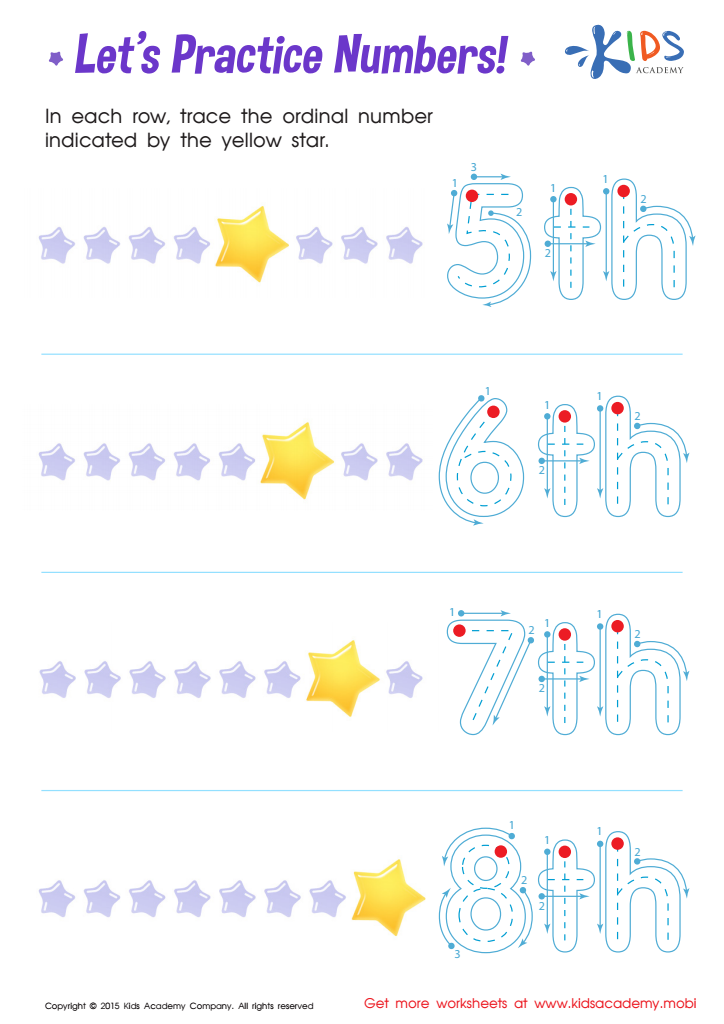
Ordinal Numbers: Let's Practice Numbers Printable
Worksheet
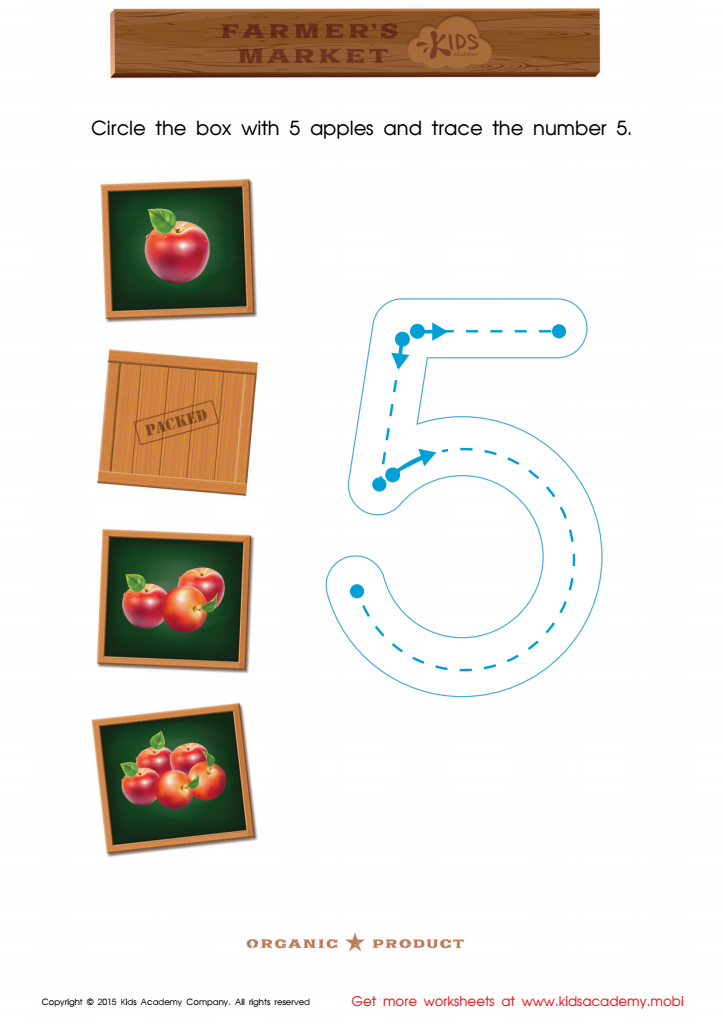
Count the Apples and Trace the Number 5 Printable
Count the juicy apples in each box, find the one with 5 and trace the number 5 following the arrows. Practice makes perfect! Print and get your little mathematician counting.
Count the Apples and Trace the Number 5 Printable
Worksheet
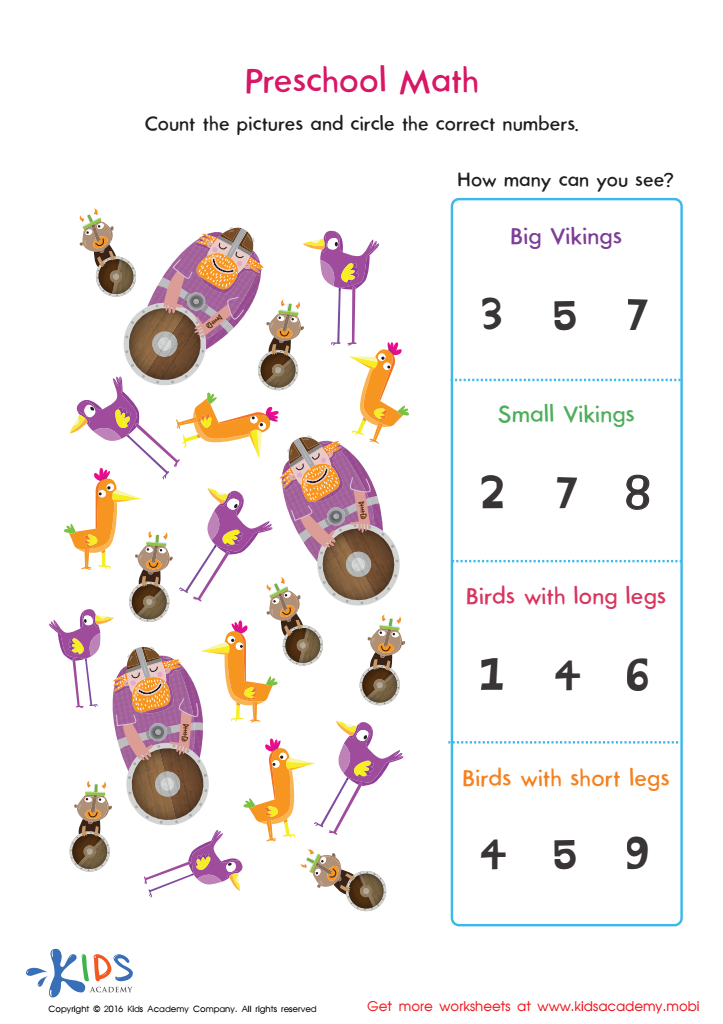
Counting Worksheet: Preschool Math
Worksheet
Join Kids Academy for Free
Who is primarily going to use this learning content?








Number tracing is an essential activity for children aged 3-9, as it lays a strong foundation for their mathematical skills and overall cognitive development. For parents and teachers, this practice promotes fine motor skills, enhancing hand-eye coordination, and muscle control, which are crucial for writing and other tasks. Tracing numbers helps children familiarize themselves with numerals, enabling recognition and recall. This familiarity is a critical precursor to mathematical concepts like counting, addition, and subtraction.
Additionally, number tracing can foster confidence in young learners. As children see their progress through improvement in their tracing skills, they build a sense of achievement that encourages a positive attitude towards learning. It also promotes focus and concentration, essential attributes as they move into more complex academic themes.
Moreover, number tracing activities can be fun and engaging. When incorporated into playful learning, they can turn a challenging concept into an enjoyable experience. By introducing number tracing through games, stories, or crafts, parents and teachers can cultivate an environment where mathematics becomes a natural part of a child's exploration of the world. In summary, number tracing is a significant stepping stone that nurtures fundamental skills and confidence for lifelong learning in mathematics.








