Numerical comparisons Worksheets for Ages 3-9
3 filtered results
-
From - To
Explore our engaging Numerical Comparisons Worksheets designed for children ages 3-9! These interactive resources help young learners develop essential math skills by comparing numbers, understanding greater and lesser values, and strengthening their analytical abilities. Each worksheet is crafted to encourage critical thinking, making math fun and accessible. With colorful images and age-appropriate activities, children will enhance their numerical understanding through playful learning. Perfect for homeschooling, classroom use, or extra practice at home, our worksheets support a robust foundation in mathematics. Start your child's journey into numbers today, and watch their confidence grow as they master numerical comparisons!
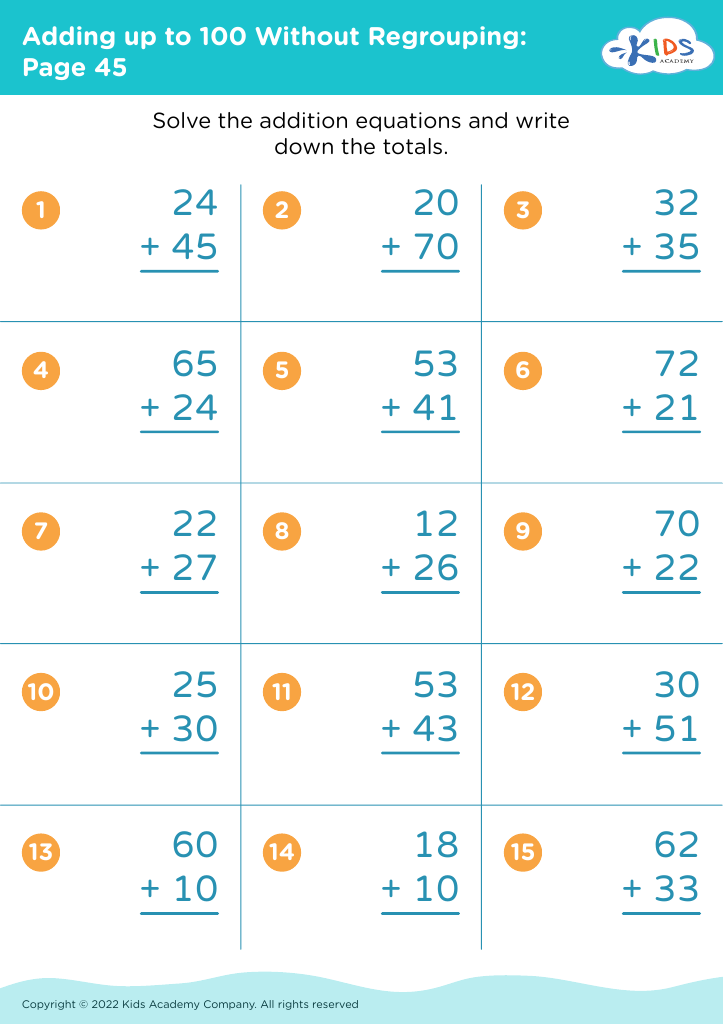







Numerical comparisons are fundamental to a child's early mathematical development and lay the groundwork for future learning. For children ages 3-9, understanding how to compare quantities, sizes, and amounts helps them develop critical thinking and problem-solving skills. These skills are not only vital in math but also in daily life, as children learn to evaluate and make decisions based on numerical information.
Encouraging engagement with numerical comparisons at a young age can foster a positive attitude toward math. Parents and teachers can use everyday situations—like comparing the number of apples to oranges to discussing sizes of toys—to make learning fun and relatable. This hands-on approach helps children conceptualize math as more than just numbers; it becomes a practical tool they can apply.
Moreover, strong foundational skills in numerical comparisons are correlated with later success in mathematics, contributing to better academic outcomes. Understanding relative quantities helps prepare children to tackle more complex concepts like addition, subtraction, and even fractions later on. By promoting mathematical literacy from an early age, we can empower children to become confident learners and problem solvers, ready to engage with the world around them. Thus, parents and teachers should prioritize and nurture these skills.








