Nurture your child's natural curiosity with our Observation Skills Worksheets designed for ages 3-9. These engaging worksheets help young learners enhance their attention to detail and critical thinking abilities. From spotting differences to matching exercises, each activity is crafted to sharpen focus and improve cognitive development in a fun, interactive way. Perfect for both classroom and home use, our printable resources offer a variety of visual challenges that keep kids entertained while they learn. Boost your child's observational skills and pave the way for academic success with our expertly designed worksheets. Explore and download now!

Check out this FREE "Observation skills" Trial Lesson for age 3-9!

Skip Counting and Your Fingers to Divide

Favorites
With answer key
Interactive
  • 3-9
  • Observation skills
What Do You See? Reading Worksheet

What Do You See? Reading Worksheet

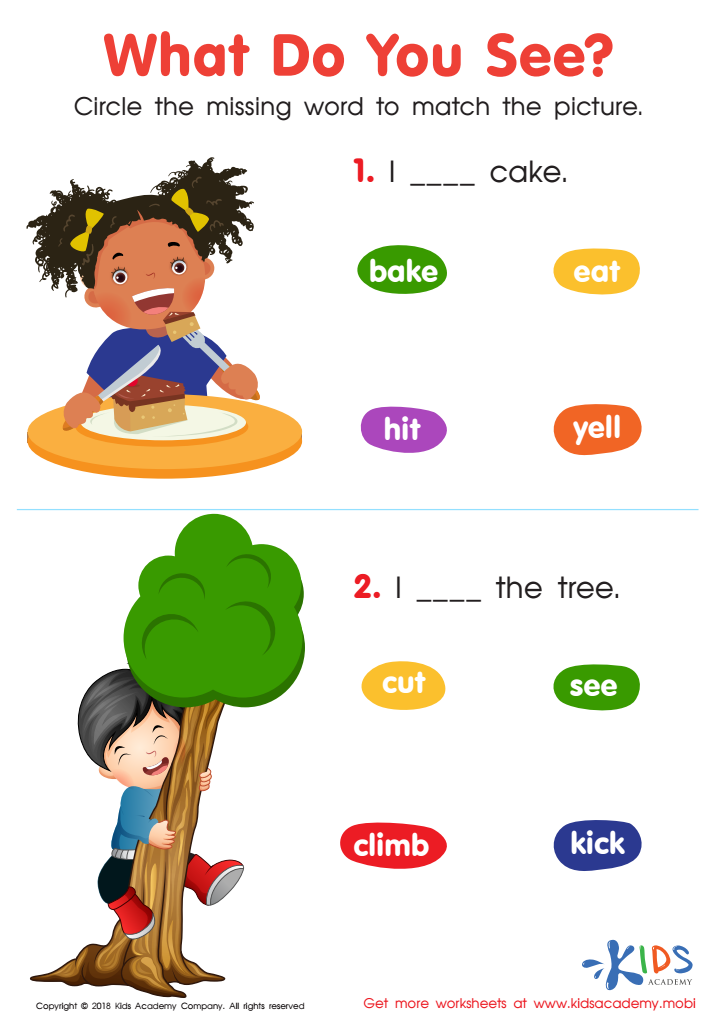
New readers can use the attractive pictures and high-frequency words on this worksheet to practice expressive language skills and decode as they fill in the blanks. As they circle the correct words, they'll feel like reading superstars!
What Do You See? Reading Worksheet
Worksheet
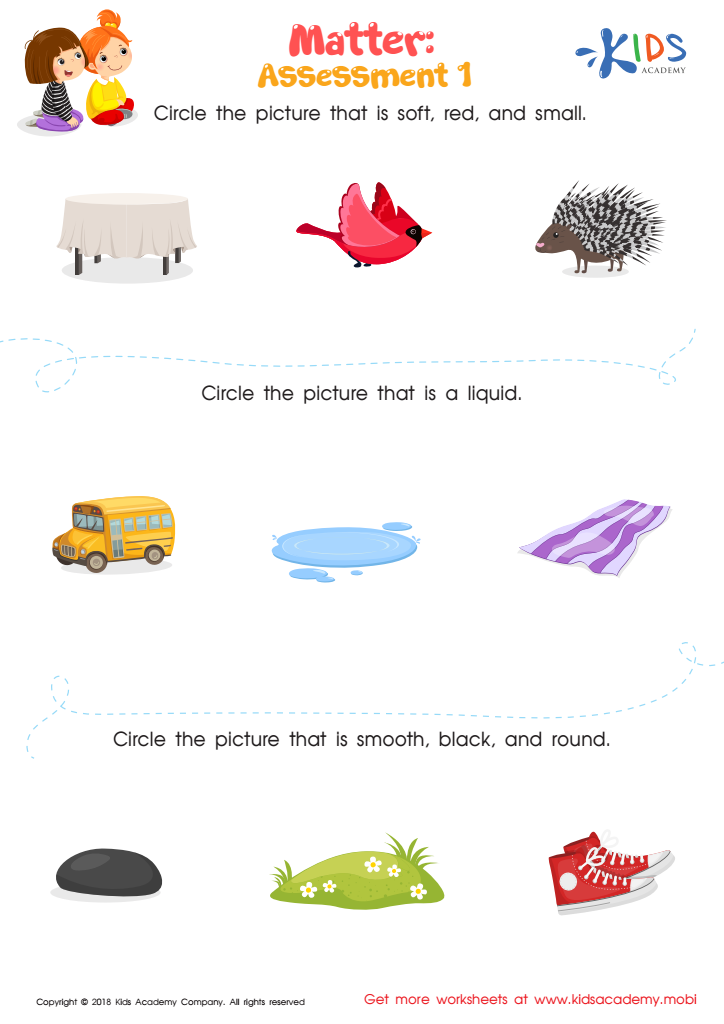
Matter: Assessment 1 Worksheet

Matter: Assessment 1 Worksheet

Have your children learn that anything that has weight and takes up space is matter. Examples include buses, tables, people, animals, and more. Use this worksheet to help them identify the objects and circle the soft, red, and small one; the liquid; and the smooth, black, and round one.
Matter: Assessment 1 Worksheet
Worksheet
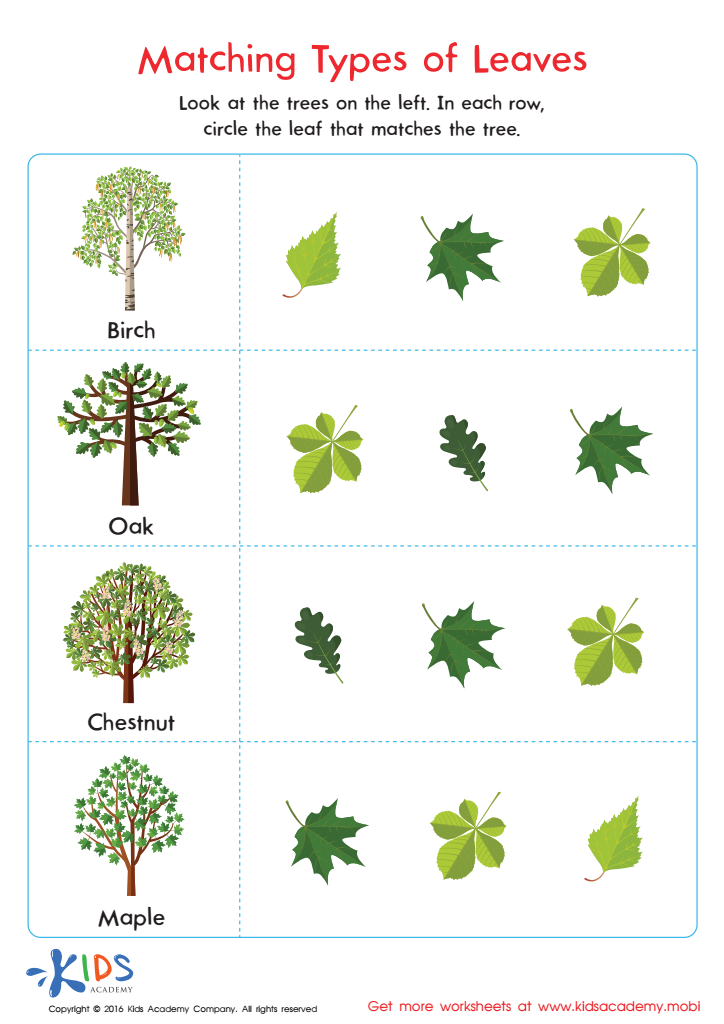
Different Types of Leaves Worksheet

Matching Types of Leaves Printable
Trees are beautiful and essential to life. Show your child the joy of learning about them with this leaf worksheet. It teaches tree identification and encourages observing nature. Expand the learning with additional activities about trees!
Matching Types of Leaves Printable
Worksheet
How Many Tadpoles Worksheet

How Many Tadpoles Worksheet

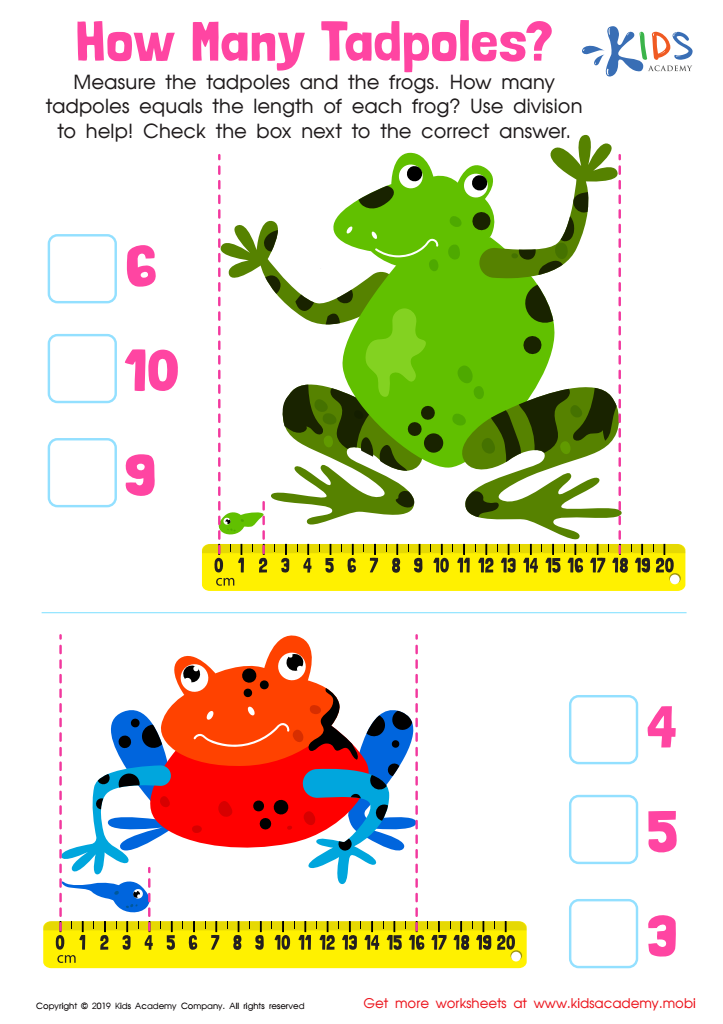
Kids love tadpoles! They'll have fun using them to work out the measurements of their frog friends. By dividing the length of the frogs by the length of the tadpoles, children can deduce how many tadpoles it takes to equal a frog. With the use of 'how many' and 'each' they'll solve math problems without realizing it!
How Many Tadpoles Worksheet
Worksheet
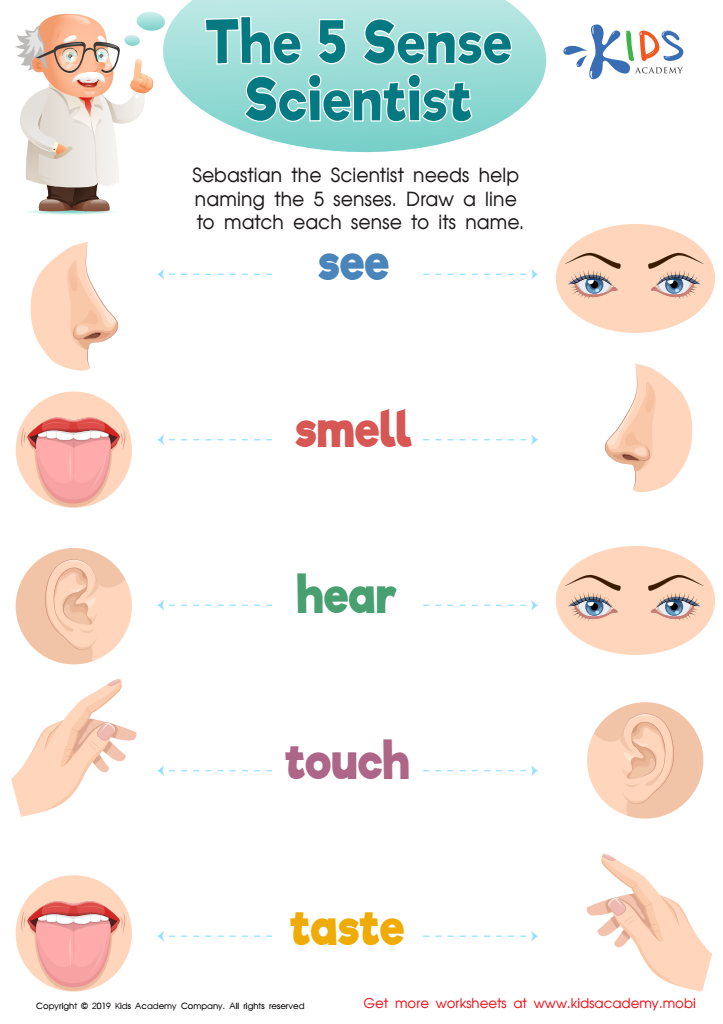
The 5 Sense Scientist Worksheet

The 5 Sense Scientist Worksheet

Our young children will have fun learning about their five senses with this free Sense Scientist worksheet. Helping Sebastian the Scientist, they'll name the five senses and use traceable lines to connect each picture with its correct sense. Colorful words and pictures will create a memorable picture representation.
The 5 Sense Scientist Worksheet
Worksheet
Pendulum experiment worksheet for 3rd grade

Pendulum Experiment Worksheet For 3rd Grade
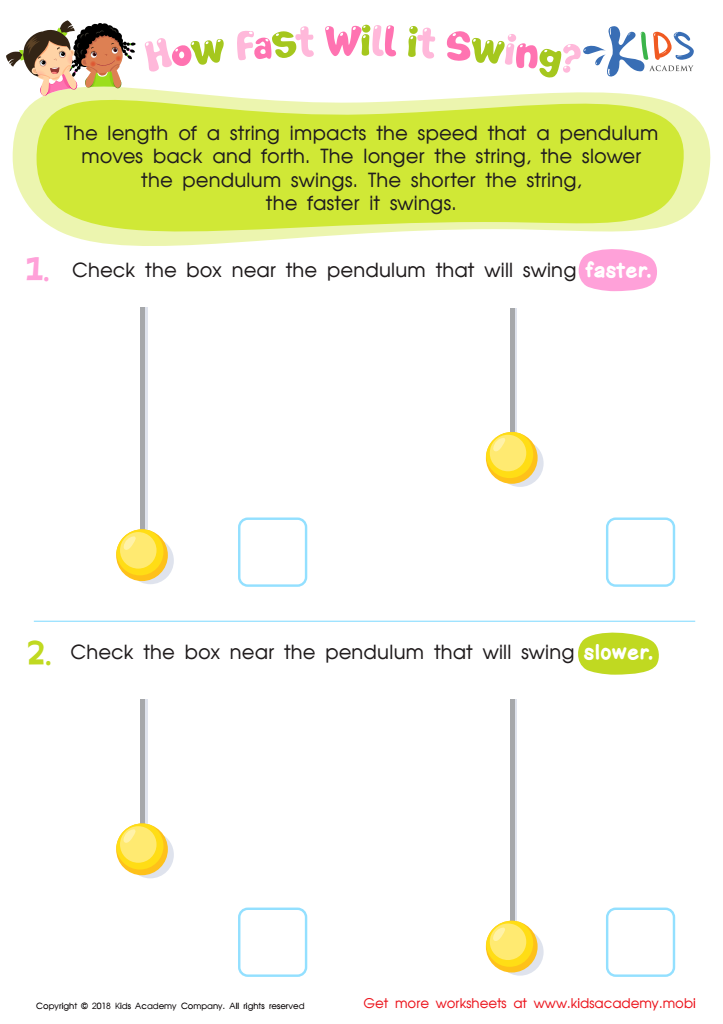
Time to flex those science muscles! A pendulum's speed depends on its string length. Complete this 3rd grade pendulum experiment worksheet and experiment with a yo-yo at home! Read the description to answer the questions correctly.
Pendulum Experiment Worksheet For 3rd Grade
Worksheet
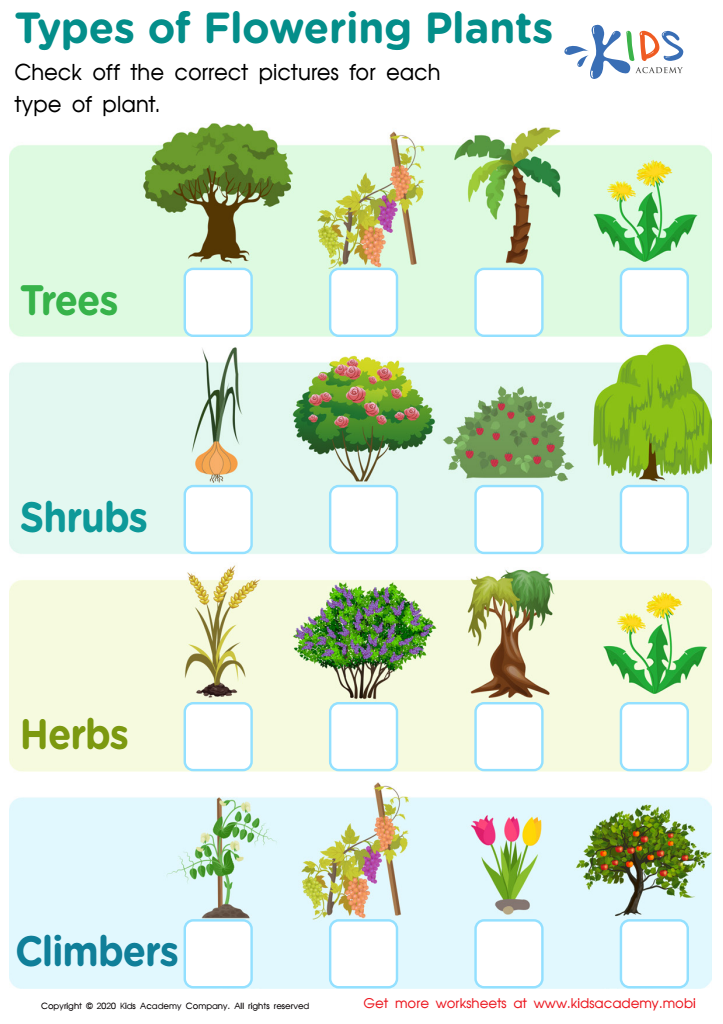
Types of Flowering Plants Worksheet

Types of Flowering Plants Worksheet

Help kids explore the variety of plants around them! Have them discover trees, shrubs, herbs, and vines with this fun science worksheet. Print it and let them match the plant pictures to their correct names. It's an exciting learning experience that'll let them check off the right images and explore the botanical world.
Types of Flowering Plants Worksheet
Worksheet
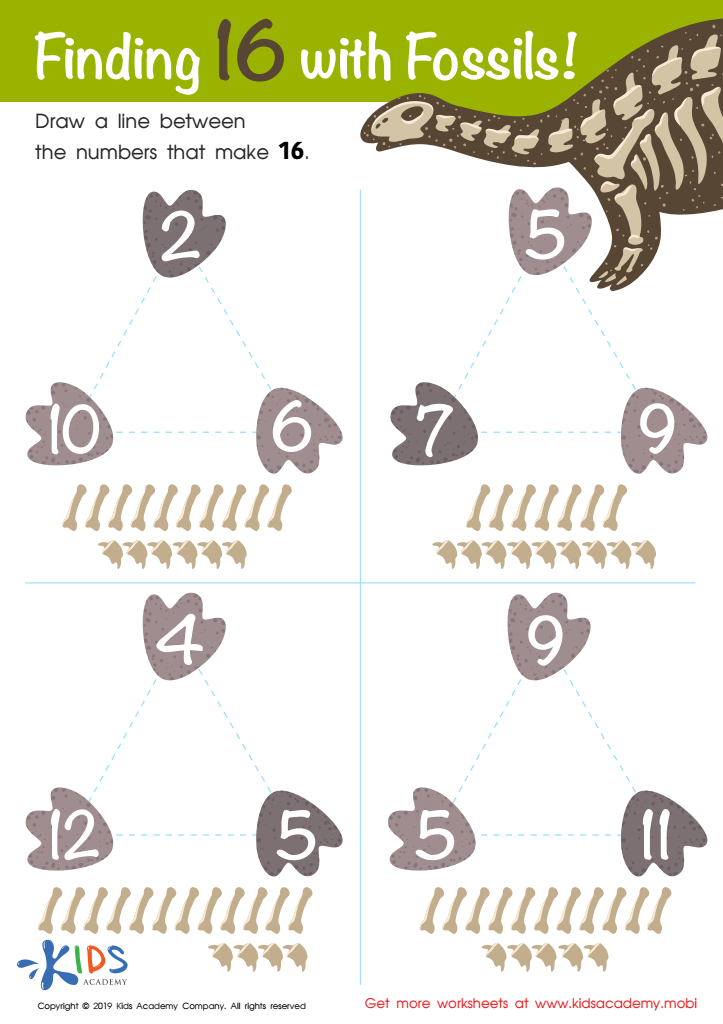
Finding 16 With Fossils Worksheet

Finding 16 With Fossils Worksheet

Experts hunt for fossils, dig them up, and study them to learn more about past life forms - how they lived, what they looked like, and when they lived. Show kids the picture in this worksheet and point out the fossils. Help them count the bones and draw a line between the numbers that add up to 16 in each triangle.
Finding 16 With Fossils Worksheet
Worksheet
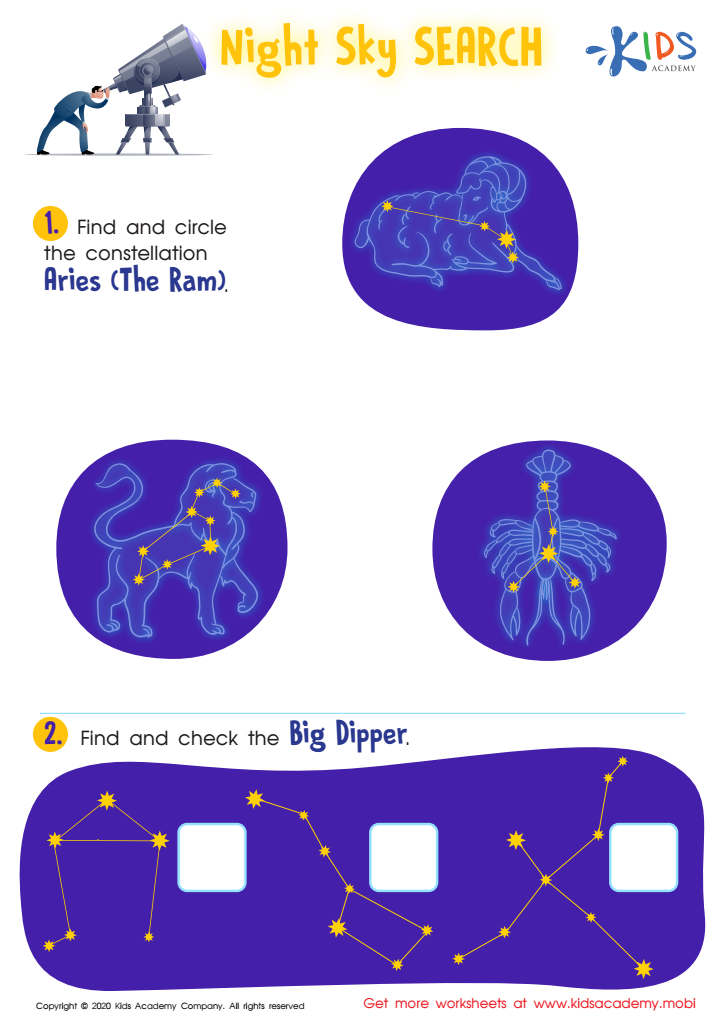
Night Sky Search Worksheet

Night Sky Search Worksheet

Gaze up into the night sky and spot the stars! Your little astronomer can learn about Aries and Big Dipper constellations with this science worksheet. Simply find the ram for Aries and check the box for Big Dipper. Then, when the weather is right, go outside and look for them in the night sky!
Night Sky Search Worksheet
Worksheet
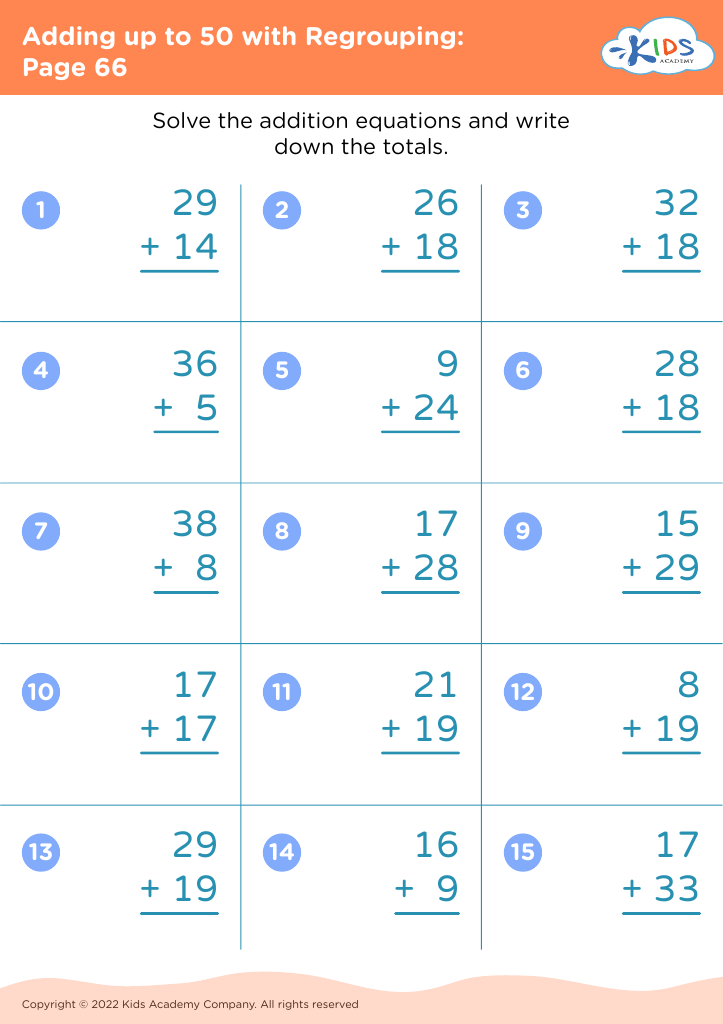
Adding up to 50 with Regrouping: Page 66
Worksheet
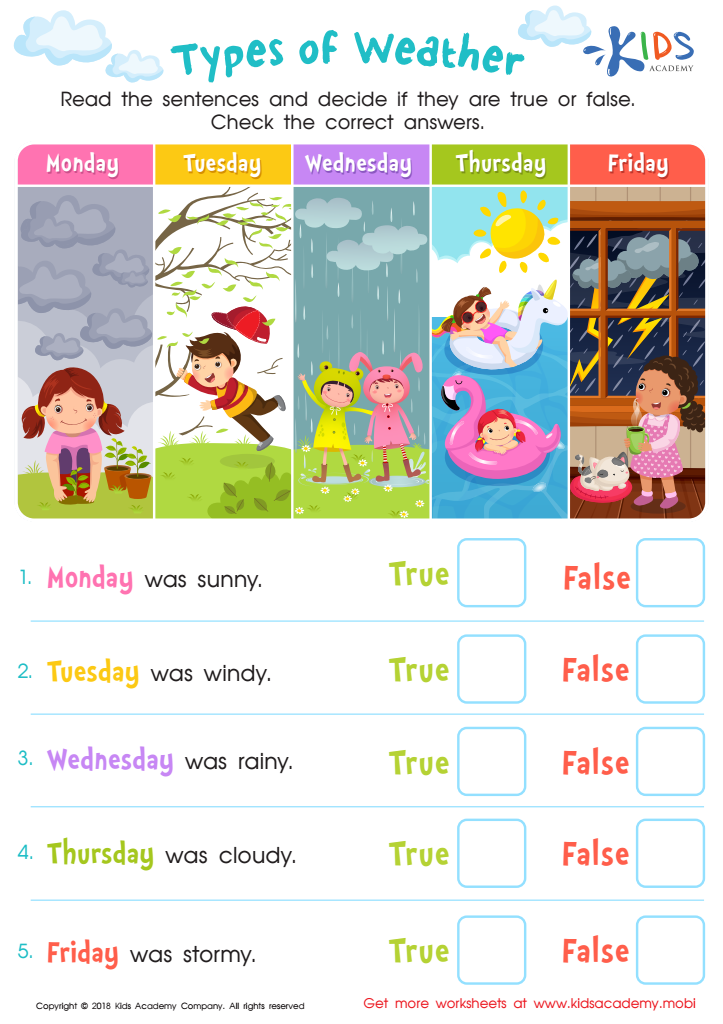
Types of Weather Worksheet
Types of Weather Worksheet

This worksheet will test your child's knowledge of the weather. Show them the pictures of five days of the week, each with a different weather and ask them to describe it. Then read the sentences and ask if they're true/false. Help them find the right answers.
Types of Weather Worksheet
Worksheet
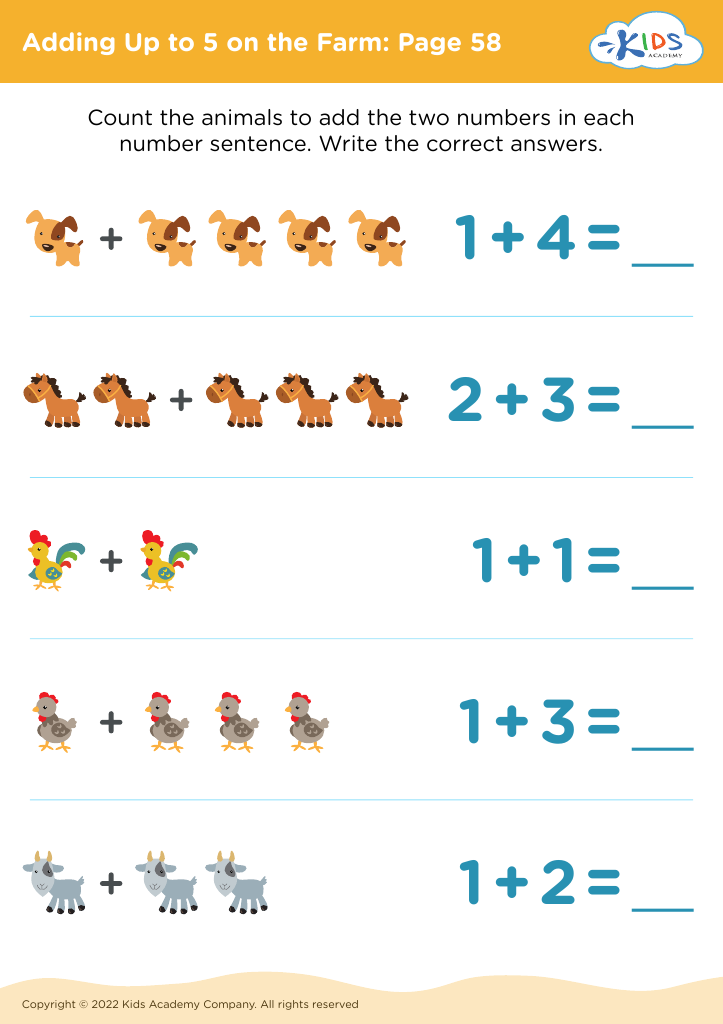
Adding Up to 5 on the Farm: Page 58
Worksheet
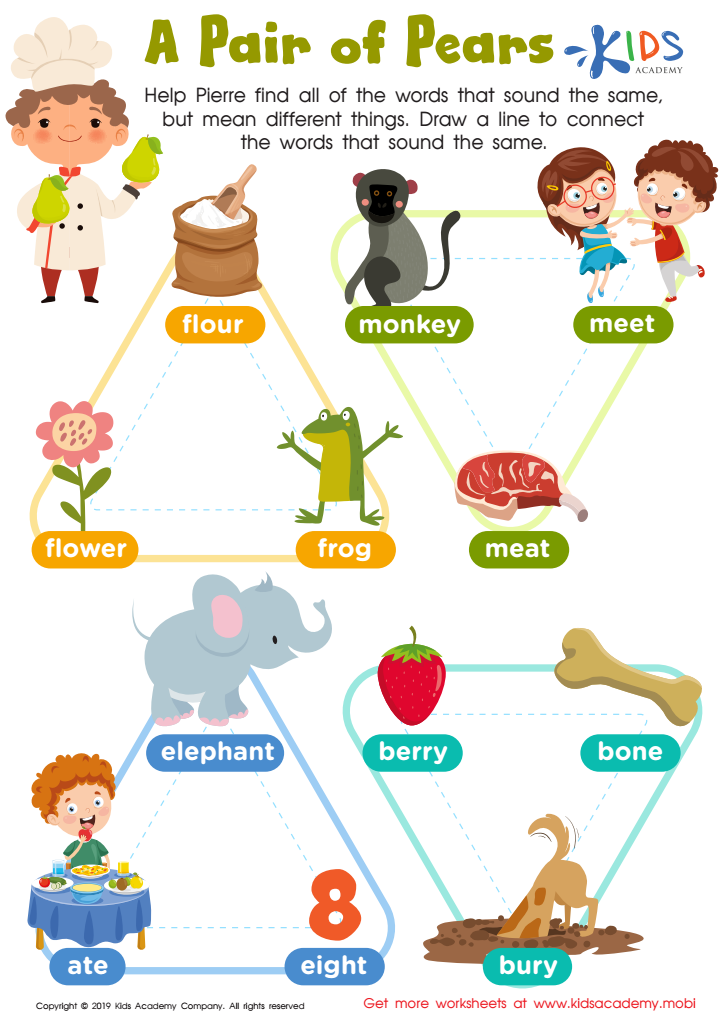
Pair Pears Worksheet
Pair Pears Worksheet

Young readers can have difficulty knowing when to use the right homophone. This free worksheet helps them use familiar imagery to understand better by connecting words that sound similar but are spelled and mean different things. Students will trace the lines to form a picture and have a reference image to differentiate between the different homophones.
Pair Pears Worksheet
Worksheet


Observation skills are crucial for young children (ages 3-9) as they form the foundation for learning and development. Parents and teachers should care deeply about honing these skills for several reasons.

Firstly, observation allows children to make sense of the world around them. By paying attention to details, they learn to recognize patterns, understand cause and effect, and develop critical thinking abilities. For example, observing plants grow can teach them about nature, while noticing emotional cues in others can improve their empathy and social skills.

Secondly, strong observation skills enhance academic learning. In subjects like science and math, paying close attention to experiments or problem-solving steps is essential. These skills translate into better performance in the classroom and a deeper understanding of core concepts.

Additionally, observation aids in creativity and imagination. Whether in art, storytelling, or play, children who notice more about their environment can generate richer, more detailed creative work.

Furthermore, developing these skills early on sets a strong foundation for lifelong learning and curiosity. Observant children are generally more engaged and inquisitive, qualities that are invaluable as they grow older and face more complex challenges.

In summary, investing time in nurturing observation skills for young children equips them with the cognitive tools necessary for both academic success and emotional intelligence, fostering well-rounded development.