Understanding citizenship Worksheets for Ages 3-9
6 filtered results
-
From - To
Discover our engaging "Understanding Citizenship Worksheets for Ages 3-9," designed to introduce young learners to the vital concepts of community, responsibility, and belonging. Our worksheets incorporate fun activities that promote awareness of individual roles in society, helping children to understand the importance of sharing, fairness, and respect. These resources blend educational content with enriching exercises, making learning about citizenship enjoyable and relatable. Ideal for parents and educators aiming to cultivate a sense of responsibility and community involvement in children, these worksheets set the foundation for becoming caring and informed citizens. Explore our diverse worksheet collection to support your child’s development today!
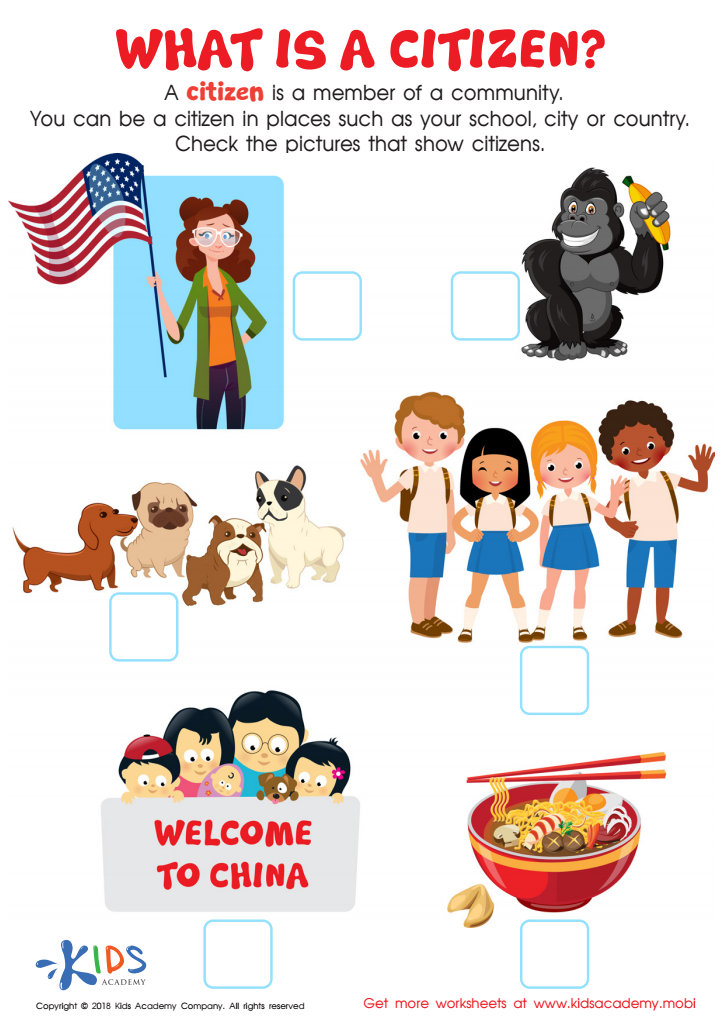
What is a Citizen? Worksheet
 Assign to My Students
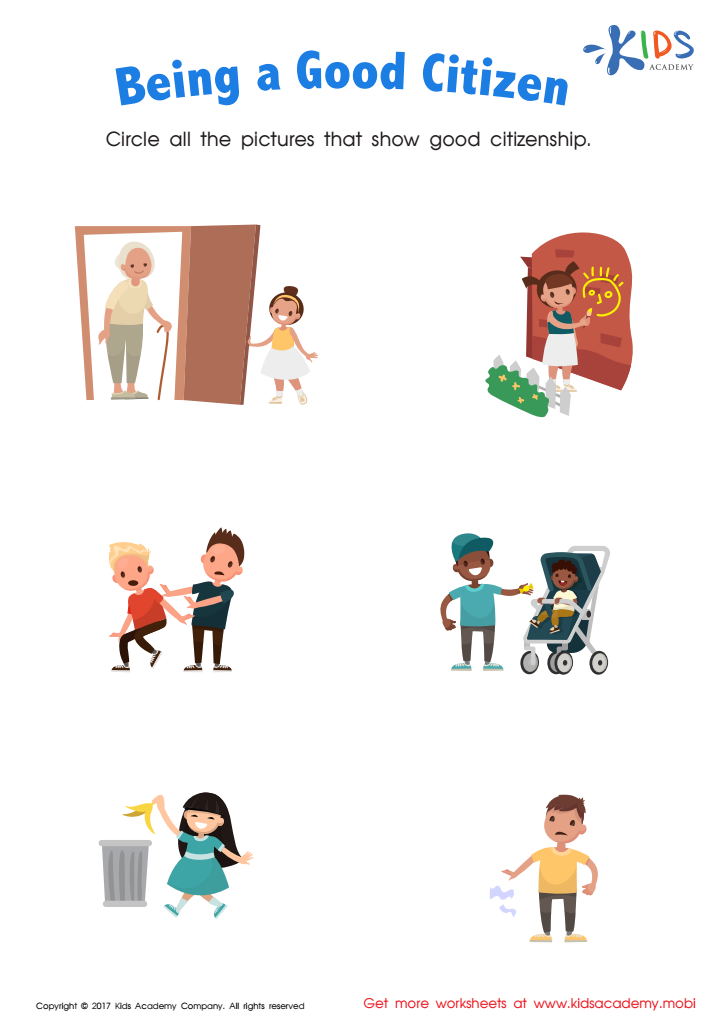
Being a Good Citizen Printable
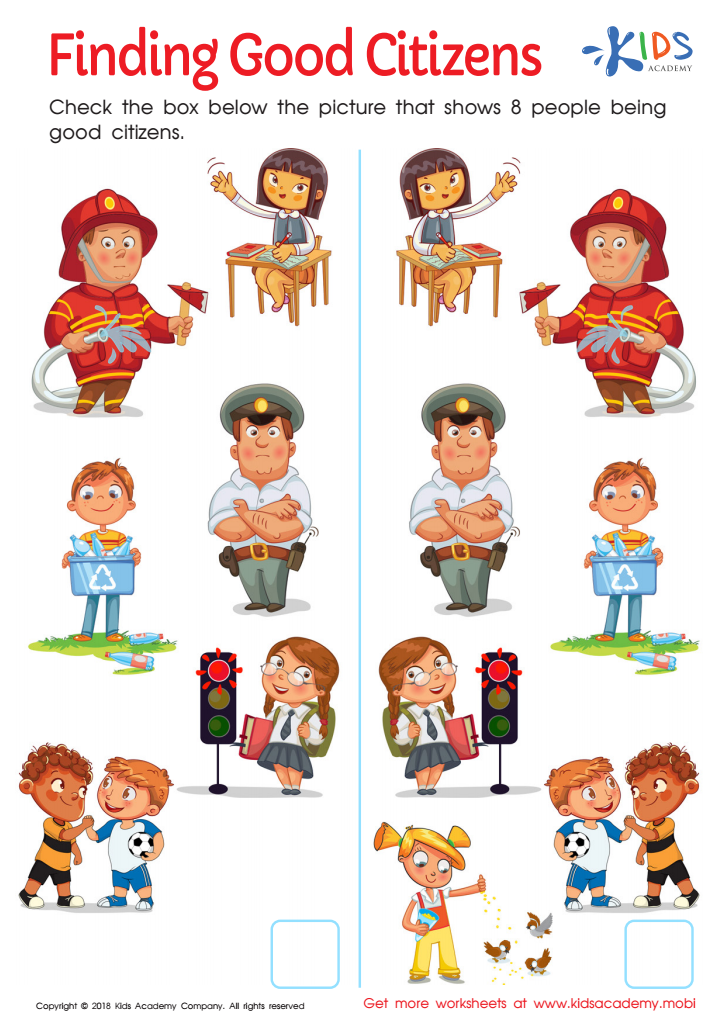
Finding Good Citizens Worksheet
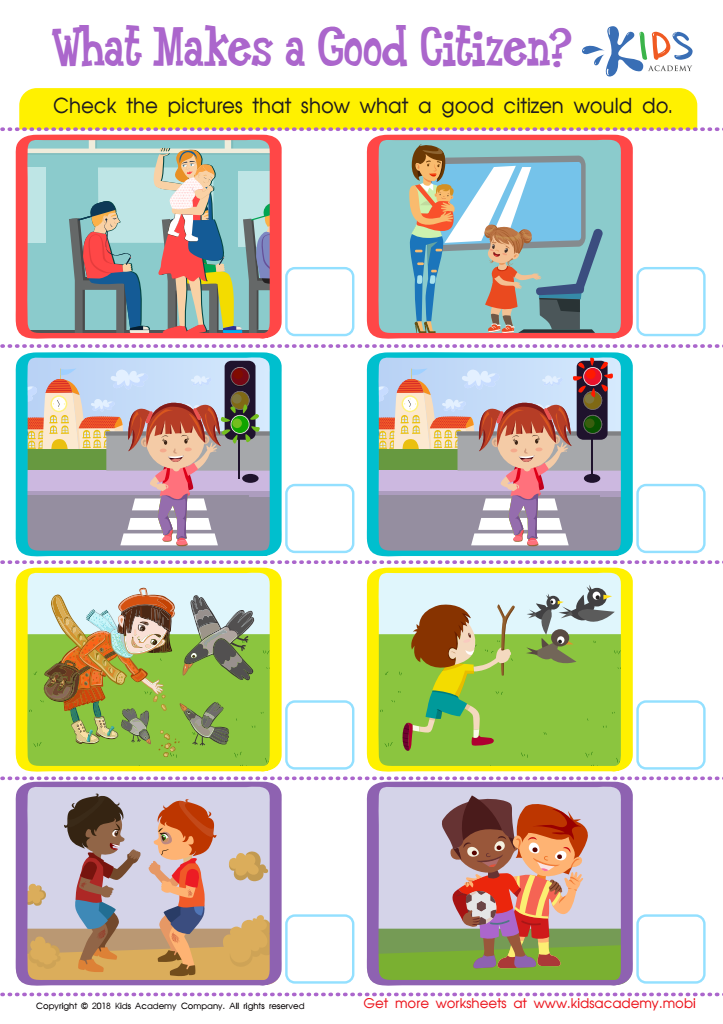
What Makes a Good Citizen? Worksheet
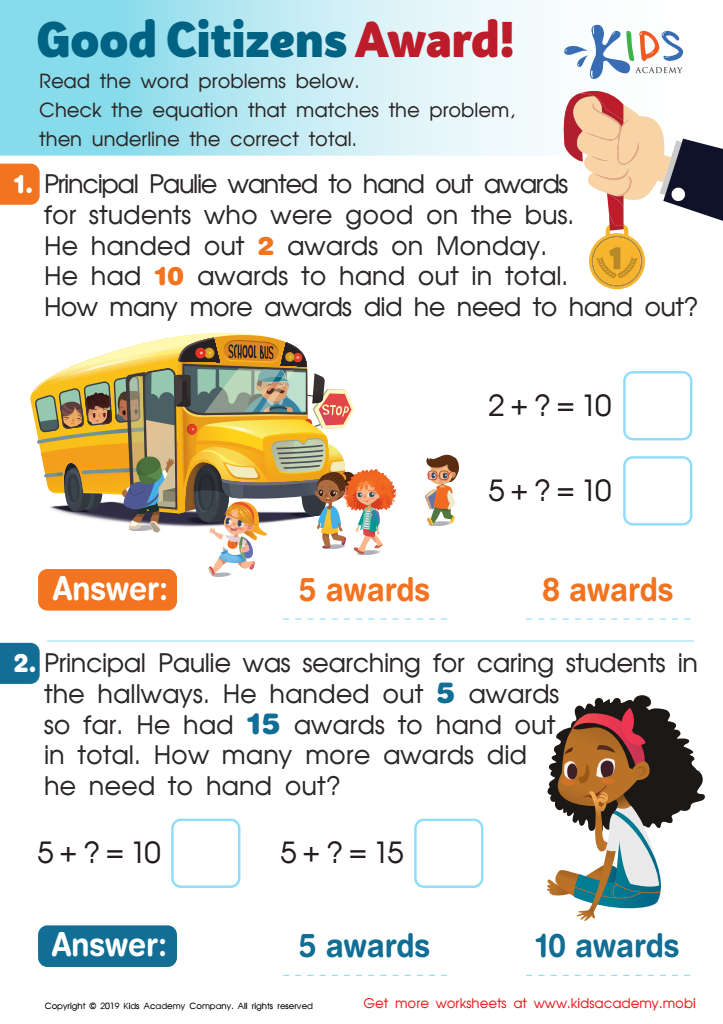
Good Citizens Award! Worksheet
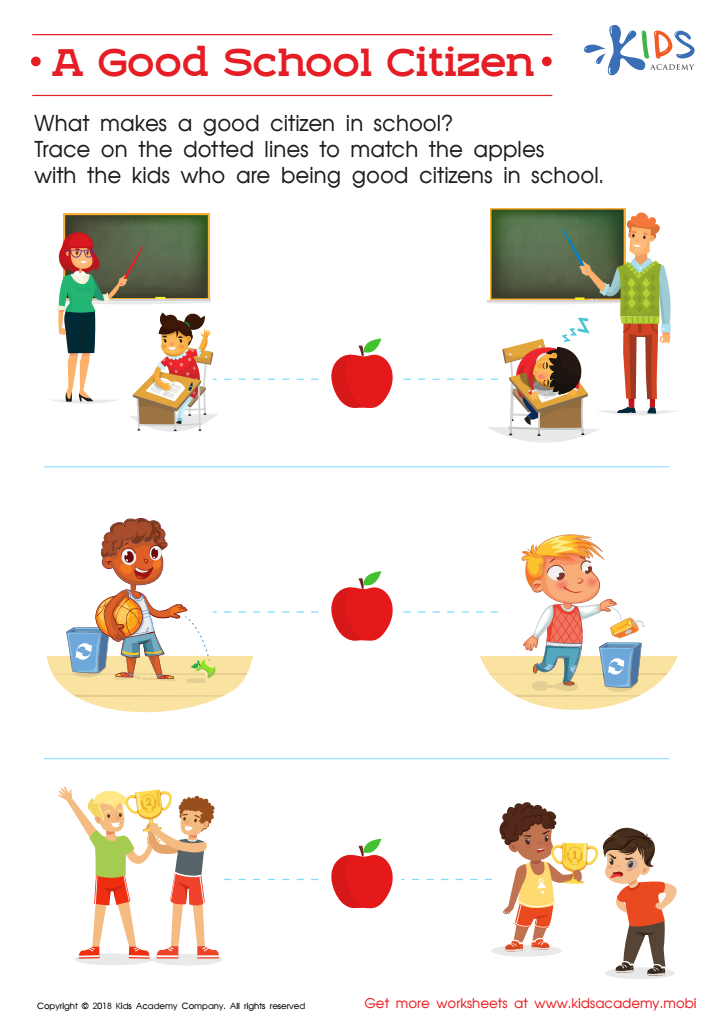
A Good School Citizen Worksheet



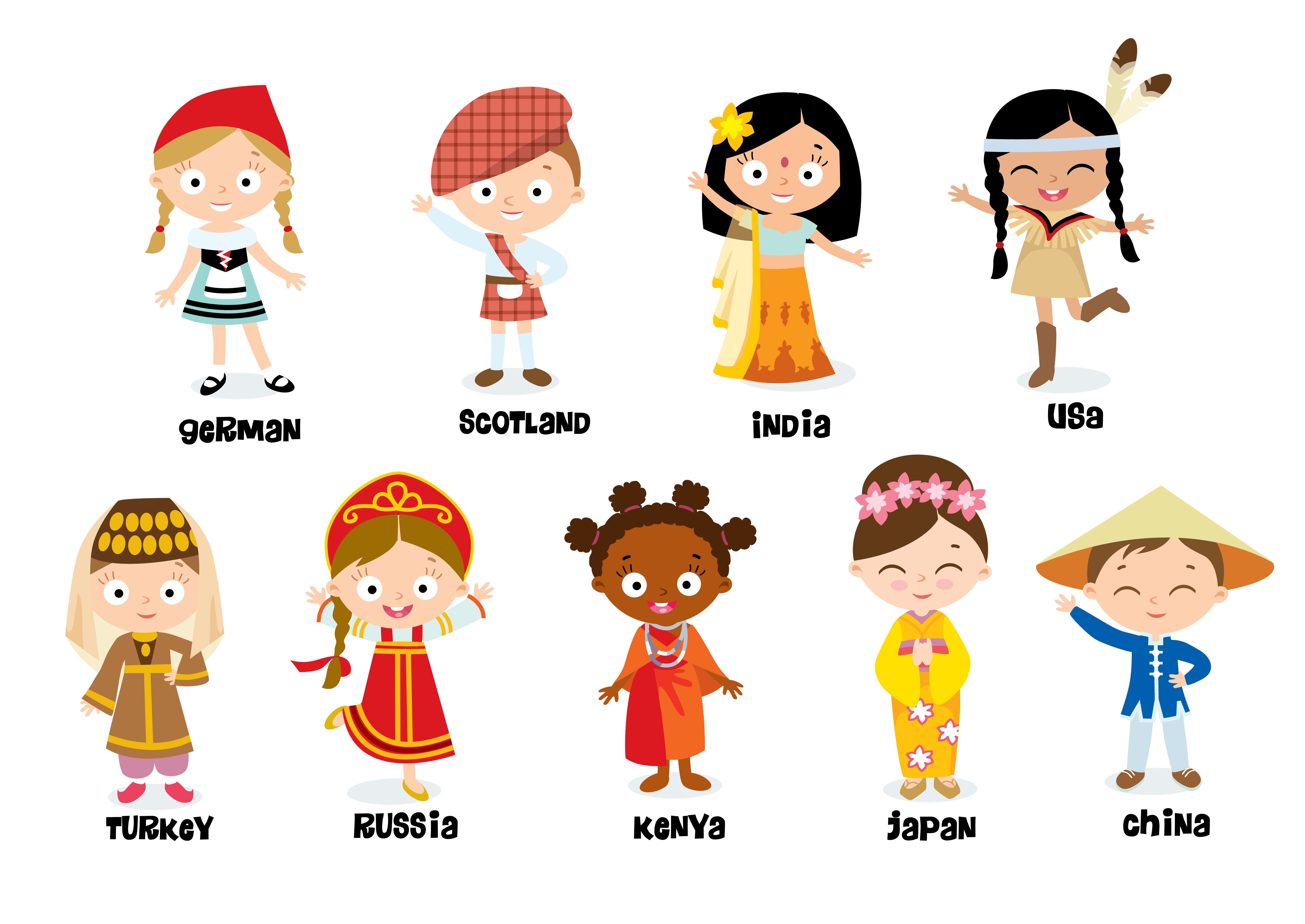

.jpg)

Understanding citizenship is vital for children ages 3-9 as it lays the foundation for their future roles as responsible, engaged community members. At this early stage, children begin to develop their sense of identity and belonging within their families, schools, and the broader society. Teaching them about citizenship encourages respect for diversity, empathy toward others, and the value of cooperation.
When children understand concepts like fairness, responsibility, and the importance of rules, they are more likely to engage positively with their peers and participate in their communities. These lessons foster social skills that are crucial for conflict resolution and teamwork, equipping them to navigate social interactions as they grow.
Moreover, introducing children to the principles of citizenship cultivates critical thinking about their rights and responsibilities, encouraging them to voice their opinions and take action on issues that matter to them. This early education empowers them to understand the impact of their choices, fostering a sense of agency and ethical behavior.
Ultimately, parents and teachers play a pivotal role in shaping these young citizens, guiding them to become informed, compassionate, and proactive members of society who will contribute positively in the future. Engaging children with the concept of citizenship is an investment in their and society's well-being.








