
Understanding economics Worksheets for Ages 3-9
3 filtered results
Difficulty Level
Grade
Age
-
From - To
Subject
Activity
Standards
Introduce young children to the basics of economics with our engaging, age-appropriate worksheets designed for kids aged 3-9. These colorful and interactive printables from Kids Academy help children understand essential concepts such as goods and services, money, jobs, and simple financial decision-making. Through fun activities, vibrant illustrations, and relatable scenarios, young learners can grasp the importance of everyday economic principles in a playful manner. Ideal for both classroom use and at-home learning, these worksheets support early learning skills while making complex ideas accessible and enjoyable for young minds. Start building a strong foundation in economics today!
Favorites
With answer key
Interactive
 Assign to My Students
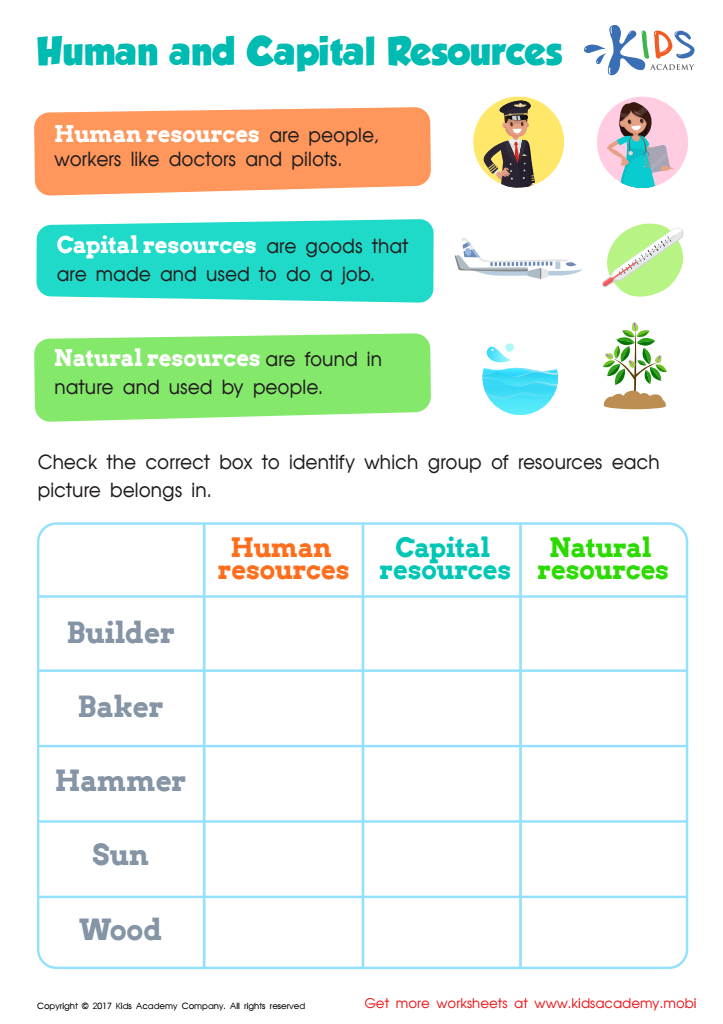
Human and Capital Resources Worksheet
It helps identify and differentiate human, natural and capital resources, so your kid can understand how each affects their world.
Human and Capital Resources Worksheet
Worksheet
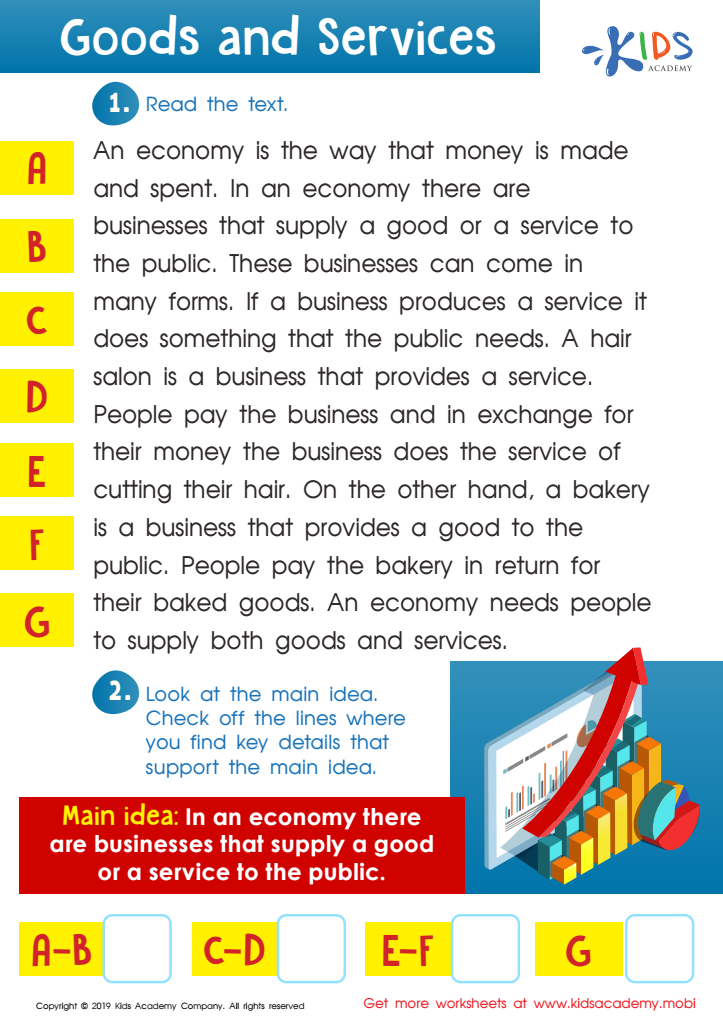
Goods and Services Worksheet
Teach your kids about the economy and businesses with this worksheet. Ask them if they know what goods and services are. After they complete the worksheet, they'll have a better understanding. Read the text to them and guide them step-by-step through the instructions. Help them learn!
Goods and Services Worksheet
Worksheet
Join Kids Academy for Free
Who is primarily going to use this learning content?








Introducing basic economic concepts to children aged 3-9 is crucial because it lays the foundation for essential life skills that extend far beyond managing money. Firstly, it helps cultivate a sense of responsibility. By teaching kids about saving, sharing, and spending wisely, parents and teachers instill habits that will shape their financial behavior in adulthood.
Secondly, understanding economics fosters critical thinking and problem-solving skills. When children learn to make choices with limited resources—be it time, money, or energy—they develop the ability to evaluate options and anticipate outcomes. This early practice is invaluable as they grow older and face more complex decisions.
Thirdly, these lessons promote empathy and social awareness. Understanding concepts like trade, value, and needs versus wants helps children recognize the economic diversity in our world. They begin to understand why some people have more and some have less, encouraging a more compassionate and equitable mindset.
Lastly, economics connects kids to real-world applications, making school subjects more relatable and engaging. Math becomes useful for managing allowance, while reading comprehension skills improve as they follow stories about earning and spending. Teachers and parents who prioritize these lessons provide children with tools to thrive financially, socially, and intellectually throughout their lives.








