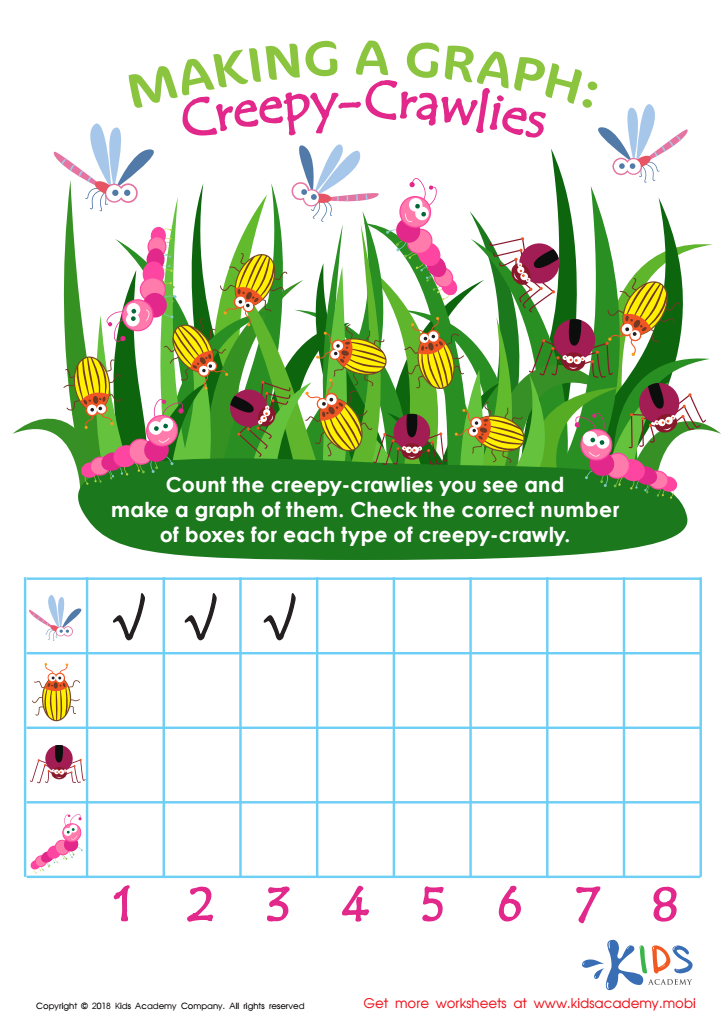
Explore our "Understanding Graphs Worksheets" designed for children aged 3-9, where little learners embark on an exciting journey into the world of data visualization! This engaging collection provides playful and interactive activities that help young minds grasp the basics of graphs and charts. From bar graphs to pictographs, our worksheets are crafted to simplify complex concepts, making learning fun and accessible. With vibrant visuals and kid-friendly instructions, children will develop essential skills in organizing, interpreting, and analyzing data, laying a strong foundation for future math success. Perfect for at-home learning or classroom use, these worksheets ignite curiosity and foster critical thinking!

Check out this FREE "Understanding graphs" Trial Lesson for age 3-9!

Organize and Categorize Data #2

Favorites
With answer key
Interactive
  • 3-9
  • Understanding graphs
Recycling Picture Graph Worksheet

Recycling Picture Graph Worksheet

This worksheet can help kindergartners learn numbers and why recycling is important. After using items and materials, they can turn them into new materials instead of throwing them away. Guide your students to follow the instructions and answer the questions at the end. Help them understand how recycling benefits our environment.
Recycling Picture Graph Worksheet
Worksheet
Making a Graph: Creepy Crawlies Worksheet

Making a Graph: Creepy Crawlies Worksheet

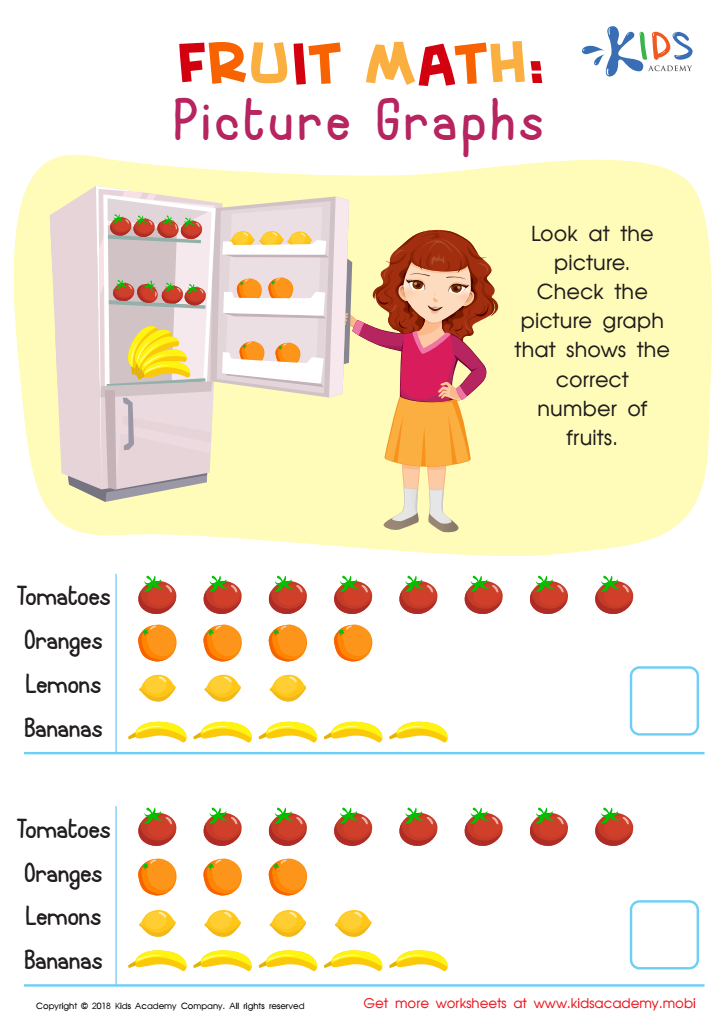
Let your little math whiz create a graph with this free PDF worksheet. They can count and sort the creepy-crawlies, checking off the correct number of boxes for each type. This engaging activity will help them hone their visual discrimination skills while efficiently organizing data.
Making a Graph: Creepy Crawlies Worksheet
Worksheet
Fruit Math: Picture Graphs Worksheet

Fruit Math: Picture Graphs Worksheet

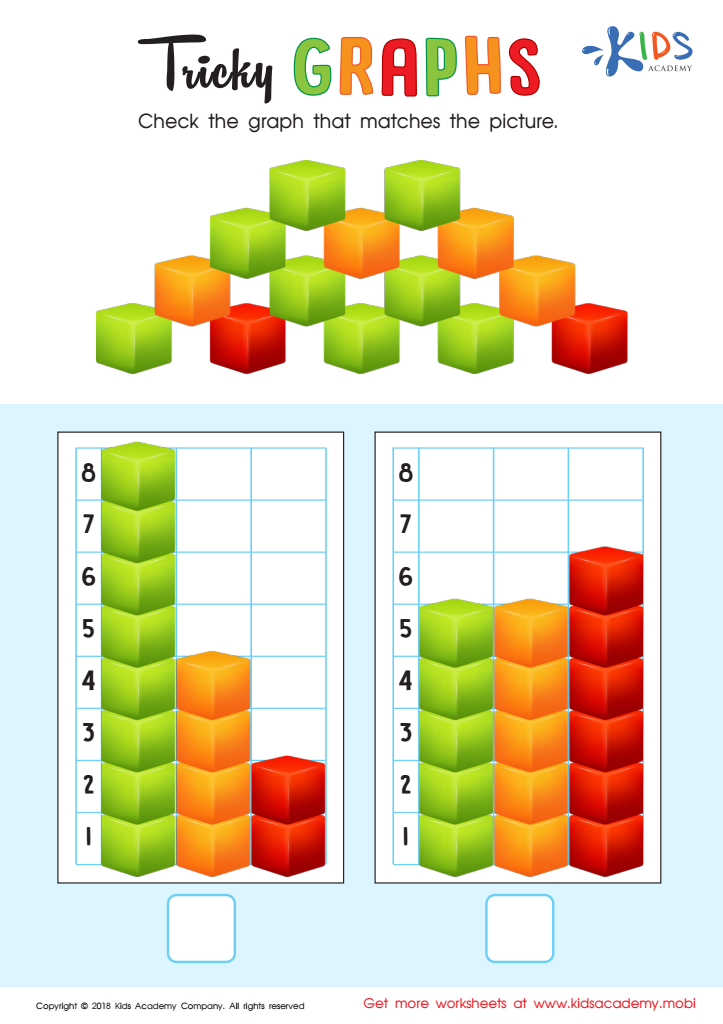
Help your child learn to draw graphs by having them look at pictures. Ask them to identify a graph that accurately portrays the data and have them explain why. This will prepare them to easily draw more complex graphs in the future. For example, have them look at the picture with the number of fruits in the colorful worksheet and explain why the graph is accurate.
Fruit Math: Picture Graphs Worksheet
Worksheet
Tricky Graphs Worksheet
Tricky Graphs Worksheet

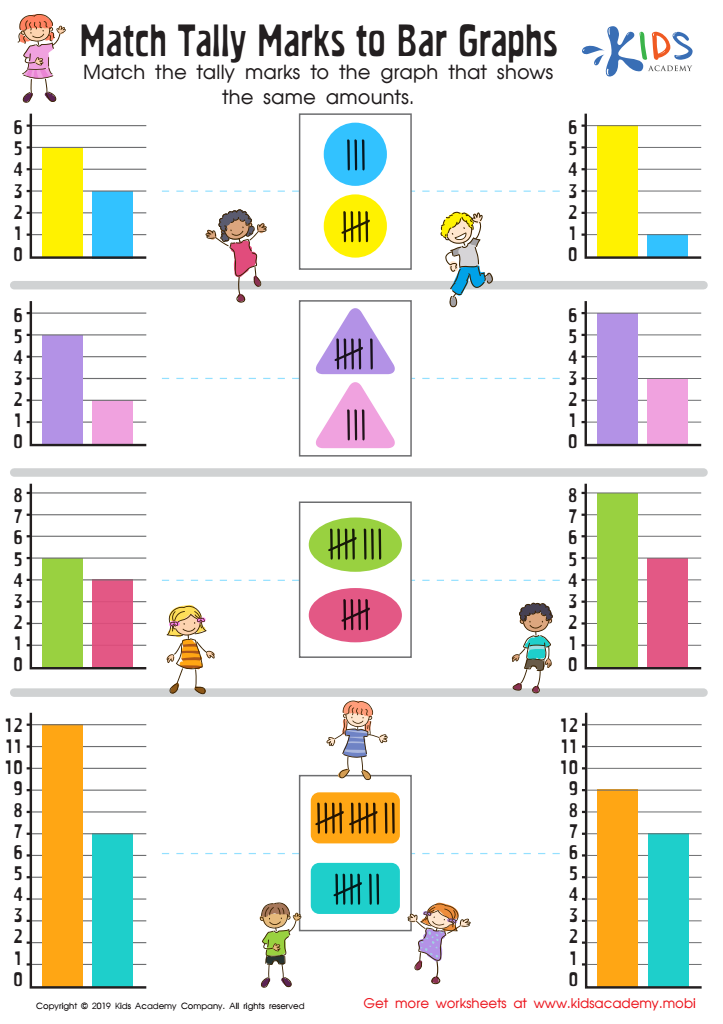
Looking for a fun way to sharpen your kid's graphing skills? Get this colorful PDF worksheet! They'll get to practice visual discrimination, counting, and creating bar graphs. Plus, graphing and reading graphs are essential for problem-solving in math.
Tricky Graphs Worksheet
Worksheet
Match Tally Marks to Bar Graphs Worksheet

Match Tally Marks to Bar Graphs Worksheet

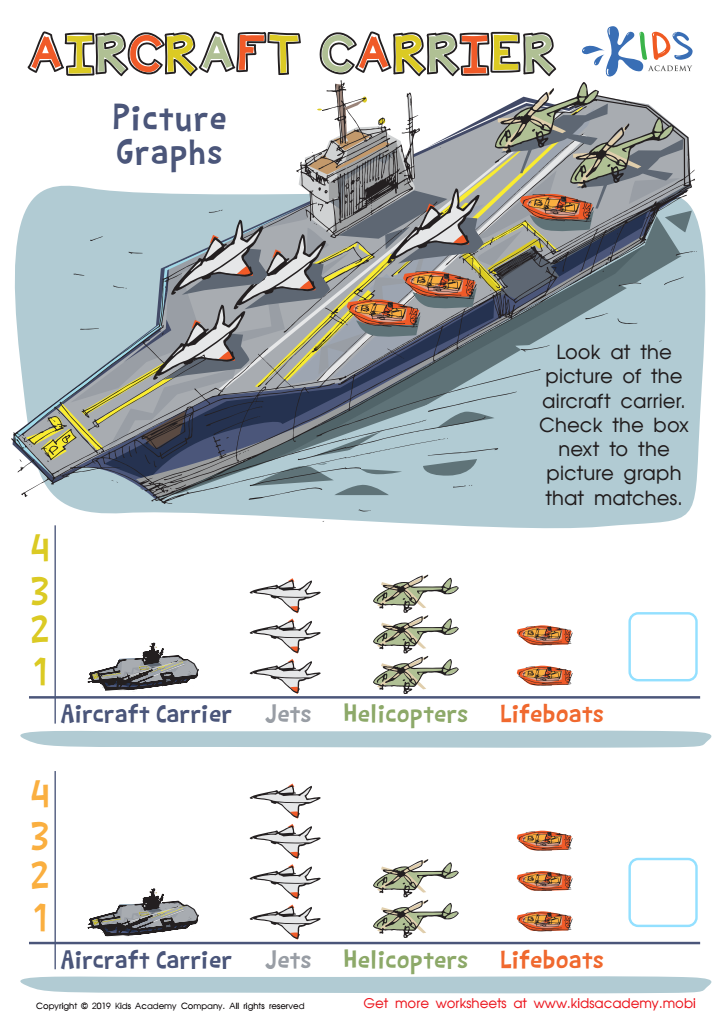
Learning math can be tough for kids. Rules and formulas can be confusing. Don't worry, this worksheet can help them understand graphs better. Show them how to match the tally marks with the graph that shows the same amount. It will help them grasp the basics and prepare them for more complex equations.
Match Tally Marks to Bar Graphs Worksheet
Worksheet
Aircraft Carrier Picture Graphs Worksheet


Aircraft Carrier Picture Graphs Worksheet

Kids love learning about jets and boats with this awesome worksheet! It's a great way to engage them as they work on picture graphs. Representing numerical values with pictures, this free PDF requires them to choose which picture graph and representation best match the carrier in the picture. It's also great practice for visual discrimination!
Aircraft Carrier Picture Graphs Worksheet

Worksheet


Understanding graphs is crucial for children aged 3-9 as it lays the foundation for critical thinking and problem-solving skills. During early childhood, children are naturally curious and eager to make sense of the world around them. Learning to read and interpret graphs helps them visualize data, comprehend relationships, and recognize patterns, which are essential skills in various disciplines, including math, science, and social studies.

Moreover, graphs can make complex information accessible. For example, simple bar graphs can help children understand comparisons, while pictographs can introduce them to the concept of data representation. By integrating graph-reading skills into their education, parents and teachers encourage children to engage with data analytically, fostering a mindset that embraces inquiry and exploration.

Additionally, graphing activities can promote collaboration and communication skills as they discuss their findings with peers or family members. This hands-on learning experience builds confidence and reinforces the understanding that data is everywhere in everyday life, from sports statistics to weather forecasts. Ultimately, mastering graph interpretation at a young age cultivates informed citizens who are capable of making evidence-based decisions in their futures. Parents and teachers should prioritize graph education for its long-lasting impact on cognitive development and analytical skills.