Understanding grouping Worksheets for Ages 3-9
3 filtered results
-
From - To
Understanding grouping is key for early development, making learning fun with engaging worksheets for ages 3-9. Our printable materials, available at Kids Academy, are designed to enhance cognitive skills by teaching children to categorize and organize items according to different attributes. Perfect for preschool through elementary students, these worksheets cover fundamental concepts such as sorting by size, shape, color, and patterns. Each activity encourages problem-solving and critical thinking in young minds, offering an interactive approach to mastering grouping skills. Parents and educators will find these resources invaluable for fostering a solid foundation in early learning.
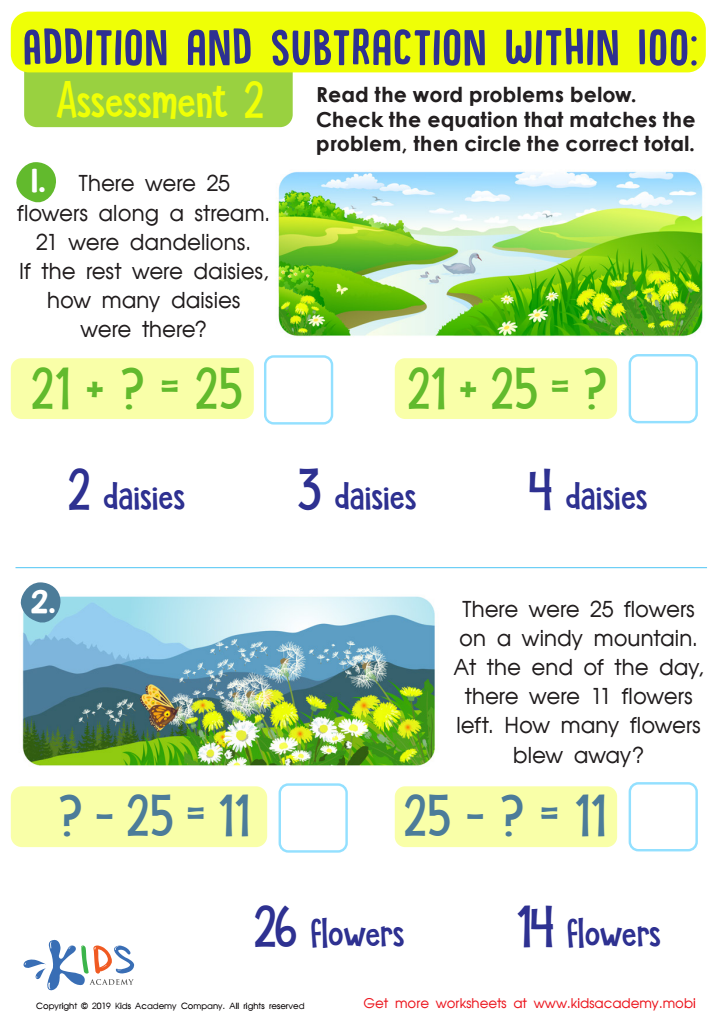
Assessment 2 Math Worksheet
 Assign to My Students
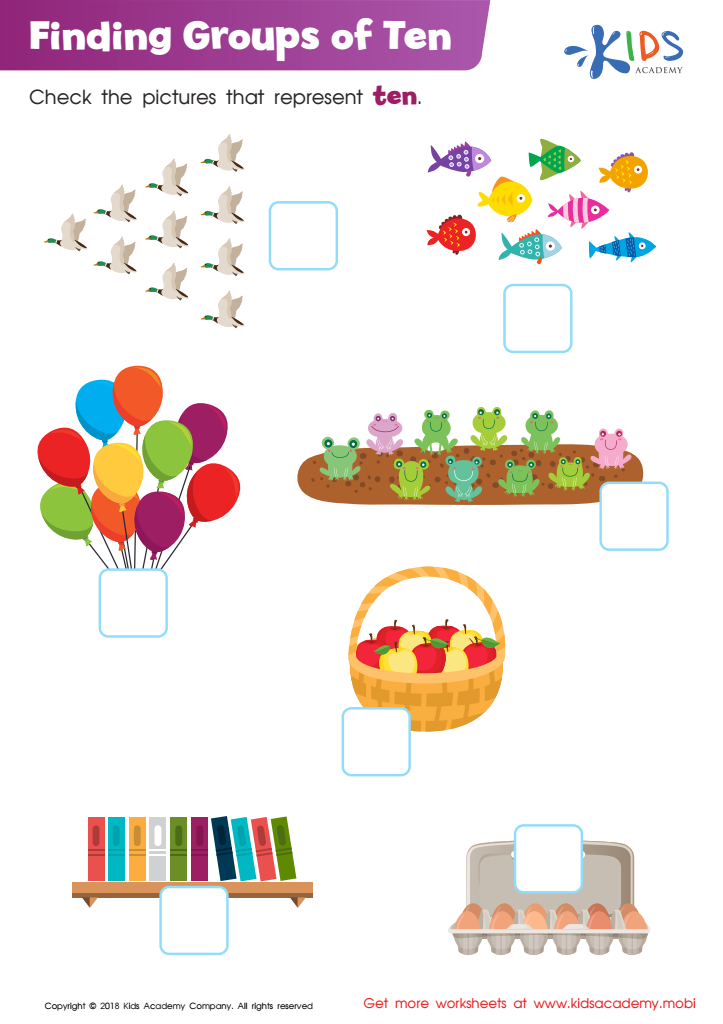
Finding Groups of Ten Worksheet
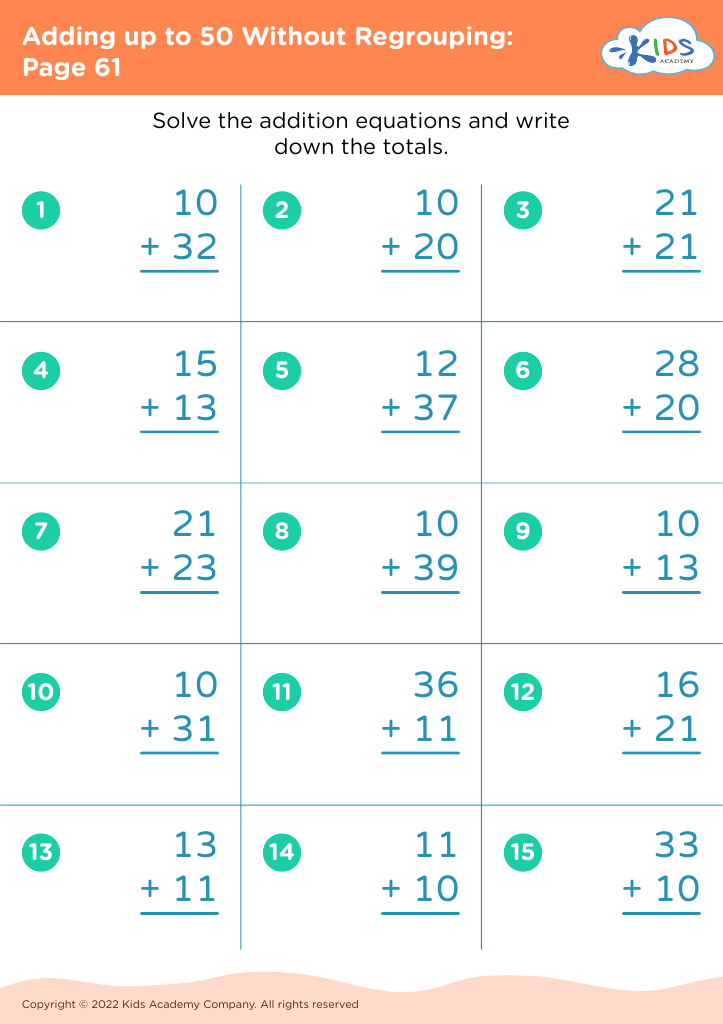






.jpg)

Understanding grouping for children ages 3-9 is foundational for their cognitive and social development. Parents and teachers should care because this concept underpins critical thinking and mathematical skills, laying the groundwork for future learning. When children learn to group objects based on common attributes like size, shape, or color, they develop important organizational skills and begin to understand the concept of categorization, a building block for more advanced concepts like numbers and arithmetic operations. For instance, learning to group items helps children grasp the ideas of addition and subtraction, thus making math less abstract and more tangible.
Moreover, grouping fosters social skills and cooperative play. When children work together to group objects or even group themselves for activities, they practice communication, teamwork, and problem-solving. These experiences help them navigate social settings more effectively, build friendships, and understand community roles.
Parents supporting kids in grouping activities at home can enhance classroom learning, creating a robust, unified approach that reinforces these skills through practical application and repetition. Activities like sorting laundry, organizing toys, or grouping groceries by type or size make learning interactive and contextually relevant, bridging the gap between abstract concepts and real-world application. Therefore, understanding and encouraging grouping is crucial for a child's comprehensive development.








