Understanding mass Worksheets for Ages 3-9
3 filtered results
-
From - To
Explore our engaging "Understanding Mass Worksheets for Ages 3-9" designed to introduce young learners to the concept of mass through fun, interactive activities! These worksheets provide age-appropriate exercises that help children grasp the differences between light and heavy objects, promoting essential skills like measurement and comparison. With colorful visuals and easy-to-follow instructions, kids will enjoy hands-on learning while enhancing their critical thinking and problem-solving abilities. Ideal for teachers and parents, these resources foster a solid foundation in early math skills. Start your child's journey to understanding mass today—download our worksheets and make learning exciting!
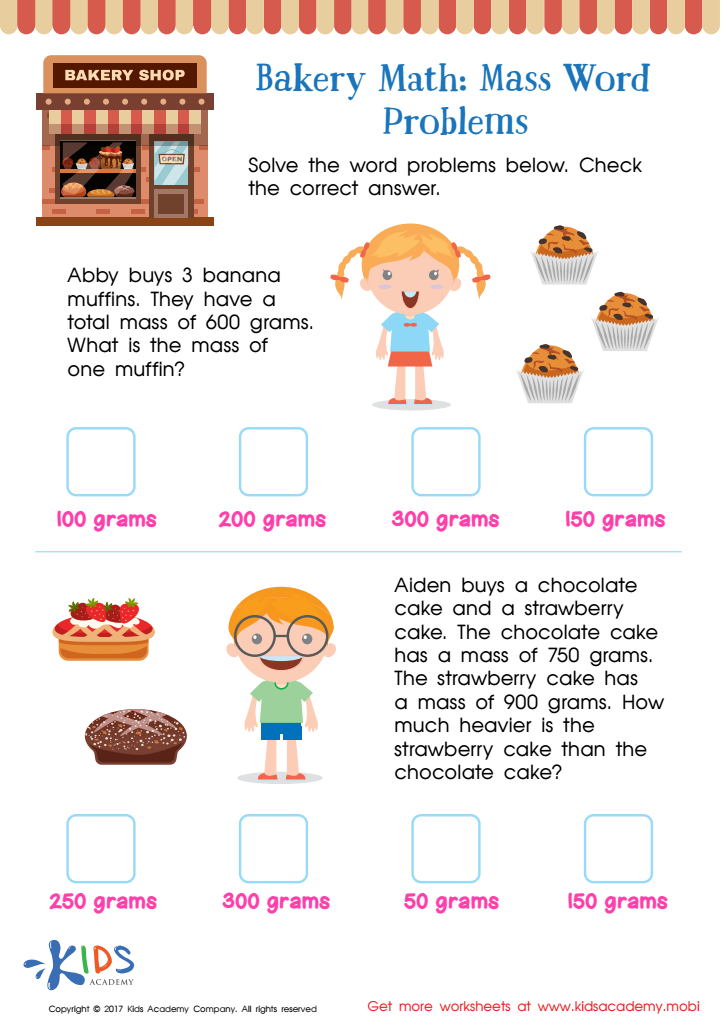
Mass Word Problems Worksheet
 Assign to My Students
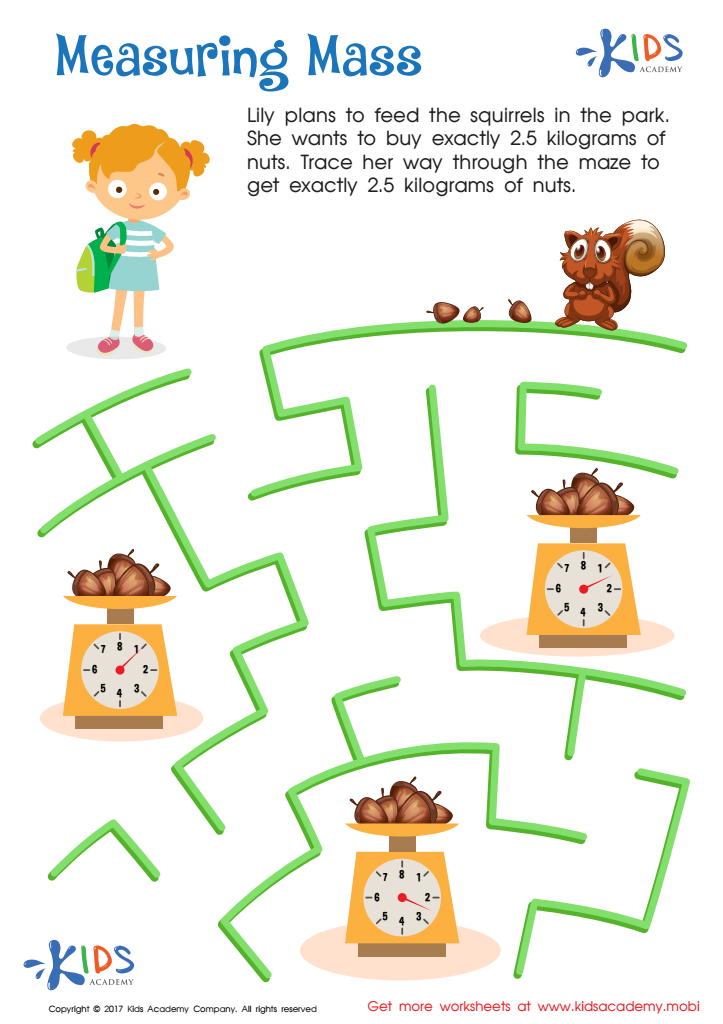
Measuring Mass Worksheet
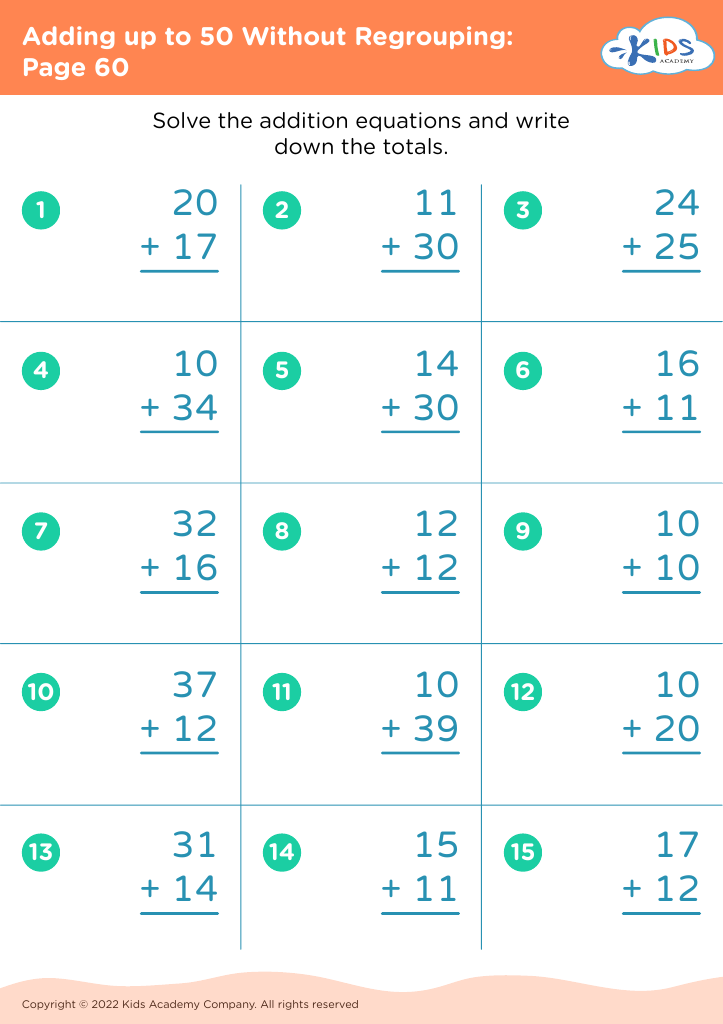


.jpg)



Understanding mass is fundamental for children ages 3-9, as it lays the groundwork for essential math and science skills. At this early stage, learning about mass helps children develop a sense of measurement, compare weights, and grasp basic concepts of balance and gravity. These foundational skills promote critical thinking and pave the way for more complex mathematics in later years.
Additionally, exploring mass in a hands-on manner enhances sensory experiences. When children lift and compare objects, they engage both physically and cognitively, which promotes deeper understanding through play—a key learning method for young kids. Engaging in activities that involve measuring mass, such as cooking or sorting objects, also fosters collaboration and communication skills as they work together to solve problems.
Furthermore, introducing mass through practical scenarios helps children make sense of the world around them, enhancing their observational skills and curiosity. Understanding mass not only plays a crucial role in their academic development but also cultivates their ability to ask questions, seek answers, and form connections between concepts. Therefore, parents and teachers should prioritize teaching mass to encourage exploration, critical thinking, and a positive attitude toward learning in young children.








