Understanding perspectives Worksheets for Ages 3-9
3 filtered results
-
From - To
Discover our “Understanding Perspectives Worksheets” designed for children aged 3-9, ideal for nurturing empathy and critical thinking skills. These engaging worksheets encourage kids to view situations from multiple angles, fostering social awareness and emotional intelligence. Activities include matching scenarios, drawing their feelings, and sharing experiences, making learning both fun and impactful. Perfect for classrooms or home learning, these worksheets help young learners appreciate different viewpoints and cultivate compassion. Encourage your child's growth in understanding and respect for diversity with our thoughtfully crafted materials that promote dialogue and reflection. Start exploring the world of perspectives today!
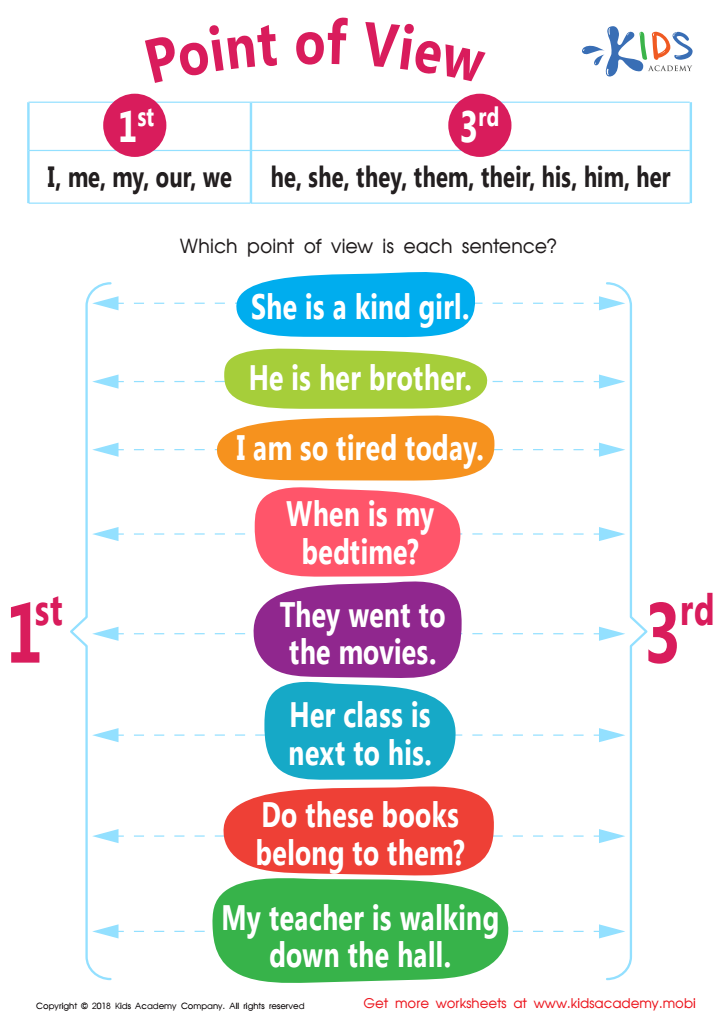
Point of View Worksheet
 Assign to My Students
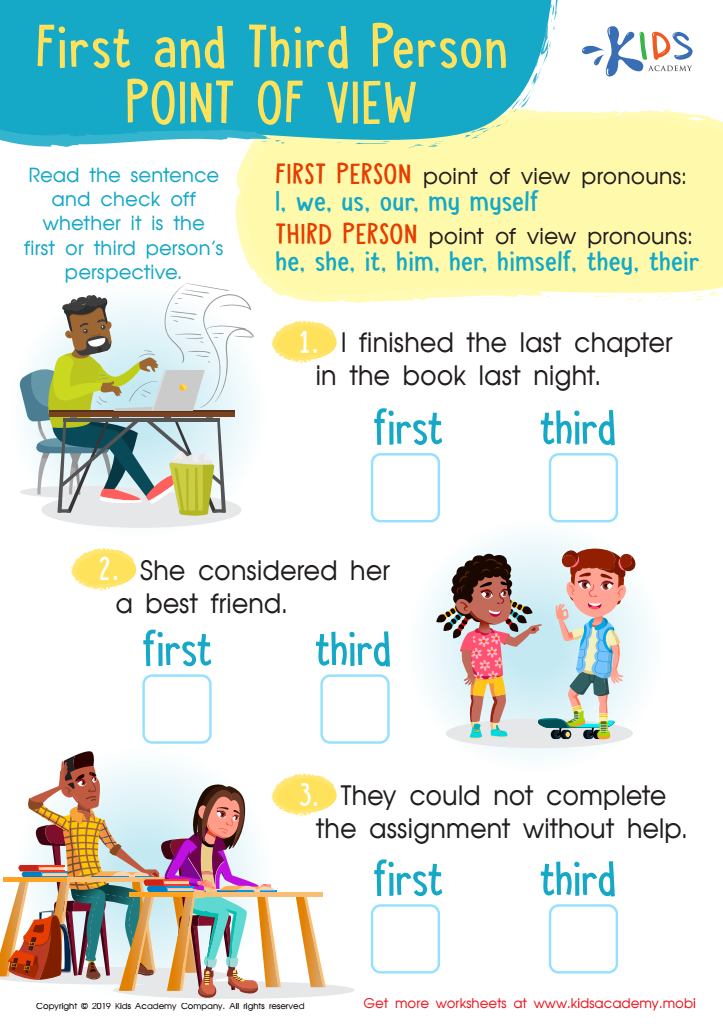
First and Third Person Point of View Worksheet
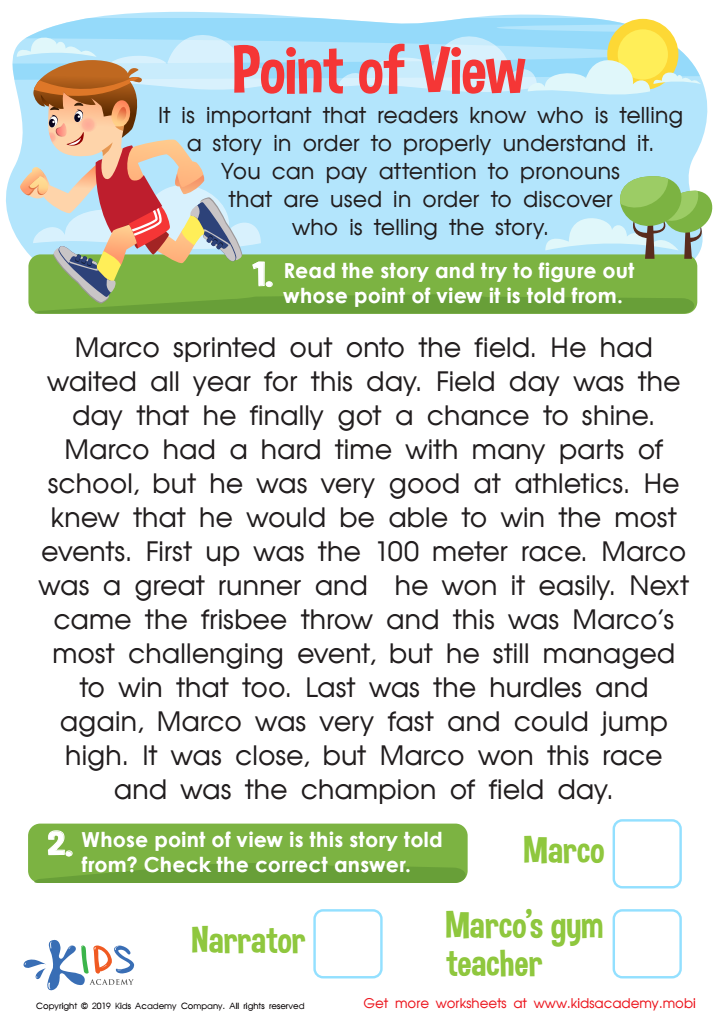
Point of View Worksheet








Understanding perspectives is crucial for children aged 3-9, as it lays the foundation for empathy, social skills, and effective communication. Parents and teachers play a vital role in nurturing these skills during early development. When children learn to recognize different viewpoints, they become better equipped to navigate social interactions, resolve conflicts, and collaborate with peers.
By fostering an awareness of different perspectives, adults help children develop critical thinking abilities, enabling them to understand that others may have feelings, thoughts, and experiences distinct from their own. This awareness enhances emotional intelligence, which is essential for building strong relationships and promoting cooperative behavior.
Moreover, teaching perspective-taking encourages inclusivity and respect for diversity. It aids in combating prejudice and bullying, as children learn to appreciate differences among individuals. In an increasingly interconnected world, these skills are imperative for addressing societal challenges.
Activities such as storytelling, role-playing, and discussions about feelings can effectively engage children in understanding diverse perspectives. By instilling these values early, parents and teachers equip children with the tools necessary for emotional and social success, ultimately fostering a more compassionate and collaborative future generation.








