Understanding synonyms Worksheets for Ages 3-9
5 filtered results
-
From - To
Welcome to our "Understanding Synonyms Worksheets" designed for children aged 3-9! These engaging worksheets aim to cultivate vocabulary skills by helping young learners discover words that share similar meanings. Through fun activities, children will explore synonyms, enhancing their language development in a playful manner. Each worksheet is tailored to suit various age groups, making learning both enjoyable and accessible. As kids practice identifying and using synonyms, they will boost their comprehension, writing, and speaking abilities. Perfect for classroom use or at home, our worksheets encourage relatively independent learning. Explore our worksheets today to make vocabulary building a fun adventure!
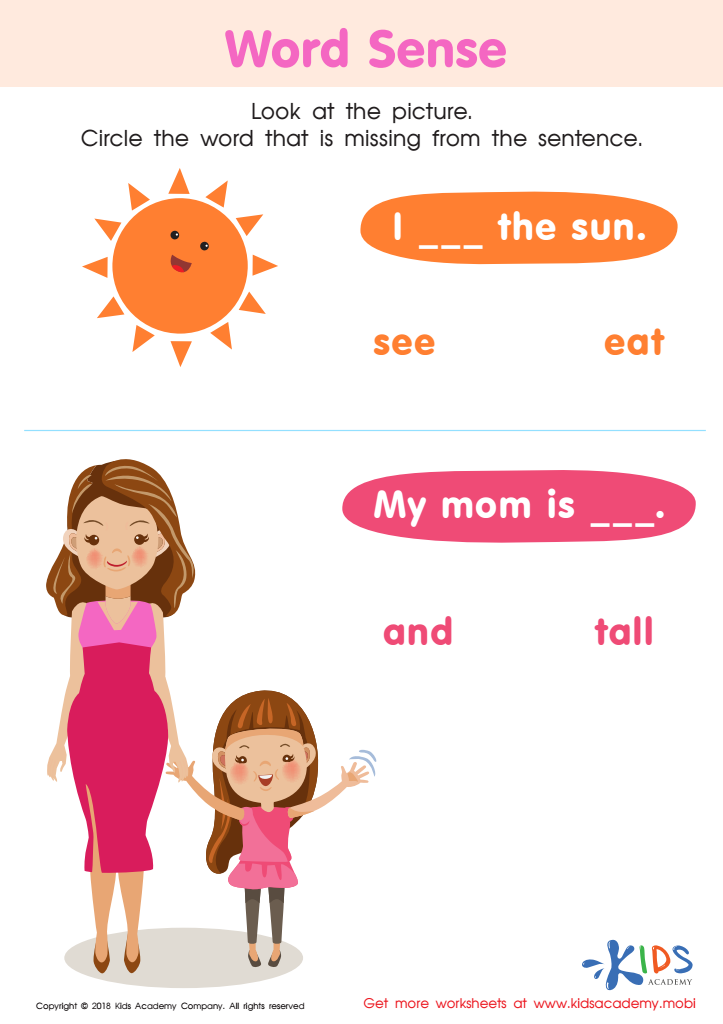
Word Sense Worksheet
 Assign to My Students
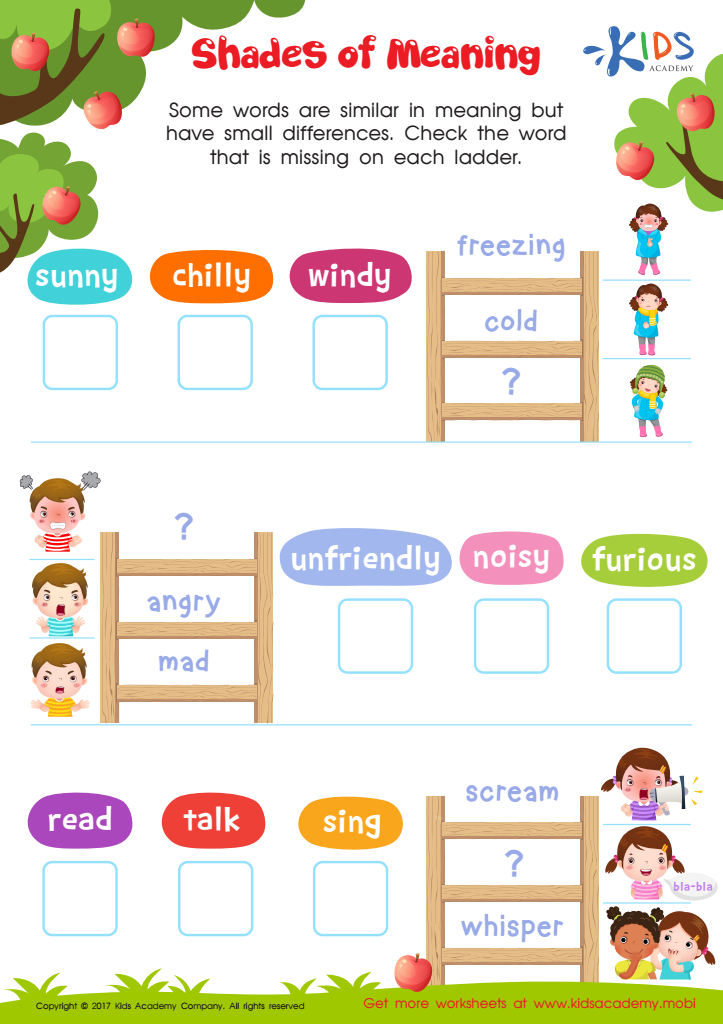
Shades of Meaning Worksheet
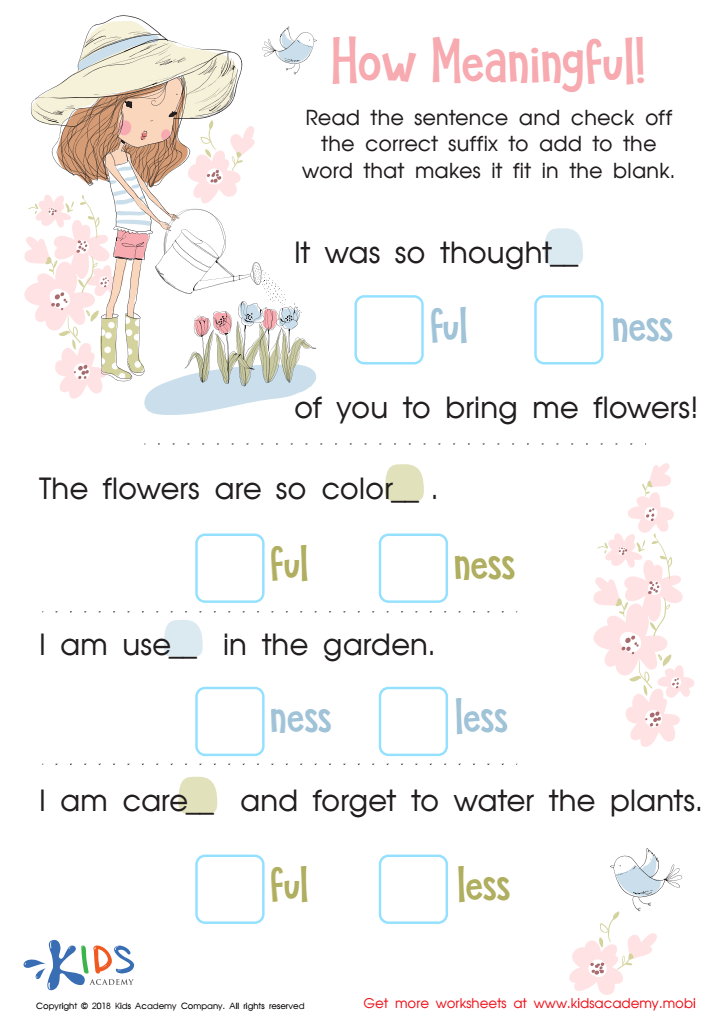
How Meaningful! Worksheet
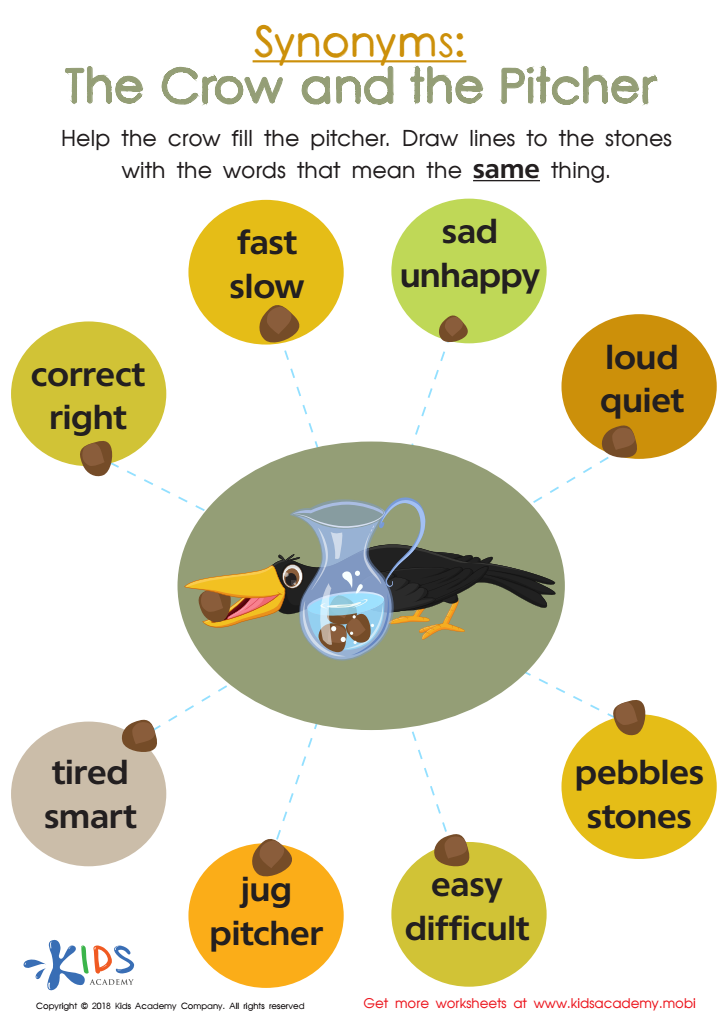
The Crow and the Pitcher Synonyms Worksheet





Understanding synonyms is crucial for children aged 3-9 as it significantly enhances their language development and cognitive skills. This foundational knowledge enriches vocabulary, allowing children to express themselves more creatively and effectively. When children learn synonyms, they become more equipped to decode words in context, which boosts their reading comprehension—an essential skill for academic success.
In addition to vocabulary expansion, knowing synonyms fosters critical thinking. Children start to recognize shades of meaning and understand that language is flexible. This awareness can inspire them to choose words more deliberately, helping them communicate their thoughts and feelings with clarity and emotion.
Moreover, teaching synonyms can enhance discussions between parents and children. When children encounter new words, parents can support their learning by introducing synonymous terms, making conversations more engaging and educational. Ultimately, this practice nurtures a love for language and literature.
Encouraging synonym recognition also prepares children for more complex language challenges as they grow, laying a strong foundation for effective communication skills. This emphasis on language can positively impact their performance in school and social interactions, ensuring that they not only understand what they hear and read but can also articulate their own ideas confidently.








