Understanding times tables Worksheets for Ages 3-9
6 filtered results
-
From - To
Explore our educational resources designed to help children ages 3-9 grasp the fundamentals of times tables with ease and enjoyment. Our engaging worksheets focus on visual aids and interactive activities, making learning multiplication fun and accessible. Tailored to various skill levels, each worksheet fosters confidence while developing essential mathematical skills. Kids will enhance their understanding through colorful illustrations and practical exercises, ensuring they engage fully with the concepts. Perfect for classroom settings or at-home practice, our times tables worksheets encourage young learners to build a strong arithmetic foundation, setting the stage for future math success. Start your child’s multiplication journey today!
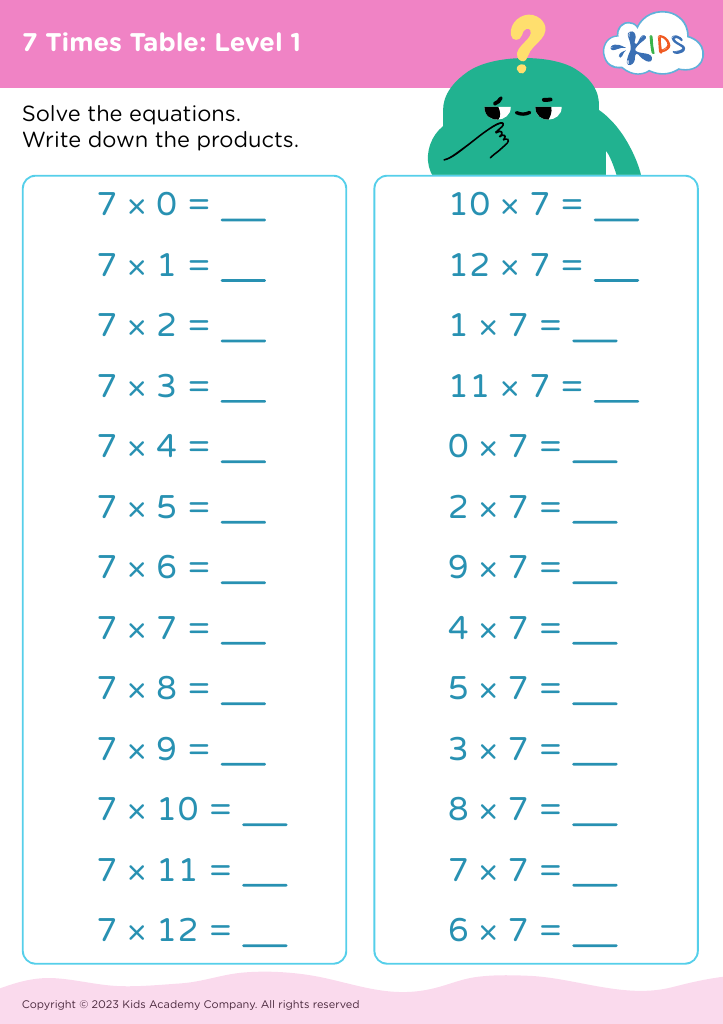
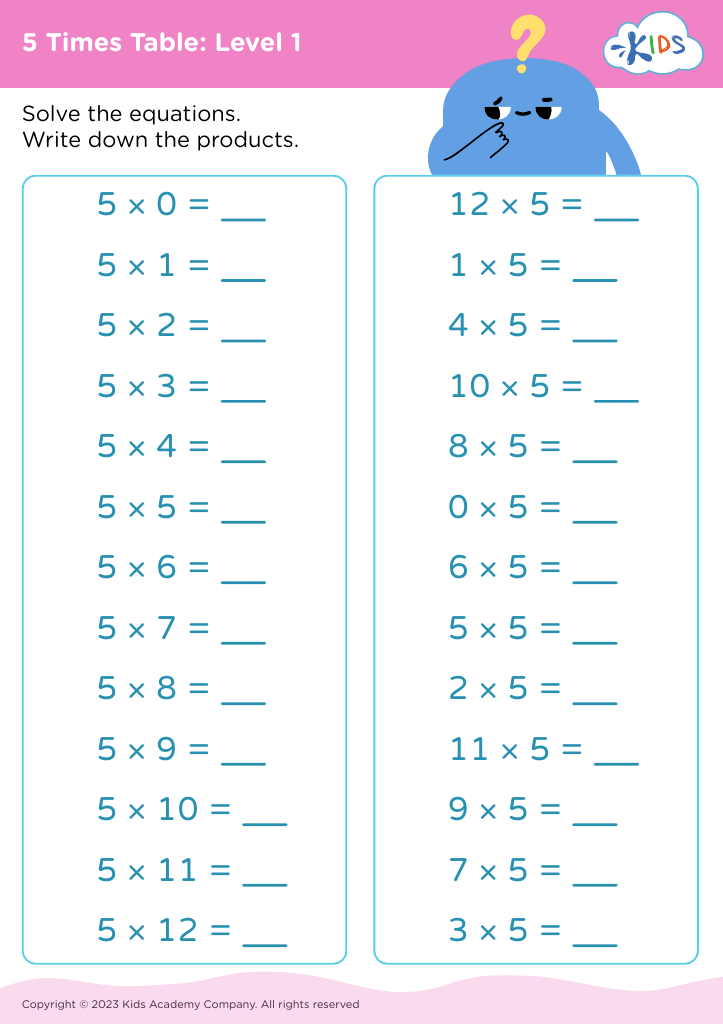
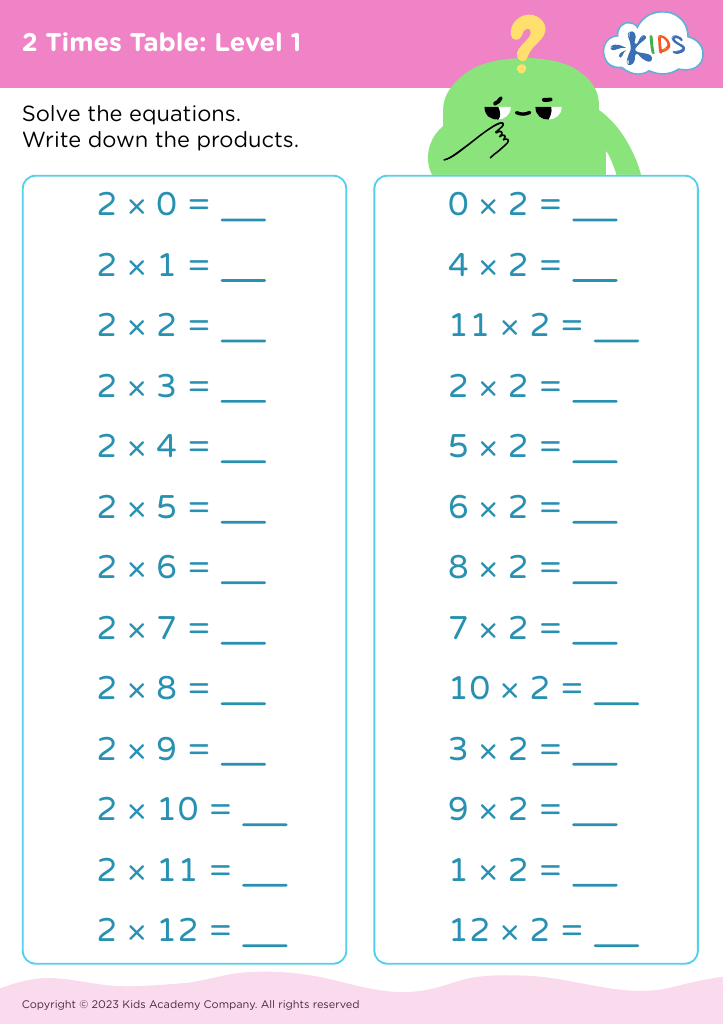
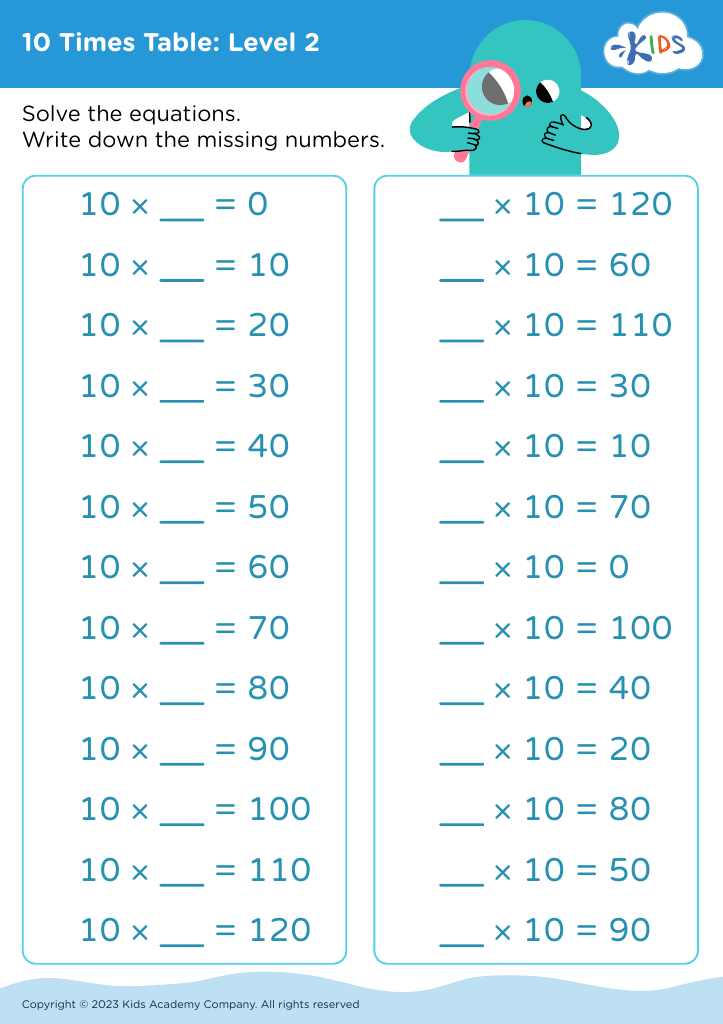
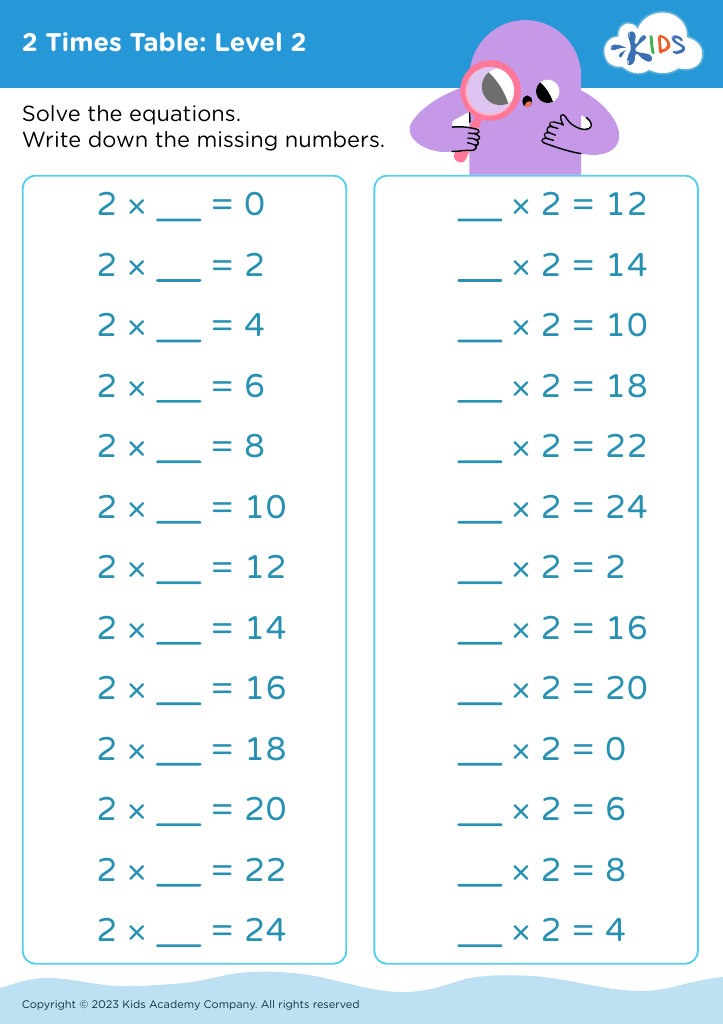
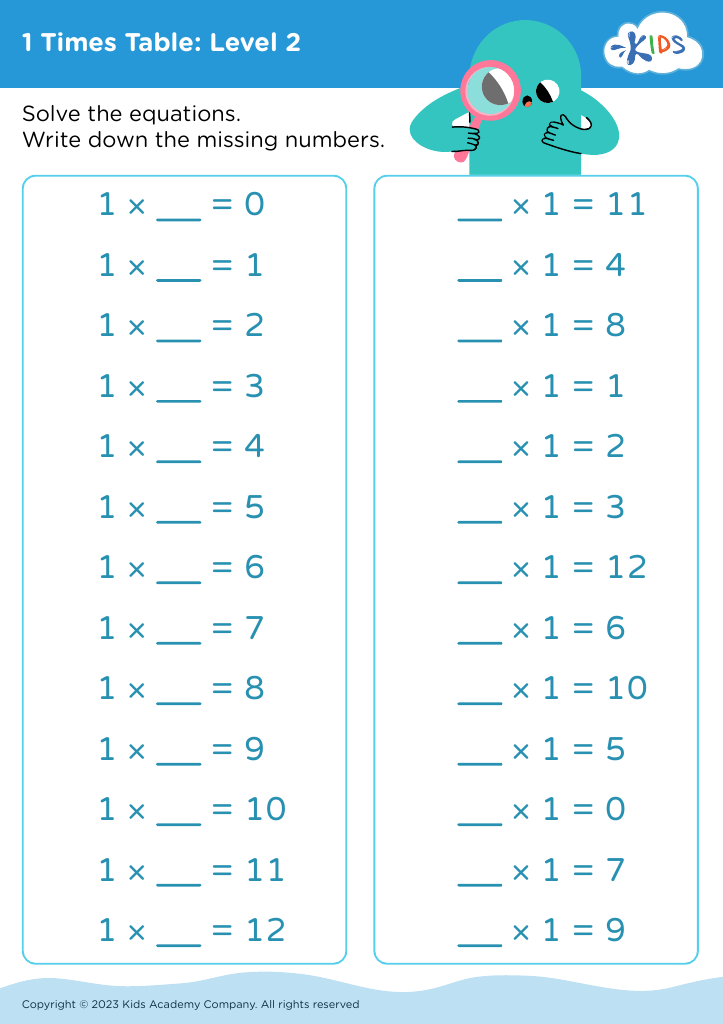





Understanding times tables is crucial for children aged 3-9 as it lays the foundation for their mathematical growth. Early exposure to multiplication concepts helps young learners develop essential number sense and boosts their confidence in handling numbers. At this age, children's brains are particularly receptive to learning patterns, making it an ideal time to introduce times tables.
When parents and teachers focus on this aspect of mathematics, it fosters critical thinking and problem-solving skills. Mastery of multiplication is key for grasping more complex math concepts, such as division, fractions, and eventually algebra. By building a solid understanding of times tables early on, children can navigate these concepts with greater ease later in their education.
Additionally, learning times tables enhances memory and cognitive skills, helping children improve their overall academic performance. It can also promote a positive relationship with math, reducing math anxiety as they build competence.
Moreover, integrating times tables practice into everyday activities can strengthen parent-child bonds. Engaging in fun, interactive learning methods such as games or songs can make learning enjoyable.
Ultimately, a strong foundation in times tables sets children up for future success in mathematics and beyond, making it paramount for teachers and parents to prioritize.








