Animal identification Adding at the Zoo Worksheets for Ages 3-9
8 filtered results
-
From - To
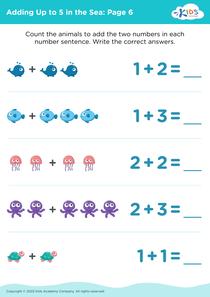
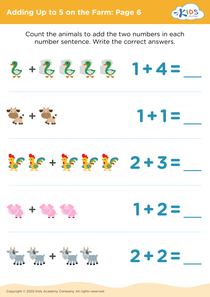
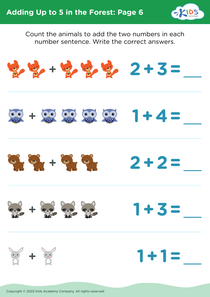
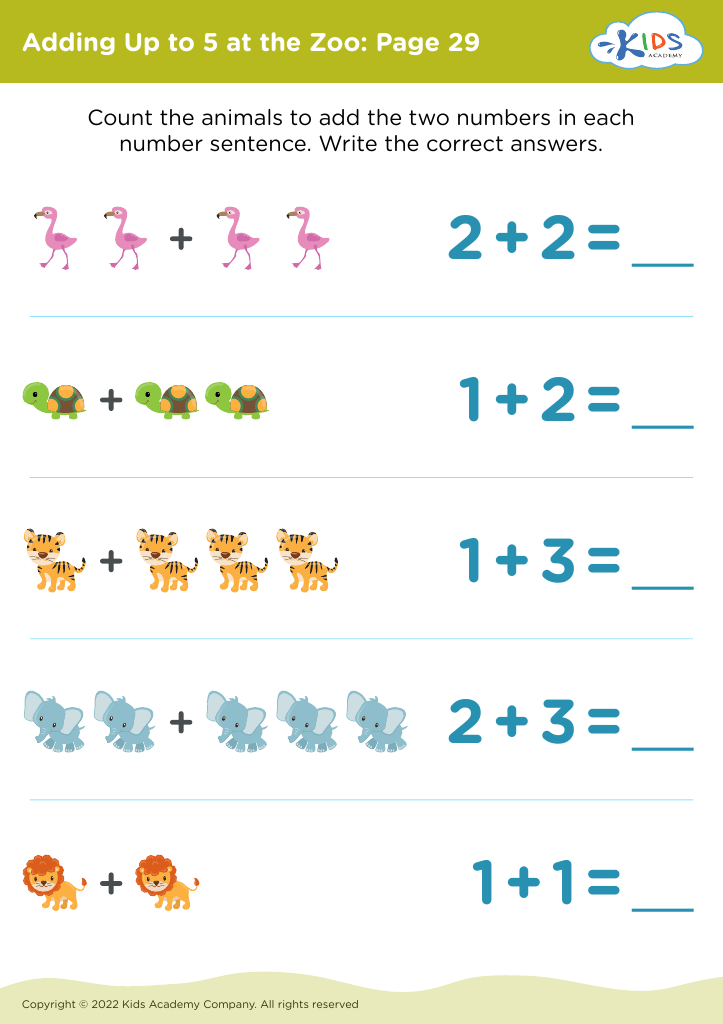
Discover our "Animal Identification Adding at the Zoo Worksheets" designed for children ages 3 to 9! These engaging worksheets provide a fun and interactive way for young learners to enhance their math skills while exploring various animals found in the zoo. Children will practice addition through colorful illustrations and relatable zoo scenarios, making learning exciting and memorable. Each worksheet is tailored to develop counting abilities and animal recognition, ensuring a comprehensive educational experience. Perfect for classroom activities or home learning, these resources encourage curiosity and a love for wildlife, while laying the foundation for essential mathematical concepts. Dive into the fun today!
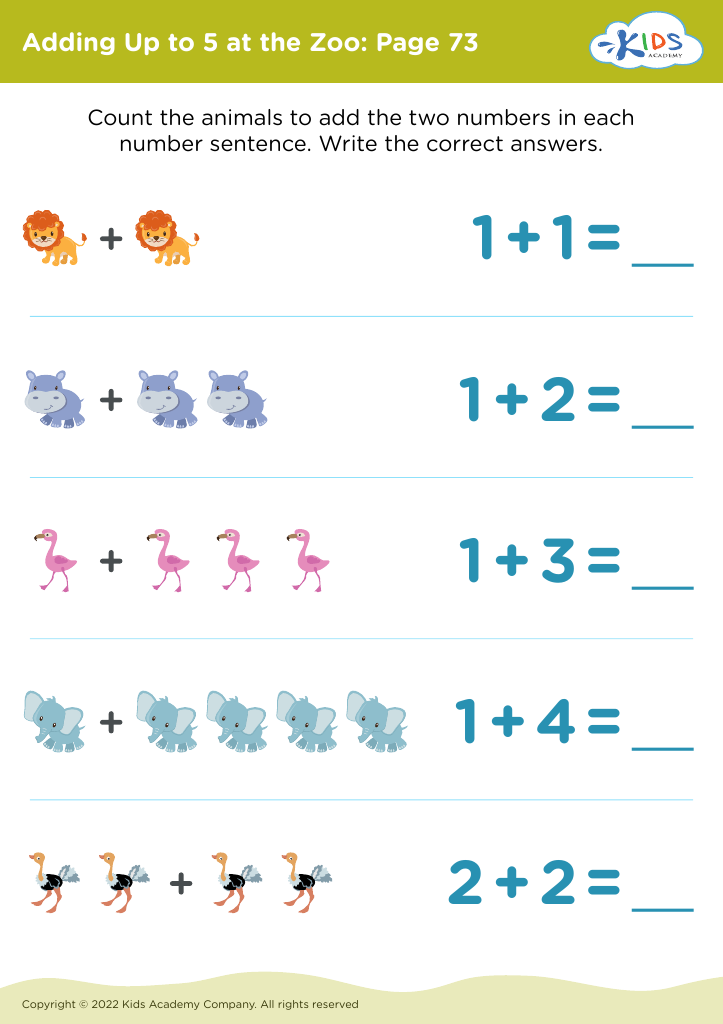
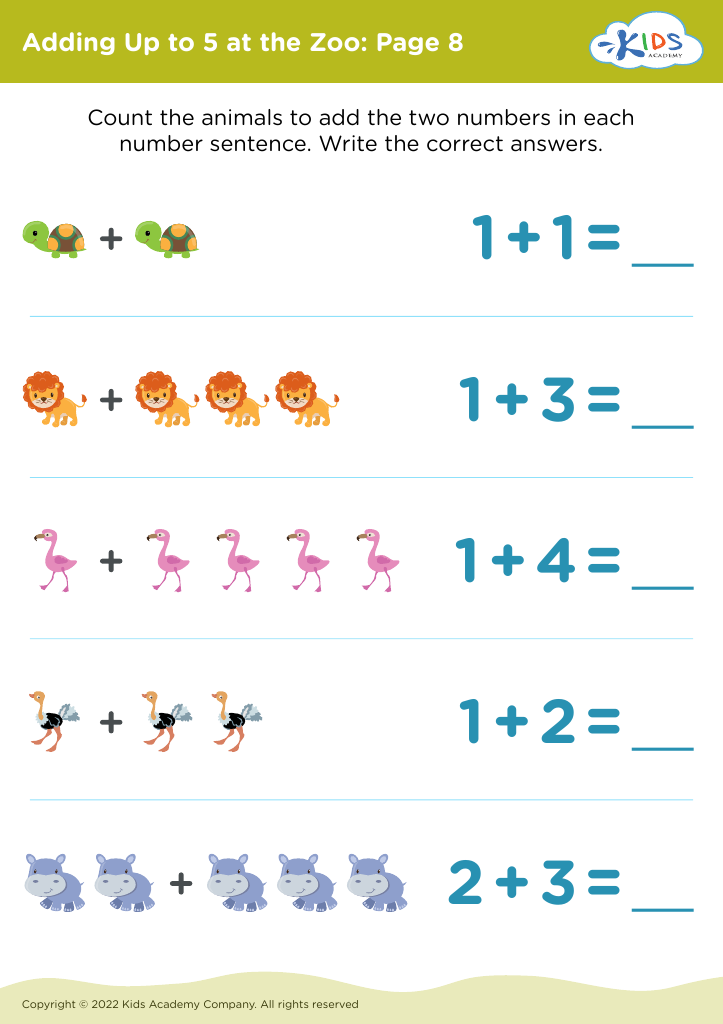
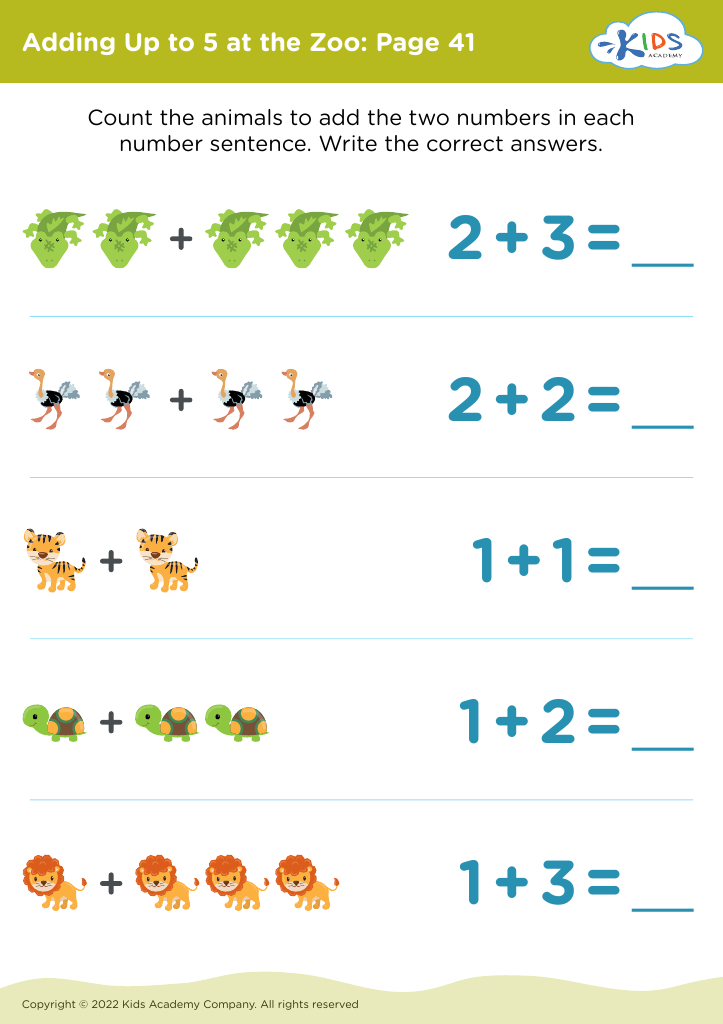
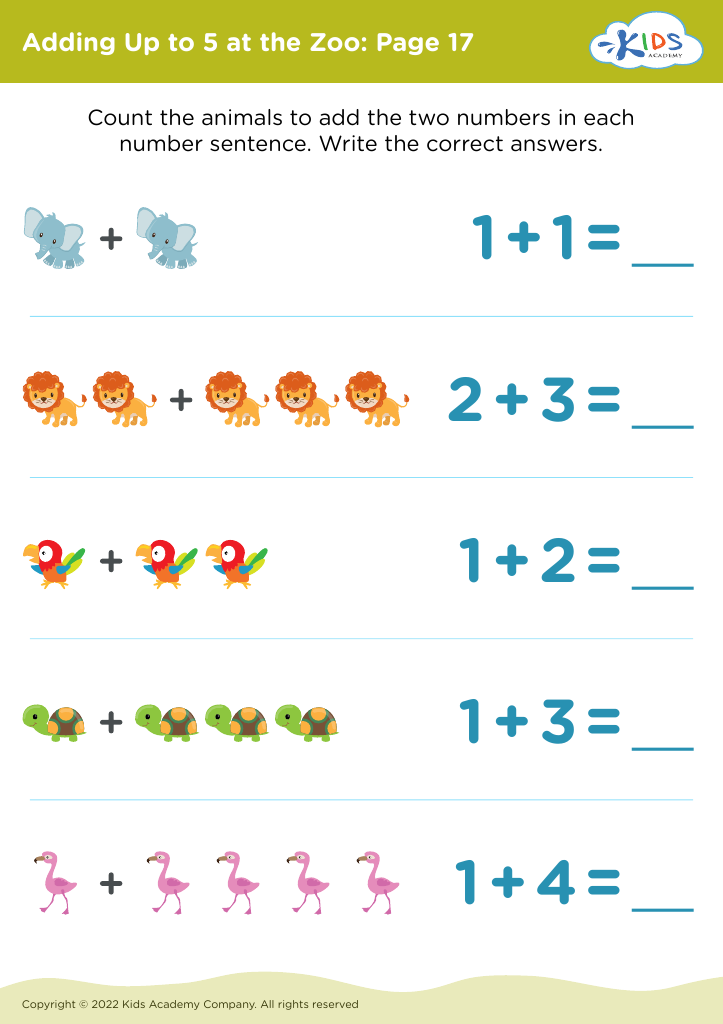
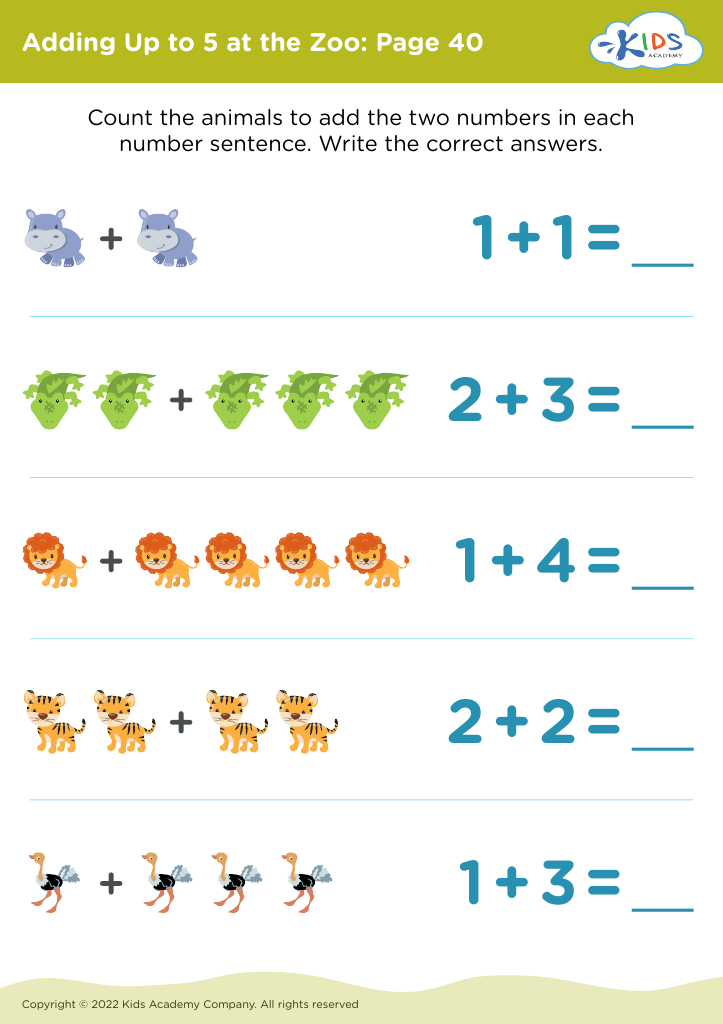
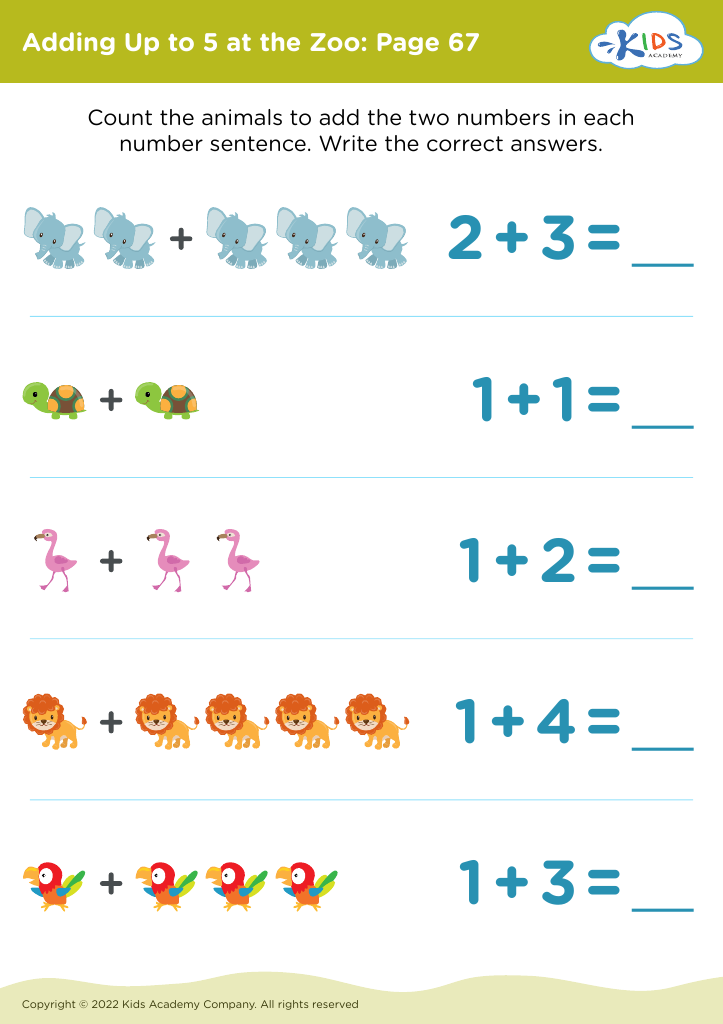
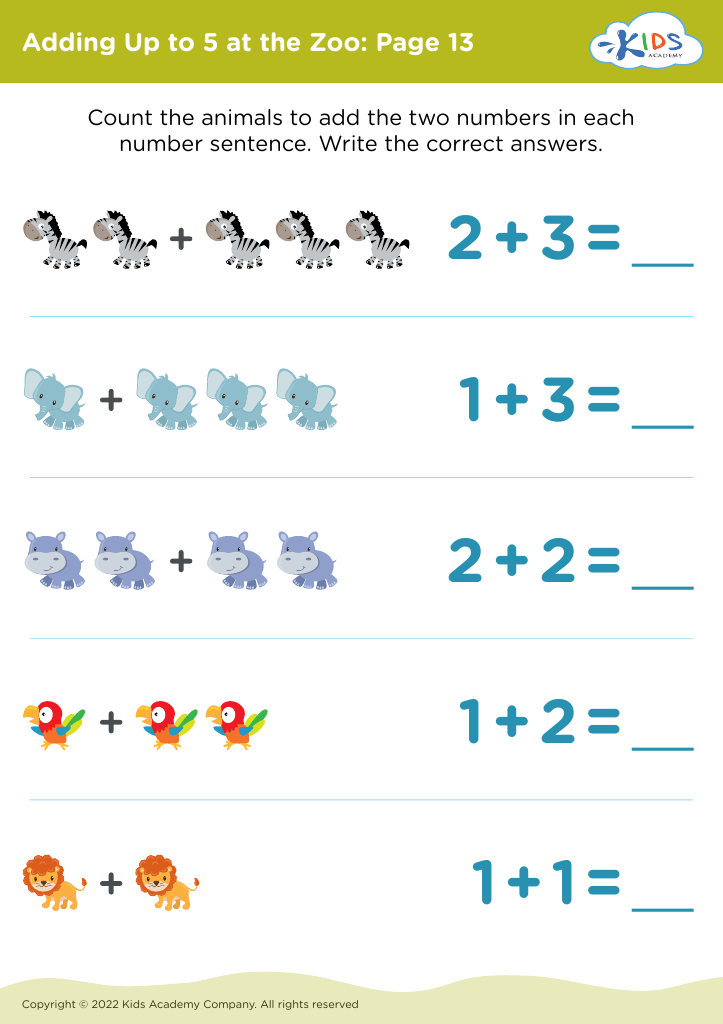



Animal identification at the zoo is crucial for young children, as it enhances their understanding of the natural world and promotes curiosity. For ages 3-9, learning about different animals—who they are, where they come from, and their habitats—is essential for early development.
When parents and teachers engage children with animal identification, they foster a love for learning and encourage observational skills. Naming animals, recognizing characteristics, and understanding their behaviors deepen children’s appreciation for wildlife, instilling values of respect and empathy towards all living creatures.
Moreover, this educational experience can spark conversations around biodiversity, conservation, and environmental stewardship. In an age where digital distractions abound, experiencing animals firsthand helps children develop sensory awareness and critical thinking skills. Notably, interactive activities, like engaging with animals through storybooks or identifying them during a zoo visit, can make the learning process fun and memorable.
Ultimately, by emphasizing animal identification, caregivers can cultivate informed, compassionate future stewards of the environment, laying the groundwork for lifelong learning and responsibility towards nature and its inhabitants. Thus, the integration of animal identification at the zoo is not just educational; it’s an essential building block for nurturing well-rounded, curious individuals.