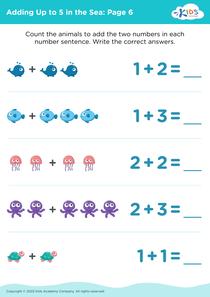
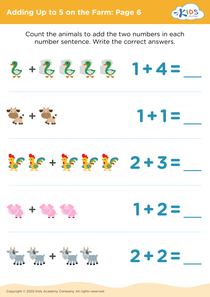
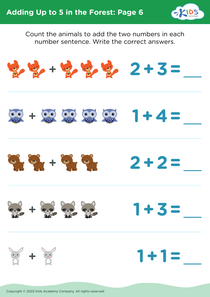
Basic Addition Skills Adding at the Zoo Worksheets for Ages 3-9 - Page 2
45 filtered results
-
From - To
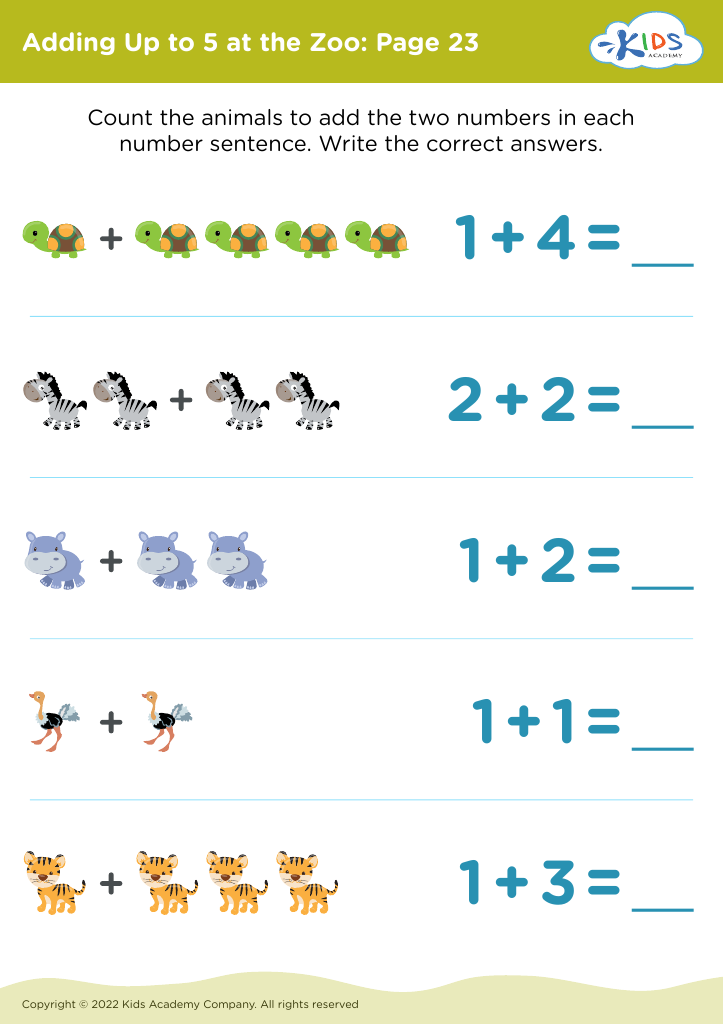
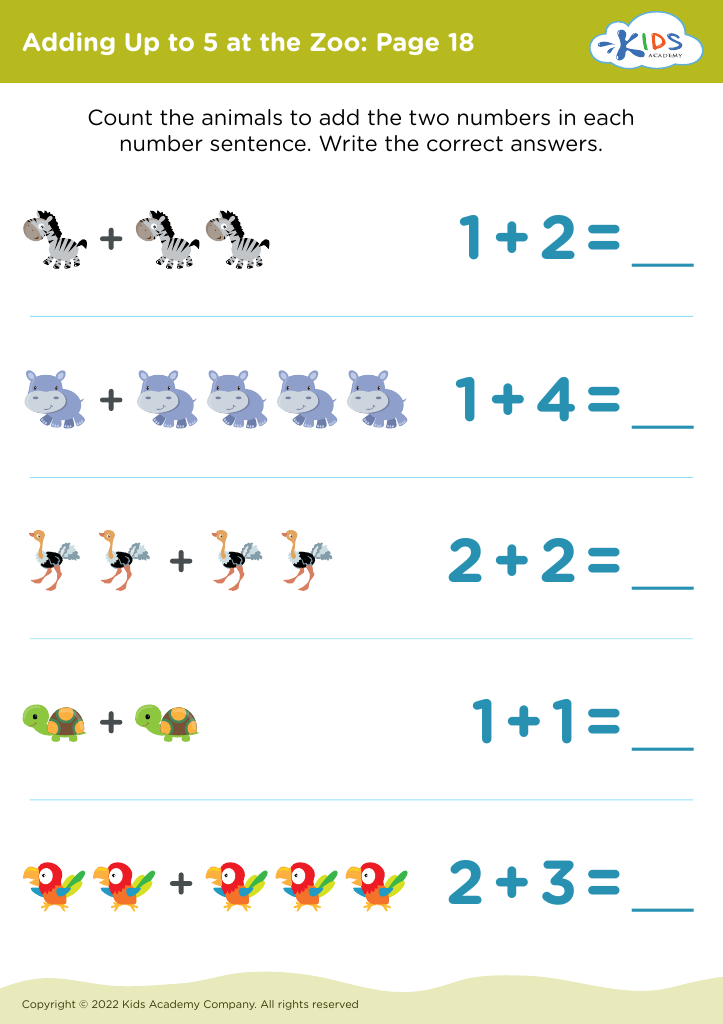
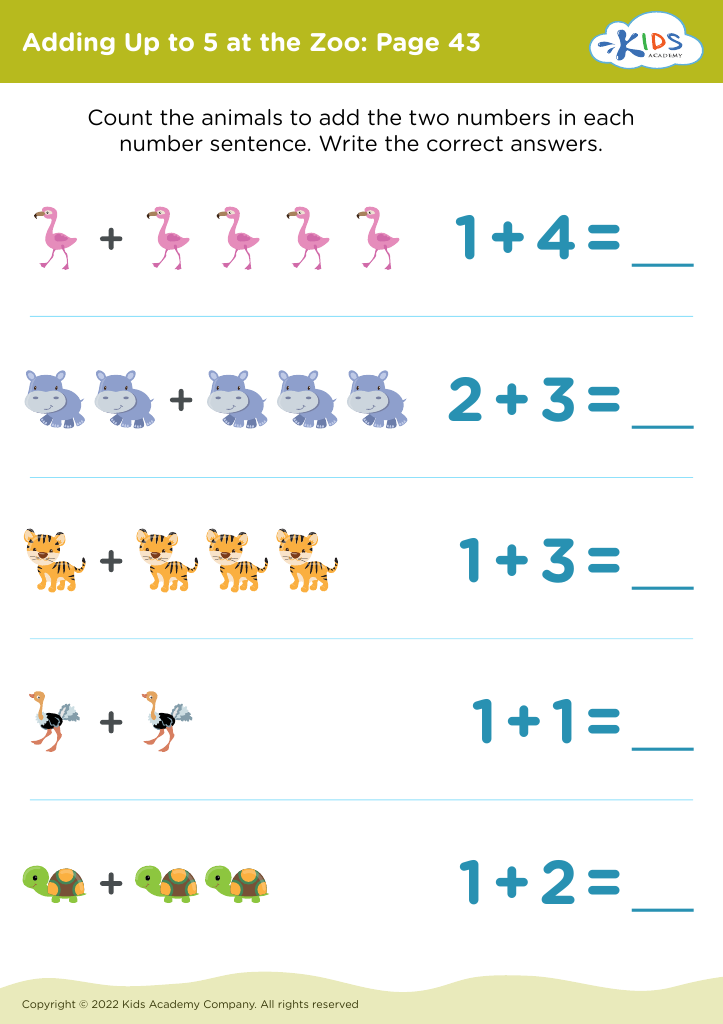
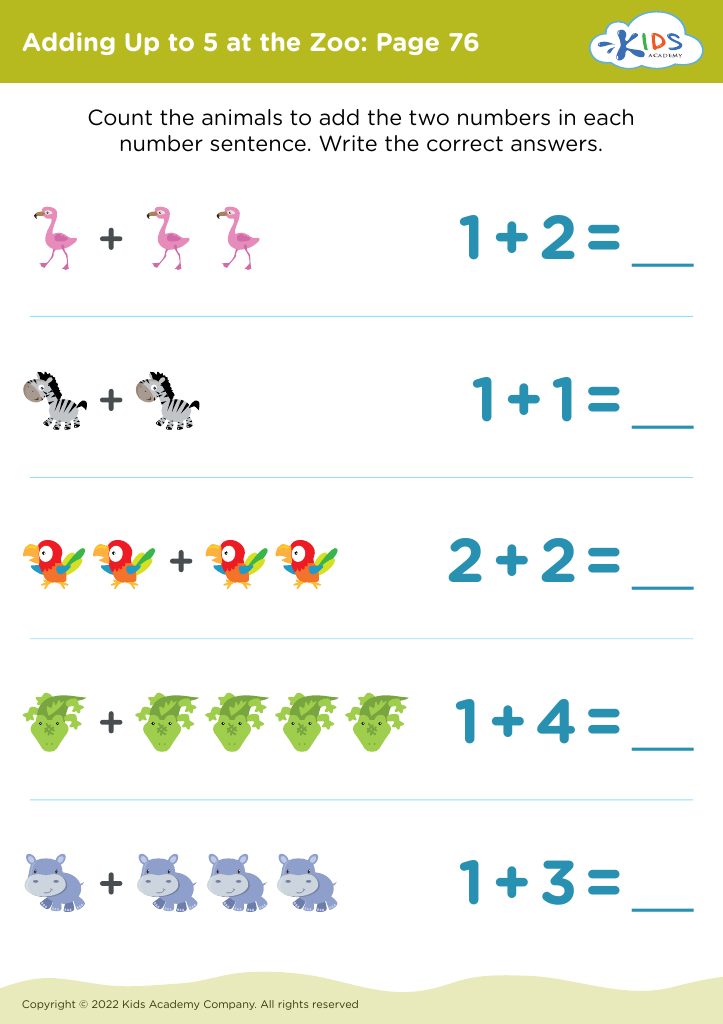
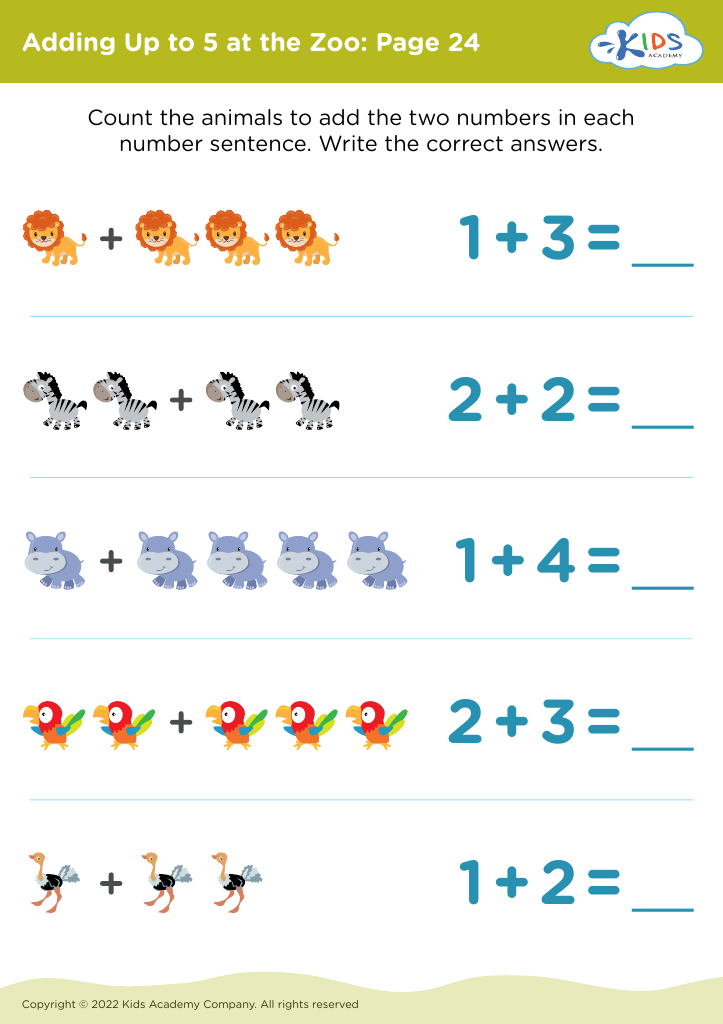
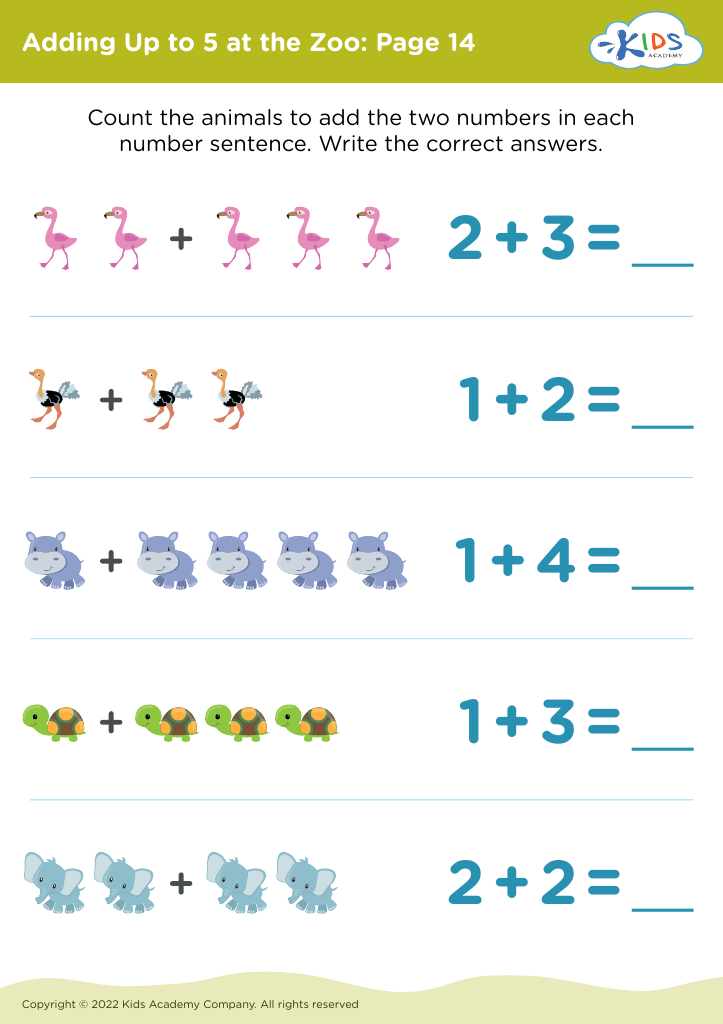
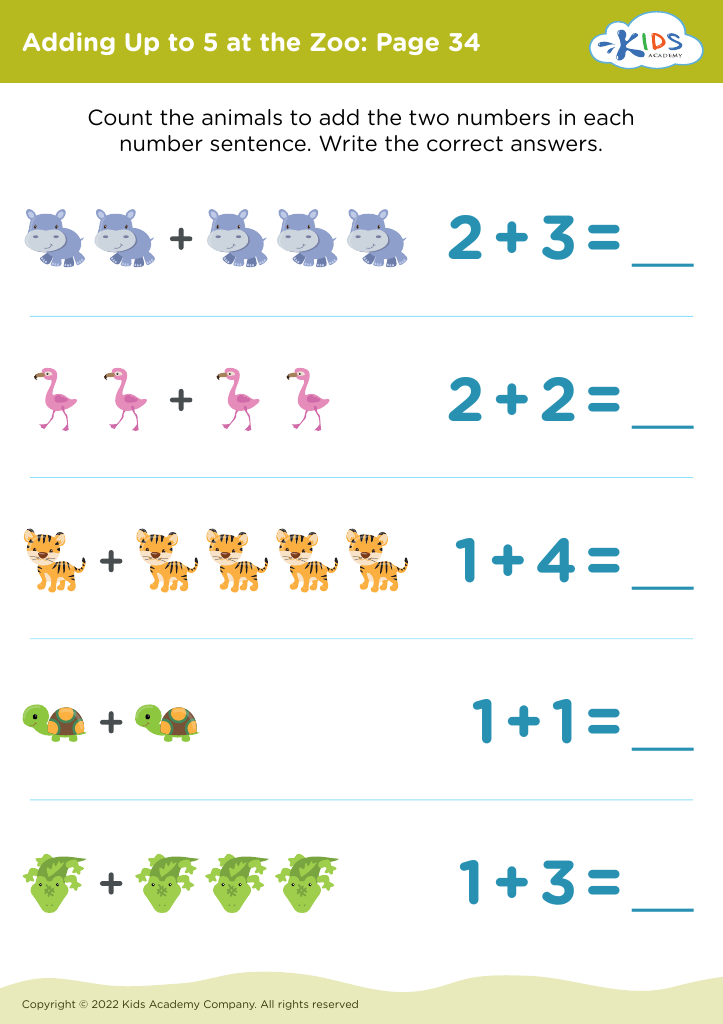
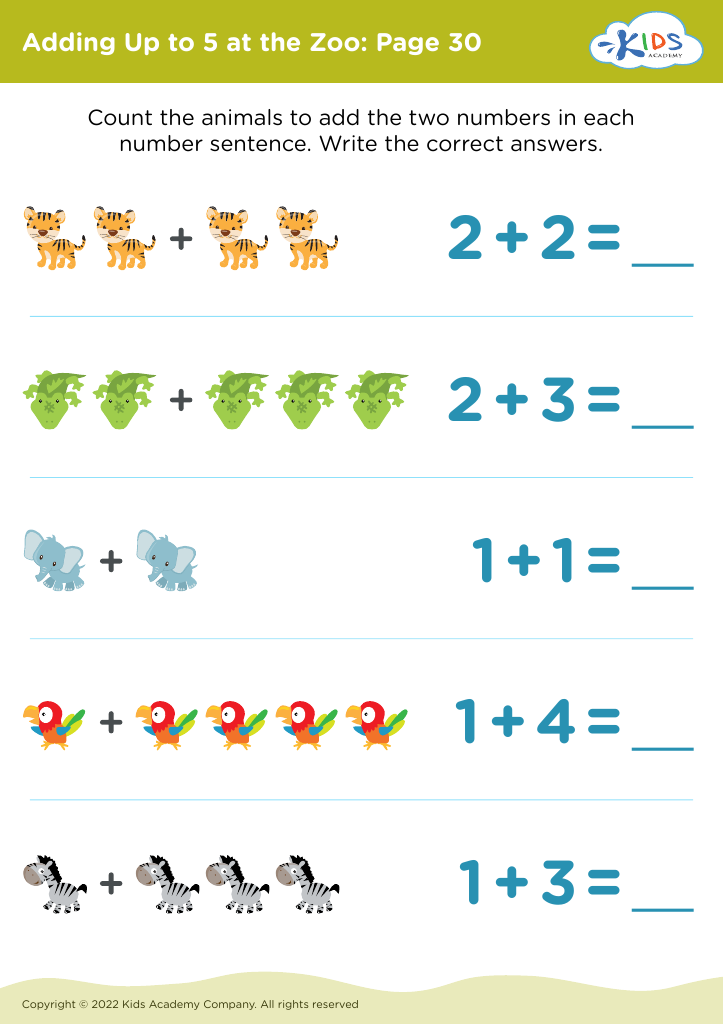
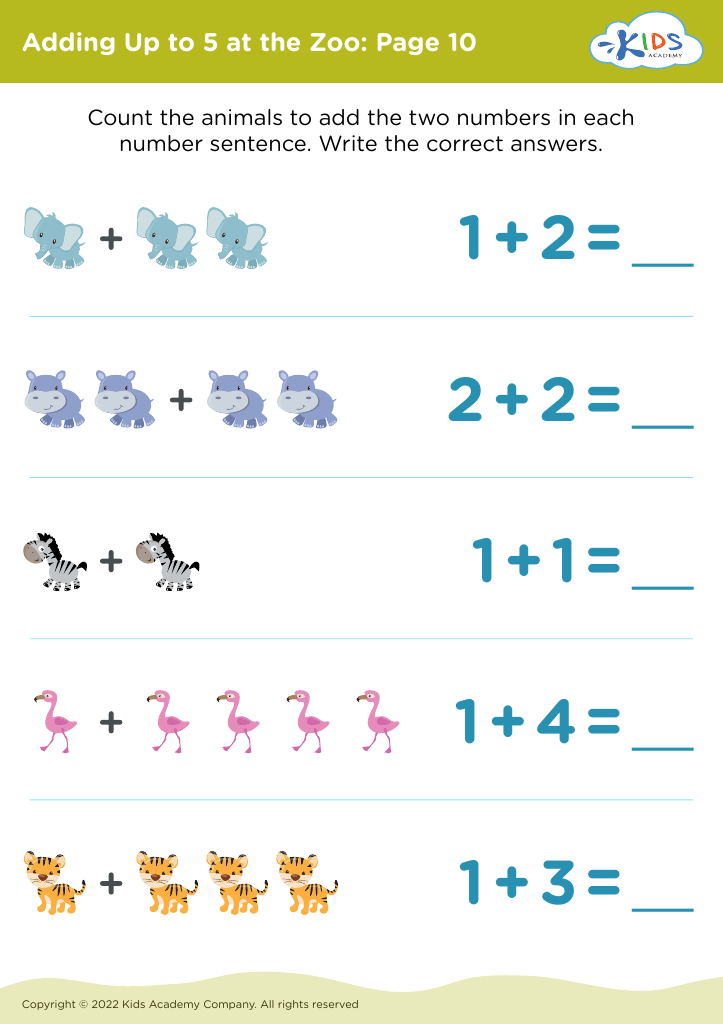
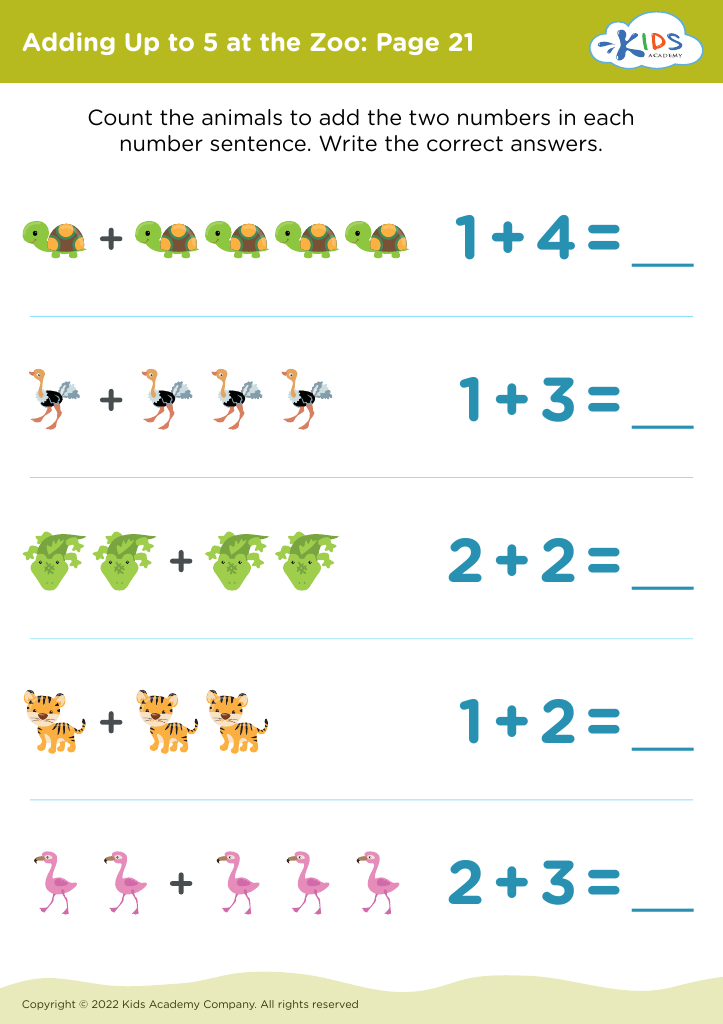
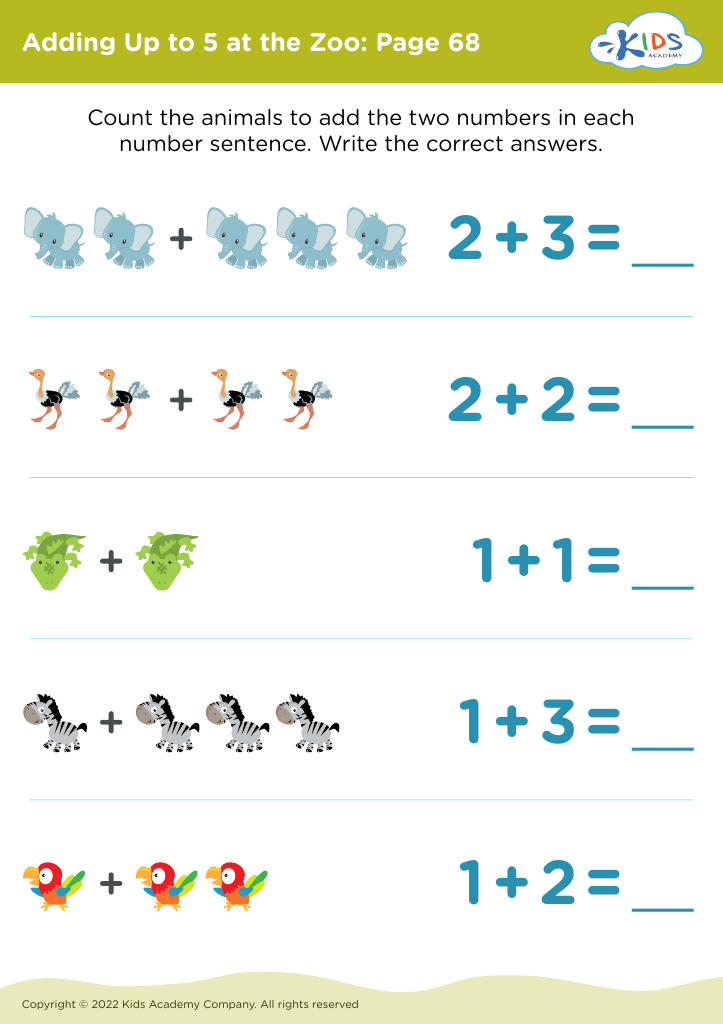
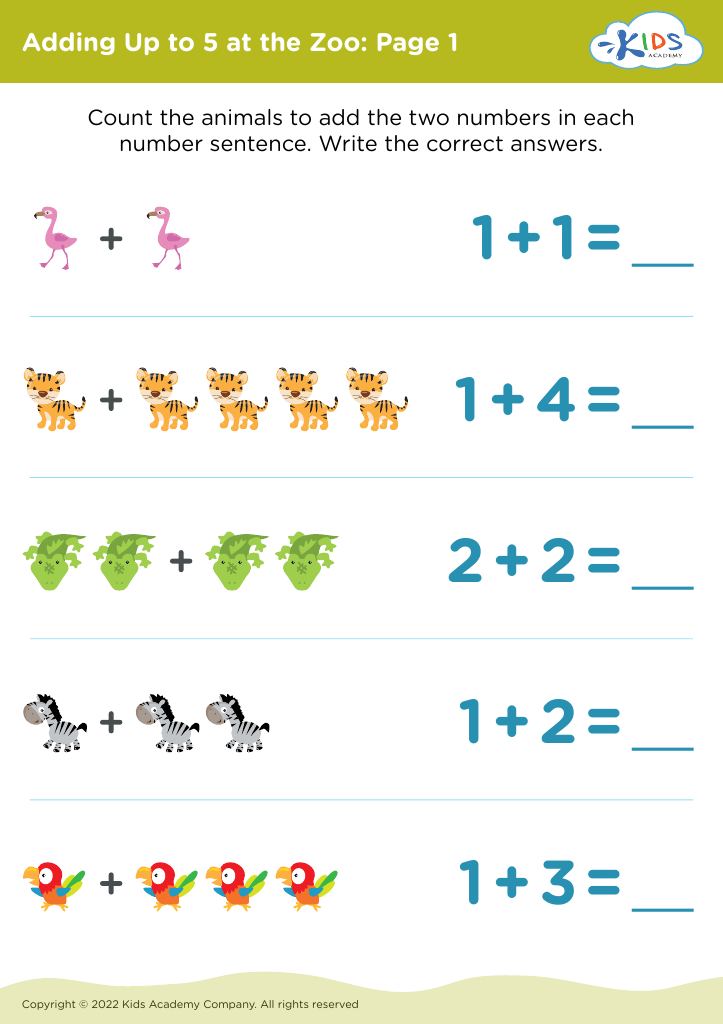
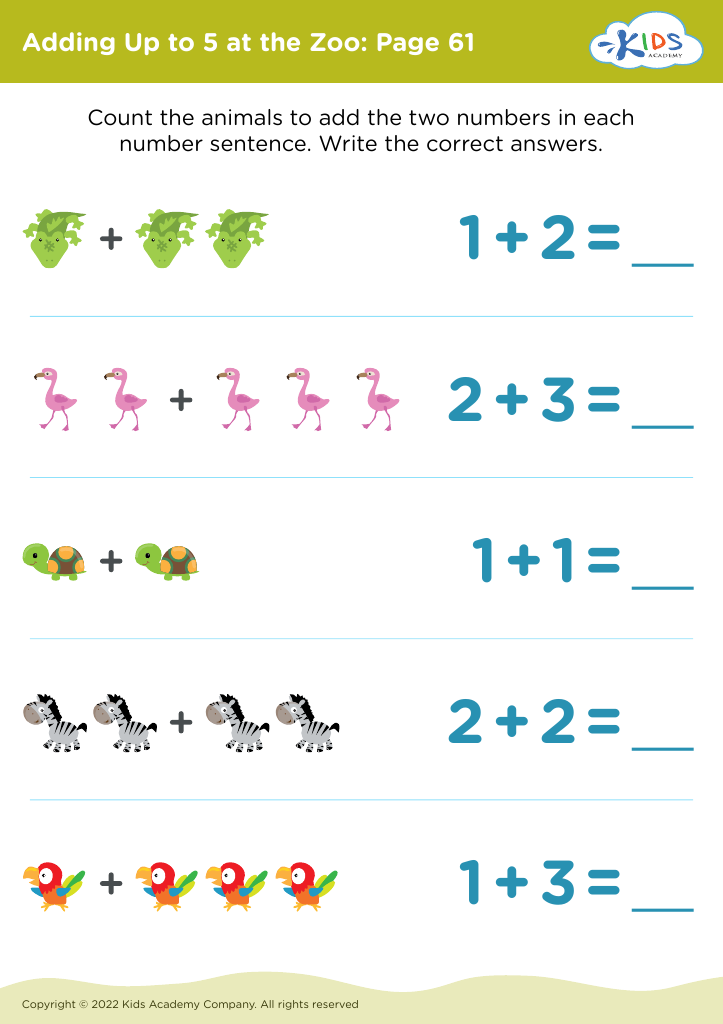
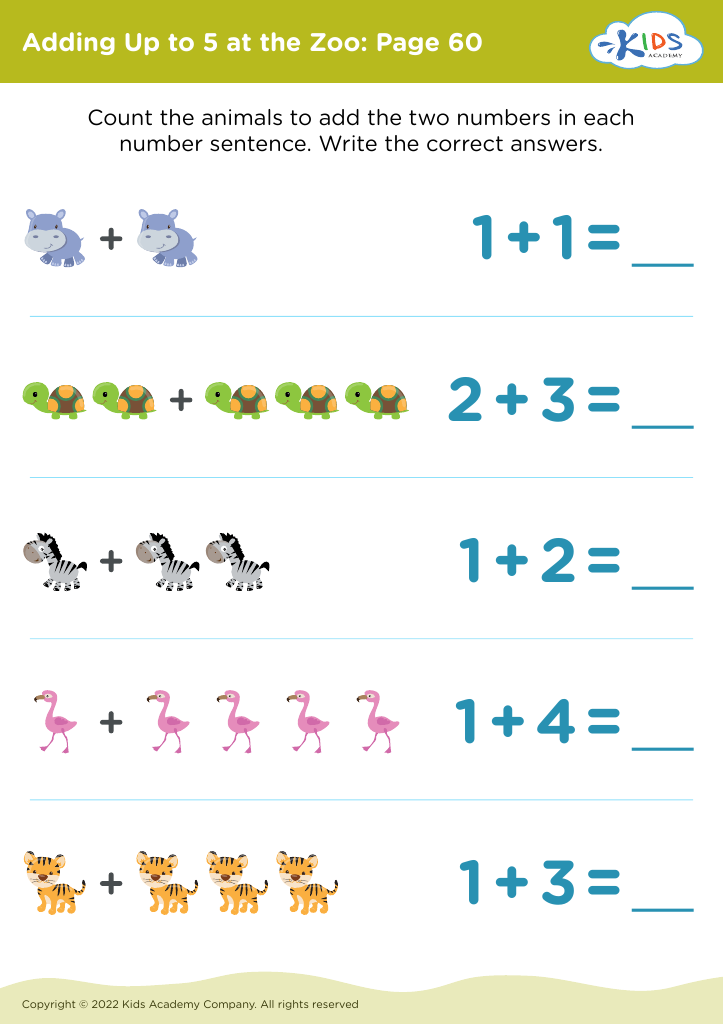
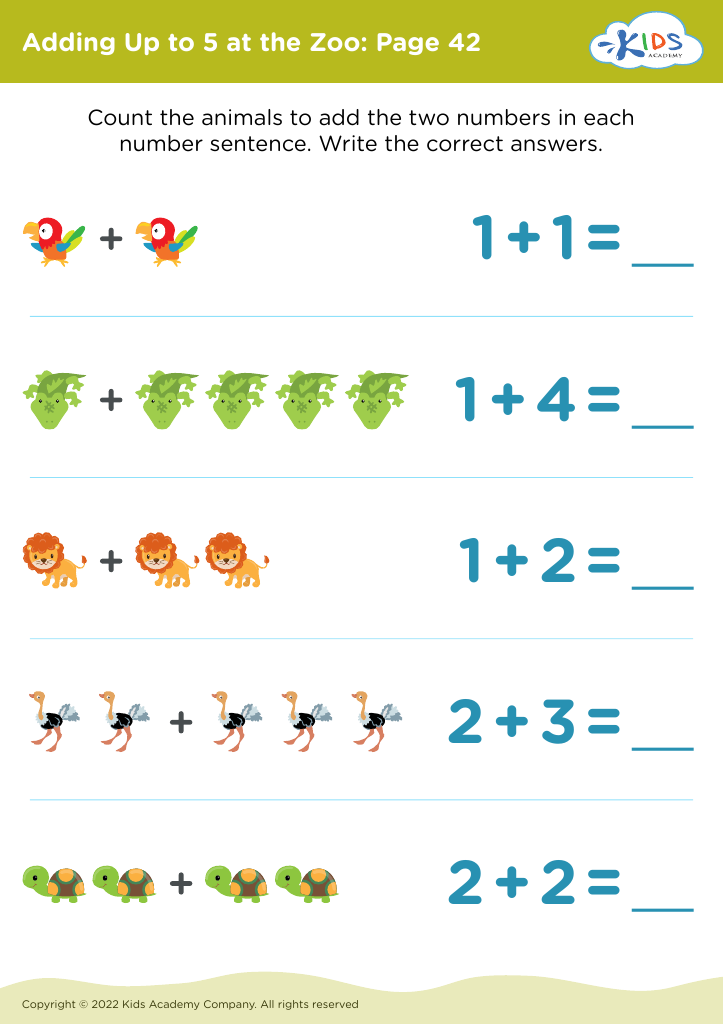
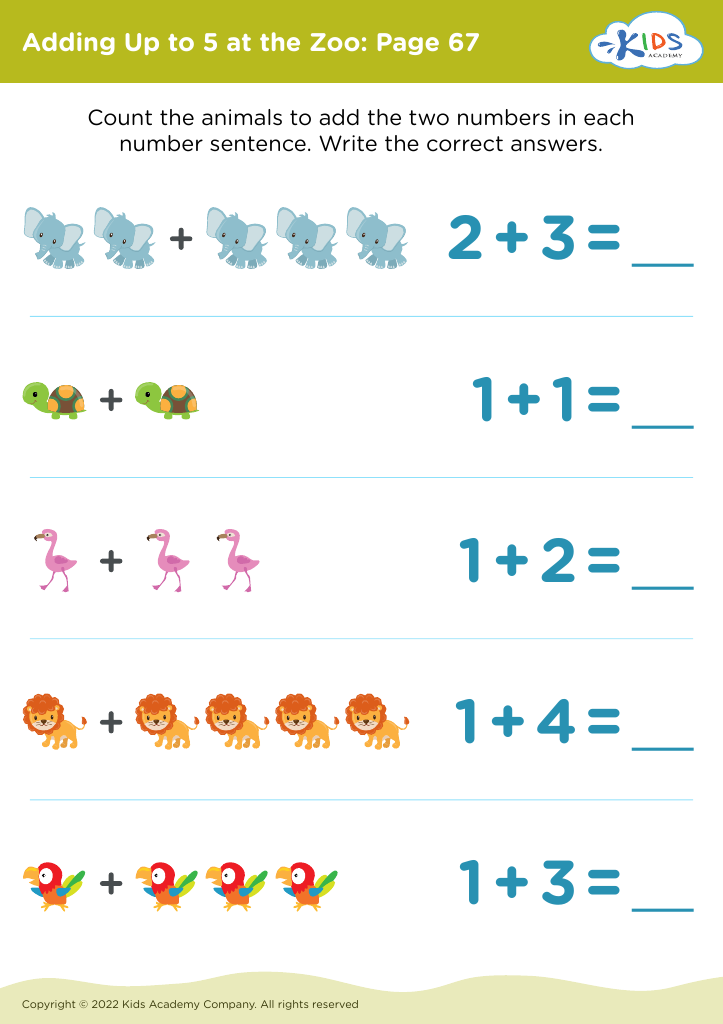
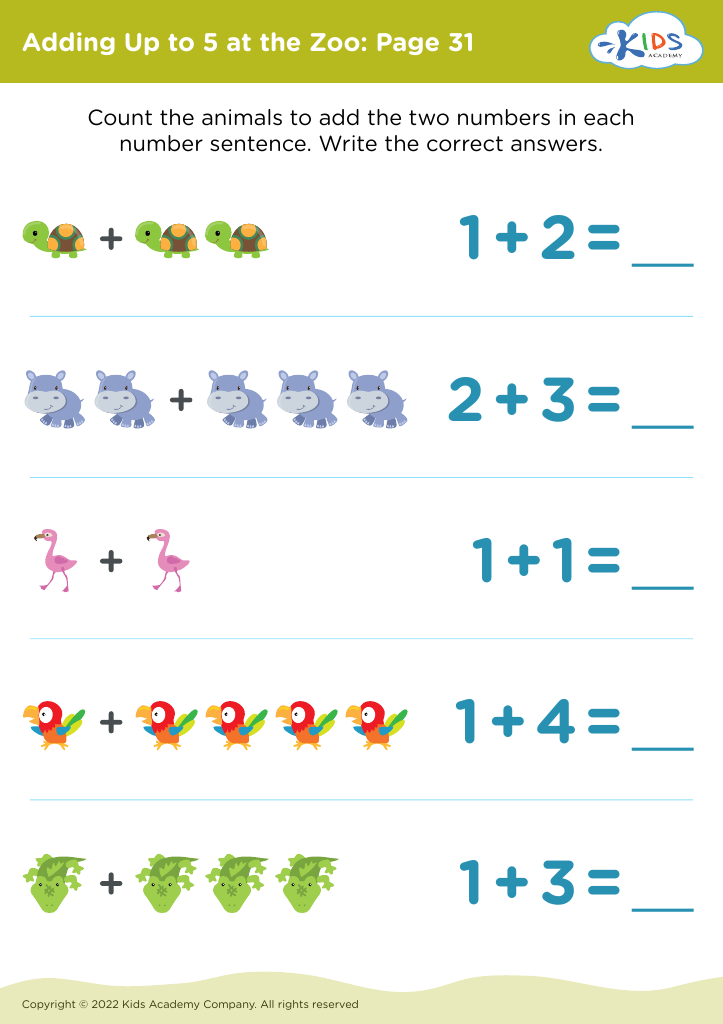
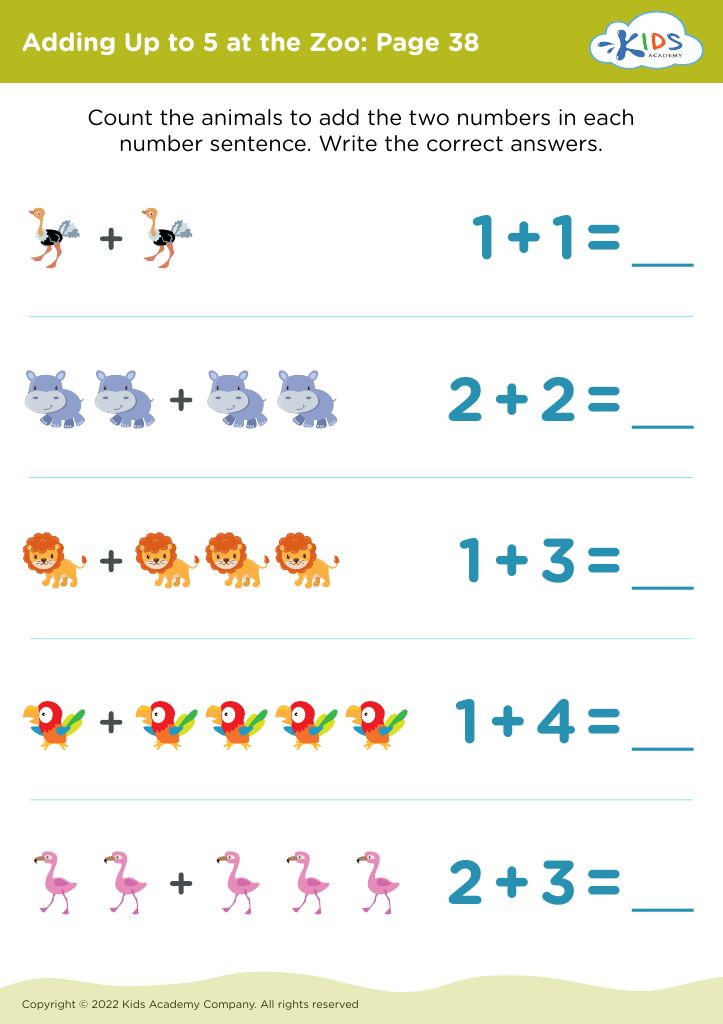
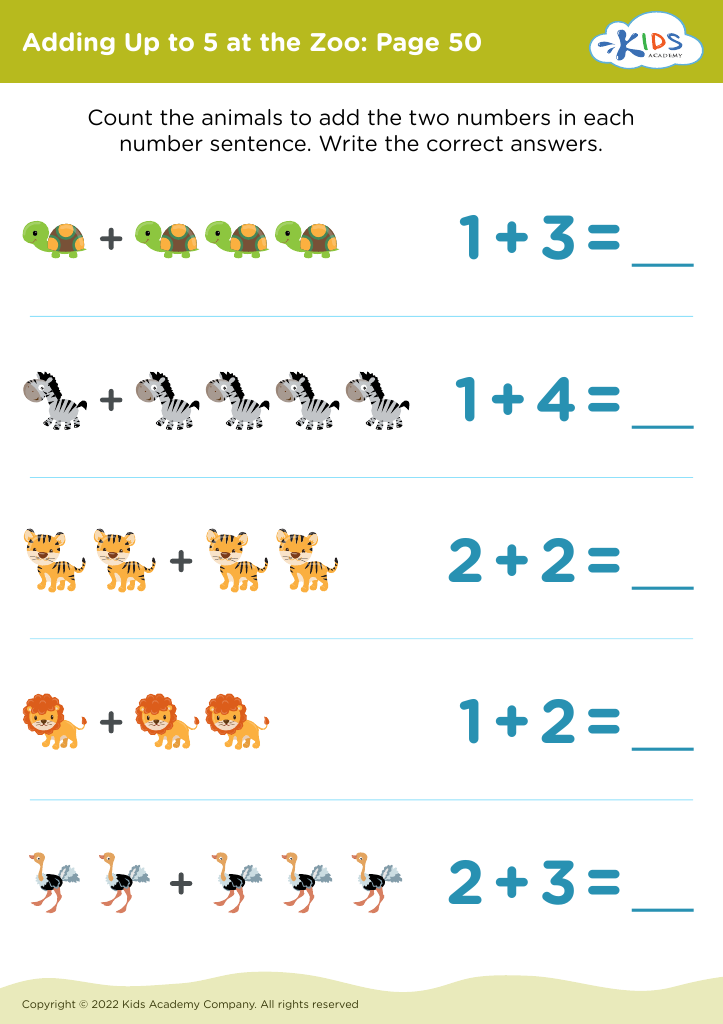
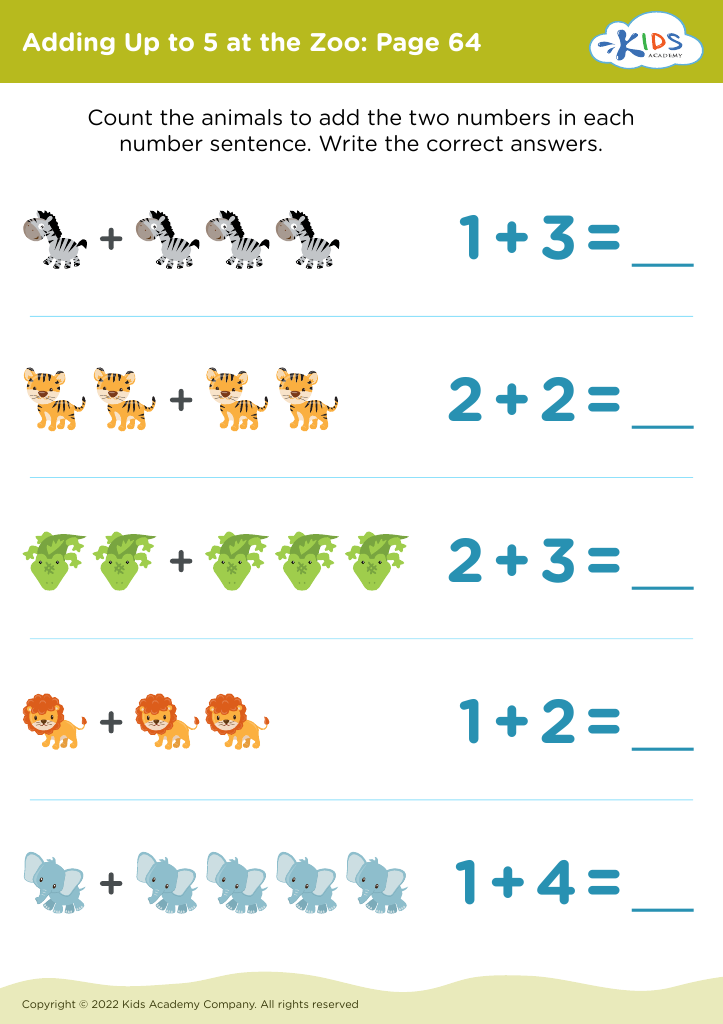
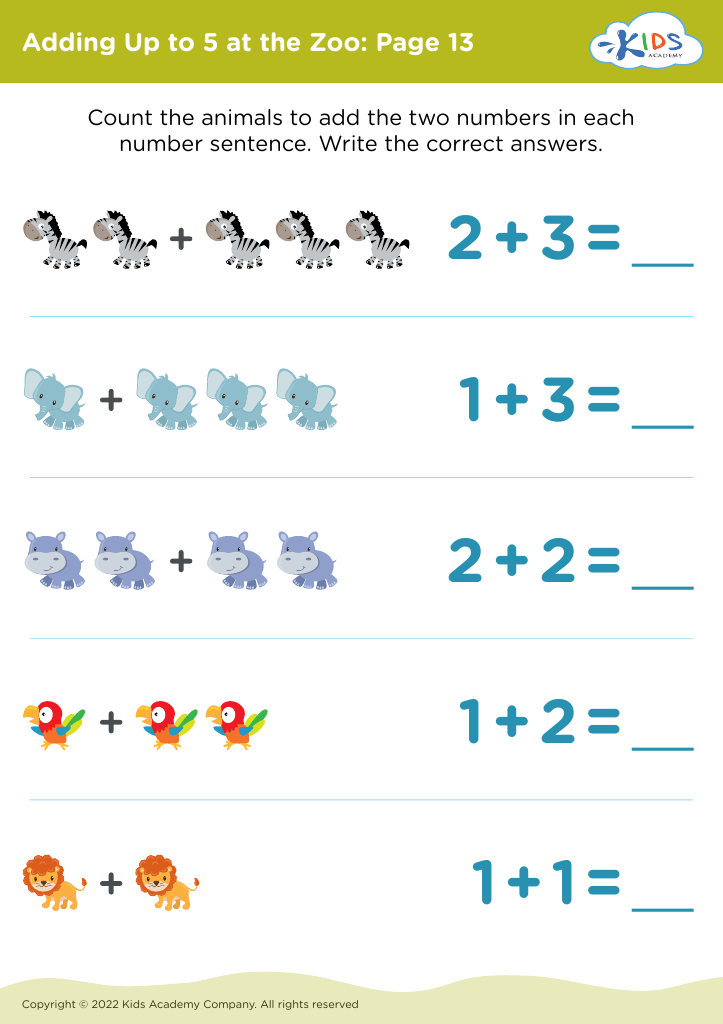



Parents and teachers should prioritize basic addition skills, such as those gained through activities like "Adding at the Zoo," for children ages 3-9, as these foundational math abilities are crucial for cognitive development. Early childhood is a critical period for learning, and engaging in fun activities helps children develop a positive attitude toward math.
Using relatable themes like a zoo, where children can visualize adding animals, enhances comprehension. It promotes engagement and makes abstract concepts concrete, which is especially vital for young learners. This type of playful learning fosters curiosity and encourages critical thinking skills.
Additionally, mastering basic addition sets the stage for more complex math concepts in later grades, helping to prevent future struggles with mathematics. By employing games and interactive lessons that involve addition, educators and parents can create supportive environments that nurture each child’s ability to think quantitatively.
Moreover, skills like addition are not just academic; they are vital in daily life for tasks such as sharing, budgeting, and problem-solving. Ultimately, instilling basic addition skills through enjoyable activities cultivates a strong math foundation, making learning both effective and enjoyable for young learners, while also supporting social skills and cooperative play in diverse settings.