Counting skills Adding at the Zoo Worksheets for Ages 3-9 - Page 2
27 filtered results
-
From - To
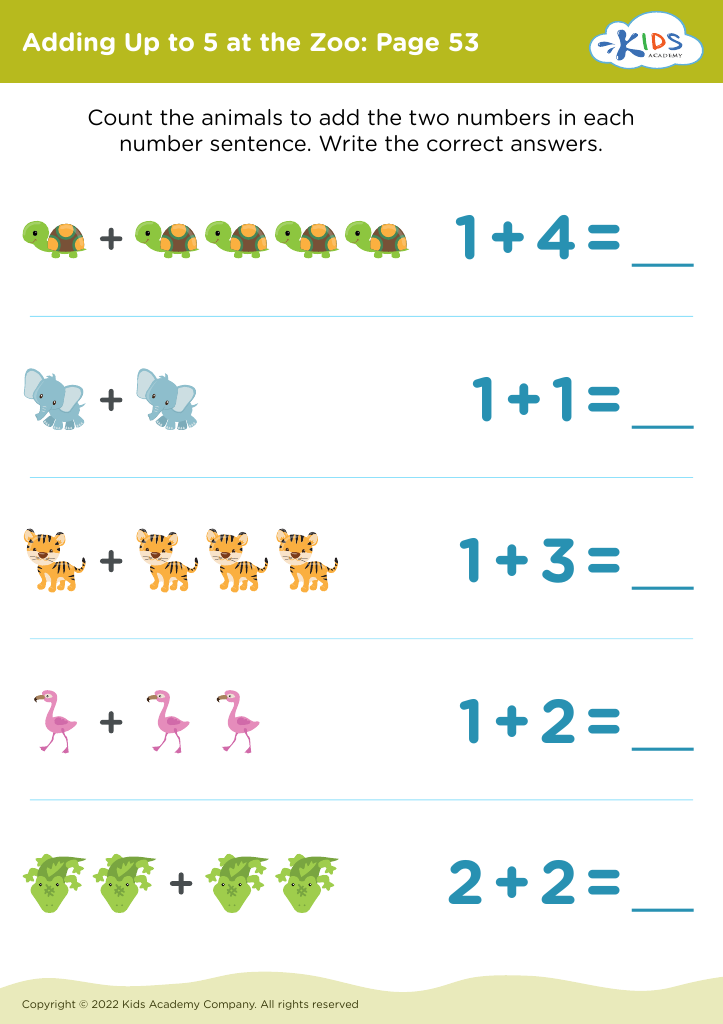
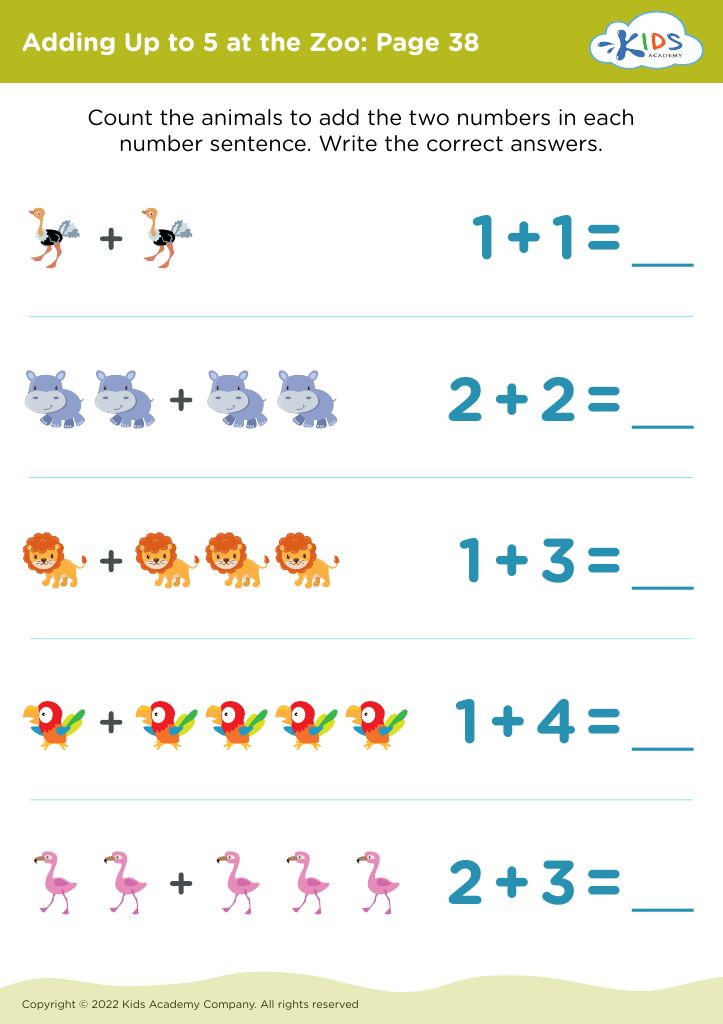
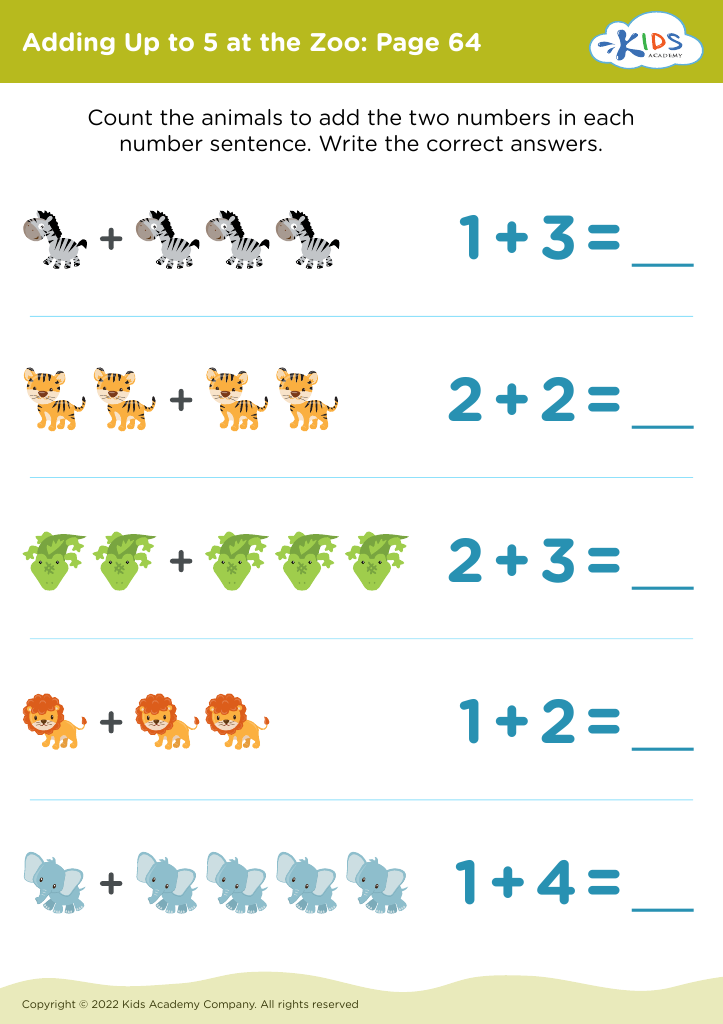



Counting skills are foundational to a child's cognitive development, particularly during the formative ages of 3 to 9. Engaging in activities such as "Counting at the Zoo" makes learning interactive and enjoyable, fostering a love for mathematics. Parents and teachers should care about these skills for several reasons.
Firstly, counting serves as the basis for more complex mathematical concepts, such as addition and subtraction. Introducing counting in relatable contexts, like a visit to the zoo, makes learning tangible and relevant, helping children grasp concepts better. Additionally, developing counting skills promotes critical thinking and problem-solving abilities, essential traits for lifelong learning.
Moreover, such engaging activities enhance social and communication skills. They provide opportunities for collaborative learning, where children can work together, share ideas, and learn from one another. It also encourages parents to participate in their child's learning journey, strengthening their bond.
Lastly, cultivating these skills at an early age builds confidence and lays the groundwork for academic success. By nurturing a child’s ability to count and add in fun and stimulating ways, adults can foster positive attitudes towards math, paving the way for future learning and achievement.