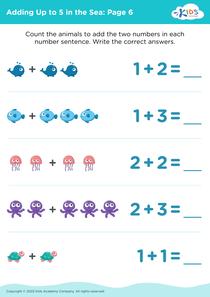
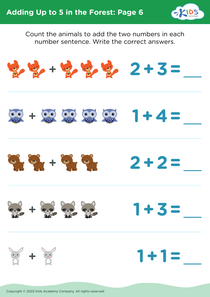
Fine Motor Skills Adding at the Zoo Worksheets for Ages 3-9
4 filtered results
-
From - To
Discover the joy of learning with our "Fine Motor Skills Adding at the Zoo Worksheets for Ages 3-9." These engaging and educational printables combine math practice with fun zoo themes, captivating young learners. Designed to enhance fine motor skills, each worksheet features playful animals and easy-to-follow activities that help children develop their hand-eye coordination and number sense. Perfect for home or classroom use, these worksheets offer an exciting way for kids to practice addition while boosting their fine motor skills. Foster a love for learning and math with our colorful and interactive zoo-themed worksheets!
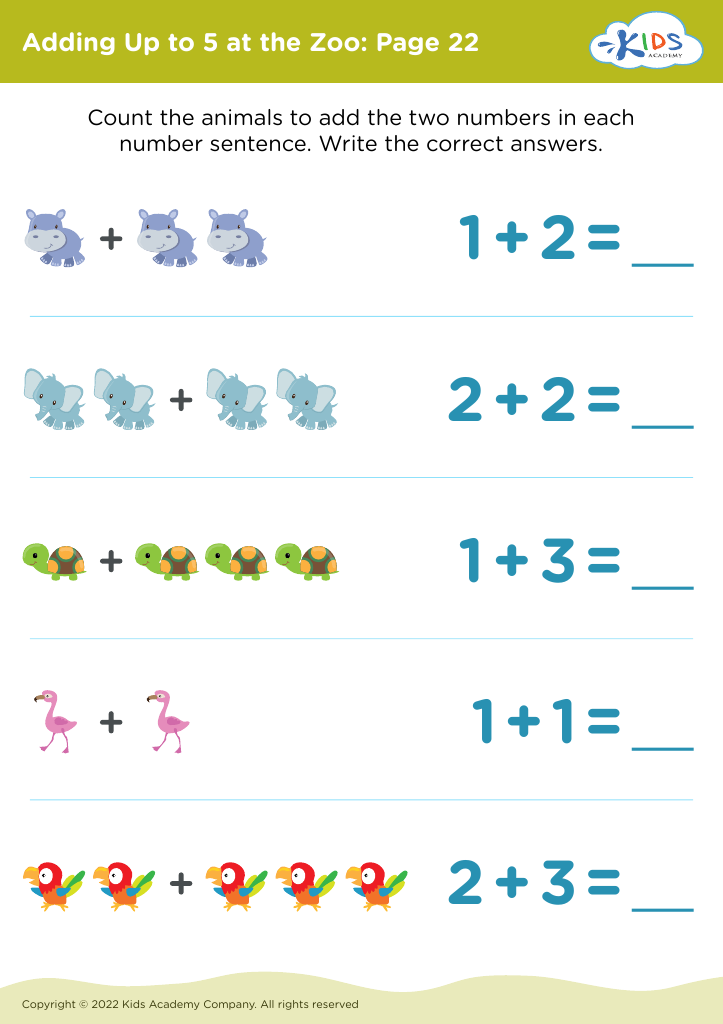
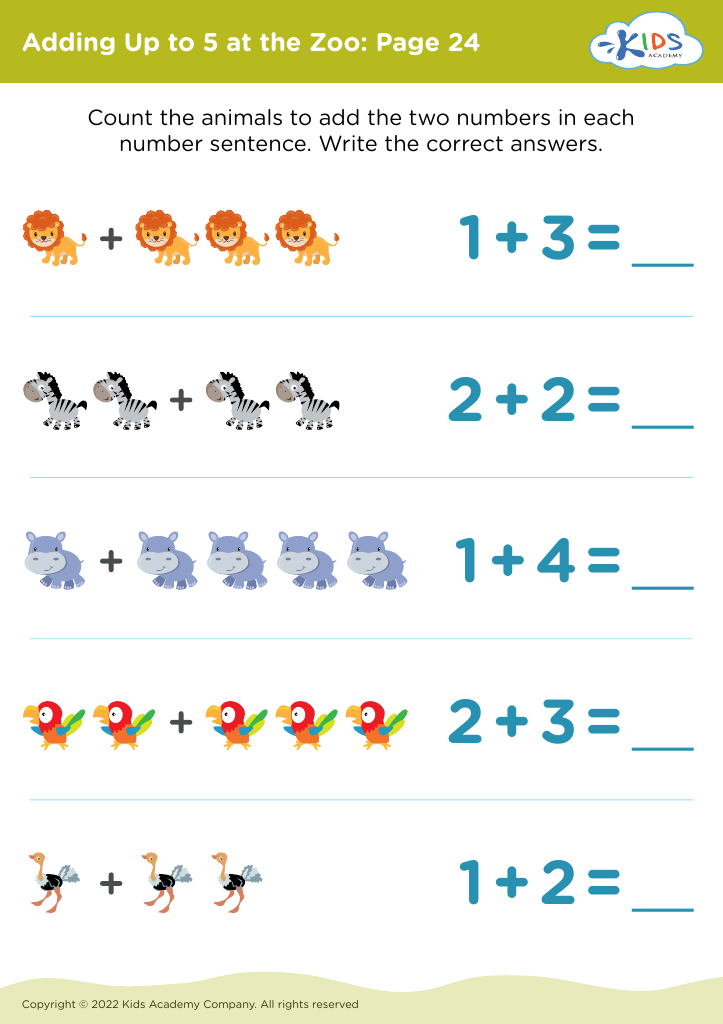
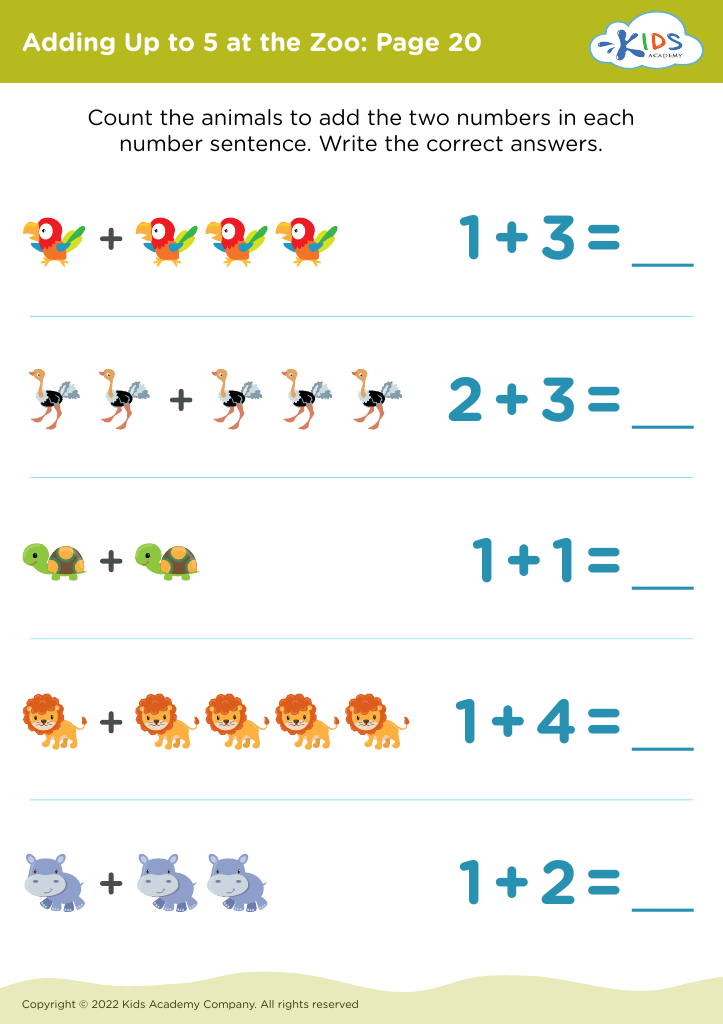
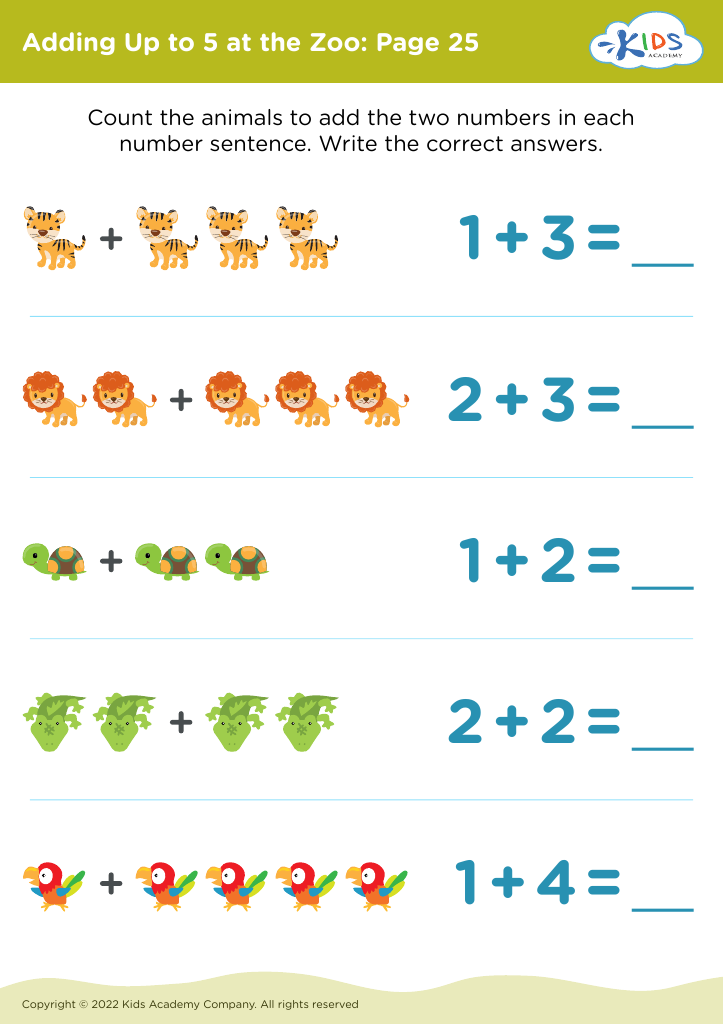



Fine motor skills are essential for children's overall development, particularly in ages 3-9, as they play a crucial role in daily activities such as writing, buttoning, tying shoes, and self-feeding. Engaging children in activities like Fine Motor Skills Adding at the Zoo, where they apply these skills in a playful, educational setting, offers multiple benefits.
Firstly, these activities enhance children's hand-eye coordination, dexterity, and precision. When children participate in tasks that involve sorting, counting, and placing small zoo animal figures, they refine their pincer grip and control—skills fundamental for later academic tasks like handwriting.
Secondly, incorporating fine motor skill activities in a theme-based context, such as a zoo, adds an element of excitement and relevance. The thematic approach keeps children engaged and motivated. It bolsters cognitive development, encouraging counting and early math skills as they add or subtract animals.
Teachers and parents should care about these activities because they also build perseverance and focus, attributes essential for success both in and out of the classroom. Moreover, engaging in these activities fosters a child's sense of accomplishment and boosts their confidence. The tactile, hands-on nature of the zoo theme makes learning tangible and fun, laying a strong foundation for more complex skills in the future.