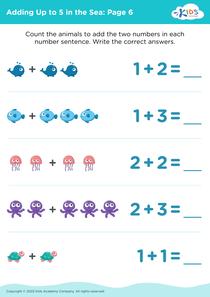
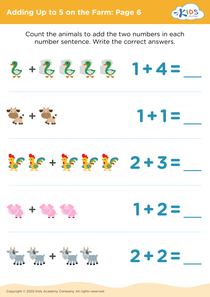
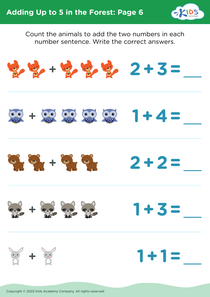
Fine motor skills (writing numbers) Adding at the Zoo Worksheets for Ages 3-9
3 filtered results
-
From - To
Enhance your child's fine motor skills with our "Adding at the Zoo" worksheets designed for ages 3-9. These engaging activities encourage children to practice writing numbers while exploring the fun theme of the zoo. Each worksheet combines simple addition problems with delightful animal illustrations, making learning enjoyable and interactive. By developing their hand coordination through writing exercises, children build the foundational skills necessary for successful handwriting. Ideal for home or classroom use, these worksheets provide an opportunity for preschoolers and early learners to strengthen their math and motor skills in a playful and imaginative environment. Download now and watch your little ones thrive!
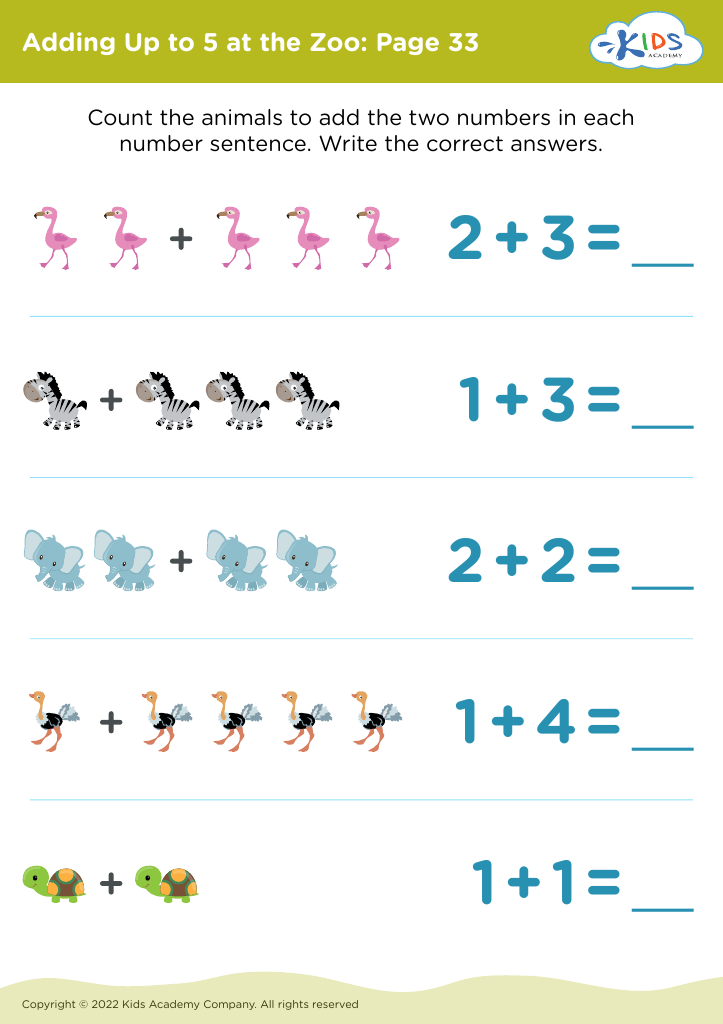
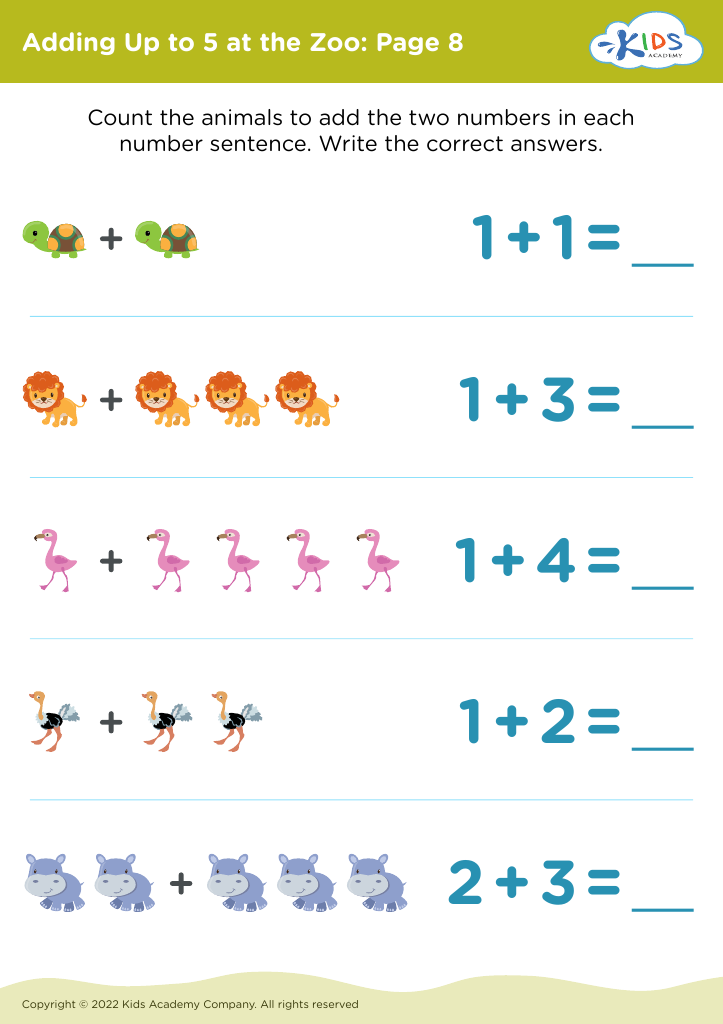
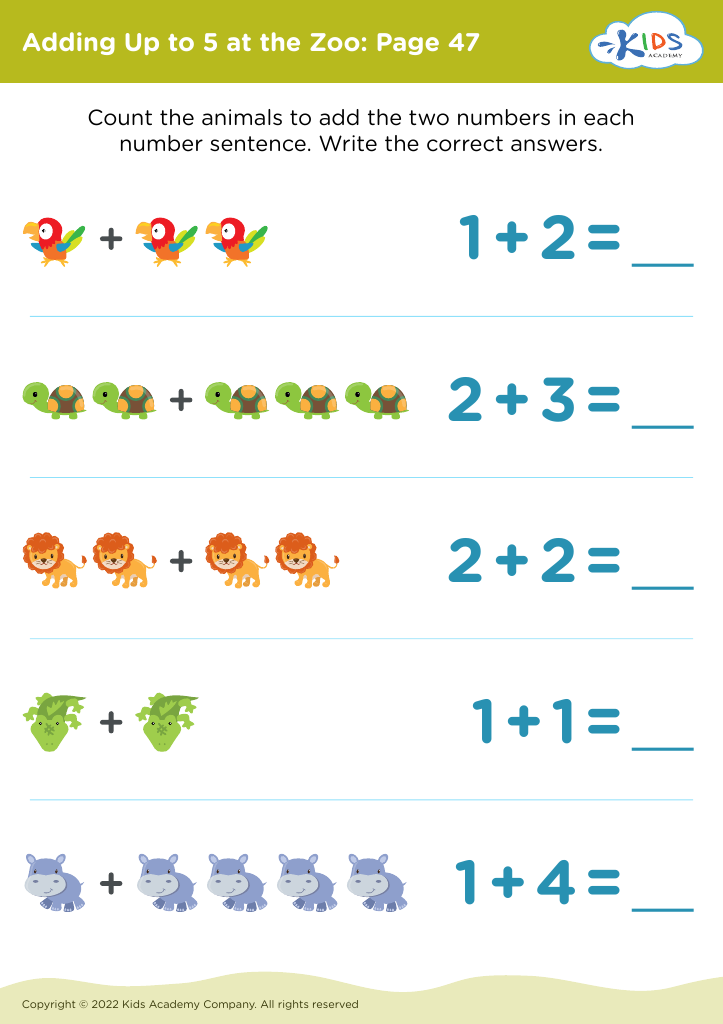



Fine motor skills are crucial for children, particularly in the preschool to early elementary years, as they are foundational for writing and various daily tasks. Engaging activities, such as "Writing Numbers: Adding at the Zoo," help young learners practice these skills in a fun and meaningful context. When children manipulate materials to form numbers—whether drawing them or engaging with manipulatives—several developmental benefits arise.
Firstly, fine motor activities enhance hand-eye coordination, essential for effective writing. By forming numbers, children strengthen their grip, precision, and control, which are necessary for successful penmanship and other tasks like using scissors or buttoning shirts. This hands-on experience also helps solidify their understanding of numbers and addition through real-world contexts, reinforcing mathematical concepts in a relatable way.
Additionally, these activities foster focus and cognitive development. They require concentration, aiding in the improvement of attention spans. Teachers and parents involved in such purposeful play not only nurture fine motor skills but also promote a positive attitude toward learning by connecting academics to playful settings like the zoo, where children can explore animals and numbers simultaneously.
In summary, fostering fine motor skills through engaging activities is essential for holistic child development, impacting both academic and practical life skills.