Hand-eye Coordination Adding at the Zoo Worksheets for Ages 3-9
3 filtered results
-
From - To
Enhance your child's hand-eye coordination while they learn to add with our "Adding at the Zoo" worksheets, designed specifically for ages 3-9. These engaging activities feature colorful zoo animals, making math fun and interactive! By combining additions with activities that involve tracking, tracing, and connecting, children will improve their coordination skills in a playful context. Our worksheets not only bolster mathematical understanding but also support fine motor skills development. Ideal for classroom use or at-home practice, these printables foster a love for learning while exploring the wonders of the zoo. Download now and turn math practice into a joyous adventure!
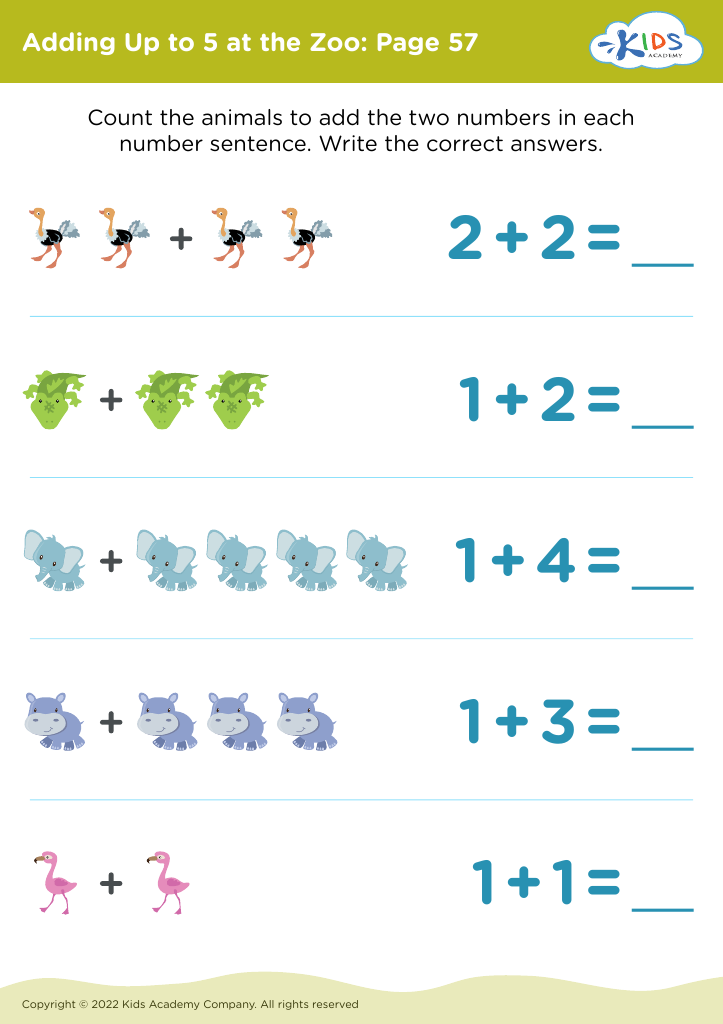
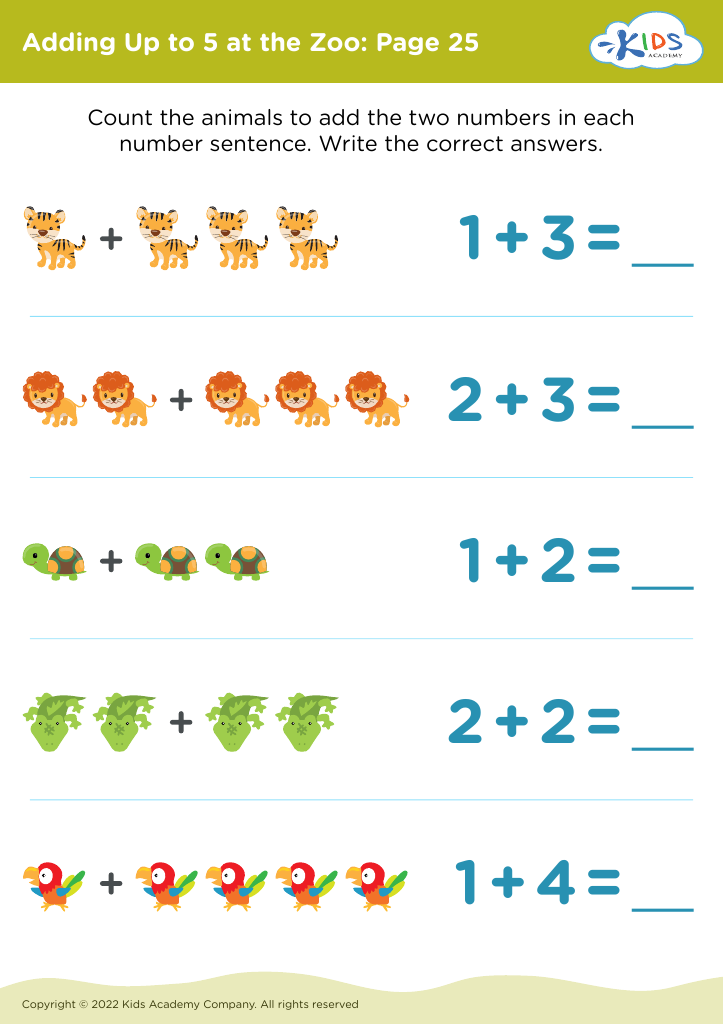
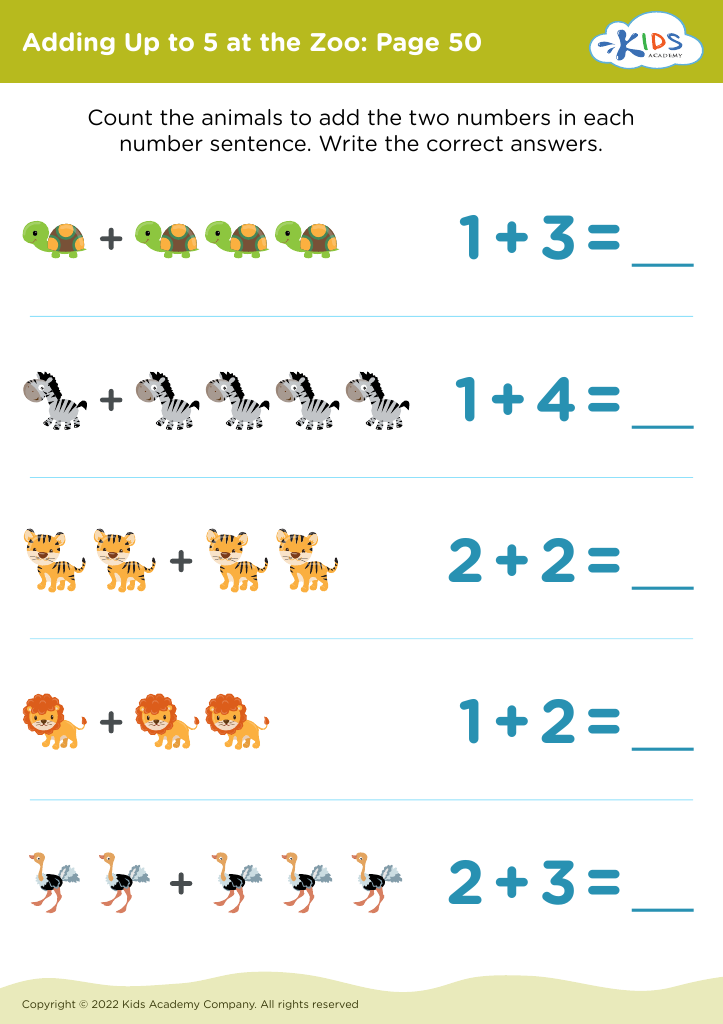



Hand-eye coordination is a critical developmental skill for children aged 3 to 9, as it lays the groundwork for both academic and everyday tasks. Activities like “Hand-eye Coordination Adding at the Zoo” provide a fun and engaging way to enhance this essential skill. When children interact with visual elements, such as images of animals, while solving addition problems, they practice synchronizing their visual input with motor responses. This dual engagement supports not just mathematical skills but also cognitive development, as children learn to navigate challenges and develop problem-solving strategies.
Additionally, learning about animals in a zoo setting fosters enthusiasm for education, making math more relatable and enjoyable. It offers a unique context that connects children’s natural curiosity with basic Arithmetic concepts, reinforcing lessons through real-world applications.
Moreover, encouraging group activities can promote social skills, teamwork, and communication while also making learning enjoyable. By caring about and participating in these activities, parents and teachers help promote a well-rounded development, aiding in physical coordination, cognitive growth, and a love of learning that can last a lifetime. In essence, “Hand-eye Coordination Adding at the Zoo” is more than just a fun game; it’s a multifaceted educational experience that can significantly benefit young children.