Problem Solving Adding at the Zoo Worksheets for Ages 3-9
3 filtered results
-
From - To
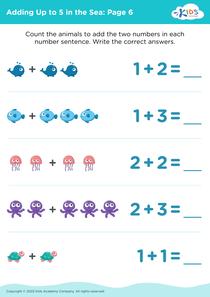
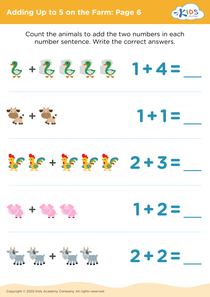
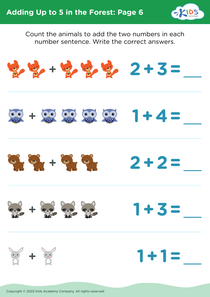
Explore our engaging "Problem Solving Adding at the Zoo Worksheets," designed for children ages 3-9! These fun and interactive worksheets encourage young learners to practice their math skills in an exciting zoo-themed environment. Each activity helps develop problem-solving abilities while introducing basic addition concepts through colorful illustrations and relatable scenarios featuring delightful animals. Perfect for use at home or in the classroom, these worksheets support early math development, critical thinking, and encourage creativity. Watch your child enhance their learning experience as they navigate through the zoo, making math fun and accessible! Start their mathematical journey today!
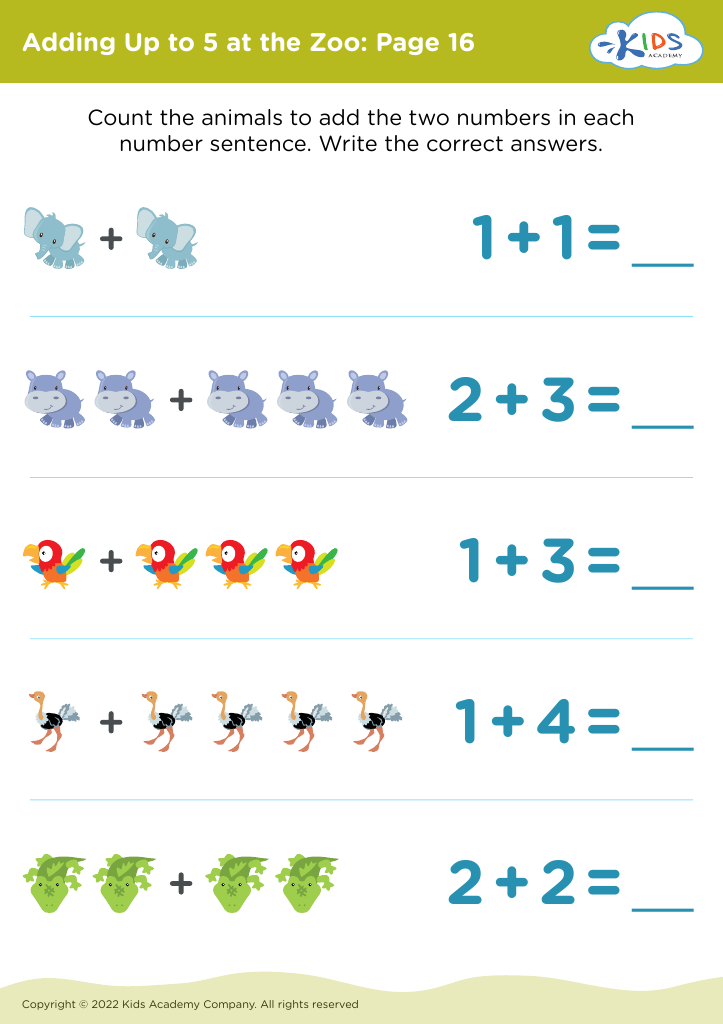
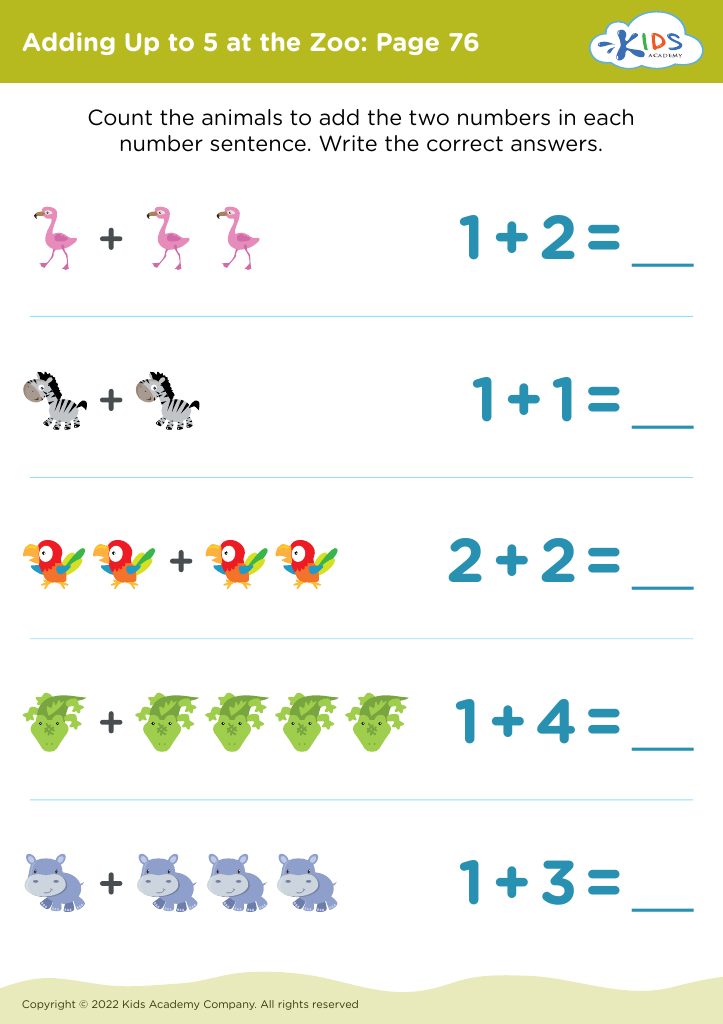
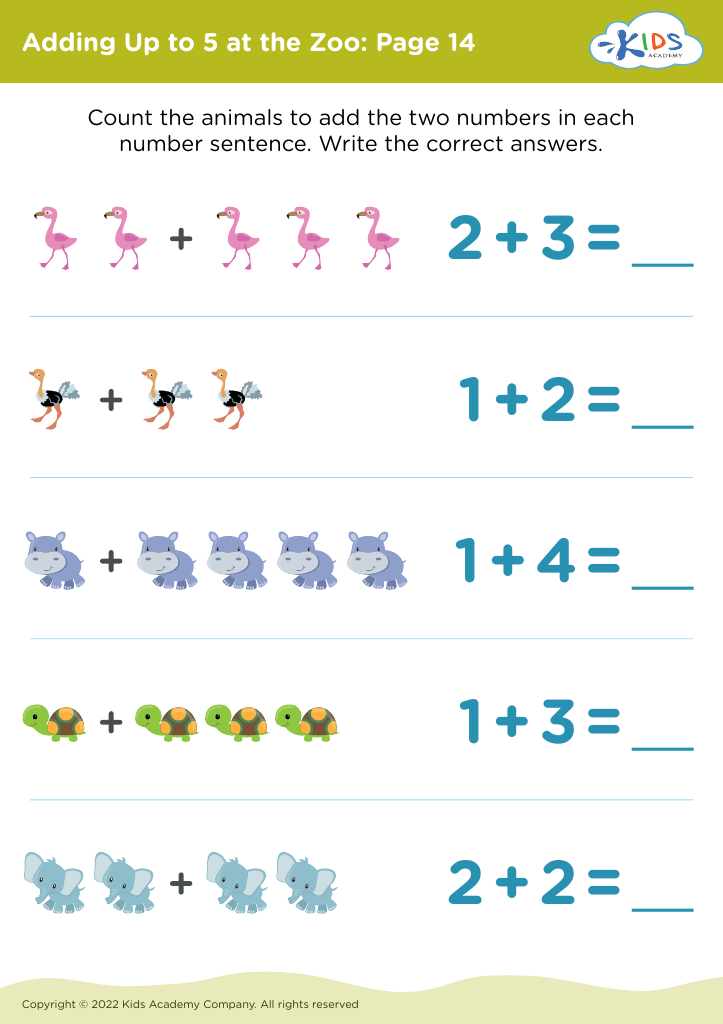



Problem-solving activities like "Problem Solving Adding at the Zoo" hold significant importance for children aged 3-9. Engaging in such activities fosters critical thinking skills, encourages creativity, and enhances mathematical understanding in an enjoyable context. As children navigate various zoo scenarios involving addition, they develop vital cognitive skills, including reasoning and logic.
Parents and teachers should care about these activities as they promote a strong foundation in math through real-life applications. This contextual learning helps children comprehend the relevance of mathematics in their daily lives, making abstract concepts more tangible and relatable. By addressing problems related to animals, habitats, and visitors, the activity also nurtures curiosity about the natural world.
Additionally, these activities encourage collaboration and communication among peers, refining social skills and emotional intelligence. Particularly in young learners, positive associations with math initiated through play help build a healthy attitude towards learning and future academic pursuits.
Ultimately, applying problem-solving in a zoo setting equips children with the tools they need to tackle life’s challenges while making learning engaging and fun—valuable attributes for their overall development and success. Encouraging such activities benefits parents and teachers committed to holistic education and social-emotional growth for young learners.