Understanding Quantities Adding at the Zoo Worksheets for Ages 3-9
6 filtered results
-
From - To
Visit our "Understanding Quantities Adding at the Zoo" worksheets page, designed for children ages 3 to 9. These engaging, colorful worksheets combine the fun of a zoo theme with essential early math skills, helping young learners grasp the concept of quantities and basic addition. Through interactive activities involving animals, children will develop their ability to count, compare, and add various quantities while enjoying playful illustrations. Ideal for home practice or classroom activities, these worksheets make learning math exciting and effective. Help your child build a strong numerical foundation with our fun, educational resources today!
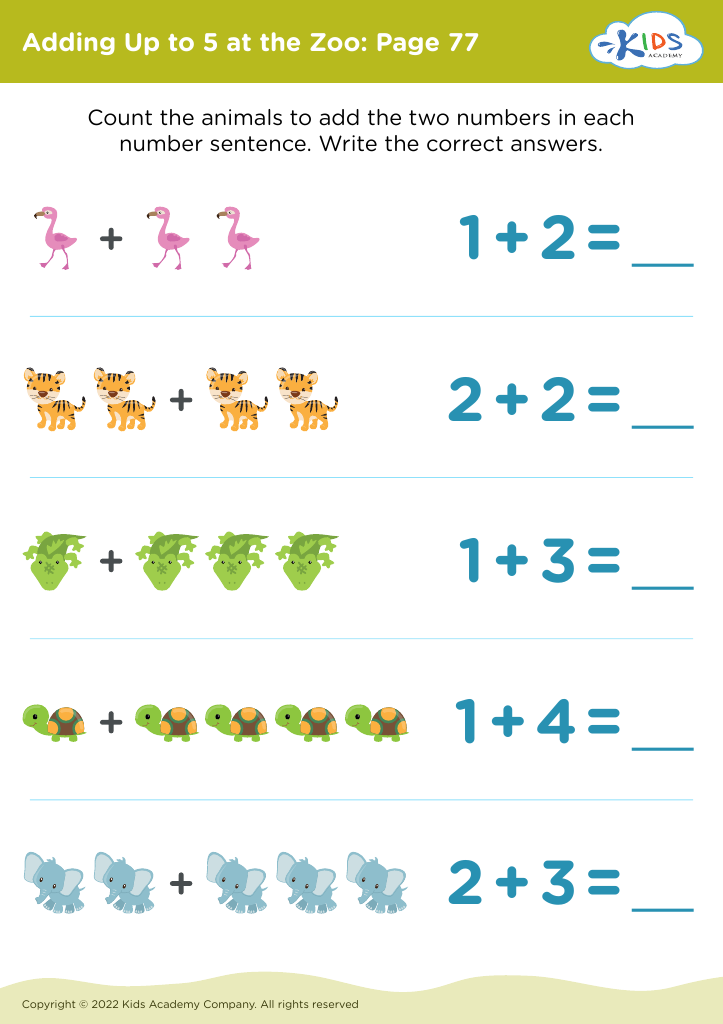
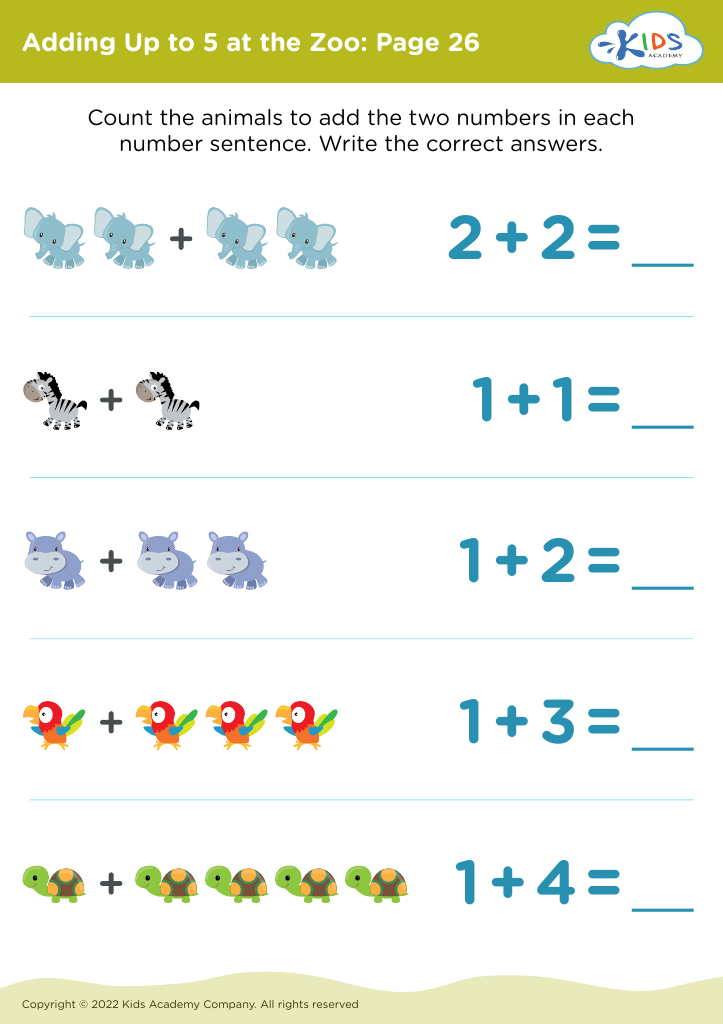
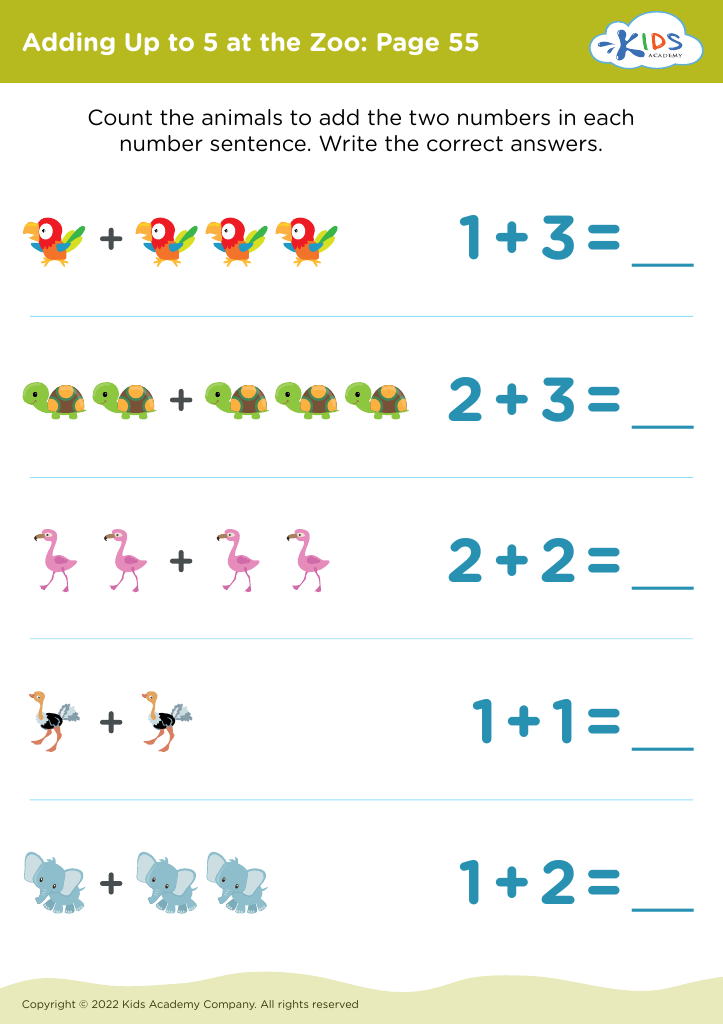
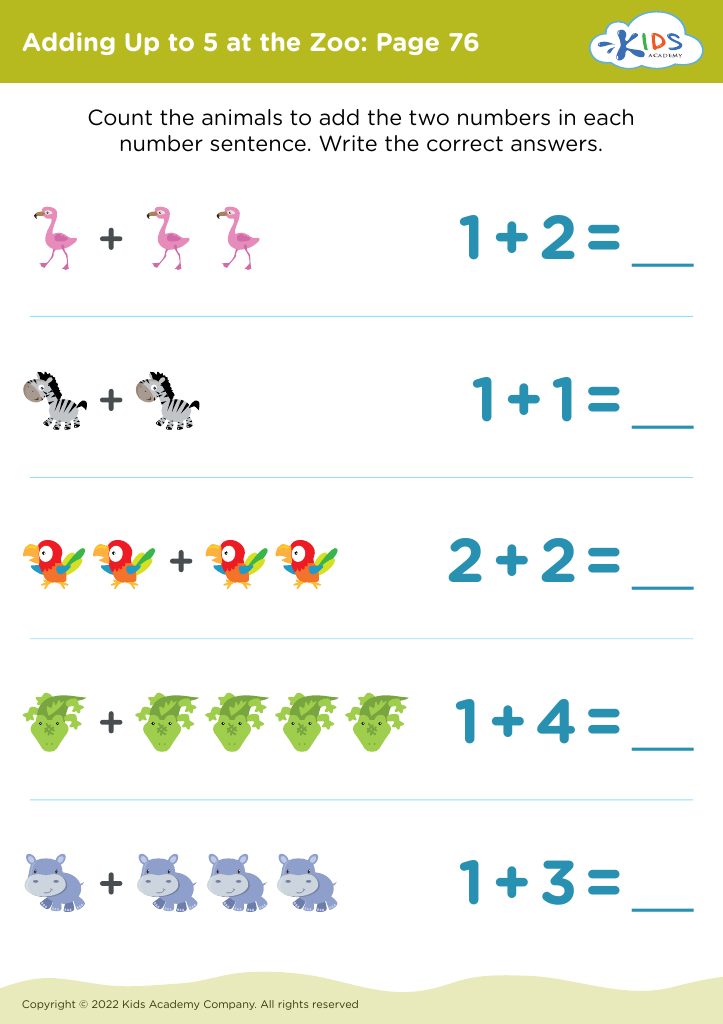
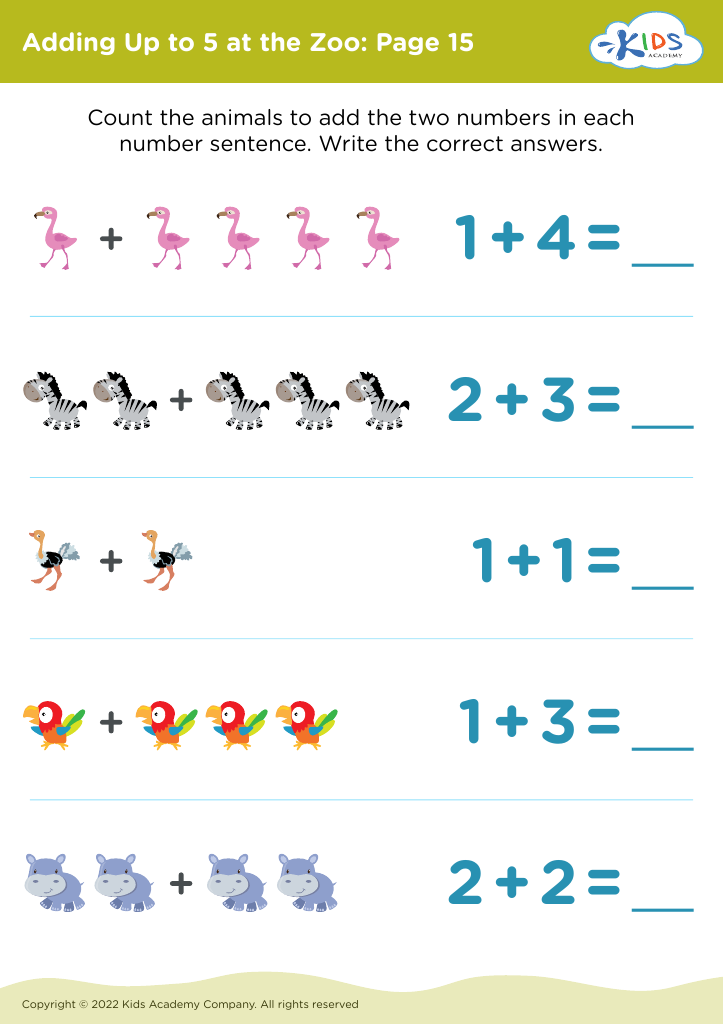
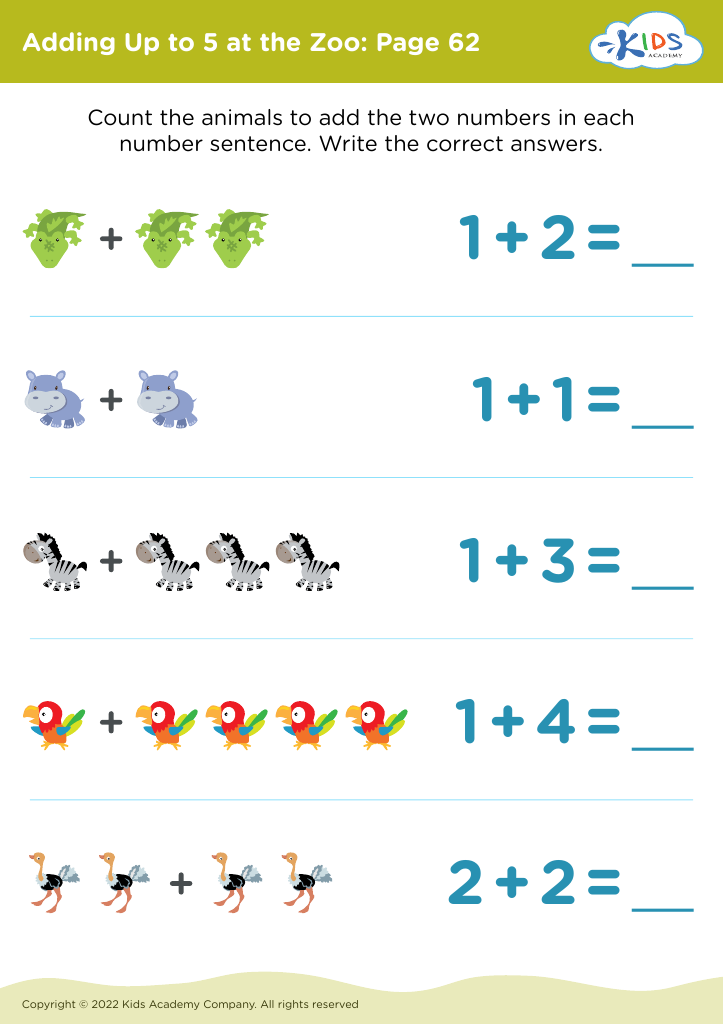



Understanding quantities and addition through engaging activities, such as "Understanding Quantities: Adding at the Zoo," is vital for children aged 3-9. This hands-on approach not only makes math relatable and fun but also helps children develop foundational skills in a meaningful context. By integrating playful themes, like animals at the zoo, children are more likely to engage enthusiastically with mathematical concepts.
Parents and teachers should care about this topic because strong early math skills correlate with future academic success. Learning how to recognize and manipulate quantities lays the groundwork for more complex problem-solving and critical thinking abilities later on. Early positive experiences with math boost children's confidence and instill a sense of curiosity about the subject.
Moreover, such activities promote social interaction and collaborative learning among peers, enhancing communication skills and teamwork. They also provide opportunities to incorporate key concepts like counting, comparison, and basic addition in a dynamic setting, fostering a love for learning. Ultimately, investing time in understanding quantities through playful experiences prepares children for a wide range of real-world applications and sets them on a path toward lifelong learning, making it an essential focus for educators and caregivers alike.