Filters

17 filtered results

Clear all filters
Favorites
With answer key
Interactive

17 filtered results

Difficulty Level

Grade


Subject

    Explore the exciting "Cognitive Development Adding in the Forest Worksheets" designed for children ages 3-9. These engaging worksheets combine mathematics with a nature-themed adventure, making learning fun and effective. With a focus on cognitive development, your child will enhance their addition skills while exploring colorful illustrations of forest animals and landscapes. Each worksheet encourages critical thinking and problem-solving, providing a rich learning experience that fosters curiosity. Perfect for early learners, our resources support comprehensive skills development in a playful and interactive way. Dive into the forest of learning and watch your child thrive in math with these captivating worksheets!
    Check out this FREE Trial Lesson on Adding in the Forest for age 3-9!

    A

    Favorites
    With answer key
    Interactive
    • 3-9
    • Cognitive Development
    • Adding in the Forest
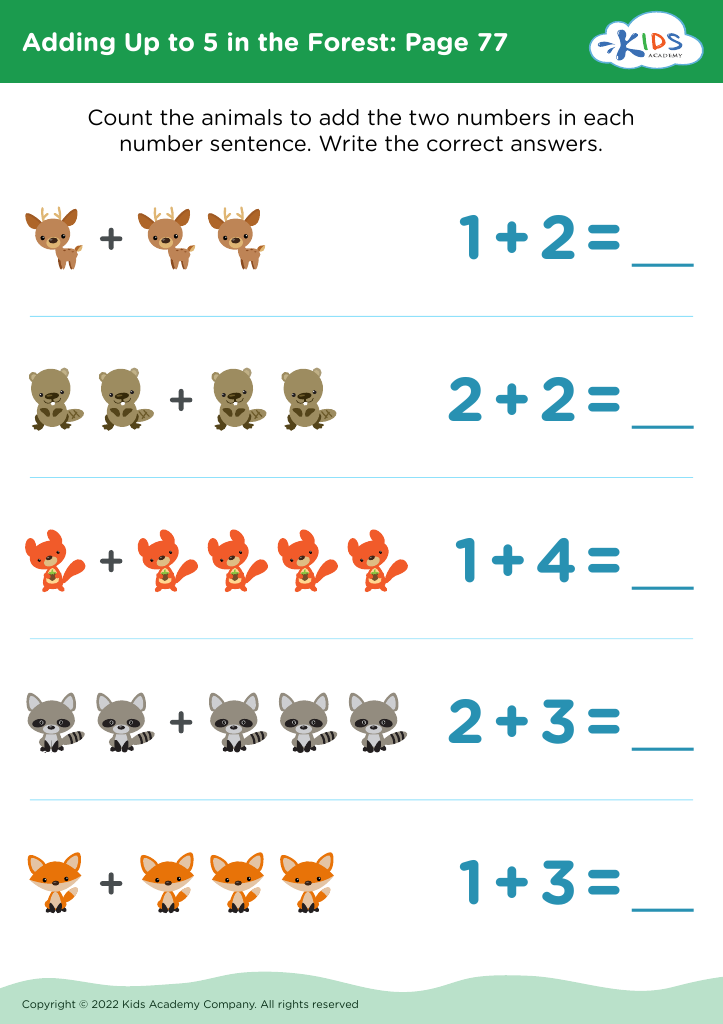
    Adding Up to 5 in the Forest: Page 77
    Adding Up to 5 in the Forest: Page 77
    Adding Up to 5 in the Forest: Page 77
    Worksheet
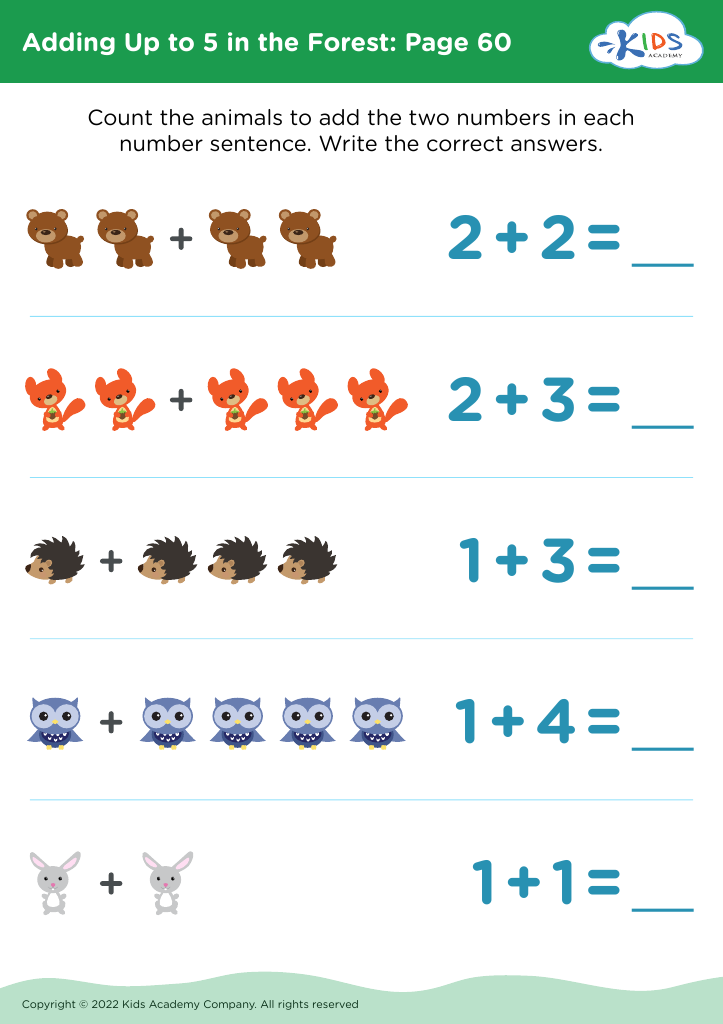
    Adding Up to 5 in the Forest: Page 60
    Adding Up to 5 in the Forest: Page 60
    Adding Up to 5 in the Forest: Page 60
    Worksheet
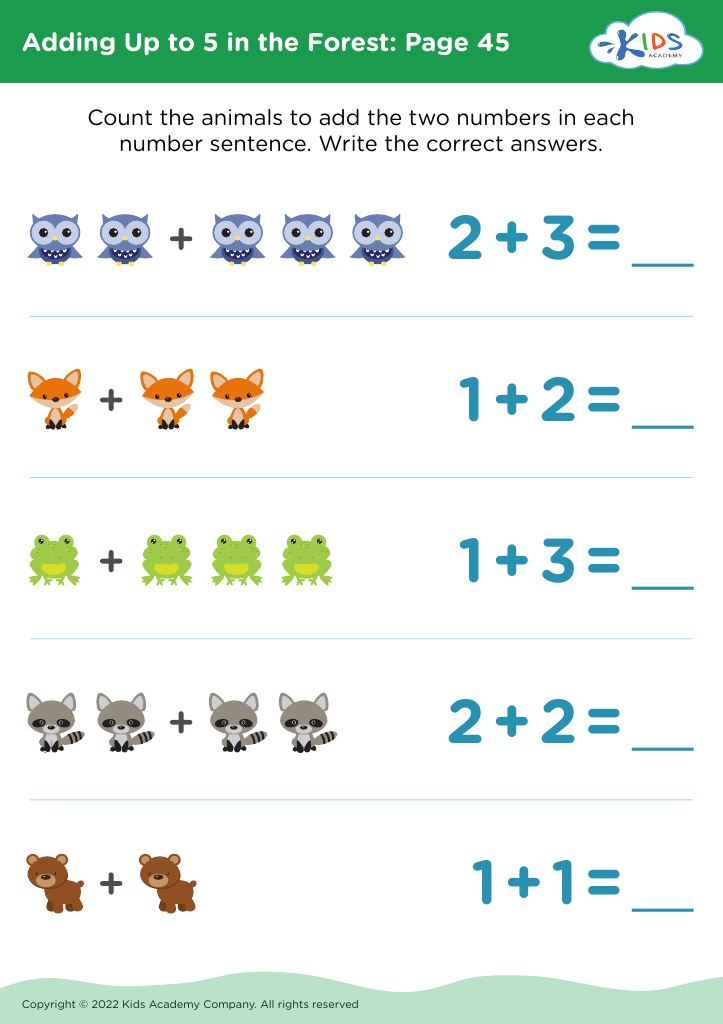
    Adding Up to 5 in the Forest: Page 45
    Adding Up to 5 in the Forest: Page 45
    Adding Up to 5 in the Forest: Page 45
    Worksheet
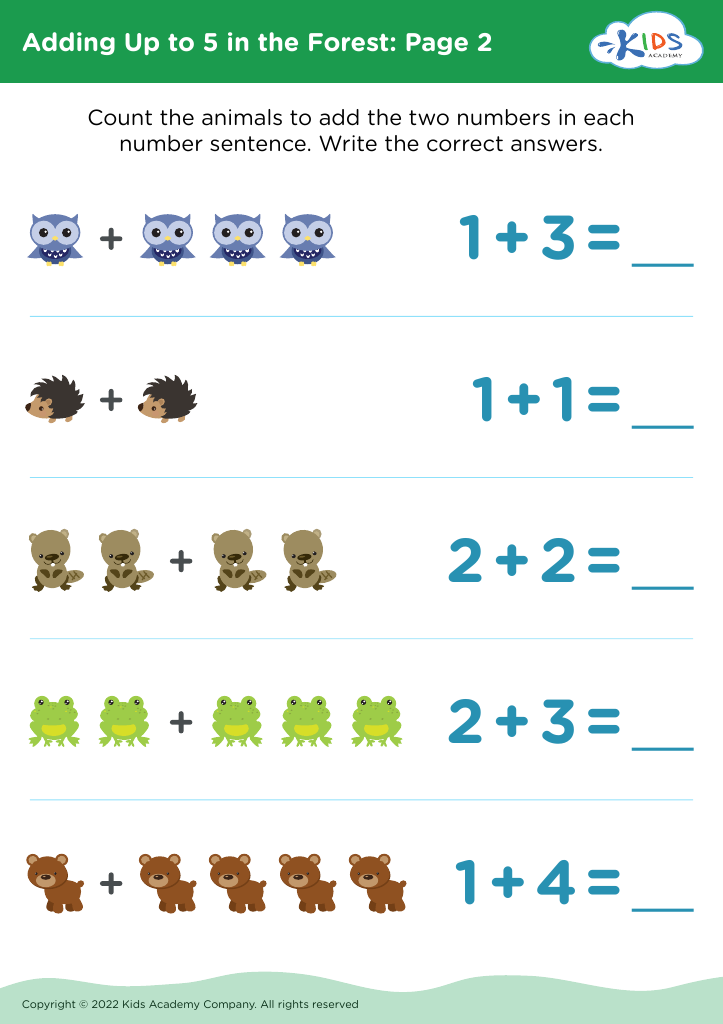
    Adding Up to 5 in the Forest: Page 2
    Adding Up to 5 in the Forest: Page 2
    Adding Up to 5 in the Forest: Page 2
    Worksheet
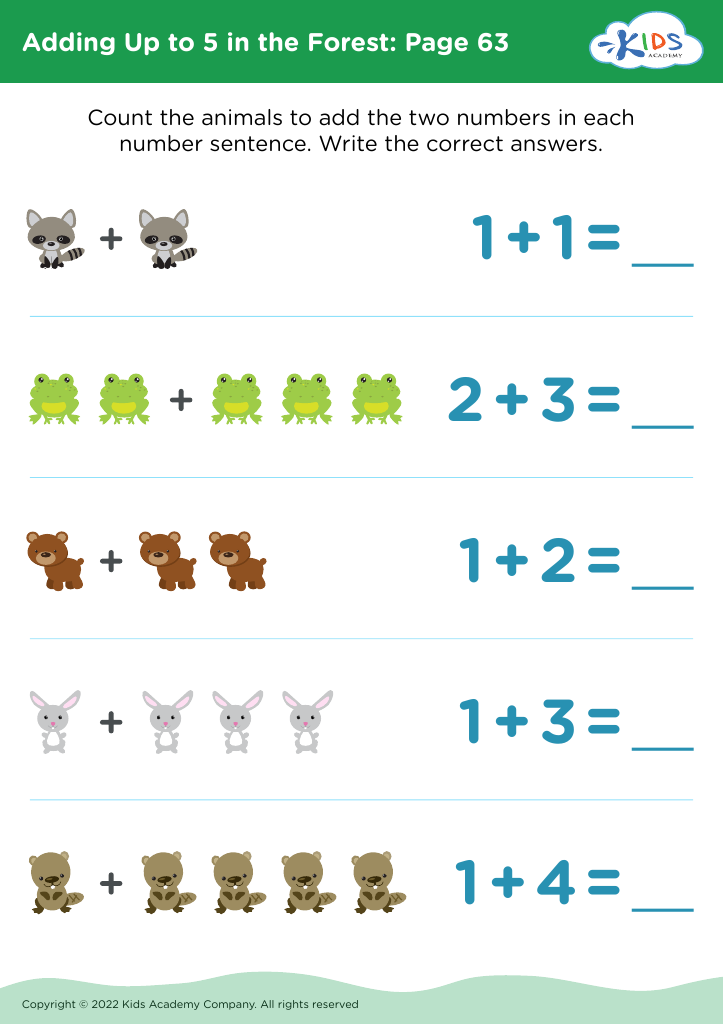
    Adding Up to 5 in the Forest: Page 63
    Adding Up to 5 in the Forest: Page 63
    Adding Up to 5 in the Forest: Page 63
    Worksheet
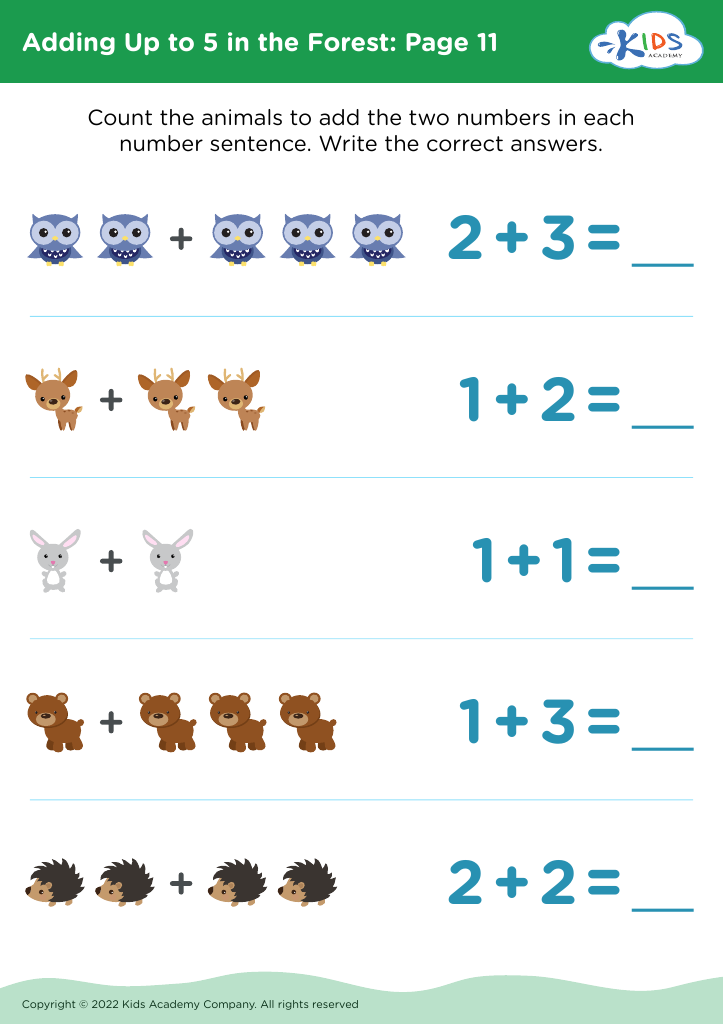
    Adding Up to 5 in the Forest: Page 11
    Adding Up to 5 in the Forest: Page 11
    Adding Up to 5 in the Forest: Page 11
    Worksheet
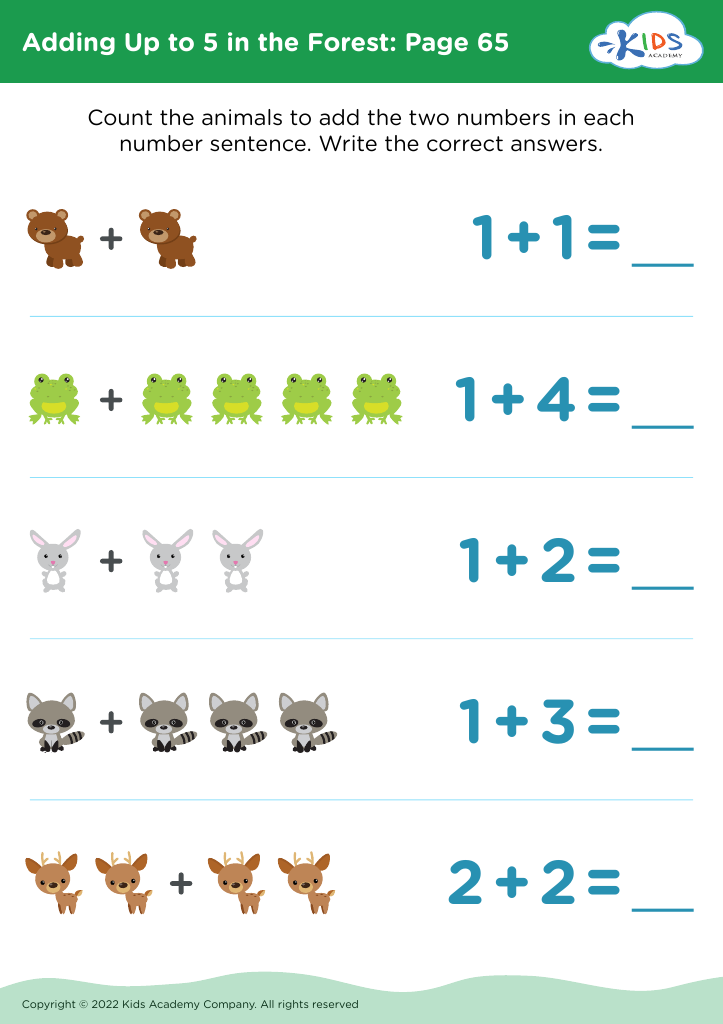
    Adding Up to 5 in the Forest: Page 65
    Adding Up to 5 in the Forest: Page 65
    Adding Up to 5 in the Forest: Page 65
    Worksheet
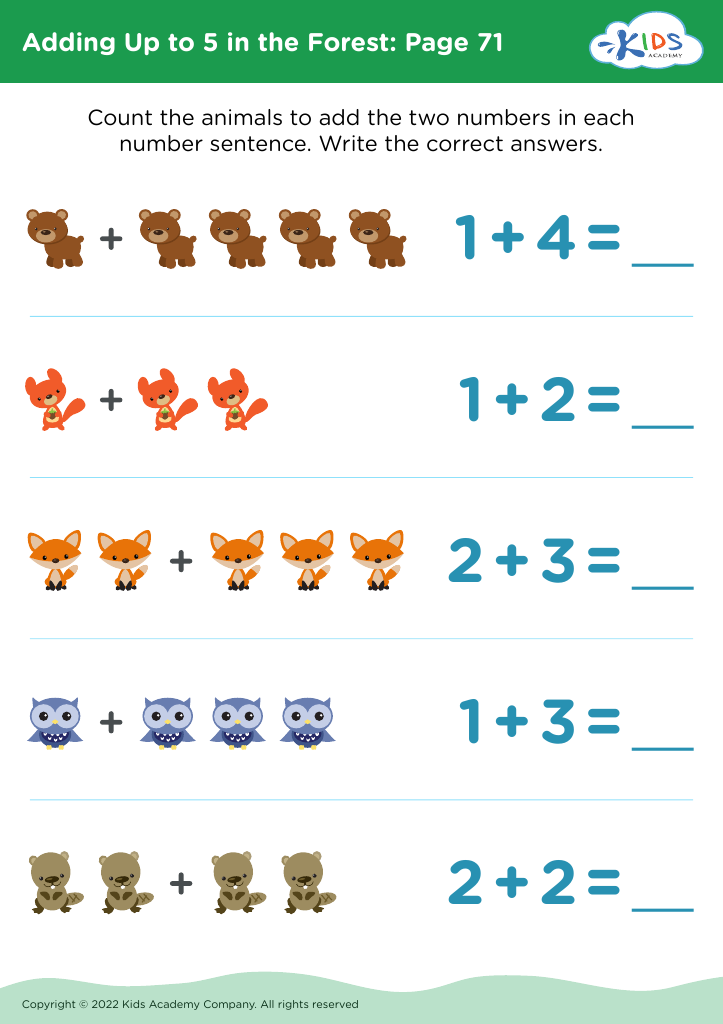
    Adding Up to 5 in the Forest: Page 71
    Adding Up to 5 in the Forest: Page 71
    Adding Up to 5 in the Forest: Page 71
    Worksheet
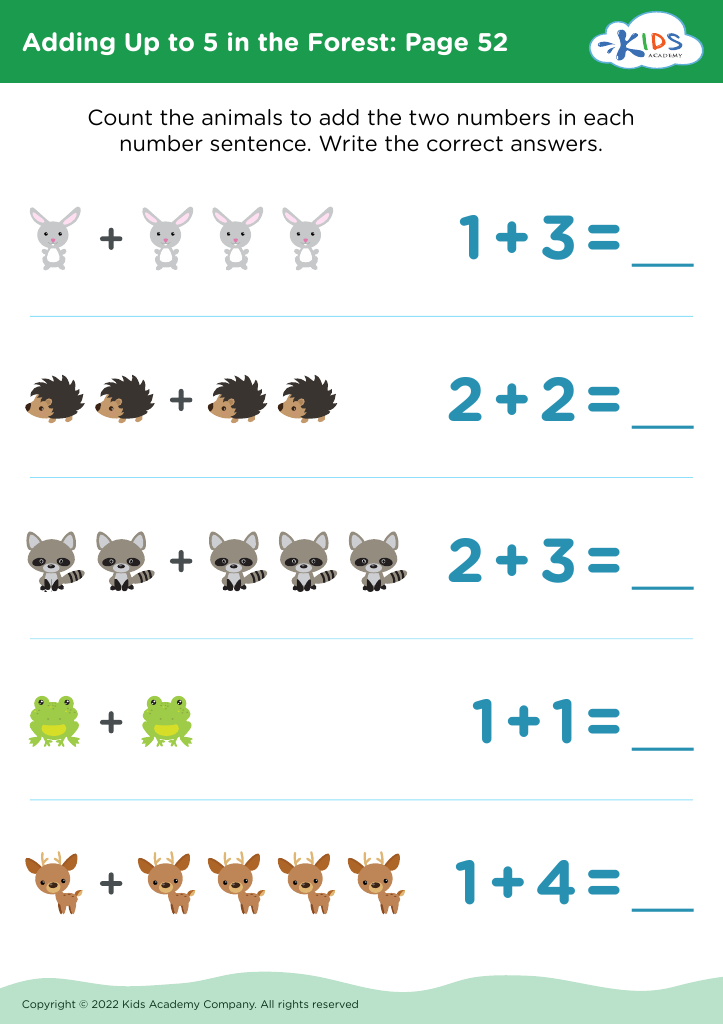
    Adding Up to 5 in the Forest: Page 52
    Adding Up to 5 in the Forest: Page 52
    Adding Up to 5 in the Forest: Page 52
    Worksheet
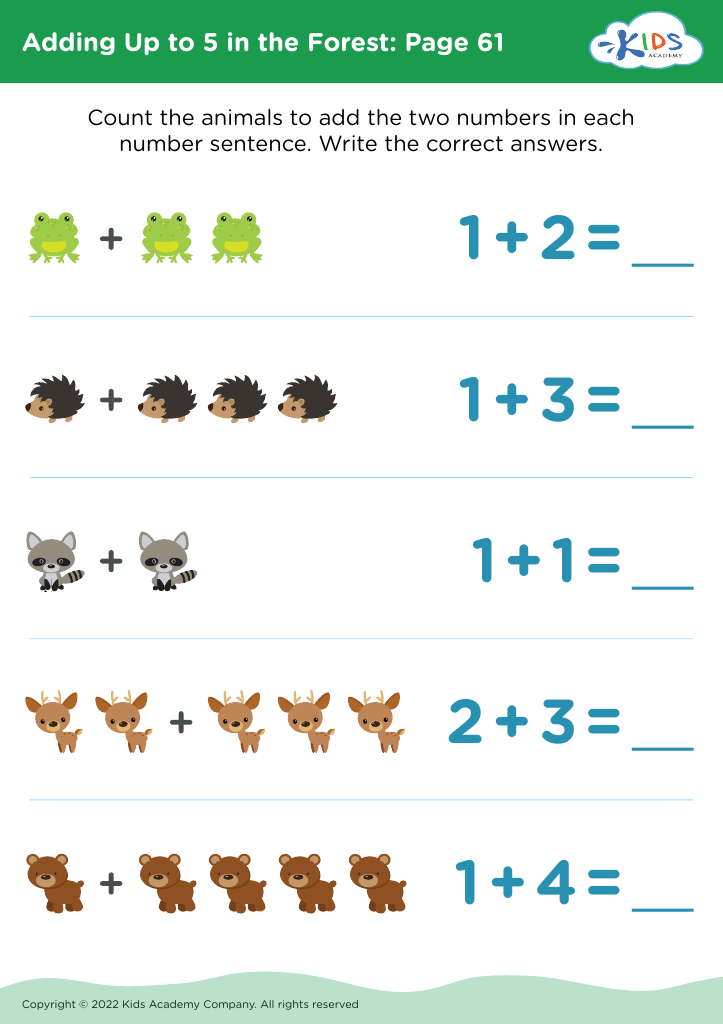
    Adding Up to 5 in the Forest: Page 61
    Adding Up to 5 in the Forest: Page 61
    Adding Up to 5 in the Forest: Page 61
    Worksheet
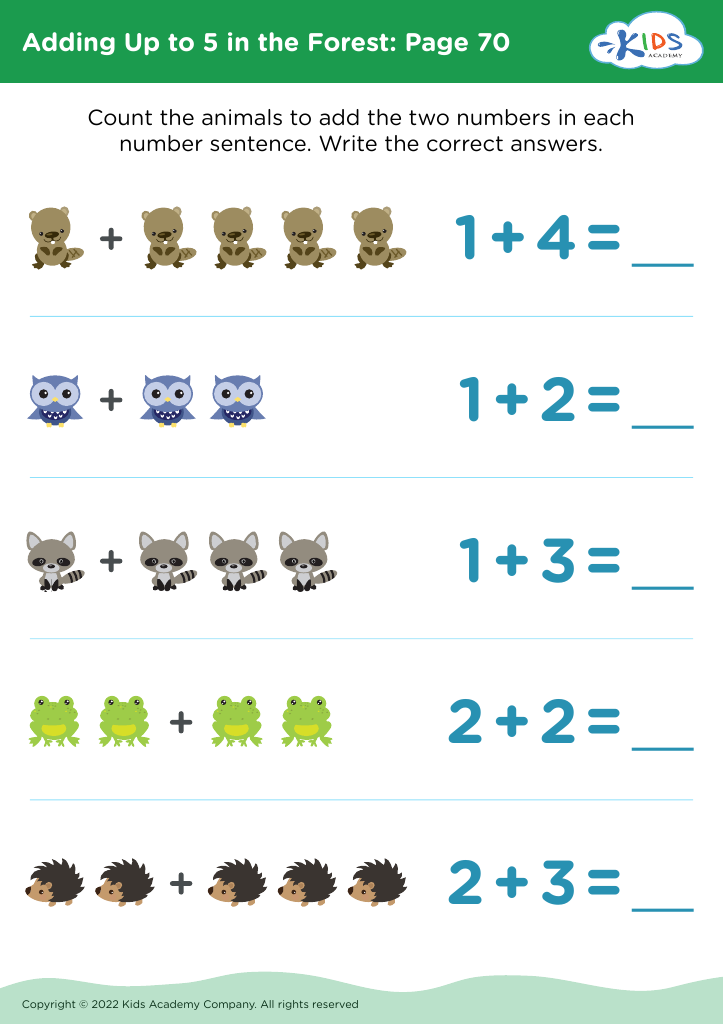
    Adding Up to 5 in the Forest: Page 70
    Adding Up to 5 in the Forest: Page 70
    Adding Up to 5 in the Forest: Page 70
    Worksheet
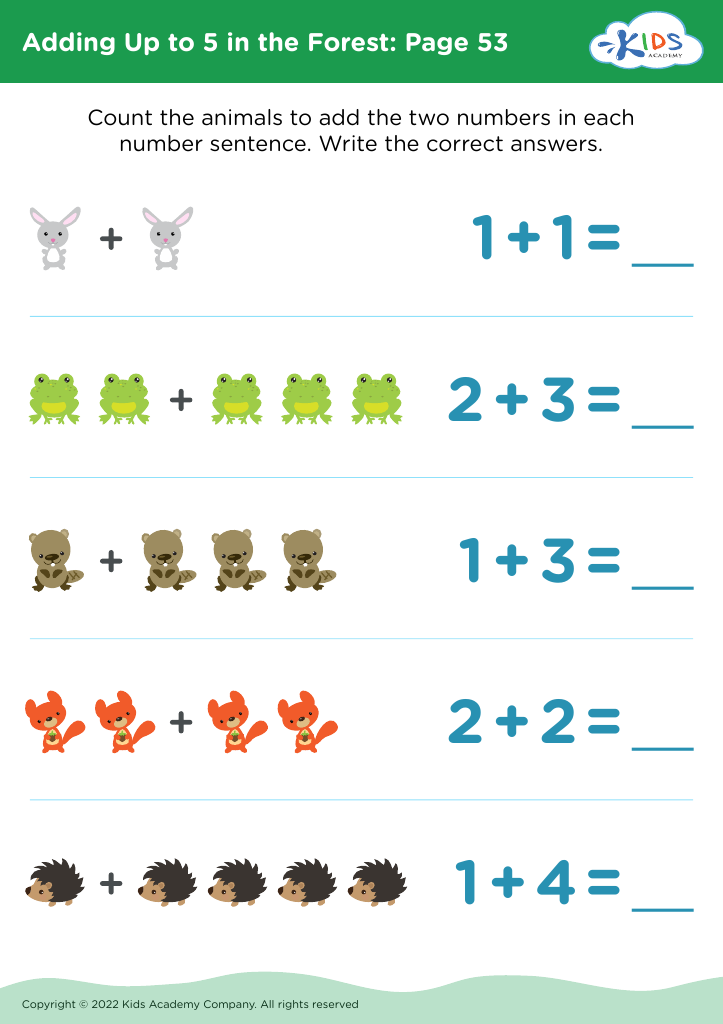
    Adding Up to 5 in the Forest: Page 53
    Adding Up to 5 in the Forest: Page 53
    Adding Up to 5 in the Forest: Page 53
    Worksheet
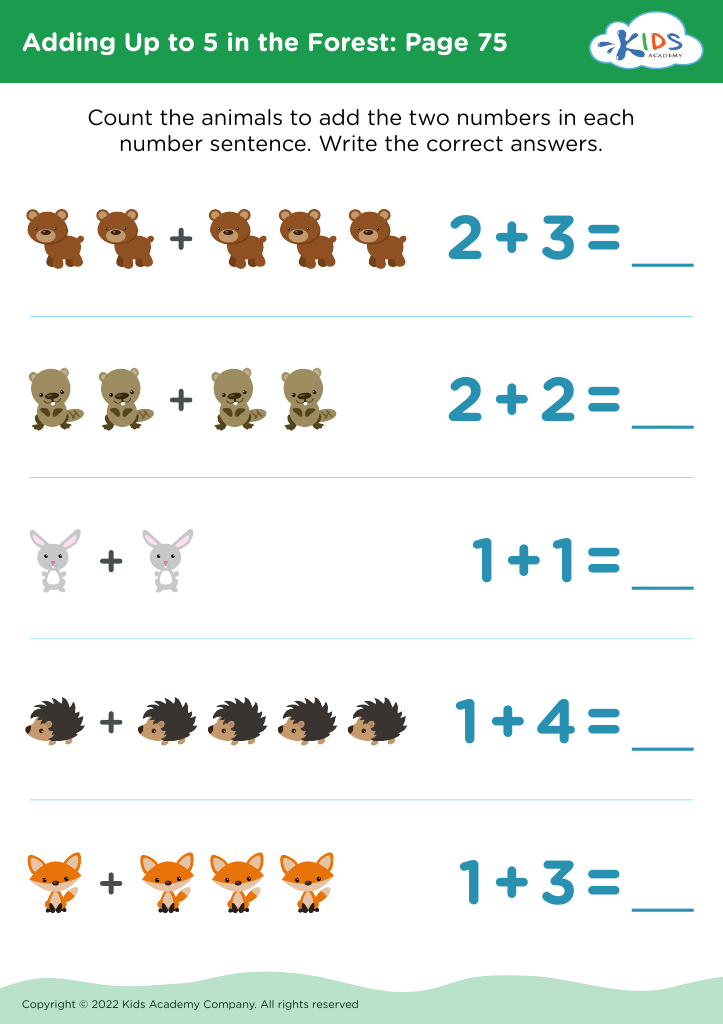
    Adding Up to 5 in the Forest: Page 75
    Adding Up to 5 in the Forest: Page 75
    Adding Up to 5 in the Forest: Page 75
    Worksheet
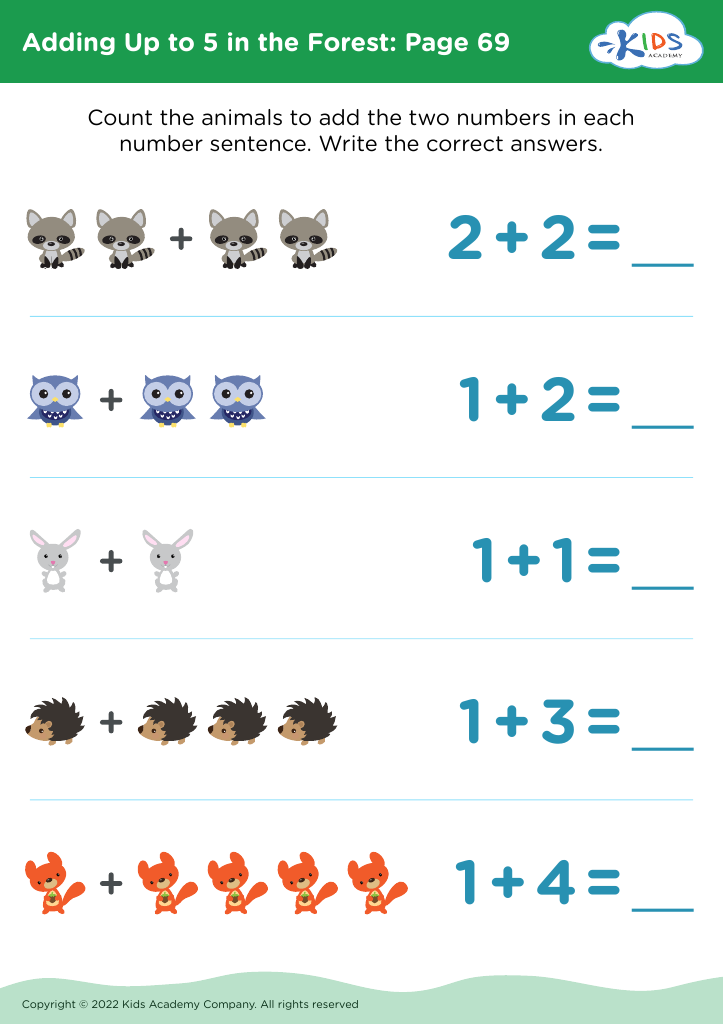
    Adding Up to 5 in the Forest: Page 69
    Adding Up to 5 in the Forest: Page 69
    Adding Up to 5 in the Forest: Page 69
    Worksheet
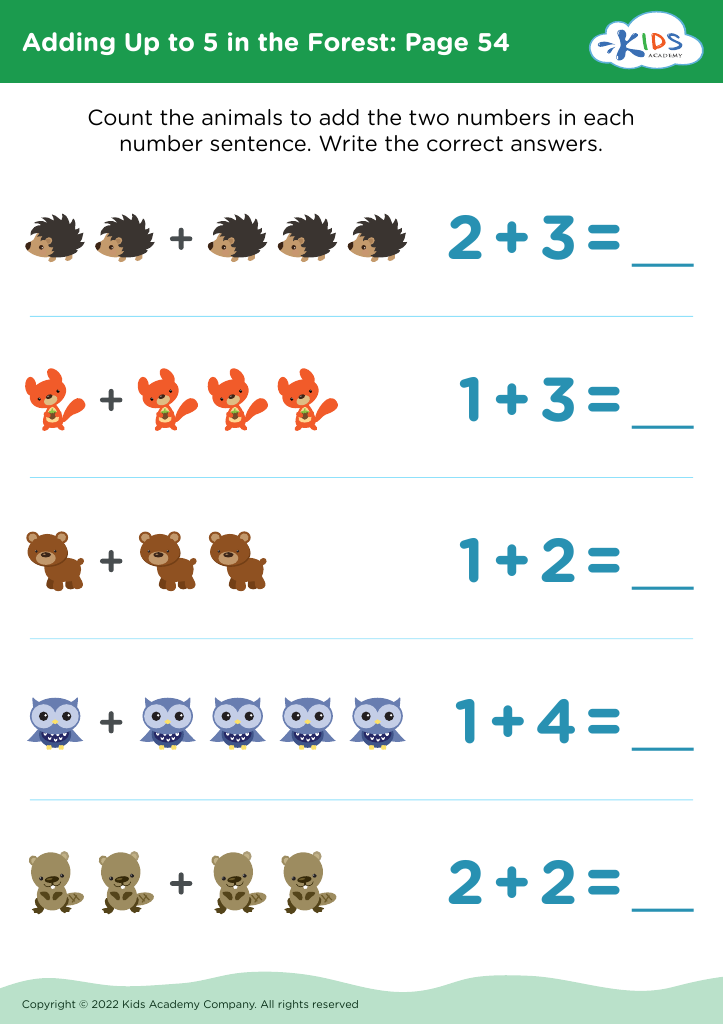
    Adding Up to 5 in the Forest: Page 54
    Adding Up to 5 in the Forest: Page 54
    Adding Up to 5 in the Forest: Page 54
    Worksheet
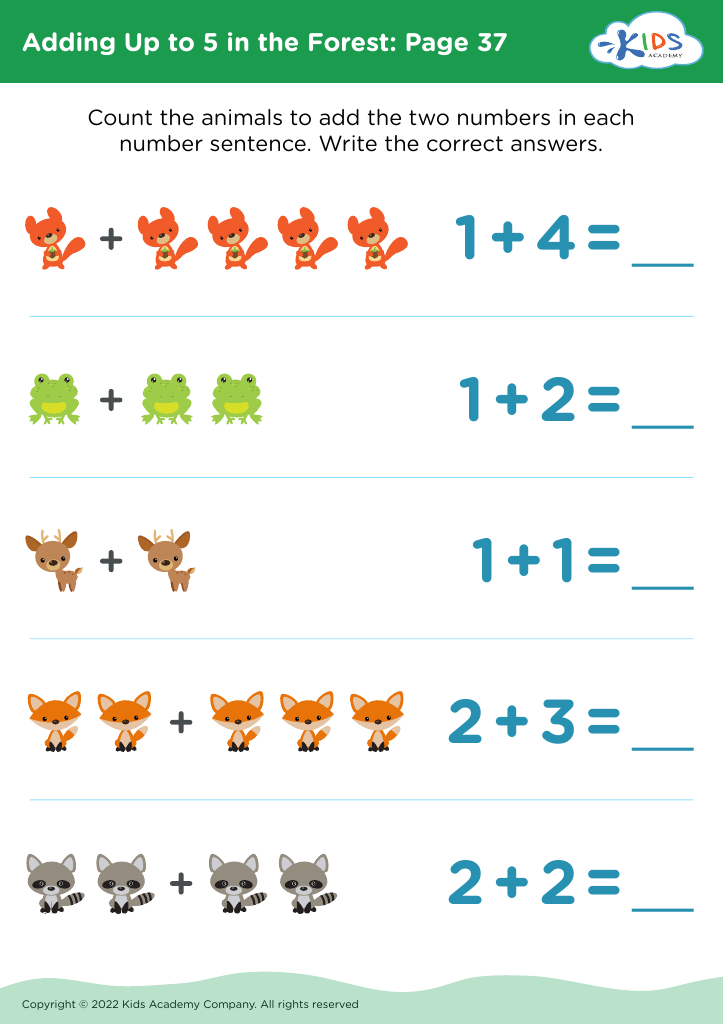
    Adding Up to 5 in the Forest: Page 37
    Adding Up to 5 in the Forest: Page 37
    Adding Up to 5 in the Forest: Page 37
    Worksheet
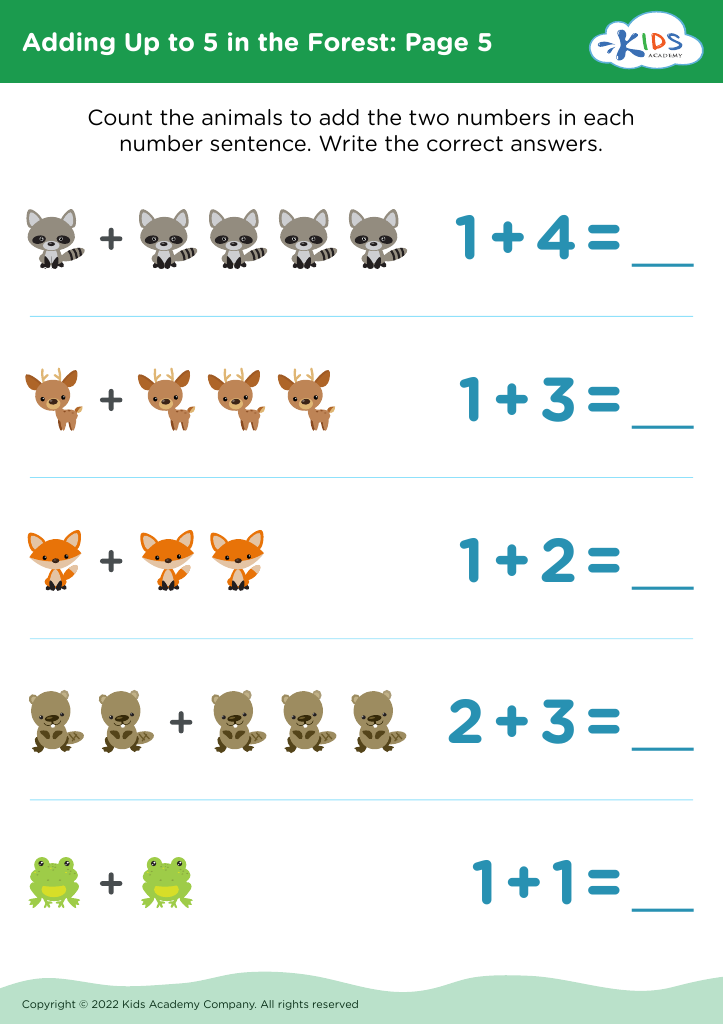
    Adding Up to 5 in the Forest: Page 5
    Adding Up to 5 in the Forest: Page 5
    Adding Up to 5 in the Forest: Page 5
    Worksheet


    Cognitive development is a critical aspect of a child’s growth that significantly influences their ability to learn, think critically, and interact socially. For parents and teachers, understanding and supporting this development between ages 3-9 is essential as these years lay the foundation for a child's future learning and behavior. The "Adding in the Forest" approach, which involves integrating nature-based learning, makes this process engaging and effective.

    Nature stimulates curiosity, encourages exploration, and enhances problem-solving skills. When children engage in outdoor activities, such as counting leaves, identifying shapes in trunks, or comparing sizes of rocks, they gain hands-on experience that fosters critical thinking and boosts cognitive skills. These activities promote sensory experiences and imaginative play, both vital for cognitive flexibility.

    Moreover, outdoor learning spaces can significantly enhance children’s emotional and social development, reducing anxiety and improving focus. As a result, children are better equipped to absorb academic concepts. By investing in cognitive development through innovative methods like 'Adding in the Forest,' parents and teachers can cultivate well-rounded individuals who are not only ready for school but also prepared for lifelong learning. This holistic approach benefits children’s overall well-being, fostering inquisitive, thoughtful, and adventurous learners.