Filters

47 filtered results

Clear all filters
Favorites
With answer key
Interactive

47 filtered results

Difficulty Level

Grade


Check out this FREE Trial Lesson on Adding in the Sea for age 3-9!

A

Favorites
With answer key
Interactive
  • 3-9
  • Basic Addition Skills
  • Adding in the Sea
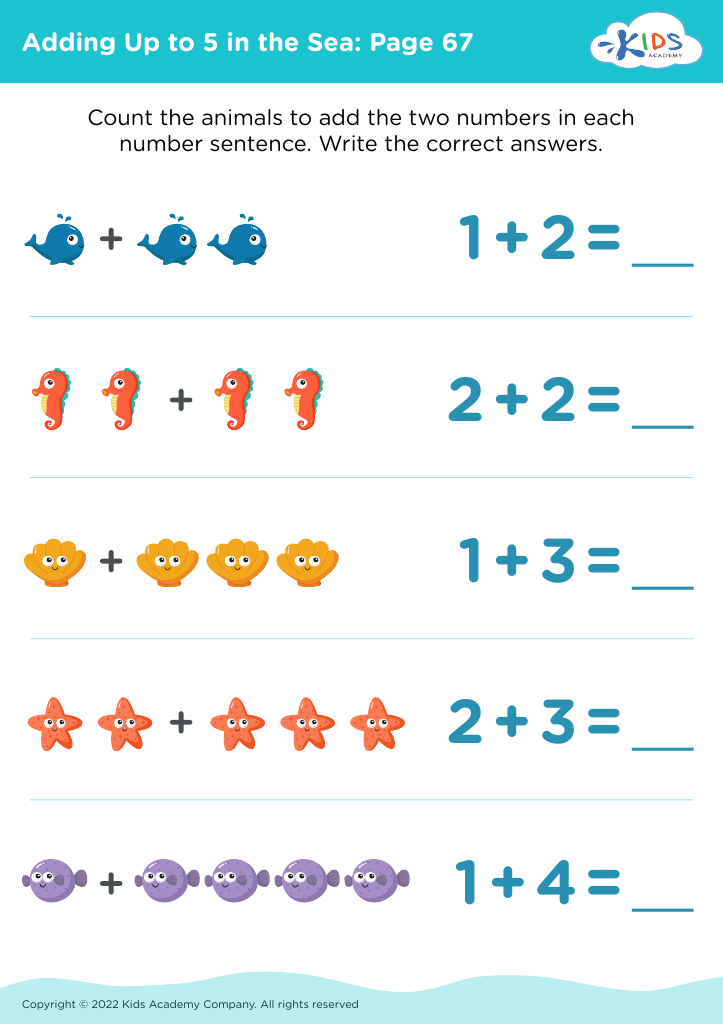
Adding Up to 5 in the Sea: Page 67
Worksheet
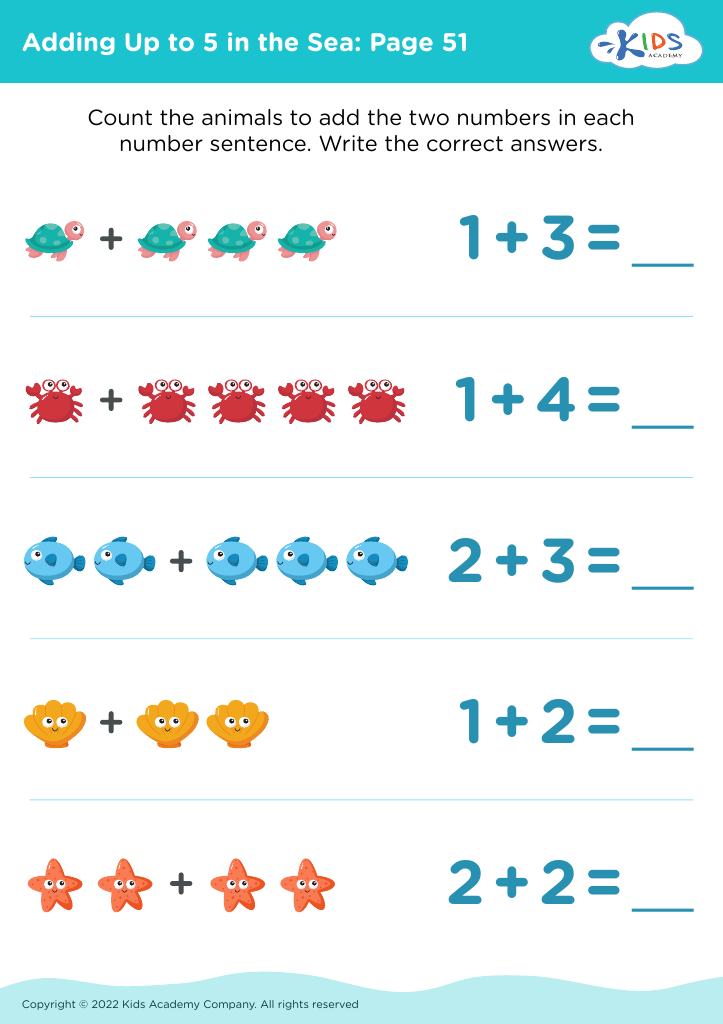
Adding Up to 5 in the Sea: Page 51
Worksheet
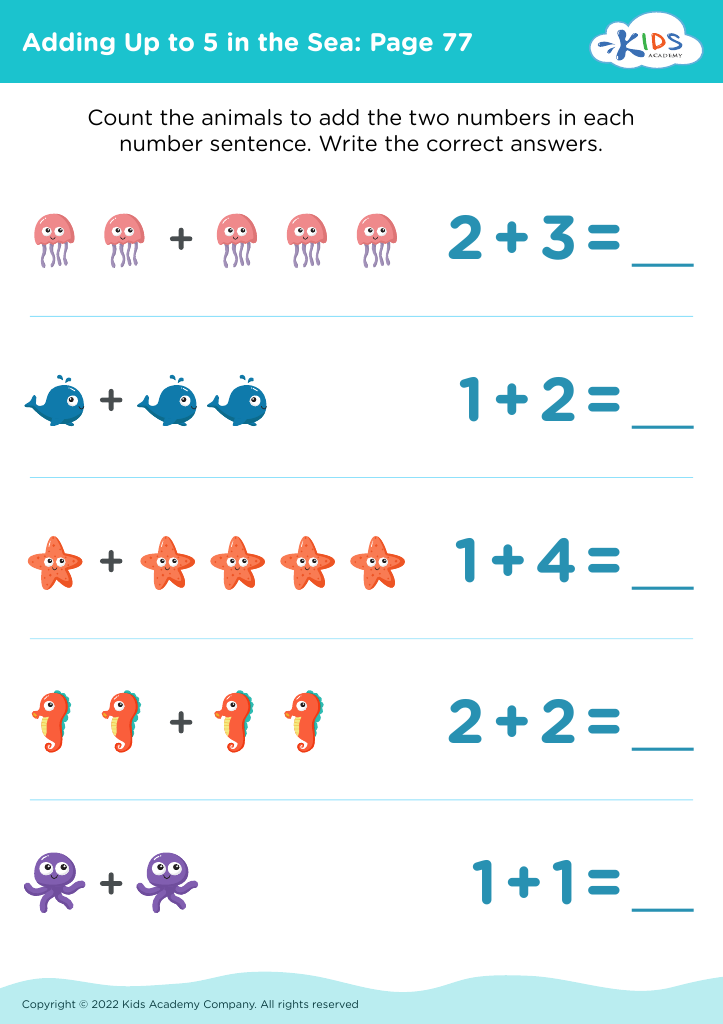
Adding Up to 5 in the Sea: Page 77
Worksheet
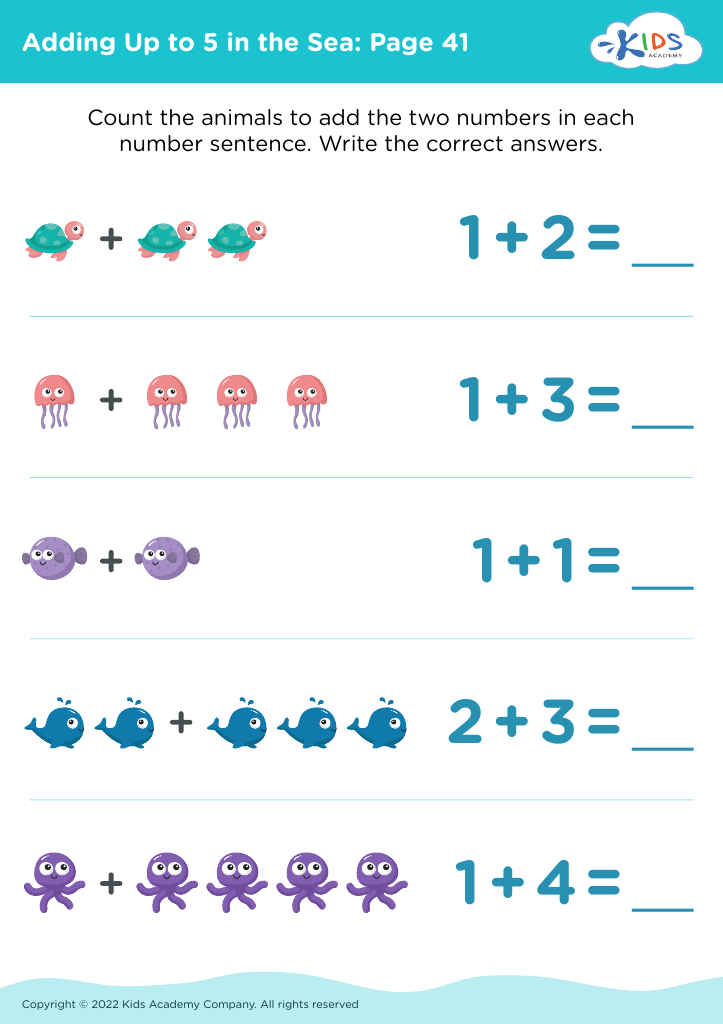
Adding Up to 5 in the Sea: Page 41
Worksheet
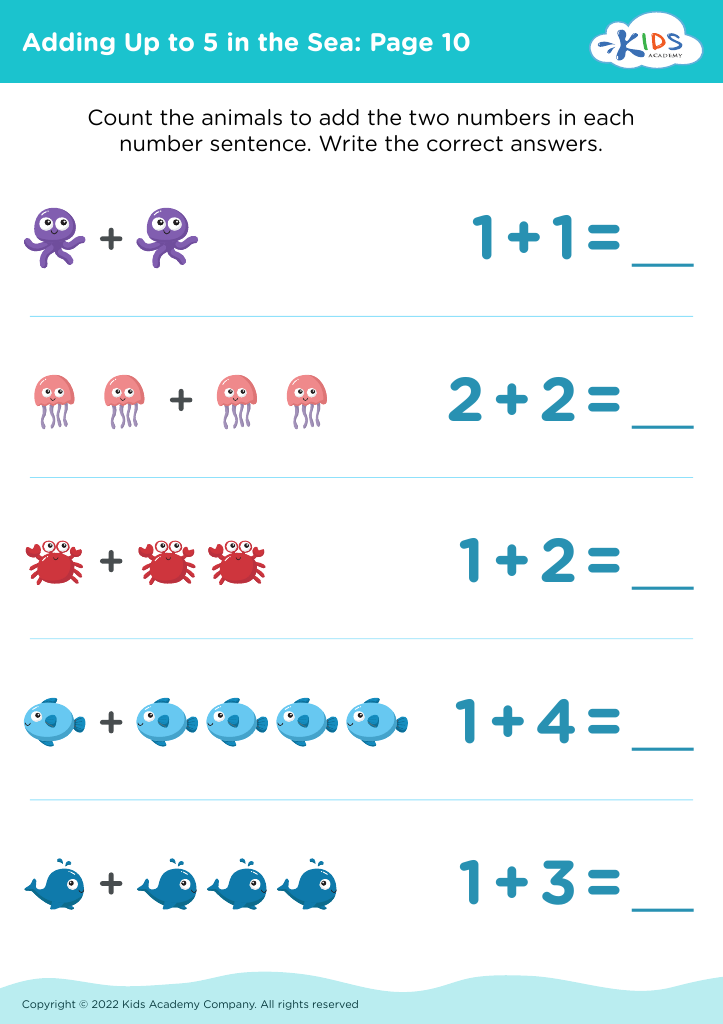
Adding Up to 5 in the Sea: Page 10
Worksheet
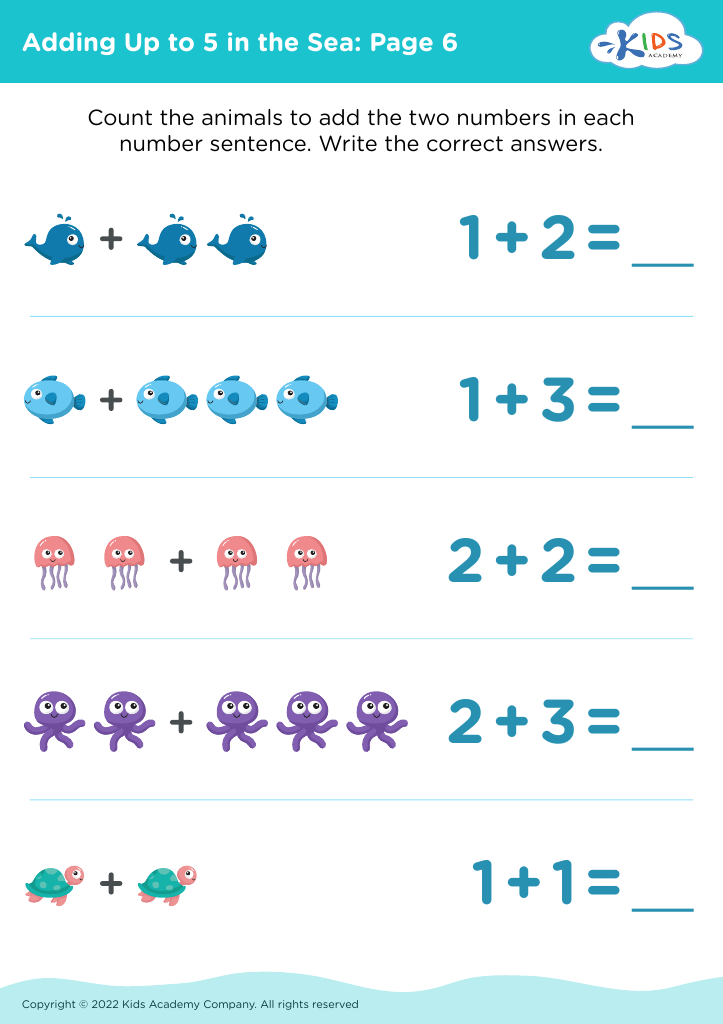
Adding Up to 5 in the Sea: Page 6

Adding Up to 5 in the Sea: Page 6

Adding Up to 5 in the Sea: Page 6
Worksheet
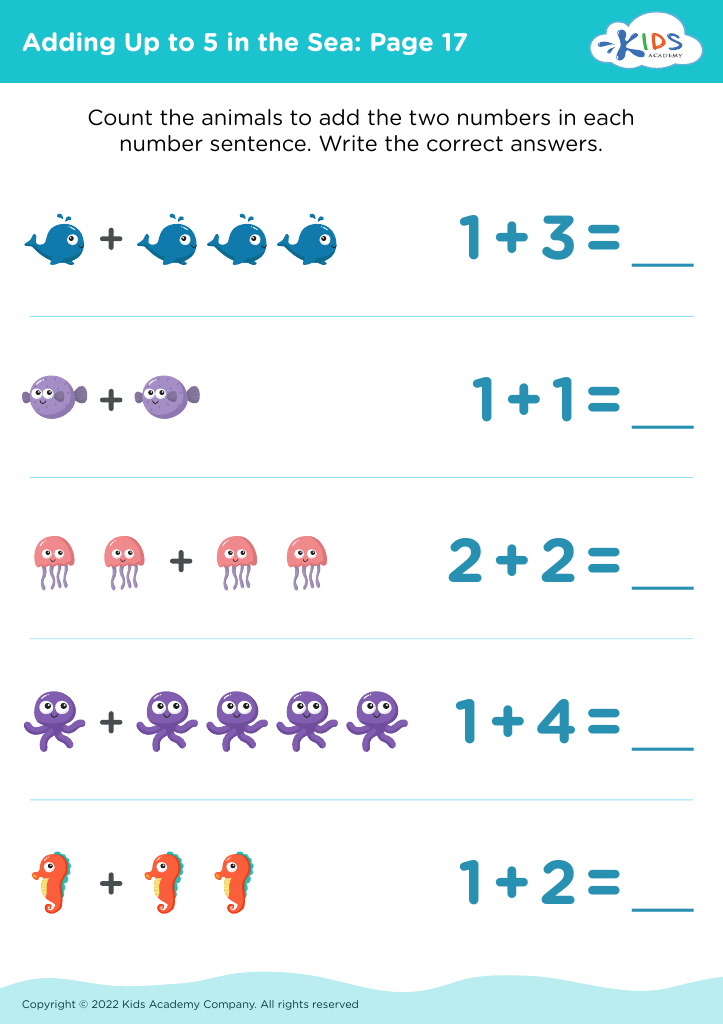
Adding Up to 5 in the Sea: Page 17
Worksheet
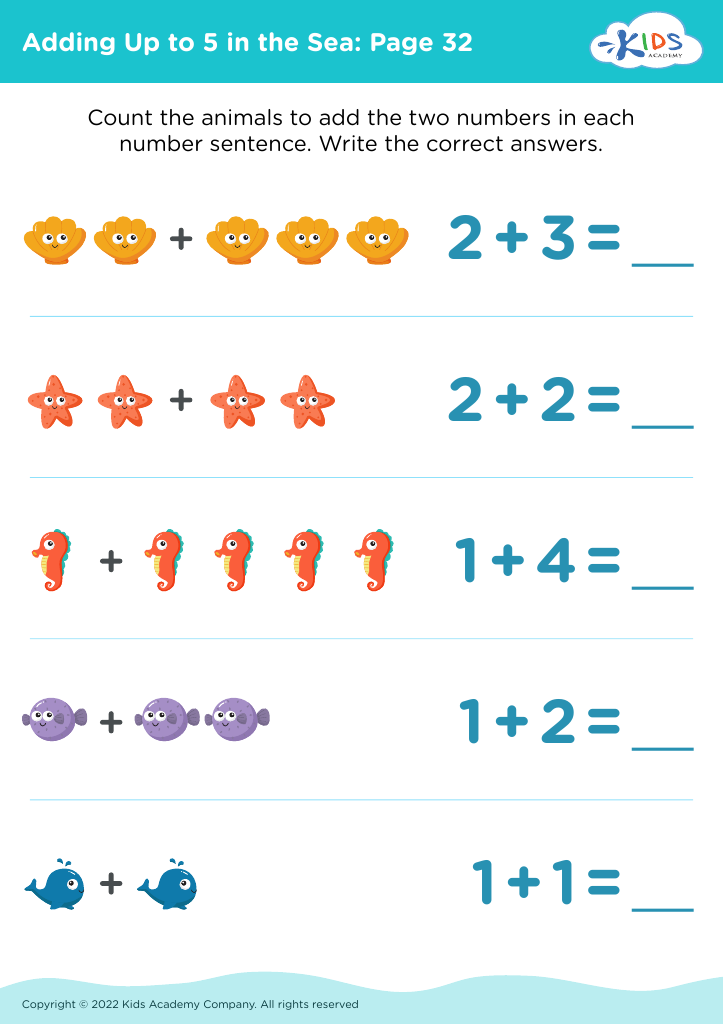
Adding Up to 5 in the Sea: Page 32
Worksheet
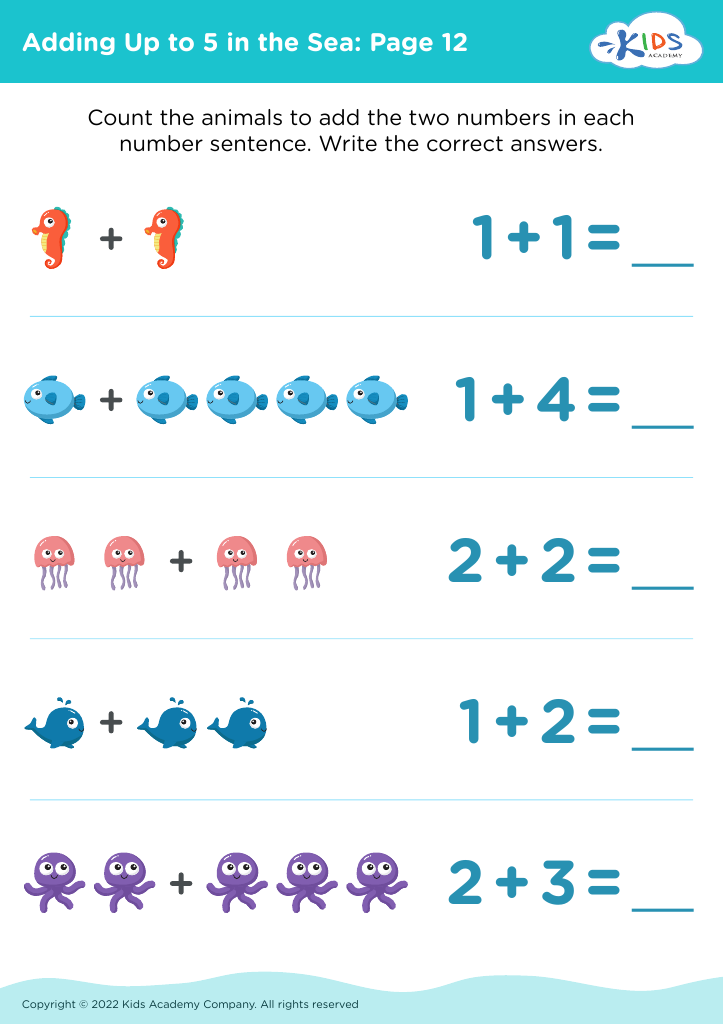
Adding Up to 5 in the Sea: Page 12
Worksheet
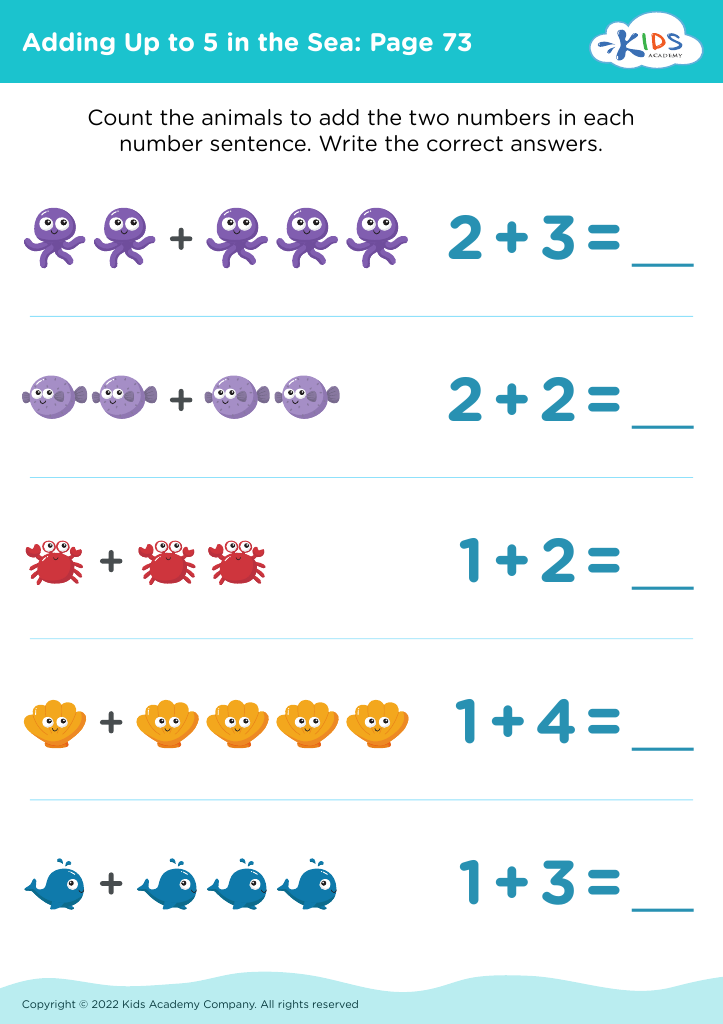
Adding Up to 5 in the Sea: Page 73
Worksheet
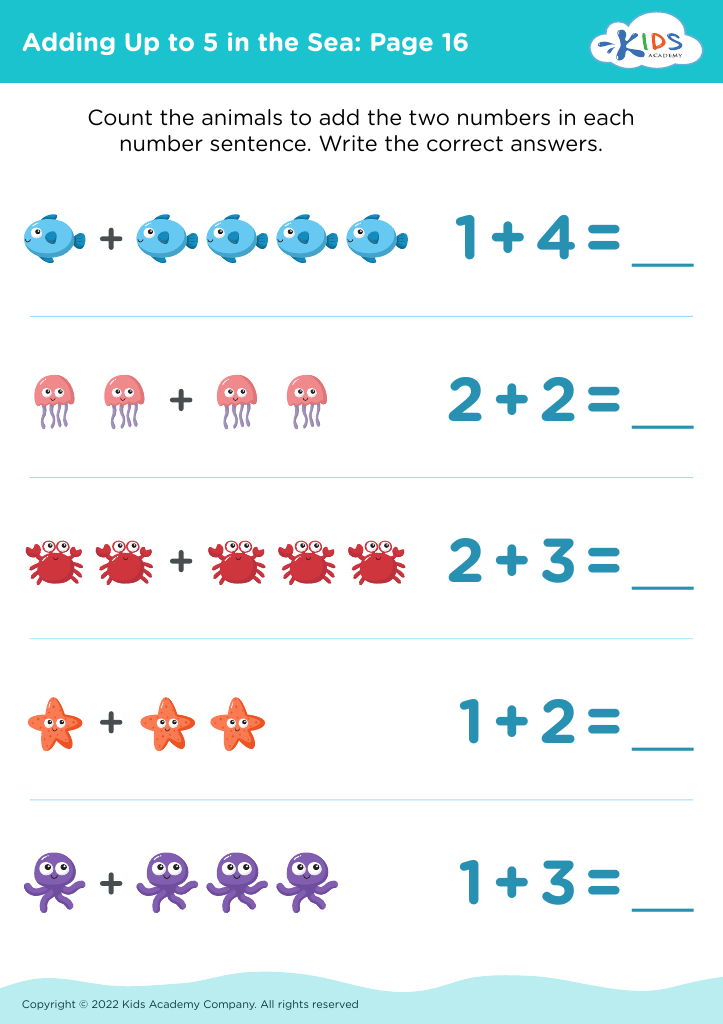
Adding Up to 5 in the Sea: Page 16
Worksheet
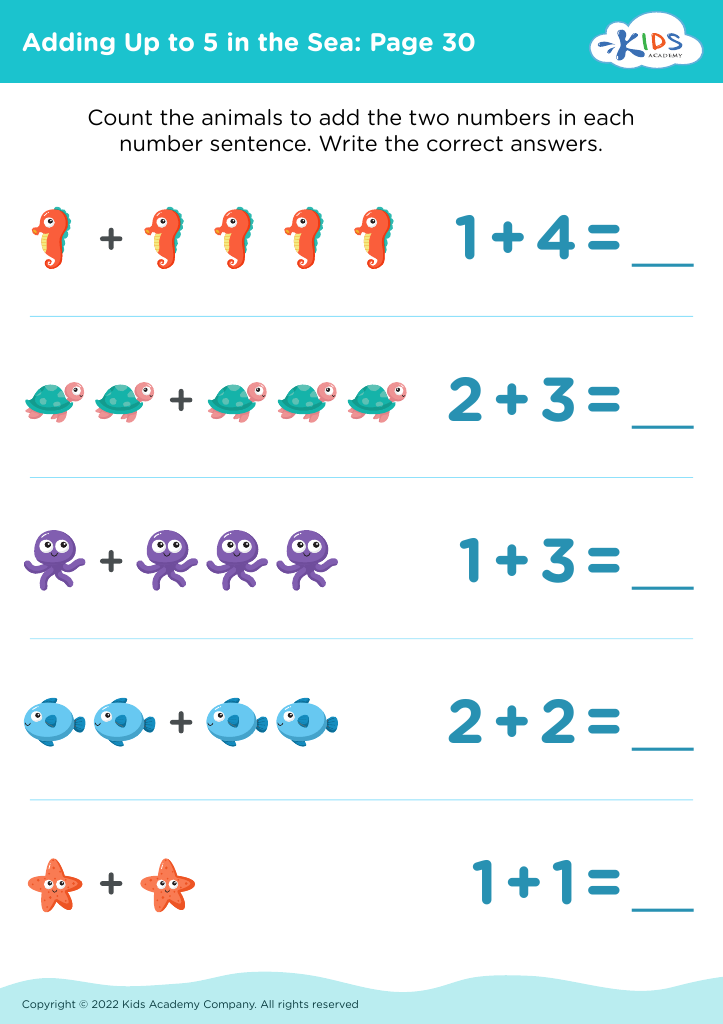
Adding Up to 5 in the Sea: Page 30
Worksheet
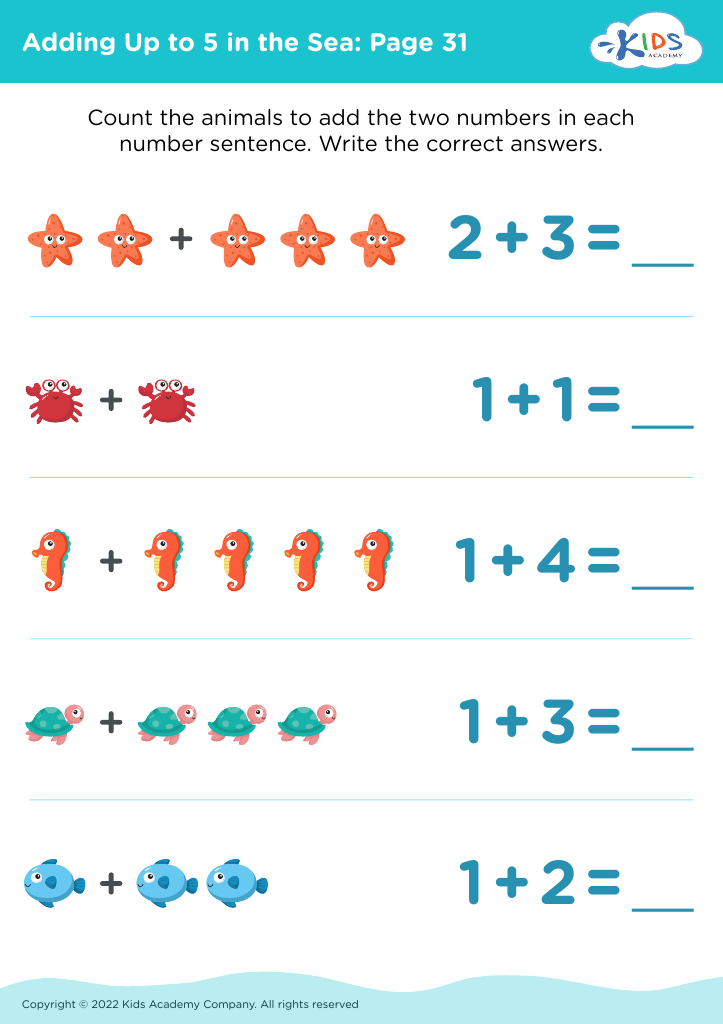
Adding Up to 5 in the Sea: Page 31
Worksheet
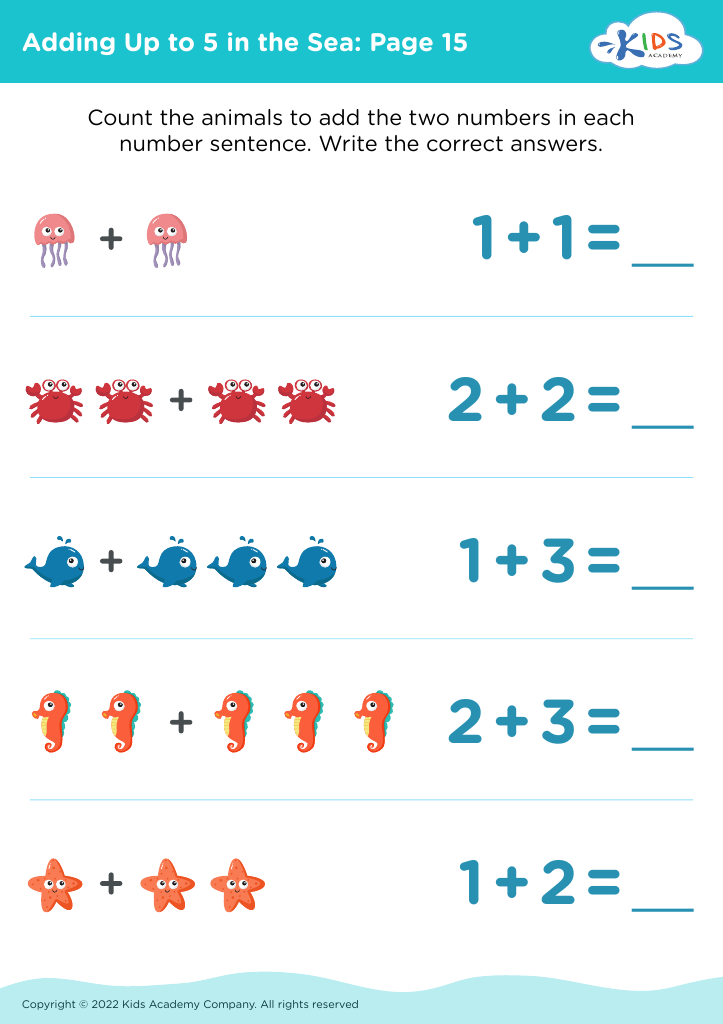
Adding Up to 5 in the Sea: Page 15
Worksheet
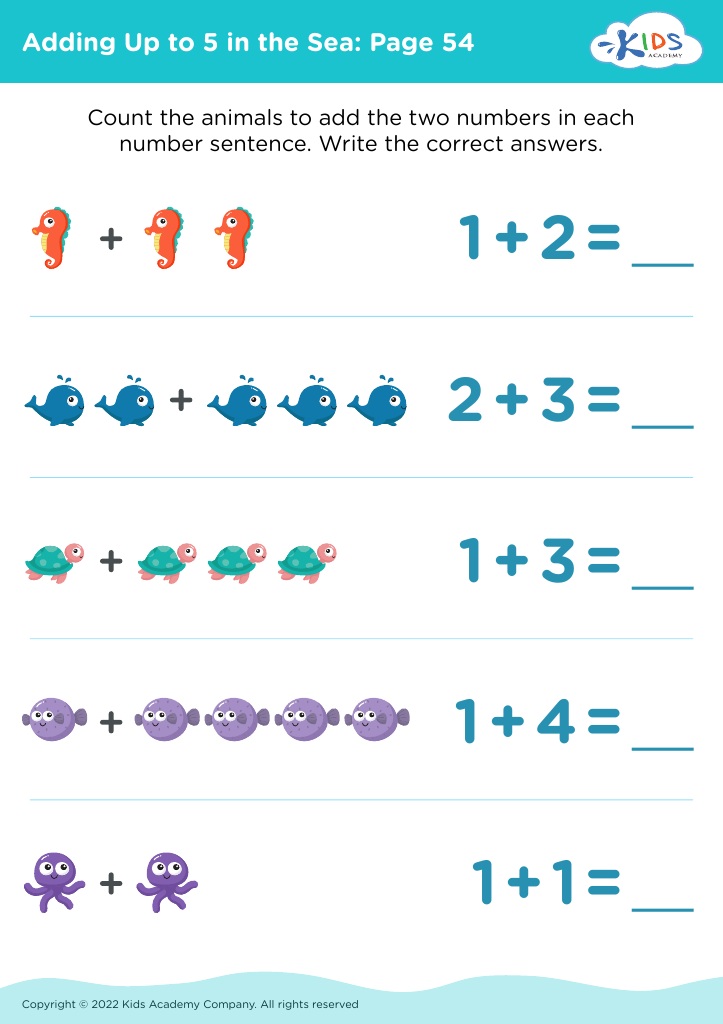
Adding Up to 5 in the Sea: Page 54
Worksheet
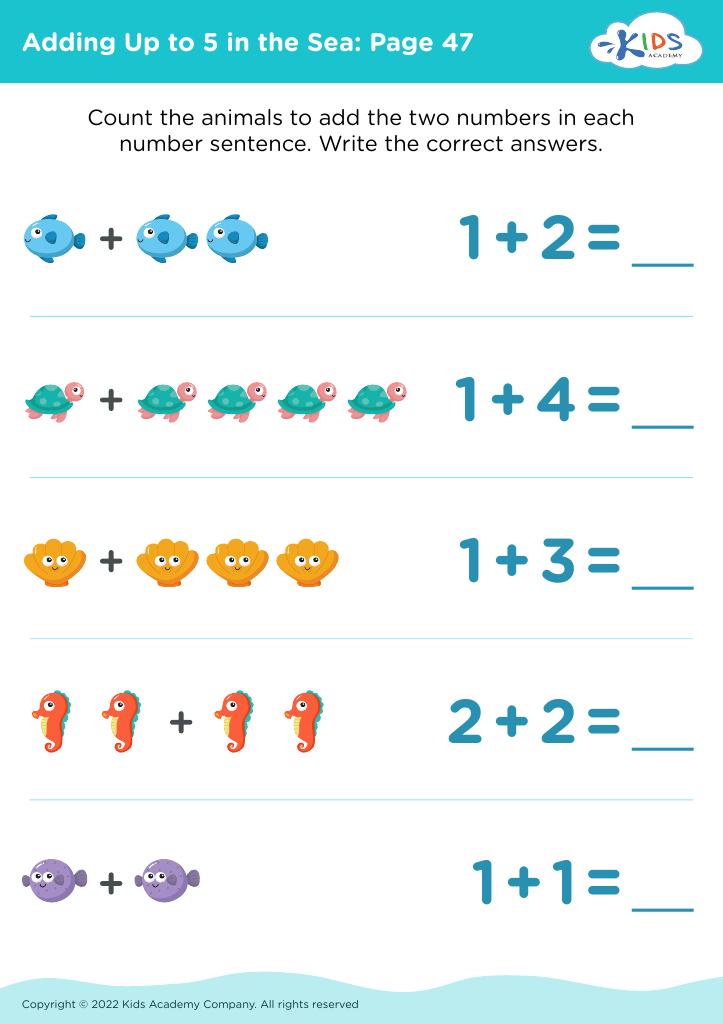
Adding Up to 5 in the Sea: Page 47
Worksheet
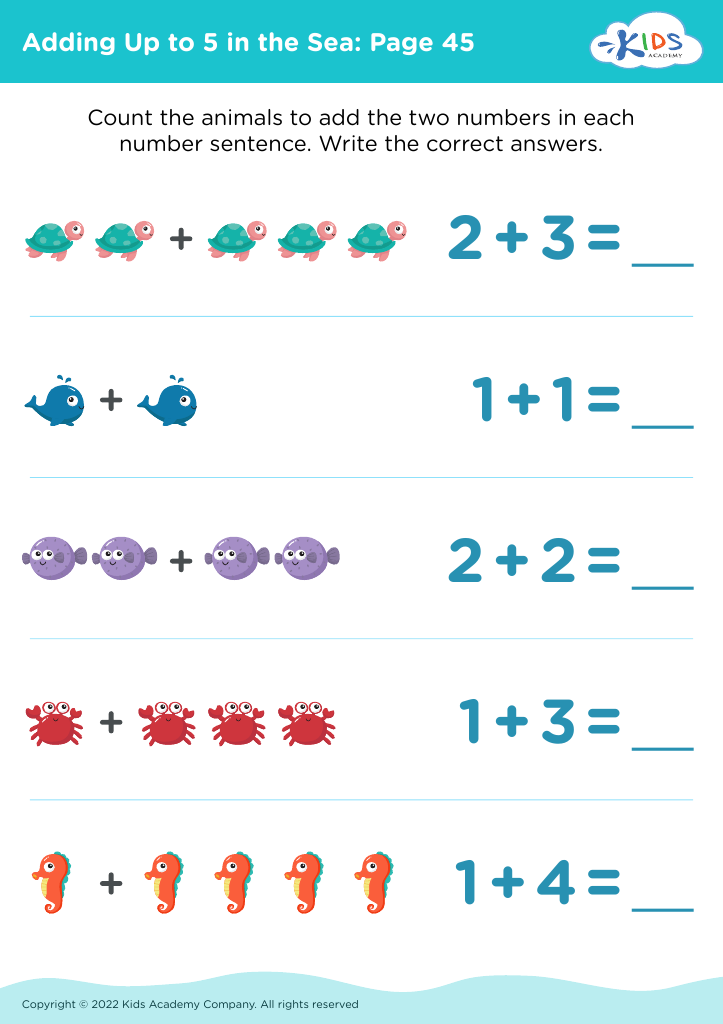
Adding Up to 5 in the Sea: Page 45
Worksheet
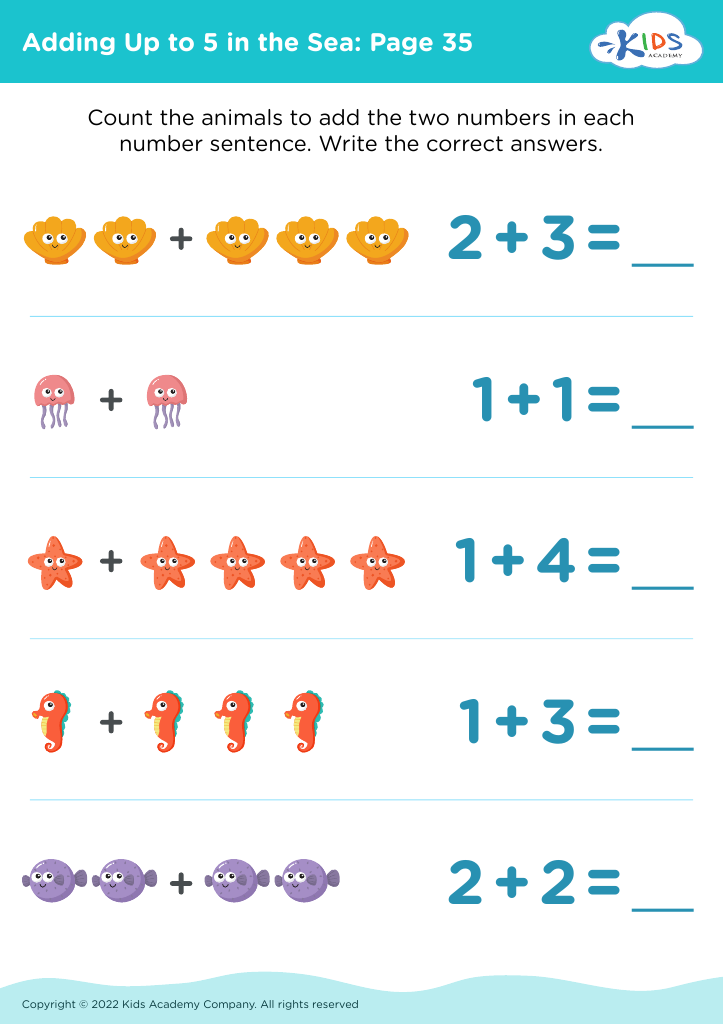
Adding Up to 5 in the Sea: Page 35
Worksheet
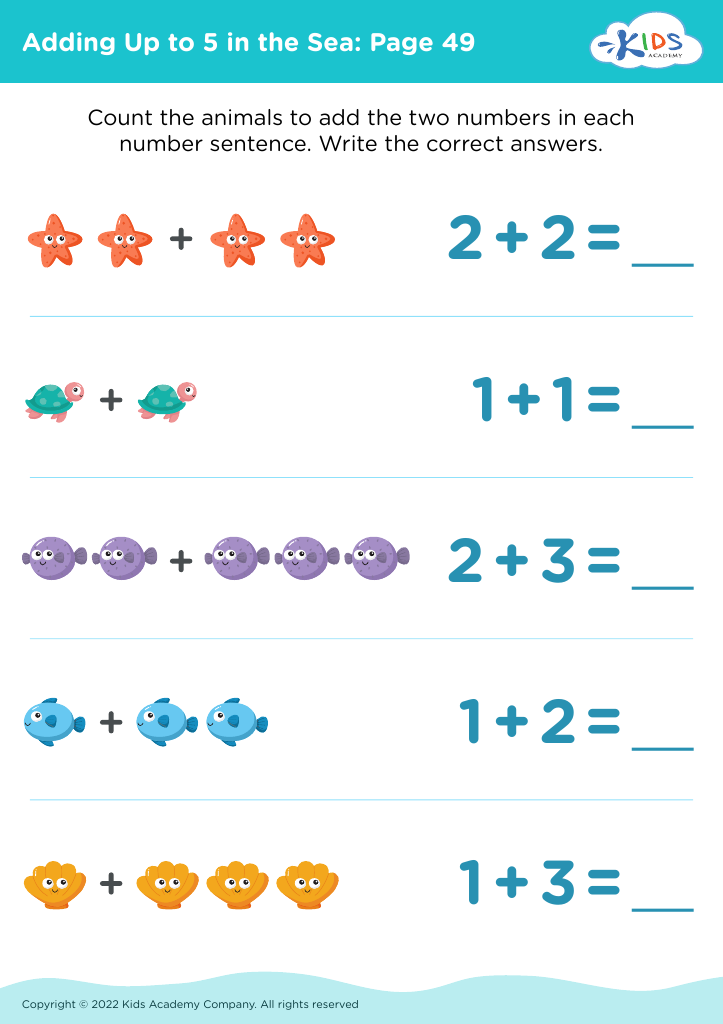
Adding Up to 5 in the Sea: Page 49
Worksheet
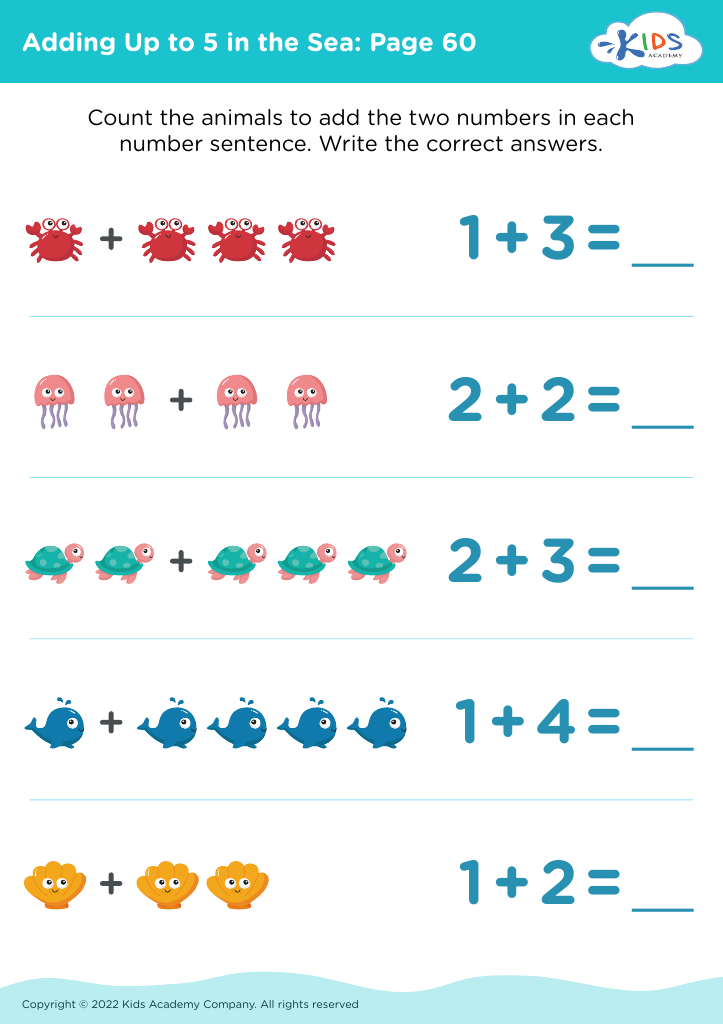
Adding Up to 5 in the Sea: Page 60
Worksheet
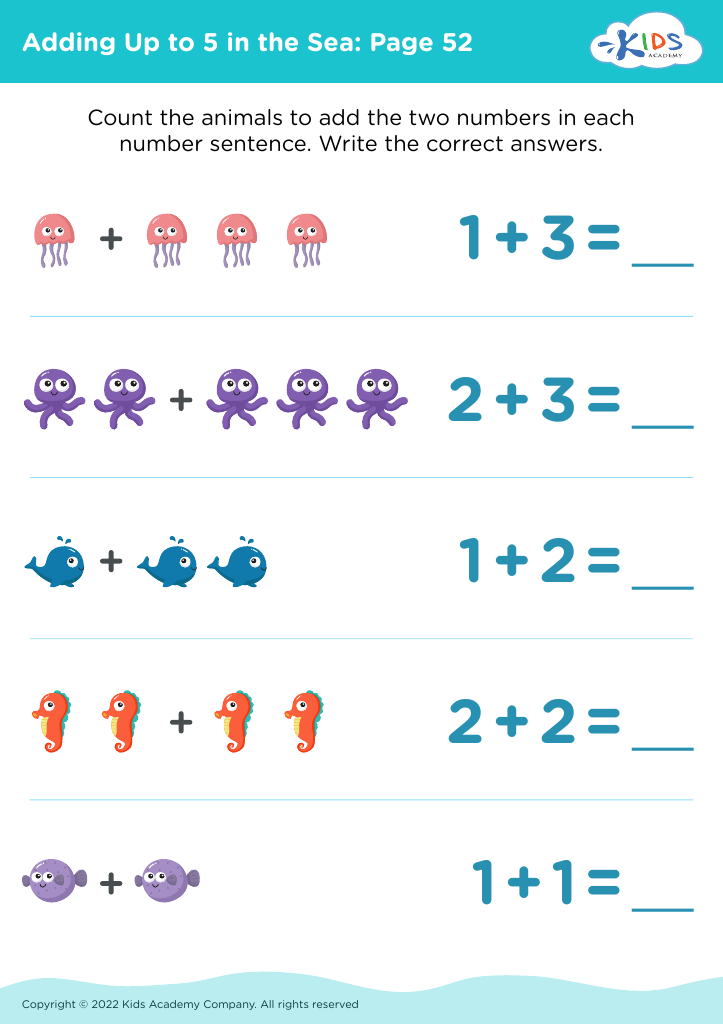
Adding Up to 5 in the Sea: Page 52
Worksheet
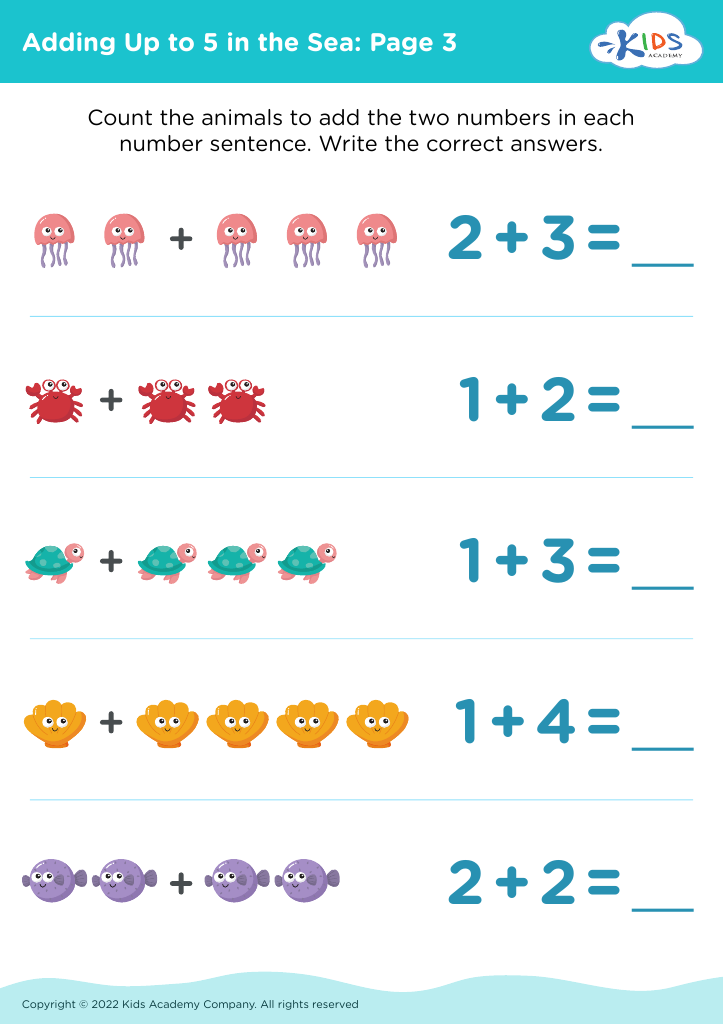
Adding Up to 5 in the Sea: Page 3

Adding Up to 5 in the Sea: Page 3

Adding Up to 5 in the Sea: Page 3
Worksheet
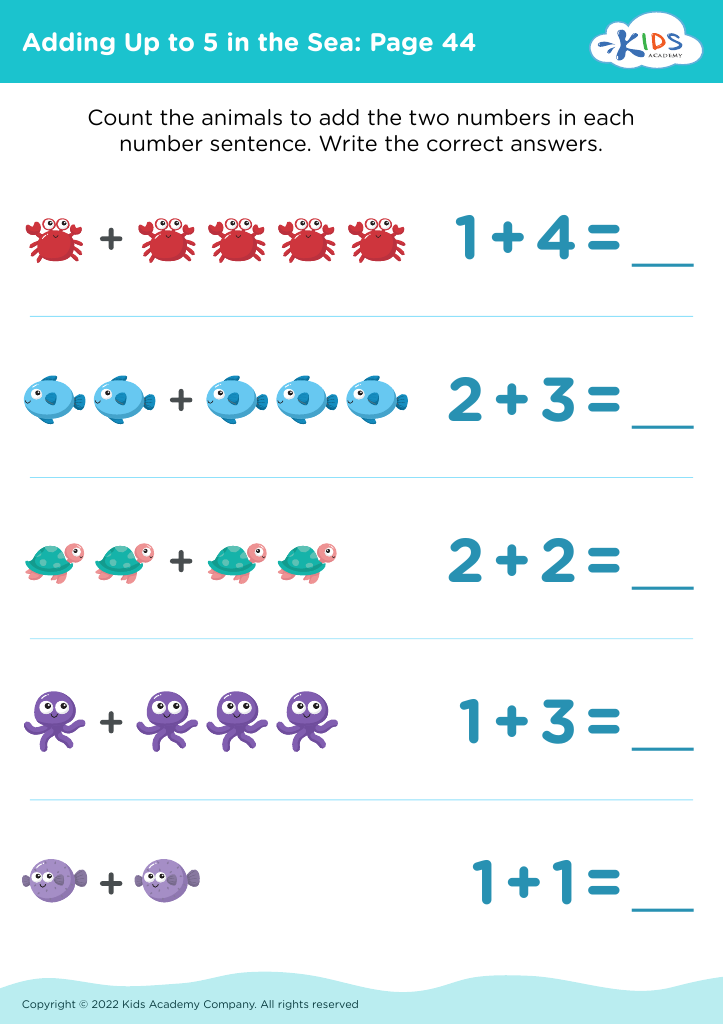
Adding Up to 5 in the Sea: Page 44
Worksheet


Parents and teachers should prioritize basic addition skills, such as "Adding in the Sea," for children ages 3-9 because these foundational concepts are crucial for broader mathematical understanding and development. Early introduction to addition nurtures children's cognitive development, enhancing problem-solving abilities and critical thinking. Engaging lessons about addition using relatable themes, like the ocean, make learning enjoyable and relatable, fostering a love for mathematics.

Additionally, mastering basic addition builds essential skills that serve children throughout their academic careers. It promotes analytical thinking, helping them tackle more complex mathematical operations in the future. Children with strong addition skills often exhibit increased confidence and persistence, reaching foundational milestones more readily.

Furthermore, incorporating fun, interactive activities like adding fish or sea creatures not only enhances retention but also allows for collaborative learning experiences between peers, parents, and teachers. These shared experiences strengthen relationships and create a supportive learning environment. An emphasis on basic addition equips children with the tools they need to navigate everyday tasks involving numbers, shaping them into competent adults capable of making informed decisions. Thus, investing time in teaching basic addition skills like "Adding in the Sea" is an essential step toward fostering a strong mathematical foundation for young learners.