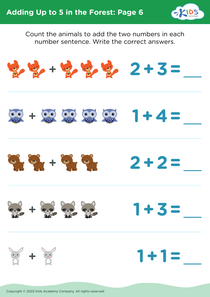
Basic Math understanding Adding in the Sea Worksheets for Ages 3-9
3 filtered results
-
From - To
Dive into a world of underwater fun with our "Adding in the Sea" worksheets, designed for children ages 3-9. These engaging activities boost your child's basic math understanding through playful, sea-themed exercises. Kids will enjoy counting cute sea creatures while mastering addition skills essential for their early education. Each worksheet is crafted to make learning delightful and interactive, fostering a love for math from an early age. Perfect for preschool through early elementary, our "Adding in the Sea" series brings the joy of math exploration to your little ones, setting a strong foundation for their future academic success.
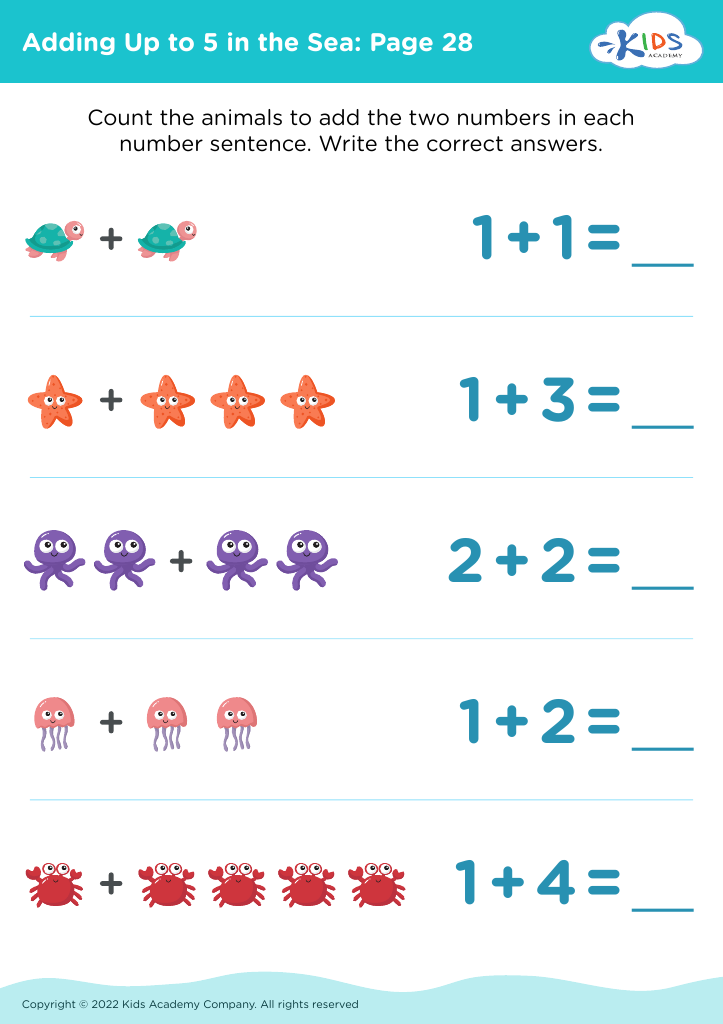
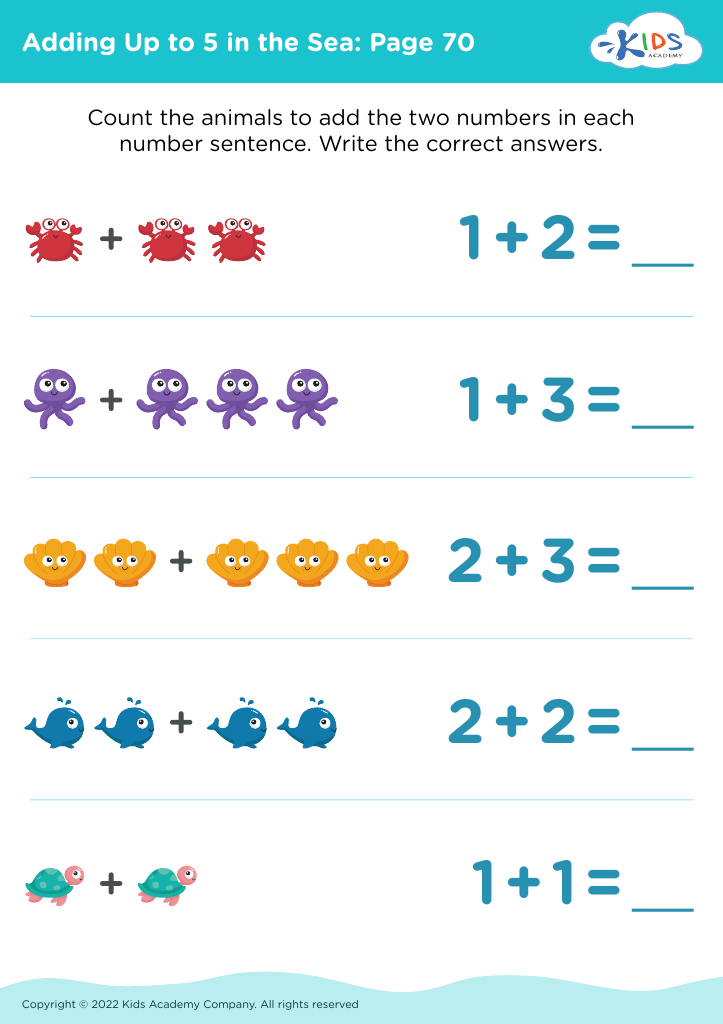
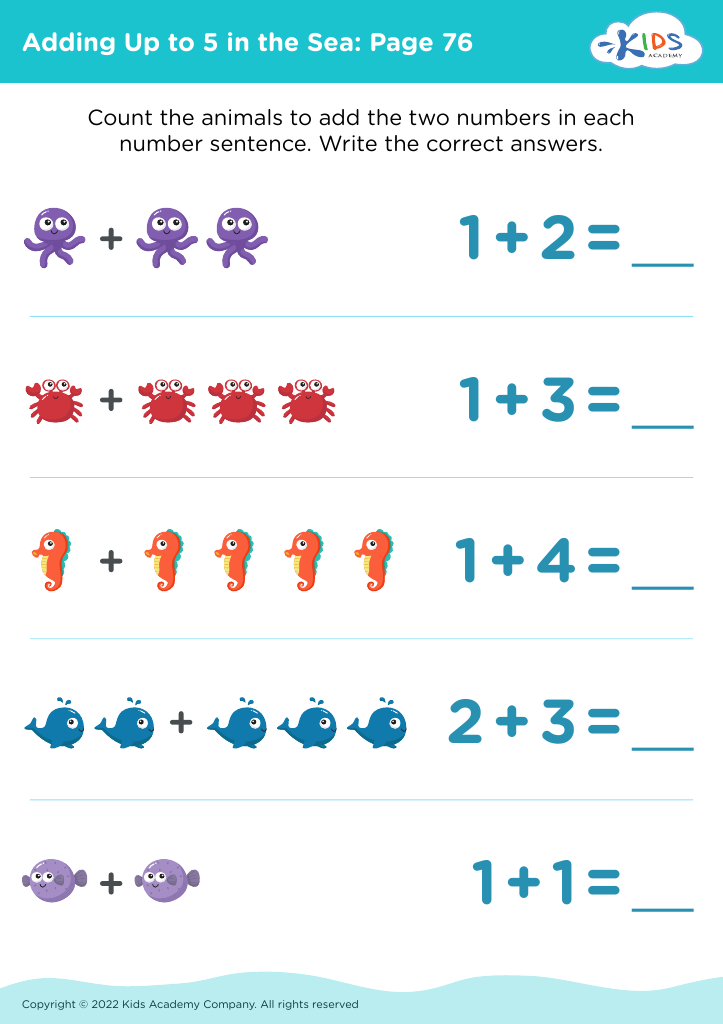



Understanding basic math concepts like addition is crucial for young learners, and the educational tool "Adding in the Sea" can make this process engaging and effective for ages 3-9. Parents and teachers should care about basic math skills because they form the foundation for future learning. Addition is not just a mathematical skill but a building block for logical thinking and problem-solving abilities. Children who grasp these concepts early are better prepared for more complex mathematical tasks in later grades.
"Adding in the Sea" utilizes thematic, ocean-based scenarios that make learning relatable and enjoyable for children. This approach captures their interest, turning the learning experience into a fun adventure rather than a chore. When learning is fun, children are more likely to retain information and develop a positive attitude towards math.
Moreover, early math skills are predictive of later academic success across different subjects. By fostering strong math foundations through engaging methods, parents and teachers can set children on a path to academic achievements and increased confidence in their abilities. Additionally, incorporating a playful theme like sea animals makes math less intimidating and can reduce anxiety associated with the subject. Hence, investing attention and care in basic math education, especially through enjoyable platforms, is essential.