Cognitive Development Adding in the Sea Worksheets for Ages 3-9 - Page 2
28 filtered results
-
From - To
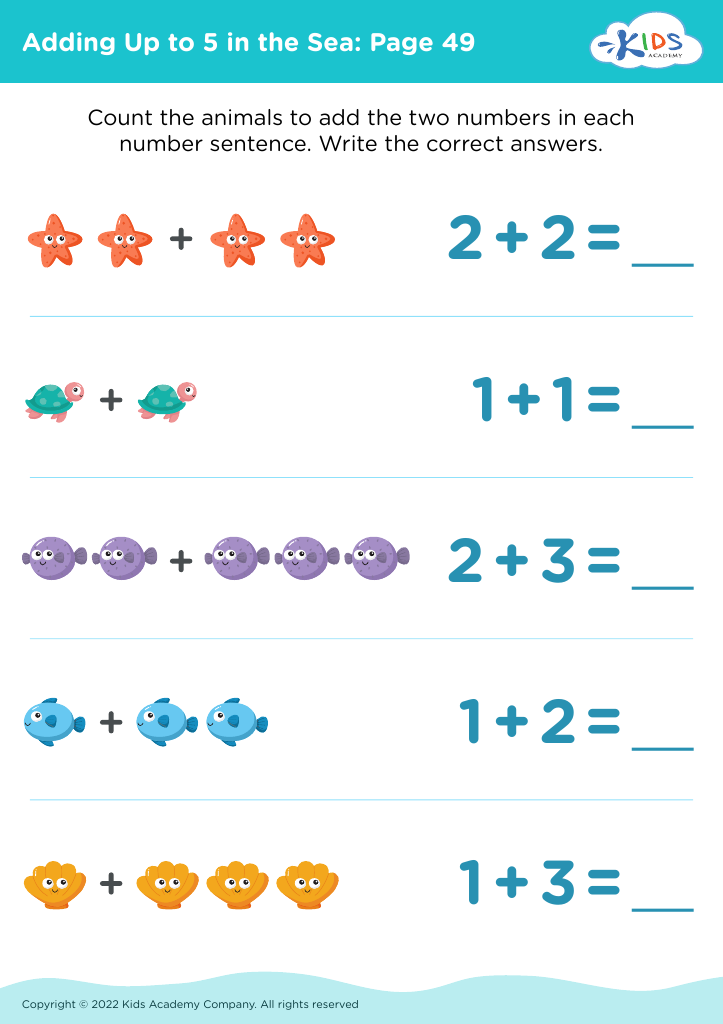
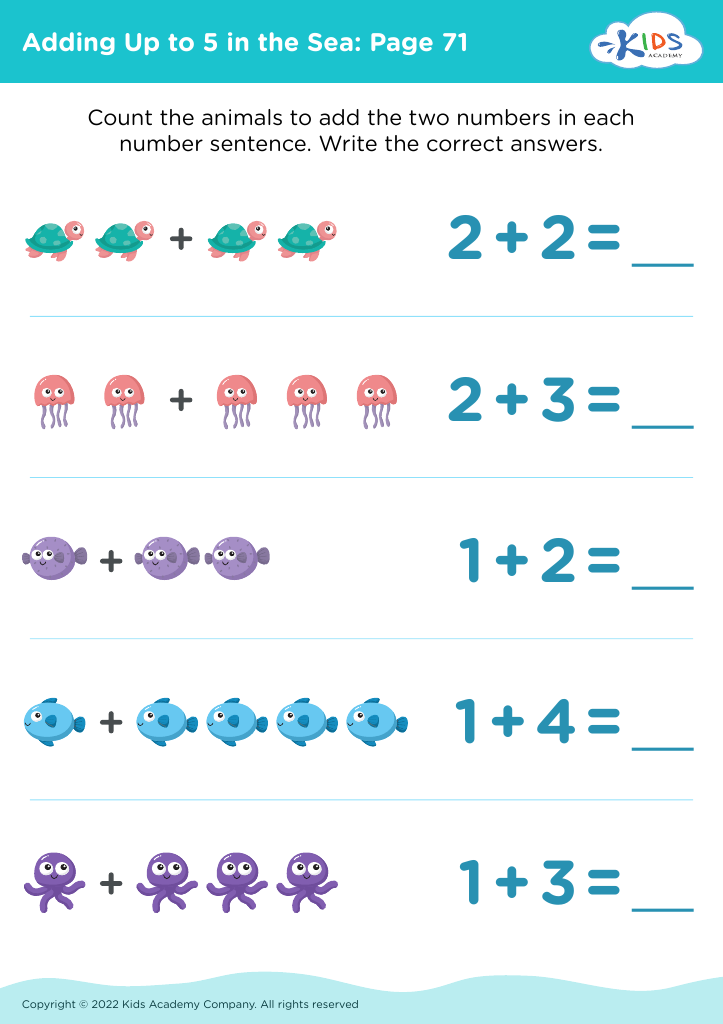
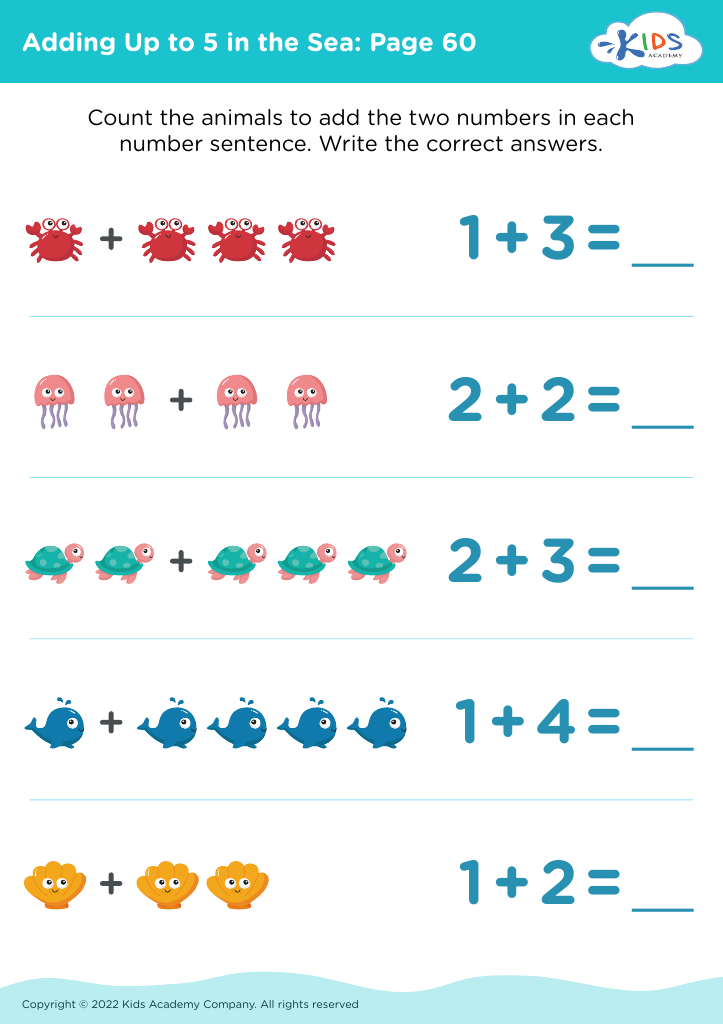
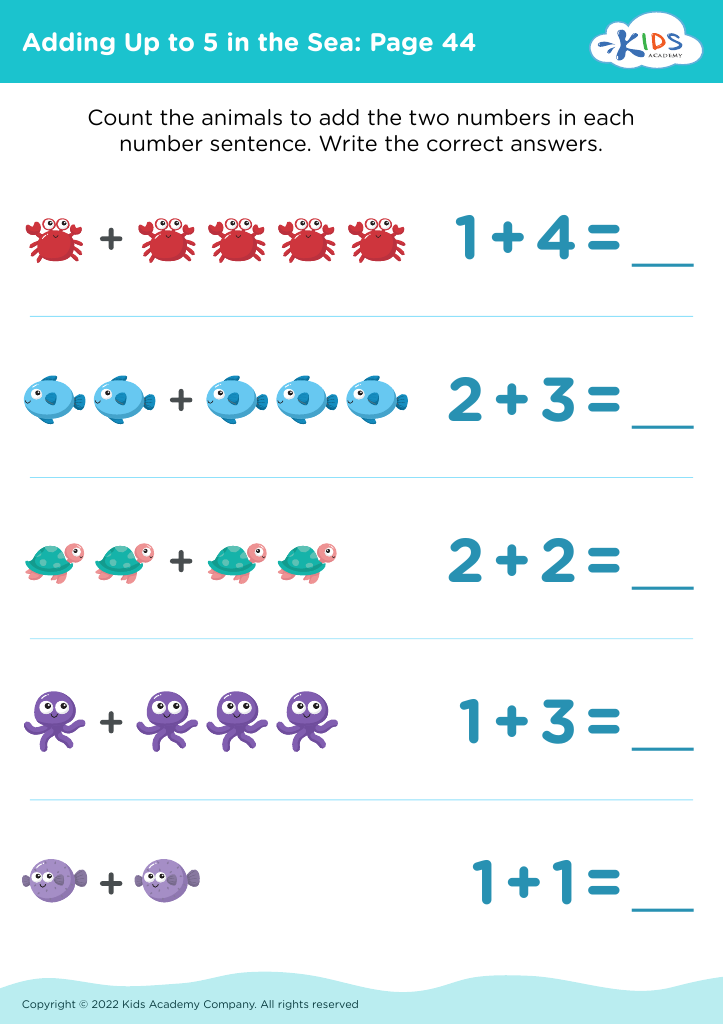



Cognitive development, particularly in the foundational years (ages 3-9), is critical as it sets the stage for lifelong learning and problem-solving skills. Cognitive Development Adding in the Sea is a unique educational tool that merges cognitive development with an engaging, aquatic-themed setting. This approach is crucial for several reasons.
First, the early years are when children’s brains are most malleable and receptive to new information. Engaging with Cognitive Development Adding in the Sea enhances memory, attention, and reasoning skills by presenting them in a captivating and interactive way. Children are more likely to grasp complex concepts such as addition if they are introduced in a fun, visual, and contextual manner.
Secondly, this program helps develop essential early math skills. Mathematics serves as a building block for many academic disciplines. By mastering addition early, children lay the groundwork for future success in other areas such as science and technology.
Moreover, the aquatic theme can make learning feel less like a chore and more like an adventure. This positive association with learning can boost a child's intrinsic motivation to explore further, promoting a lifelong love of learning.
Parents and teachers should prioritize such programs because they align with the developmental needs and interests of young learners, translating abstract concepts into tangible and enjoyable experiences.