Fine motor skills (writing numbers) Adding in the Sea Worksheets for Ages 3-9
4 filtered results
-
From - To
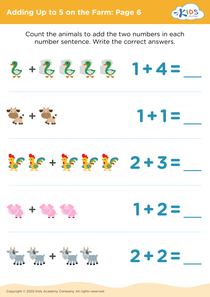
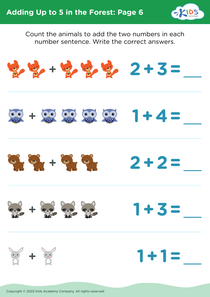
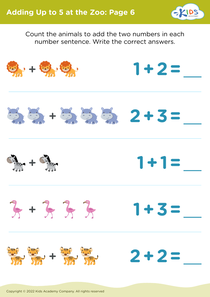
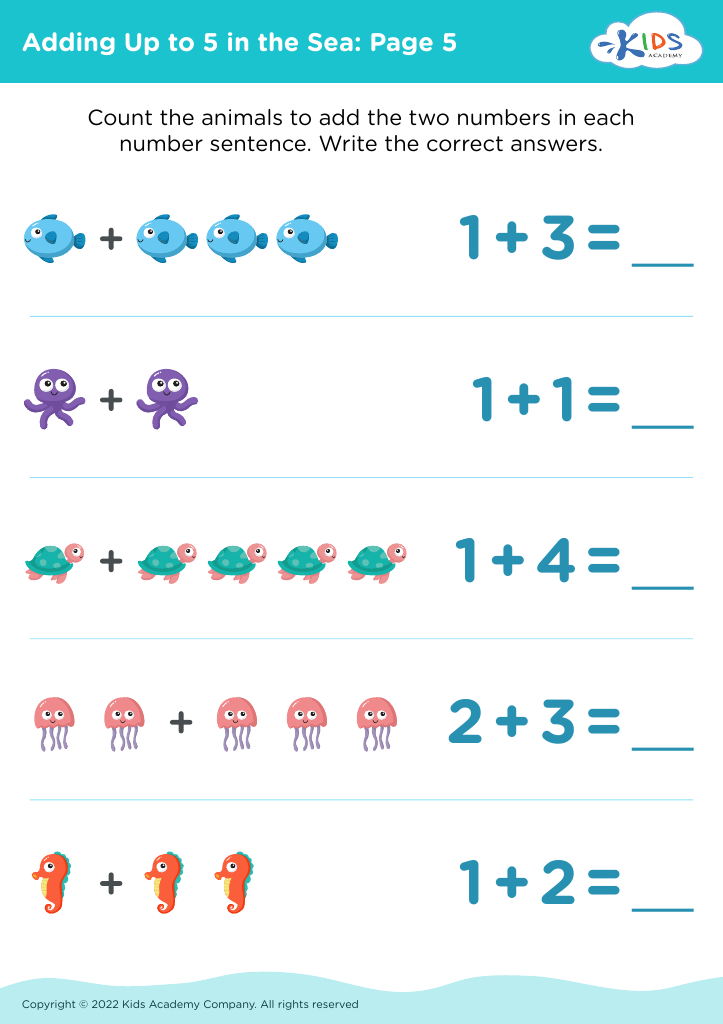
Discover our engaging "Fine Motor Skills: Writing Numbers - Adding in the Sea Worksheets" designed for children ages 3-9! These interactive worksheets focus on enhancing fine motor skills through fun ocean-themed activities that encourage young learners to practice writing numbers. Each worksheet incorporates colorful illustrations and playful scenes, making learning enjoyable while supporting hand-eye coordination and muscle control. As children navigate the underwater world of addition, they will improve their number-writing abilities and boost their confidence in math. Perfect for homeschool or classroom use, these worksheets are a fantastic way to blend creativity with essential skill development!
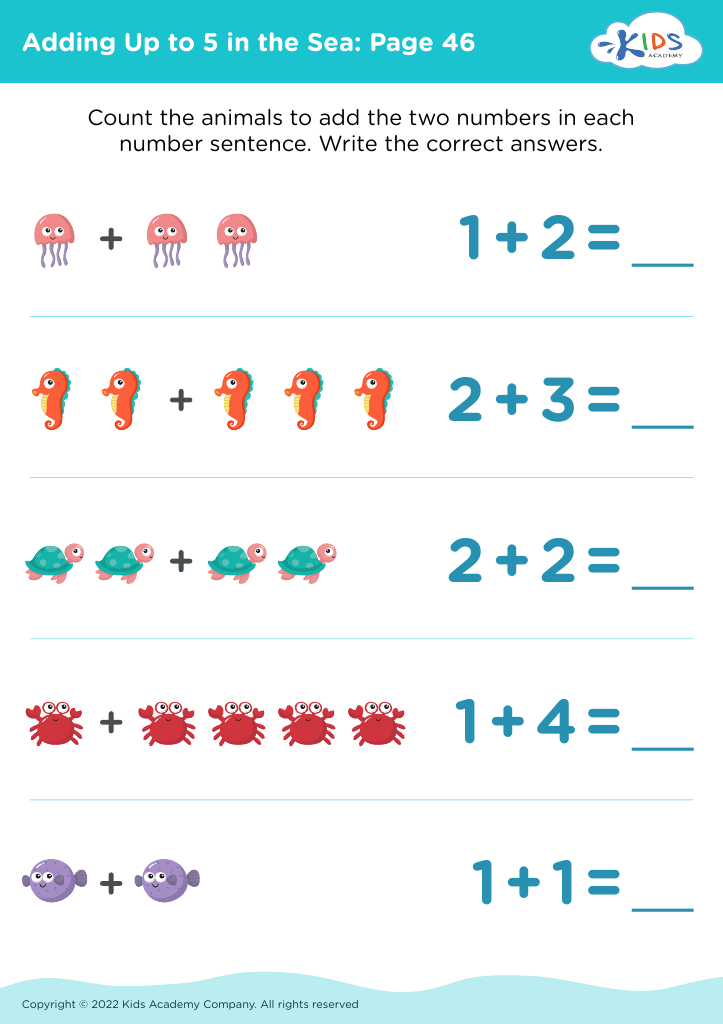
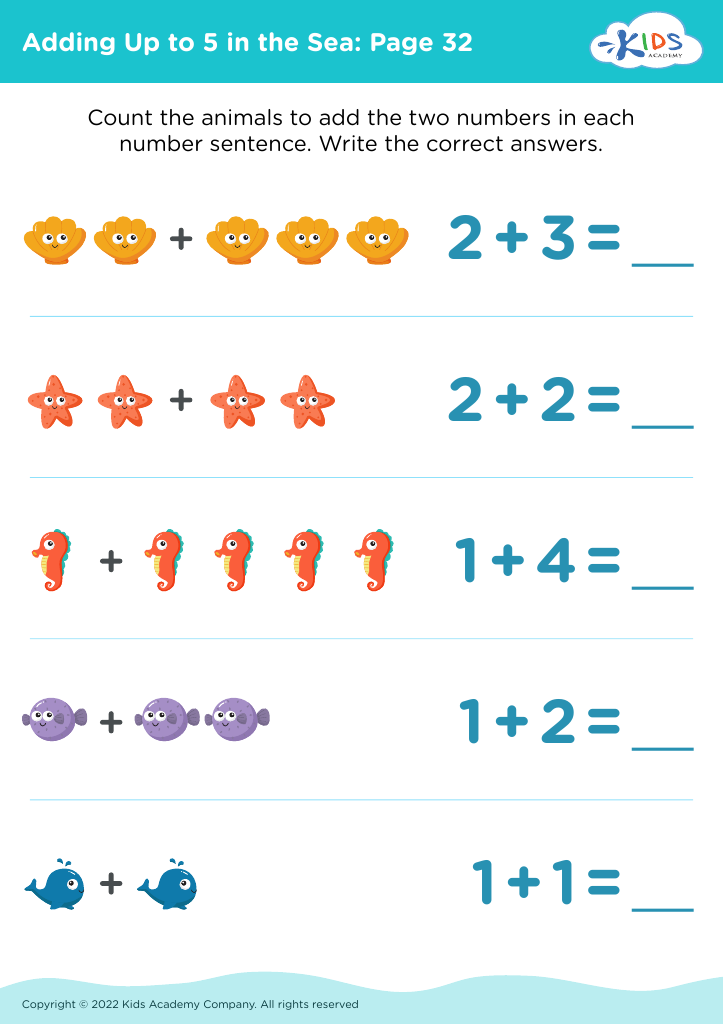
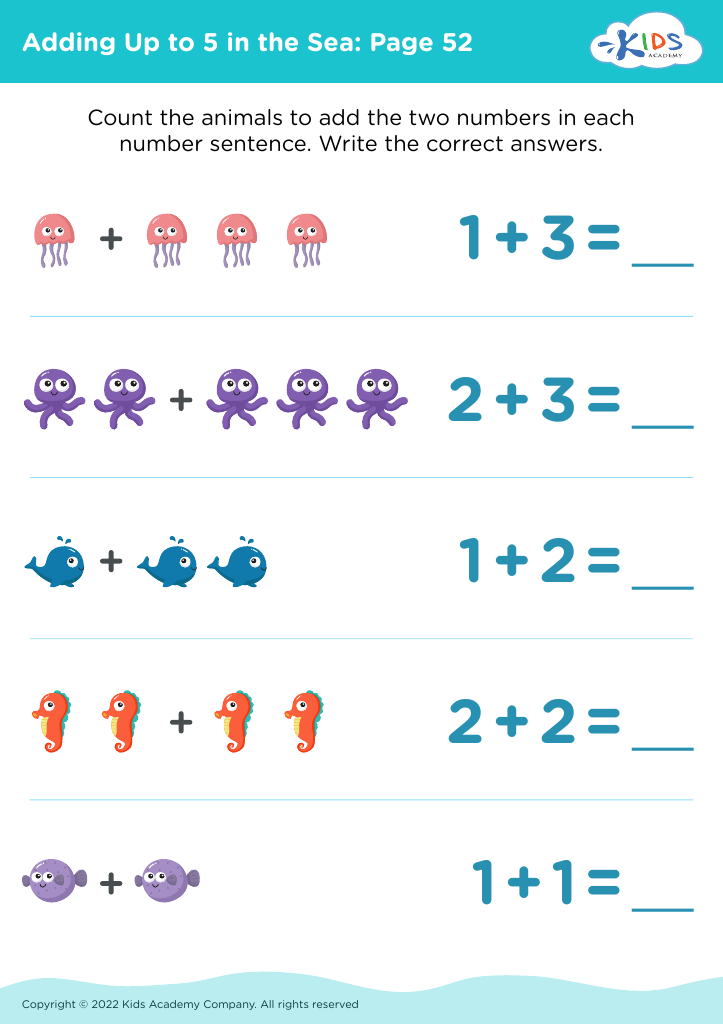



Fine motor skills, particularly writing numbers, are crucial for children ages 3-9, and both parents and teachers should prioritize their development. Mastery of these skills not only enhances children's ability to express themselves but also lays the foundation for academic success. As children learn to write numbers, they engage coordination and dexterity, which are essential for many daily tasks, from tying shoelaces to using utensils.
In the context of activities like "Adding in the Sea," which can incorporate playful elements such as sea creatures and ocean themes, fine motor skills can be developed through engaging experiences. Using fun materials like sand, water, and counting objects enables children to learn while enjoying, thus promoting concentration and interest in math concepts. Teachers and parents can encourage practice through play-based learning, fostering a positive association with numbers and writing.
In addition, developing fine motor skills fosters independence and confidence as children learn to manage writing tools effectively. These foundational skills support later academic achievement and improve overall cognitive development. Therefore, prioritizing fine motor education ensures children are well-equipped for future learning challenges in mathematics and beyond, reinforcing the importance of this developmental stage.