Hand-eye Coordination Adding in the Sea Worksheets for Ages 3-9
4 filtered results
-
From - To
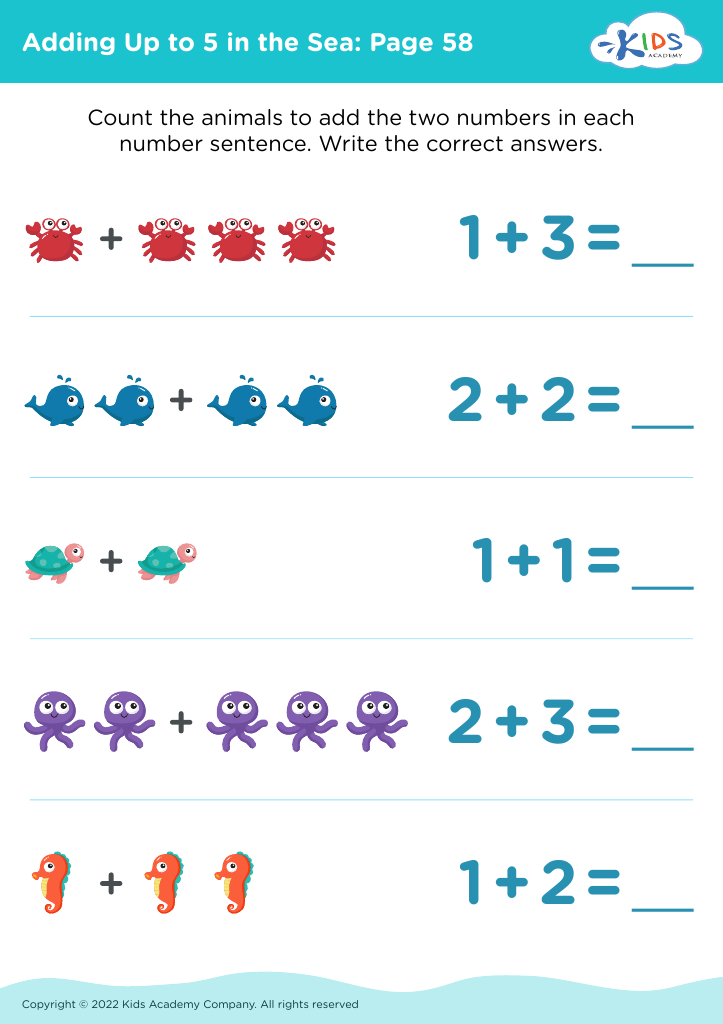
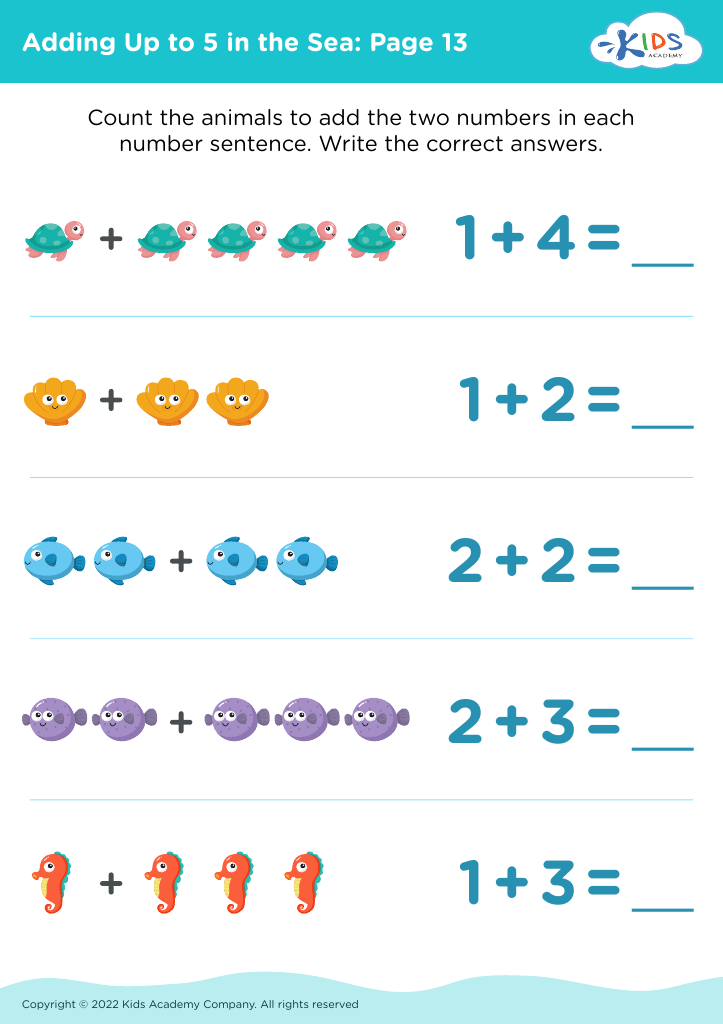
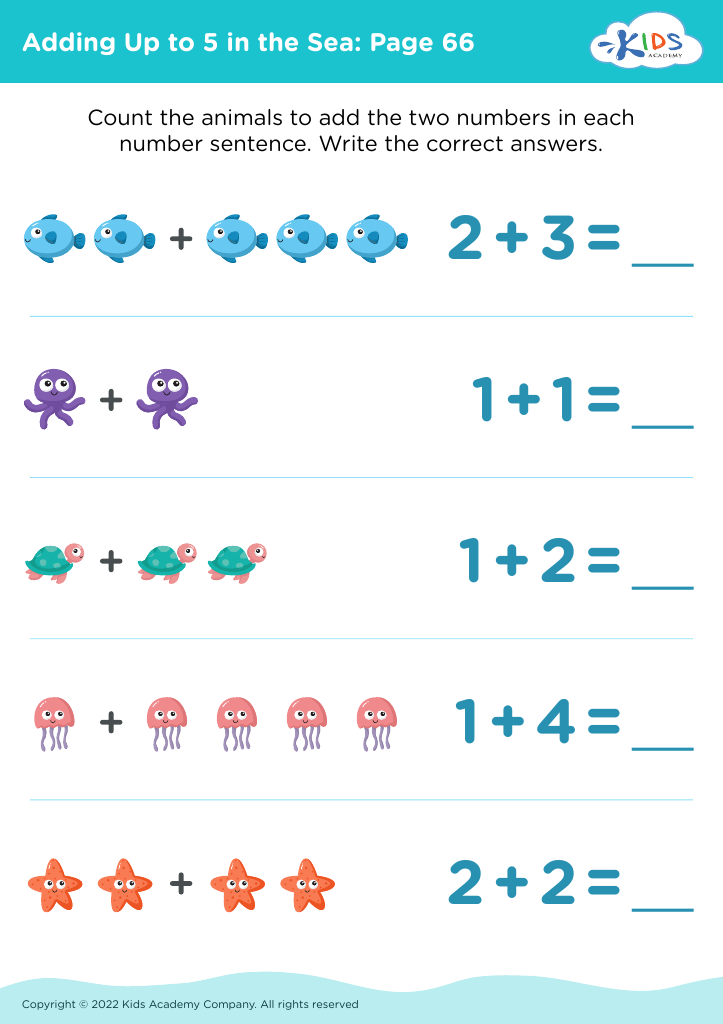
Enhance your child's hand-eye coordination with our engaging Adding in the Sea Worksheets, designed for ages 3-9. Through fun, sea-themed activities, children will practice adding while improving their precision and motor skills. These worksheets combine math and fine motor development, fostering a multi-sensory learning experience. Watch as your child delightfully navigates counting exercises featuring adorable sea creatures, strengthening both their mathematical abilities and coordination. Ideal for early learners, these printable worksheets foster foundational skills in a playful underwater adventure. Perfect for parents and educators seeking a comprehensive learning tool that blends fun with essential skill development.
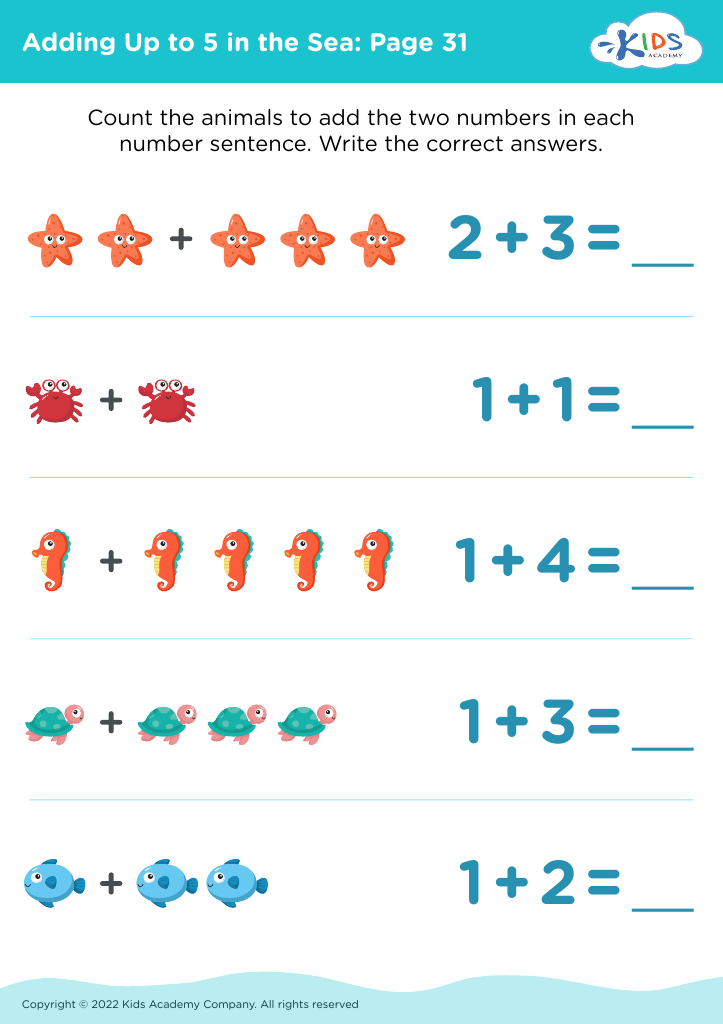



Hand-eye coordination is crucial in early childhood development as it forms the foundation for various cognitive and physical skills. For children aged 3-9, activities that enhance hand-eye coordination, such as those centered around adding practice in themed settings like "the sea," offer myriad benefits that parents and teachers should prioritize.
Engaging in hand-eye coordination tasks, such as picking out sea creatures and adding their numbers, can significantly boost fine motor skills and visual tracking capabilities. This multitasking and alignment between vision and action sharpen a child's ability to perform everyday activities like writing, cutting, and even dressing themselves.
Furthermore, incorporating educational content within captivating themes like "under the sea" makes learning relatable and fun, thereby increasing children’s enthusiasm and retention. When children are absorbing mathematical concepts through interactive play, it's not just numerical acumen that grows— there is also enhancement in problem-solving skills, spatial awareness, and confidence in tackling academic challenges.
Parents and teachers who invest in these holistic educational experiences are enabling children to develop stronger neural connections, promoting lifelong learning and adaptability. Supporting activities that foster hand-eye coordination thus plays a pivotal institutional and emotional role, setting the stage for balanced and enriched childhood growth.