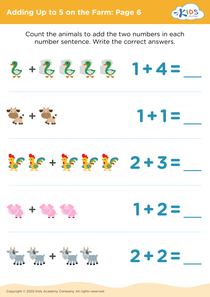
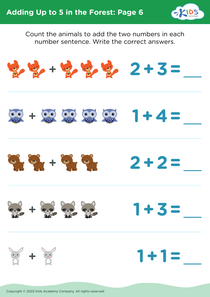
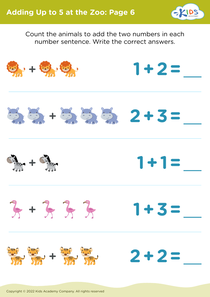
Improving concentration Adding in the Sea Worksheets for Ages 3-9
4 filtered results
-
From - To
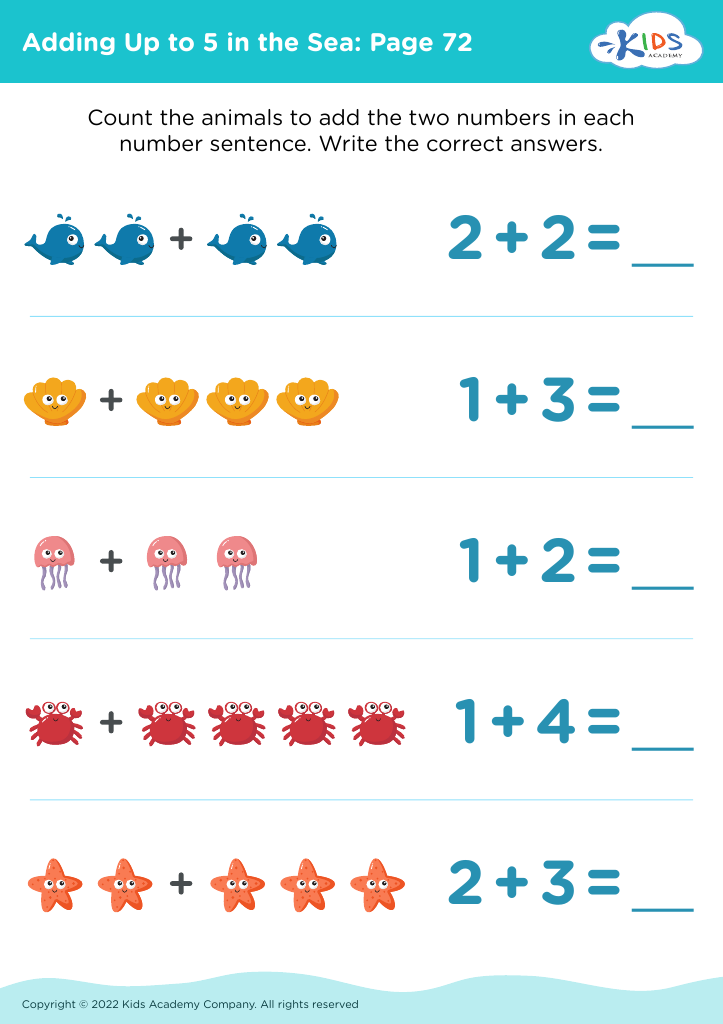
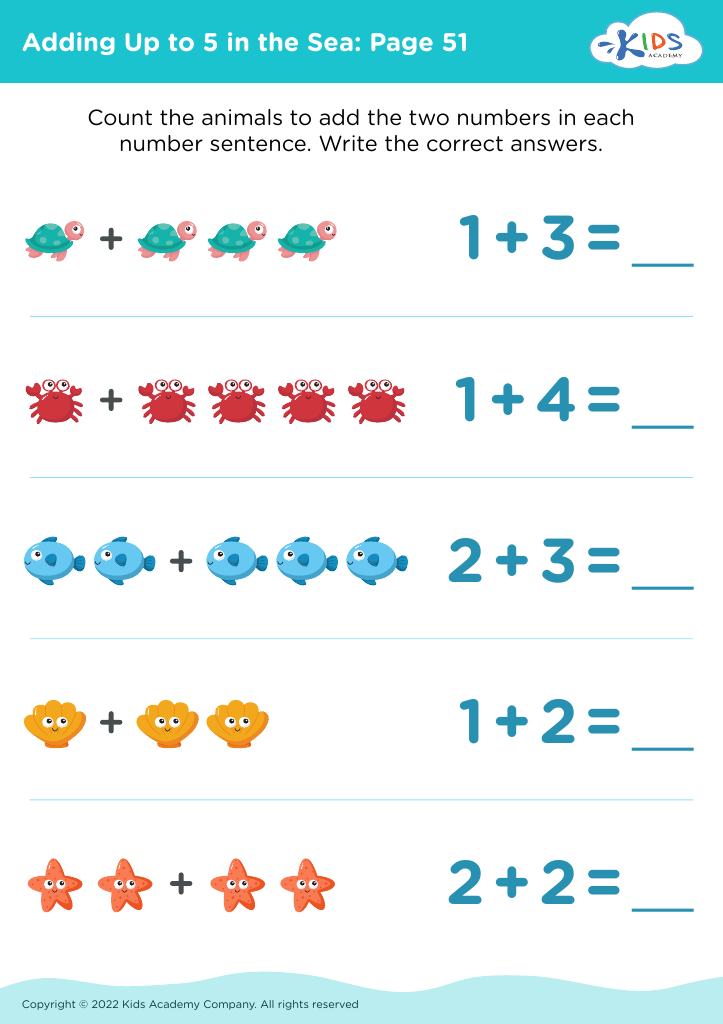
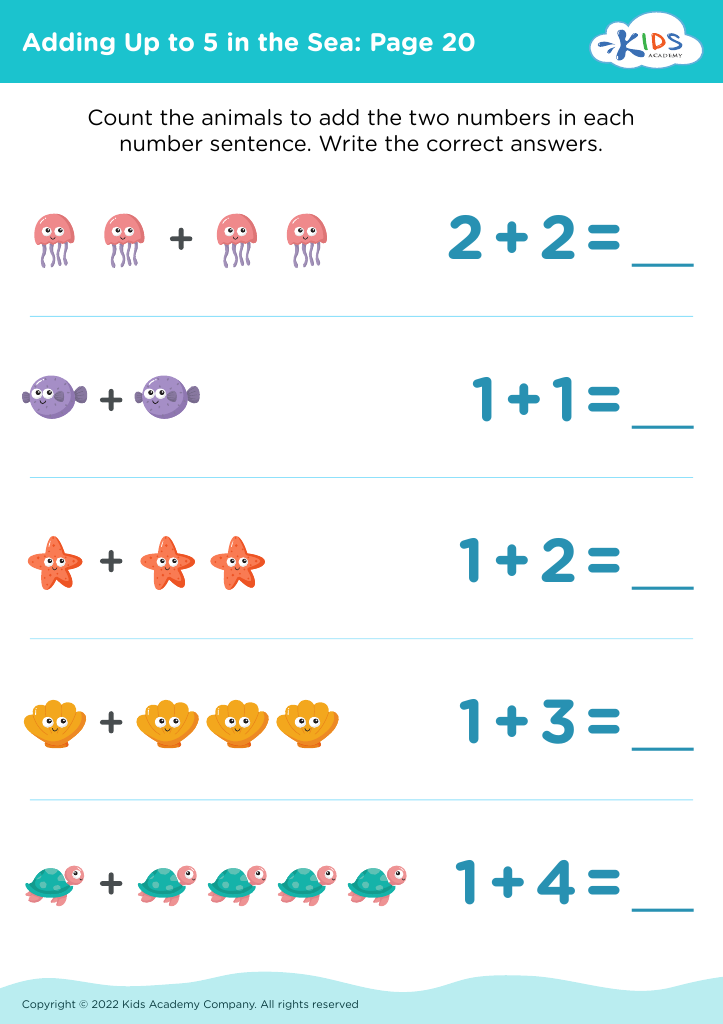
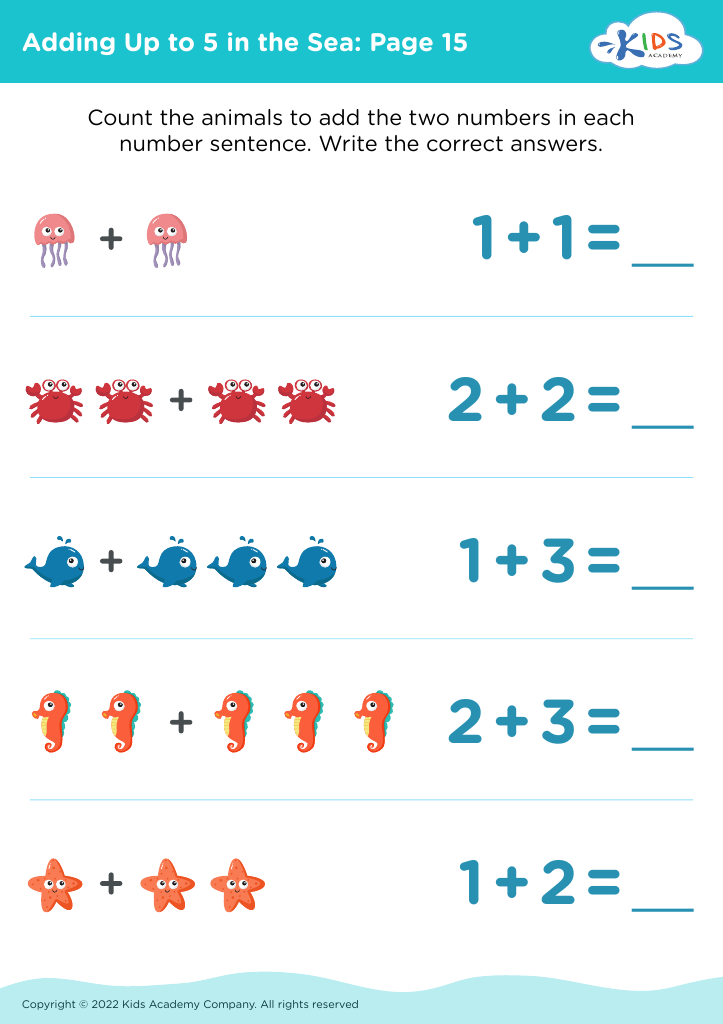
Enhance your child's focus and concentration with our engaging "Adding in the Sea" worksheets designed specifically for ages 3-9. These interactive activities blend math skills with the wonders of the ocean, capturing young learners' imaginations while helping them master addition. Each worksheet offers colorful sea-themed illustrations and fun challenges that make learning enjoyable, fostering a love for math from a young age. By encouraging sustained attention through a variety of math problems, our resources contribute to cognitive development. Dive into the world of learning with "Adding in the Sea" and watch your child thrive academically while having fun! Perfect for home or classroom use.



Improving concentration in children aged 3-9 is crucial for their overall development and learning. At this formative stage, children's brains are rapidly developing, making it an ideal time to enhance their attention span. This improvement not only supports academic success but also fosters social and emotional skills.
Teachers and parents play a vital role in creating environments that encourage focus. Early learning experiences that promote concentration can help with essential skills such as problem-solving, critical thinking, and the ability to follow instructions. Implementing strategies like structured play, interactive activities, and mindfulness can significantly boost children's concentration levels.
Moreover, concentration is linked to increased self-esteem and better classroom behavior. When children can focus and complete tasks, they gain a sense of accomplishment that enhances their motivation. Additionally, fostering concentration in young learners helps them develop coping mechanisms for managing distractions in a world filled with stimuli.
Engaging methods, such as incorporating themes like "Adding in the Sea," can spark interest and facilitate deeper learning. By teaching children to concentrate through fun, themed activities, parents and teachers create a positive learning environment that not only promotes knowledge retention but also instills a lifelong love for learning.