Underwater animal identification Adding in the Sea Worksheets for Ages 3-9
3 filtered results
-
From - To
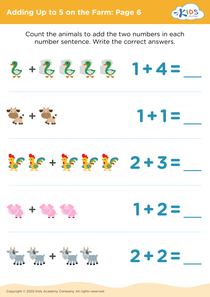
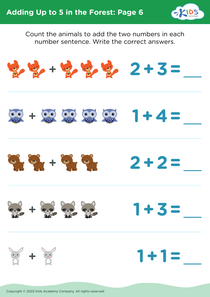
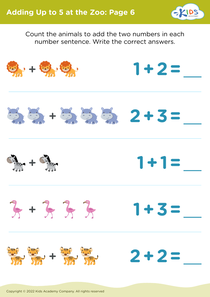
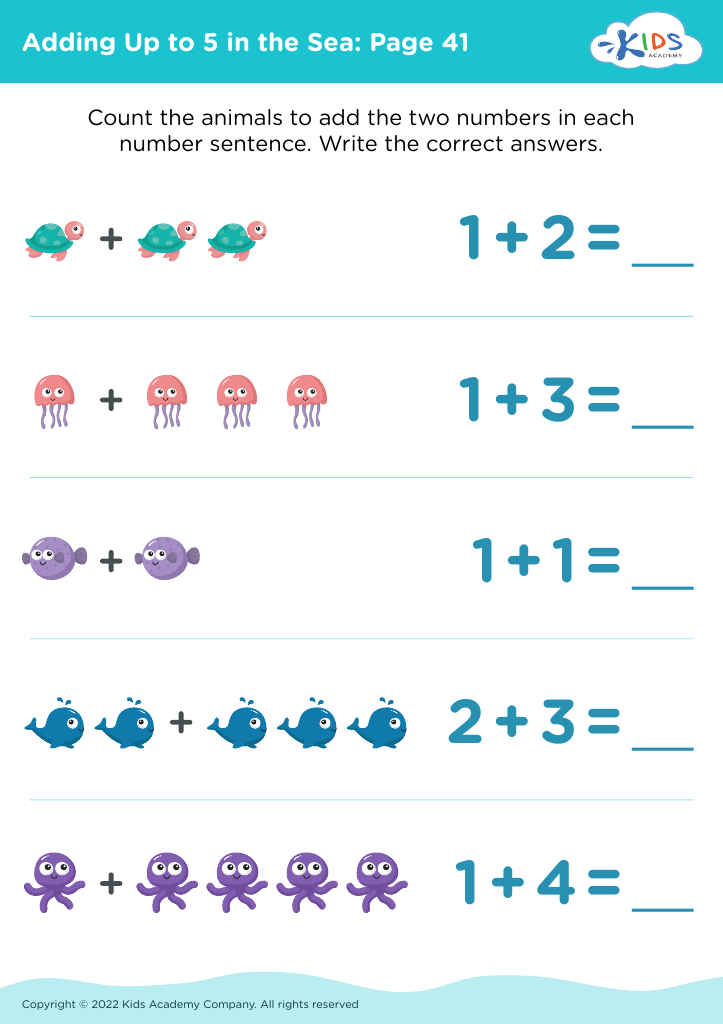
Dive into an ocean of fun with our "Underwater Animal Identification Adding in the Sea Worksheets for Ages 3-9." Designed to merge learning with play, these worksheets engage young learners in math and natural science. Kids will master addition while exploring the captivating underwater world, identifying various sea creatures along the way. Perfect for children aged 3 to 9, these activities enhance critical thinking and observational skills. Make your child’s learning experience a splash with our expertly crafted worksheets that turn math practice into an underwater adventure! Start exploring today and discover the wonders of the sea, one addition problem at a time.
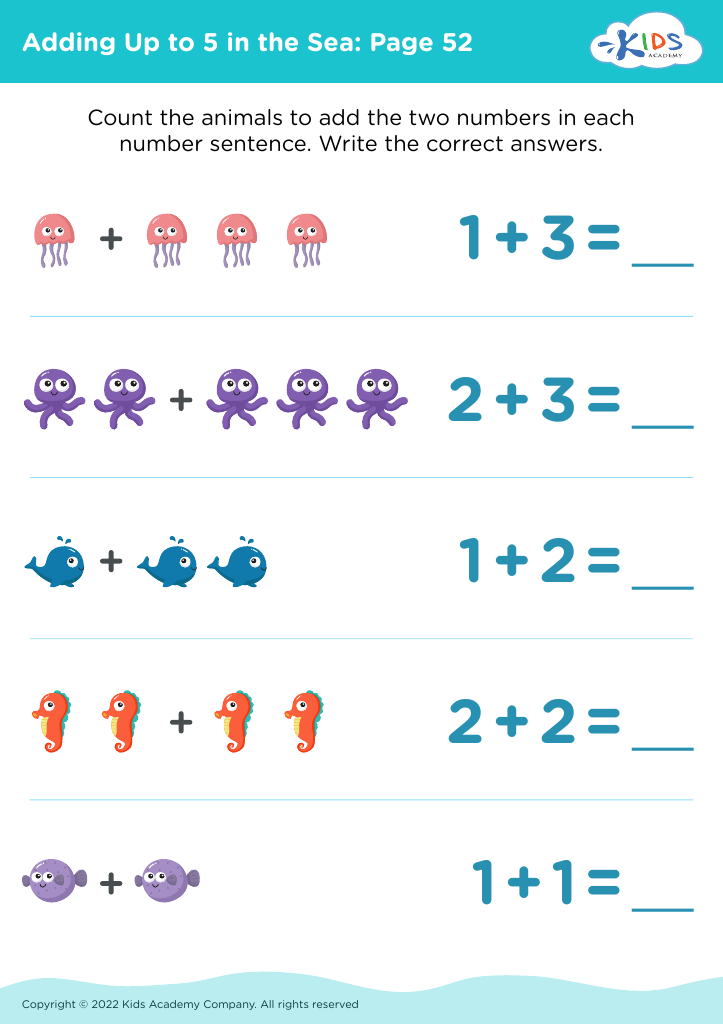
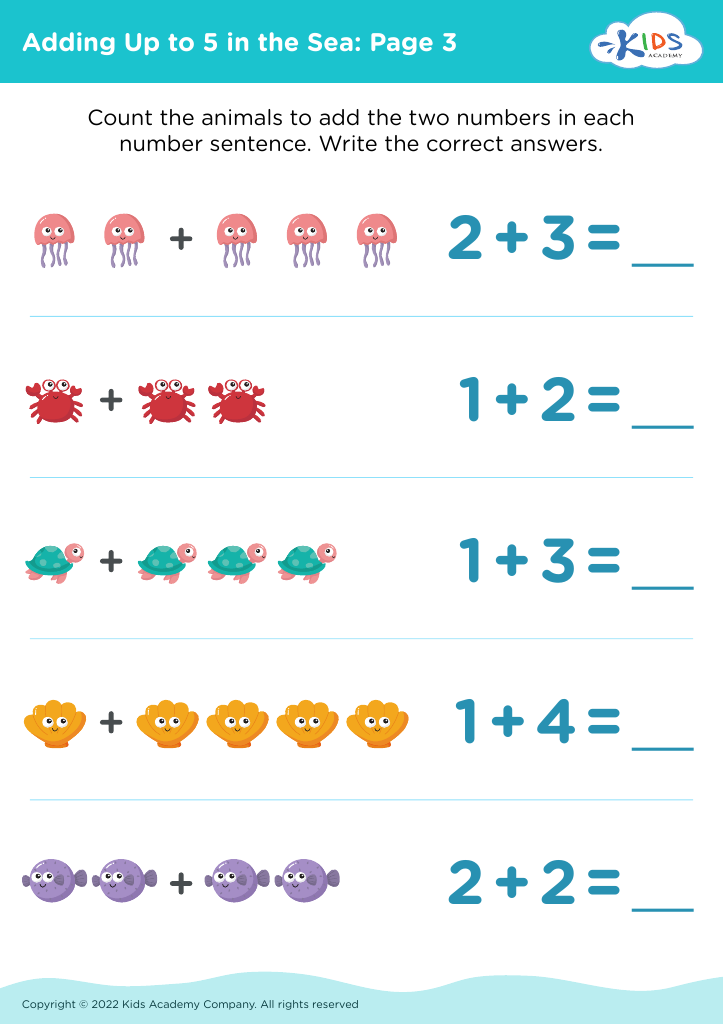



Introducing underwater animal identification to children aged 3-9 nurtures a sense of wonder and curiosity about the natural world. This early engagement fosters a lifelong appreciation for marine biodiversity and the environment. Knowing more about sea creatures facilitates foundational learning in science and enhances observational skills, crucial for cognitive development.
Understanding underwater species instills a sense of compassion and responsibility towards marine life, cultivating environmental stewards from a young age. It encourages children to recognize the importance of conservation effort, equipping them with knowledge to make sustainable choices in the future.
Additionally, studying undersea animals can be a cross-curricular journey, connecting science with literacy, art, and geography. Children can improve their vocabulary by learning new terms and names of animals. They can explore creativity through art projects depicting sea life or stories involving ocean adventures.
Interactive methods such as puzzles, videos, and visits to aquariums make the learning experience enjoyable and stimulating, benefiting both visual and kinesthetic learners. Overall, this compelling link to the oceans plays a crucial role in developing well-rounded, informed, and environmentally-conscious individuals. By fostering these early connections, parents and teachers are helping to build a generation that values and protects the marine ecosystem.