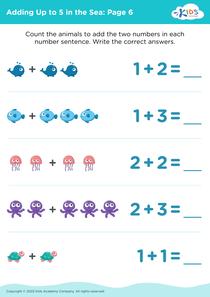
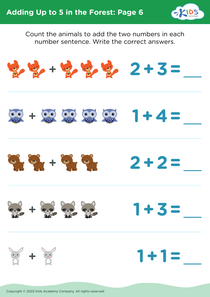
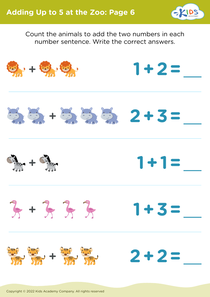
Addition Practice Adding on the Farm Worksheets for Ages 3-9
5 filtered results
-
From - To
Discover our "Addition Practice: Adding on the Farm" worksheets, designed for children aged 3 to 9. These engaging resources help young learners develop essential addition skills through fun, farm-themed activities. Each worksheet is filled with vibrant illustrations of friendly farm animals and interactive problems, making math practice enjoyable and relatable. Ideal for home or classroom use, our worksheets cater to various learning levels, ensuring all children build a solid foundation in arithmetic. Encourage your child's love for math while exploring the exciting world of farming! Perfect for enhancing critical thinking and problem-solving abilities in early learners. Start counting fun today!
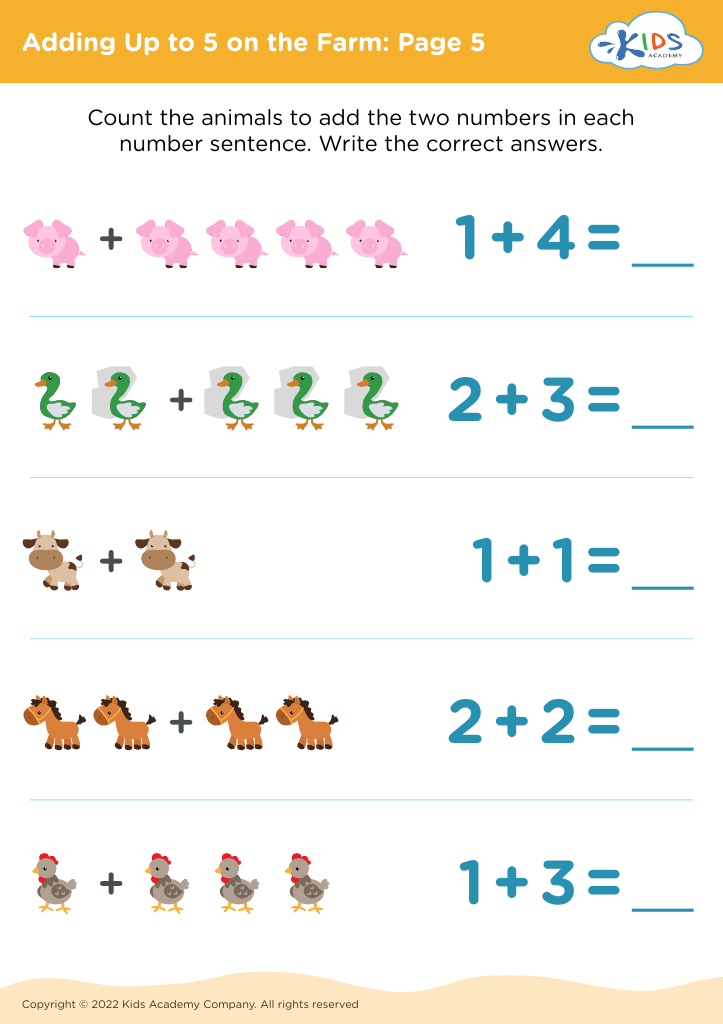
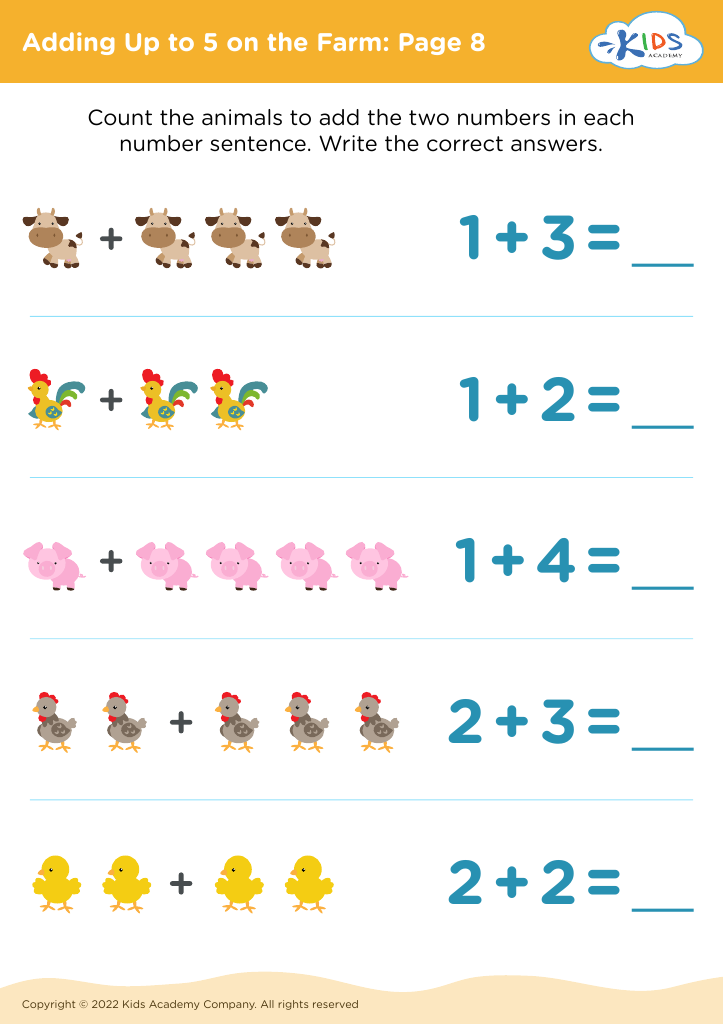
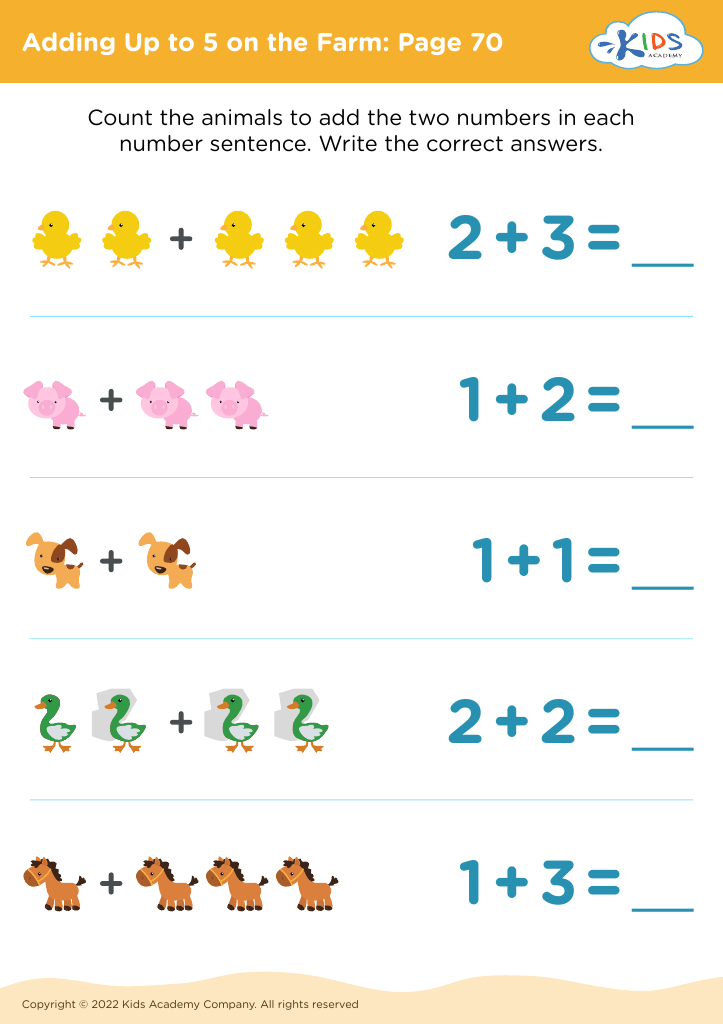
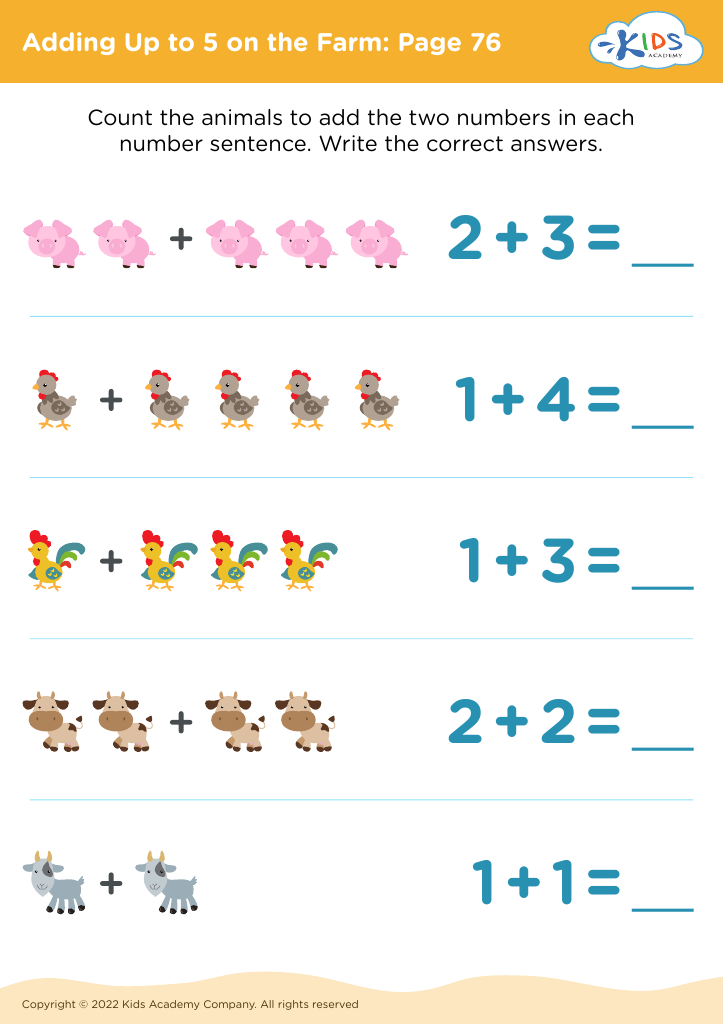
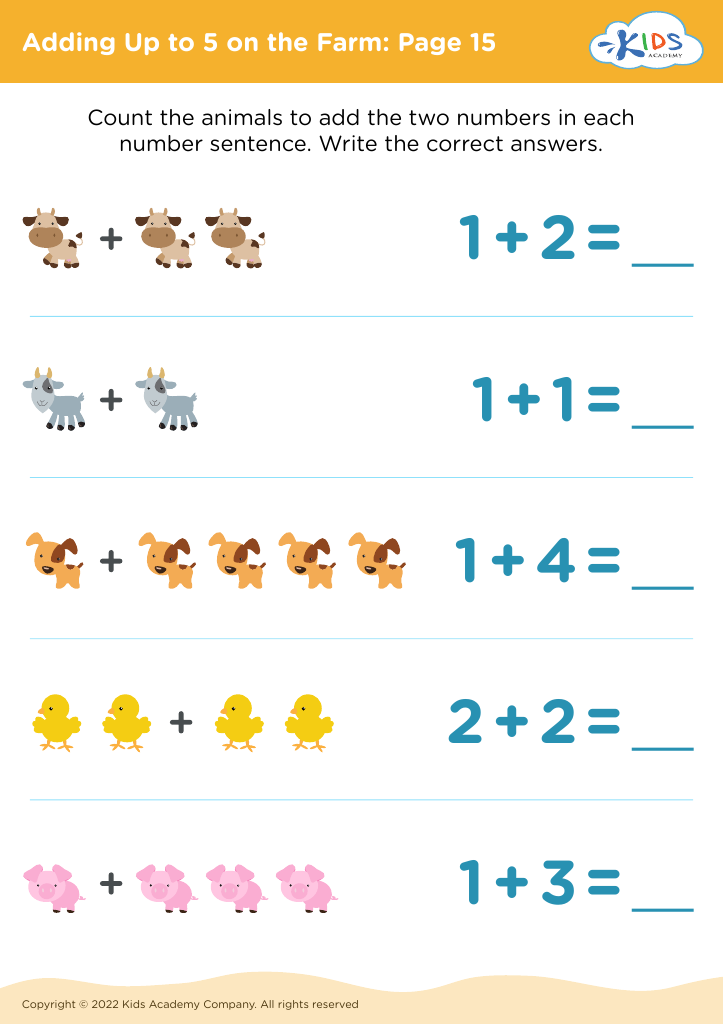



Parents and teachers should care about Addition Practice Adding on the Farm for children aged 3-9 because it provides a fun and engaging context for learning essential math skills. Early numeracy forms a foundational skill that supports future academic success, and using thematic activities can enhance a child's natural curiosity and interest in learning.
Farm-themed activities often involve relatable objects and scenarios, like counting animals or crops, making abstract concepts more concrete. This approach not only helps children grasp addition through visual and tangible experiences but also fosters a love for math by blending education with play.
Additionally, engaging in these activities together encourages parental involvement and nurtures healthy student-teacher collaboration. Regular practice in a familiar context can improve children's confidence in their abilities, setting a positive attitude towards math and learning in general. Such activities cater to diverse learning styles, effectively meeting the needs of all kinds of learners, whether they are visual, auditory, or kinesthetic.
Lastly, emphasizing foundational math skills at a young age helps to mitigate future challenges in advanced math concepts, allowing children to build a solid base for lifelong learning. By prioritizing Addition Practice, we invest in our children’s bright futures.