Animal recognition Adding on the Farm Worksheets for Ages 3-9 - Page 2
31 filtered results
-
From - To
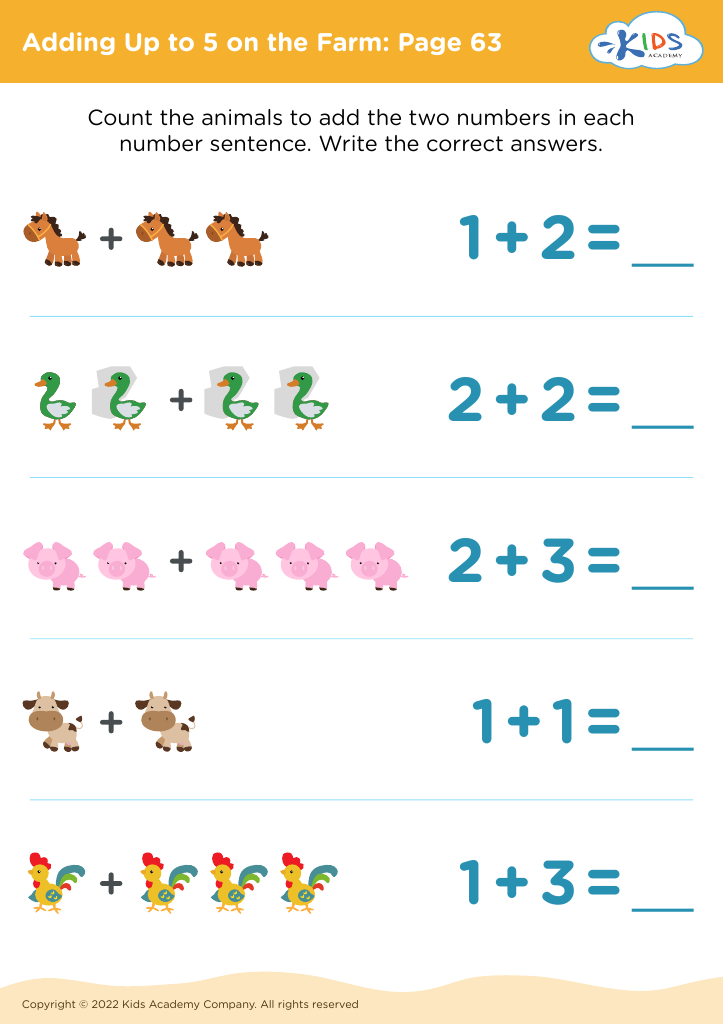
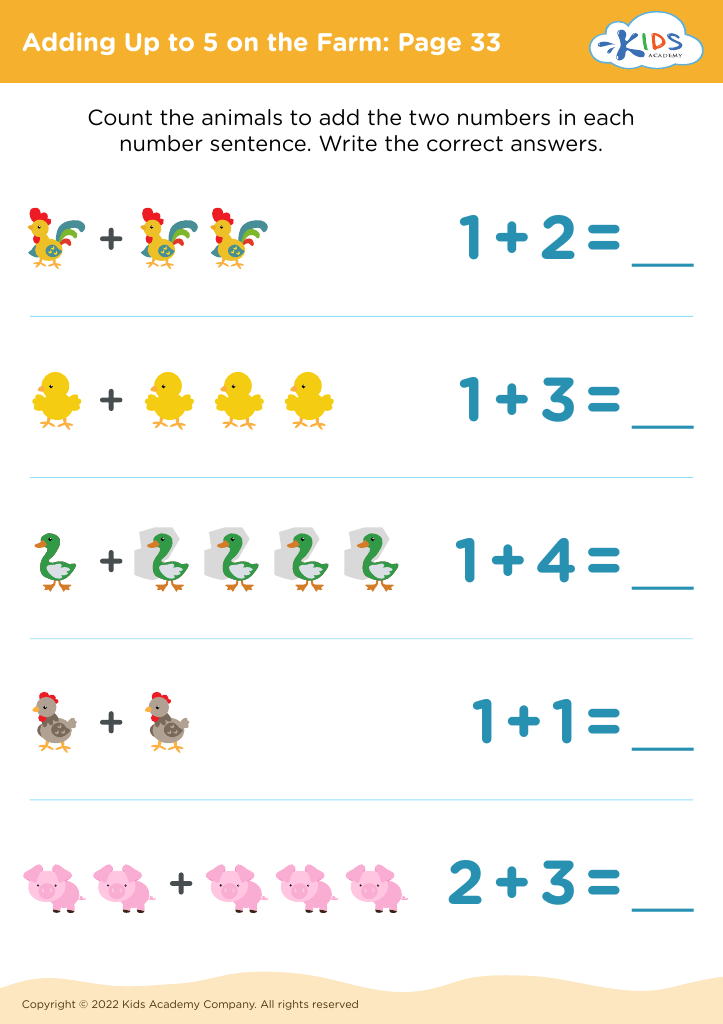
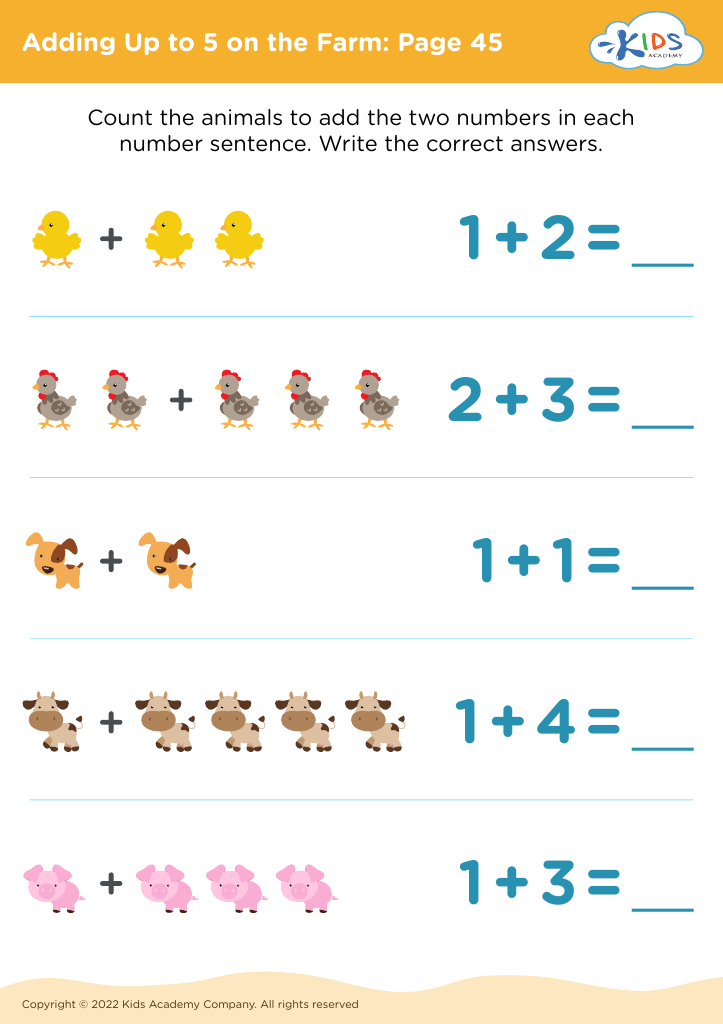



Animal recognition is a crucial developmental activity for young children, especially those aged 3-9. For parents and teachers, fostering this skill offers significant benefits that extend beyond mere entertainment. Understanding animals, particularly those found on a farm, helps children connect with nature and learn about their environment. This connection instills a sense of wonder, curiosity, and respect for living beings, which is essential in developing empathy and environmental stewardship.
Farm animals, such as cows, pigs, sheep, and chickens, are part of many children’s lives through stories, toys, and media. Familiarizing children with these animals can enhance their vocabulary and stimulate important conversations about food sources, agriculture, and agricultural science. This represents a valuable opportunity to introduce concepts like where food comes from and the basics of animal care.
In addition, recognizing and naming animals strengthens cognitive skills and memory retention. Through engaging activities like songs, crafts, and interactive games, teachers and parents can make learning enjoyable and impactful. Exposure to these concepts not only supports academic development but also nurtures critical life skills such as observation, teamwork, and care for one's surroundings. Overall, integrating animal recognition into early education enriches a child’s formative years in meaningful ways.